Category: COVID-19

  • Governor imposes state mask mandate on more counties

    Governor imposes state mask mandate on more counties

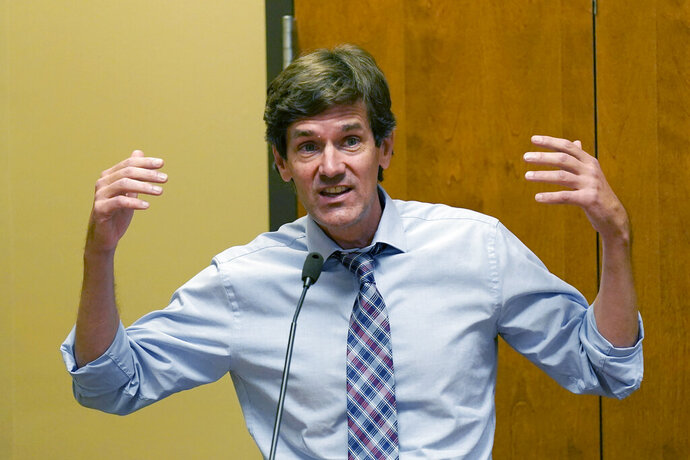
    Adams County is now included in the governor’s mask mandate for more Mississippi counties as COVID is “all around us right now.”

     
    While Adams County and Natchez already have a locally imposed requirement for people to wear face coverings in public places where people gather, Gov. Tate Reeves’ mandate points to how alarmingly widespread he sees the coronavirus has become.
     

    “I hope that people believe me when I say this is a time when the virus is extremely present,” Reeves said Tuesday. “It is all around us right now, more than almost any time before.  Please continue to be careful and safeguard yourself and your loved ones.”

     
    The state Department of Health reported Tuesday that 52 Adams County residents have died from the respiratory disease that has infected 1,447 people since March. The number of deaths has risen by seven in the past month while the number of cases spiked by 325.
     

    Below is the governor’s press release announcing the extension of the state mask mandate to Adams and 12 other counties:


    Today, Governor Tate Reeves announced 13 additional counties that have qualified and met certain requirements to be placed under mask mandates with his “Safe Recovery” executive order that is in effect until December 11.

    Those additional counties are: Adams, Amite, Coahoma, Franklin, Jefferson, Kemper, Monroe, Noxubee, Oktibbeha, Quitman, Scott, Sunflower, and Washington. 54 of Mississippi’s 82 counties are now under mask mandates. 

    “I hope that people believe me when I say this is a time when the virus is extremely present,” Governor Reeves said. “It is all around us right now, more than almost any time before.  Please continue to be careful and safeguard yourself and your loved ones
  • Americans Face New COVID-19 Restrictions After Thanksgiving

    Americans Face New COVID-19 Restrictions After Thanksgiving

    Americans returning from Thanksgiving break faced strict new coronavirus measures around the country Monday as health officials brace for a disastrous worsening of the nationwide surge because of holiday gatherings over the long weekend.

    Los Angeles County imposed a stay-at-home order for its 10 million residents, and Santa Clara County, in the heart of Silicon Valley, banned high school, college and professional sports and decreed a quarantine for those who have traveled more than 150 miles outside the county.

    In Hawaii, the mayor of Hawaii County said trans-Pacific travelers arriving without a negative COVID-19 test must quarantine for 14 days, and even those who have tested virus-free may be randomly selected for another test upon arrival. New Jersey is suspending all youth sports.

    “The red flags are flying in terms of the trajectory in our projections of growth,” said California Gov. Gavin Newsom. “If these trends continue, we’re going to have to take much more dramatic, arguably drastic, action.”

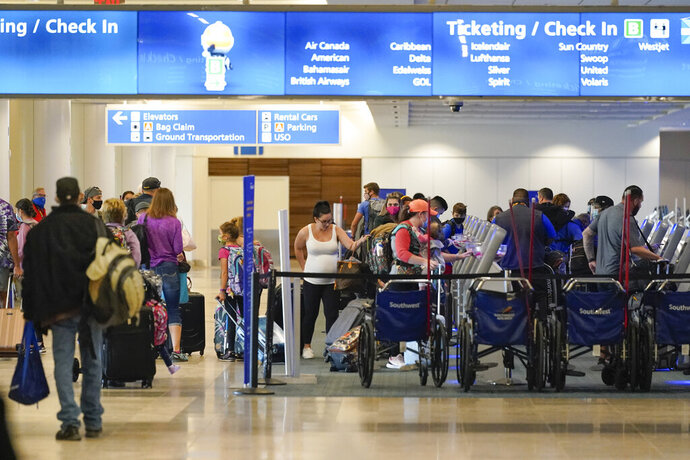
    Health experts had pleaded with Americans to stay home over Thanksgiving and not gather with anyone who didn’t live with them. Nevertheless, almost 1.2 million people passed through U.S. airports Sunday, the most since the pandemic gripped the country in March, and others took to the highways to be with family and friends.

    Now they’re being urged to watch for any signs of illness and get tested right away if they experience symptoms.

    Some families are already seeing the fallout from Thanksgiving gatherings.

    Jonathan Eshnaur lugged his 32-inch TV to a Thanksgiving Day family gathering at his sister’s home in Olathe, Kansas, so he could watch football outside. He wore a mask and only went into her house for the prayer and to use the bathroom.

    His father began feeling terrible that day and tested positive the next. His mother now is showing symptoms, and six others were exposed.

    “I think we all have a tendency to think it won’t happen to me,” said Eshnaur, a 34-year-old special education teacher. “But that is kind of the issue with these kinds of viruses is it does happen, especially when we have widespread community spread that is going on.”

    Priya Patel, 24, is isolating at her parents’ home in San Antonio after visiting friends over the weekend and coming down with a sore throat.

    Patel, who works in public health in New York City, said she had been careful, wearing masks in public and staying out of restaurants and bars. But she spent time at a friend’s home in Texas over Thanksgiving.

    “I’m an extremely extroverted person, and there is just so much time I can spend with my parents at home,” said Patel, who will stay away from her parents, both of whom have preexisting medical conditions, and wear a mask inside their home for the next 14 days.

    Health officials are urging people to remain vigilant until a vaccine becomes widely available, which is not expected to happen for at least a few months.

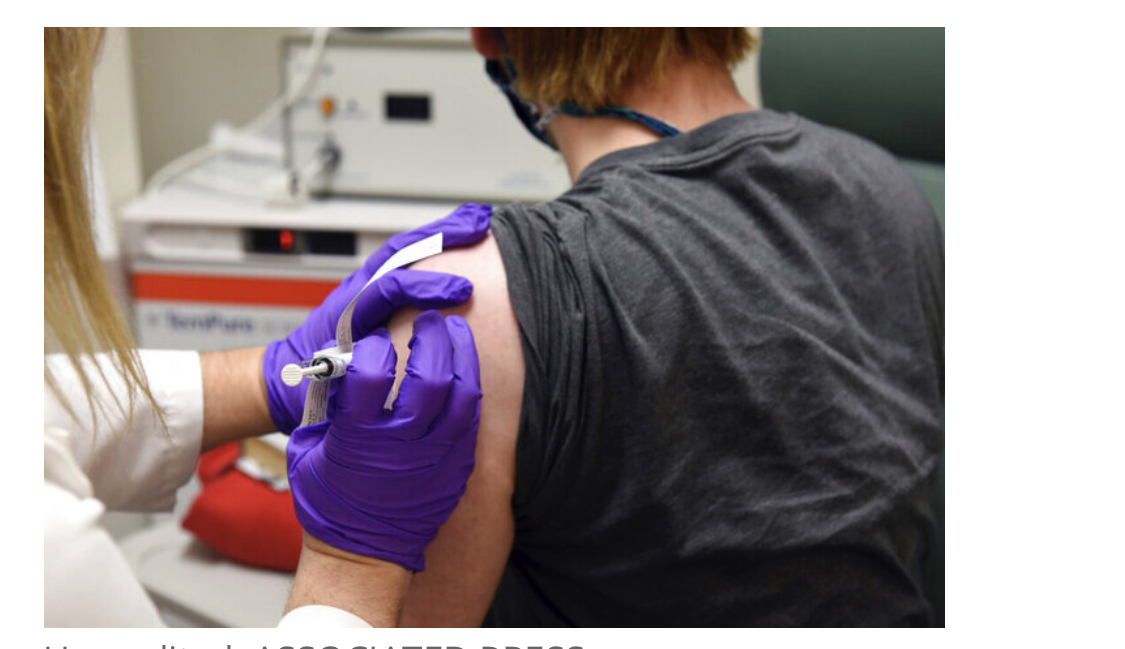
    On Monday, Moderna Inc. said it will ask U.S. and European regulators to allow emergency use of its COVID-19 vaccine as new study results confirm the shots offer strong protection. Pfizer is also seeking approval for its vaccine and hopes to begin administering shots in the U.S. in December.

    The virus is blamed for over 267,000 deaths and more than 13.4 million confirmed infections in the U.S. The country on average is seeing more than 160,000 new cases per day and over 1,400 deaths — a toll on par with what the nation witnessed in mid-May, when New York City was the epicenter.

    A record 90,000 people were in the hospital with the virus in the U.S. as of Sunday, pushing many medical institutions to the limit.

    West Virginia Gov. Jim Justice said hospitals across the state will reduce elective surgeries to ensure there is room for coronavirus patients. The number of people hospitalized with COVID-19 jumped 29% in the past week. In Kansas City, Kansas, hospital and nursing officials said they fear there will not be enough nurses to staff new hospital beds in the metro area if COVID-19 cases continue unchecked. Health officials on Monday added 4,425 confirmed infections and 87 hospitalizations to the state’s pandemic tally since Friday.

    Rhode Island’s hospitals reached their COVID-19 capacity on Monday, the same day the state’s two-week pause took effect. Under restrictions announced by Gov. Gina Raimondo, some businesses will be required to shut down, while others are restricted. Residents are also asked to limit their social circles to people in their household.

    “This will not be easy, but I am pleading with you to take it seriously,” Raimondo said in a statement.

    In suburban St. Louis, a hospital official warned that hospitalizations could double in two to three weeks if people don’t quarantine after Thanksgiving gatherings. SSM Health DePaul Hospital in Bridgeton, Missouri, last week brought in a morgue trailer to store the dead, canceled elective surgeries and doubled up patients in rooms.

    “We will be absolutely overwhelmed,” said Shelly Cordum, vice president of patient care services and chief nursing officer. “I can’t even imagine what we are going to be facing in three weeks if we stay on this path.”

    Dr. Anthony Fauci, the government’s foremost infectious-disease expert, warned on ABC over the weekend that the country could see a “surge upon surge” of infections tied to Thanksgiving. And White House corononavirus task force coordinator Dr. Deborah Birx told CBS that people who traveled should “assume that you were exposed and you became infected,” and get tested if they experience symptoms.

    __

    Associated Press writers Daisy Nguyen in Oakland, California, Alan Clendenning in Phoenix; Jeff McMillan in New York City; John Raby in Charleston, West Virginia; Michelle Monroe in Los Angeles; Lauran Neergaard in Washington; William J. Kole in Warwick, Rhode Island; and Paul Davenport in Phoenix contributed to this report.
  • European Regulator Could OK 1st COVID-19 Vaccine On Dec. 29

    European Regulator Could OK 1st COVID-19 Vaccine On Dec. 29

    BERLIN (AP) — European regulators may approve a coronavirus vaccine developed by drugmakers Pfizer and BioNTech within four weeks, the EU’s drug agency said Tuesday, a time frame that could mean the shot is rolled out first in the United States and Britain.

    The European Medicines Agency plans to convene a meeting by Dec. 29 to decide if there is enough safety and efficacy data about the vaccine for it to be approved, the regulator said. The agency also said it could decide as early as Jan. 12 whether to approve a rival vaccine shot by Moderna Inc.

    German pharmaceutical company BioNTech and its U.S. partner Pfizer said earlier Tuesday that they had asked the European regulator for expedited approval of their vaccine. The companies have said that clinical trials showed the vaccine is 95% effective.

    Multiple successful vaccines will be needed to end the pandemic, which has been on the upswing in Europe and the U.S. and so far left more than 1.4 million people worldwide dead. Pfizer and BioNTech have already sought approval to begin vaccinations in the U.S. in December. Rival Moderna said Monday it was asking U.S. and European regulators to allow the use of its vaccine.

    British regulators also are assessing the Pfizer shot and another from AstraZeneca. There are several other vaccines in development, including in Russia and China.

    Even after vaccines are approved, manufacturers and regulators will be monitoring how well they are received by patients to determine the frequency of rarer side effects that may only appear when millions are immunized. While the vaccines so far submitted for approval seem to prevent people from getting sick, it is still unclear whether they prevent people from picking up the virus entirely — and crucially — passing it to others.

    And officials caution that while some people may receive a vaccine in the coming weeks, it will take many months to give billions of people around the world the shot, or two if a booster is necessary, meaning that people will be living with virus control measures well into next year.

    If its vaccine is approved, BioNTech said its use in Europe could begin before the end of 2020 — tough but not impossible if approval comes Dec. 29. The regulator has also left open the possibility that the date of that meeting will be moved up if data comes in faster.

    The Dec. 29 date would be later than some European countries had hoped for. Germany, which has given BioNTech 375 million euros ($450,000) in funding to develop the vaccine, has been preparing to start immunizing people from mid-December onward.

    Since requests have already been made to U.S. and U.K. regulators, approval might come from them first — and authorities the world over are promising to work with drugmakers to roll out the first shots within days, if not hours, of approval.

    “We have known since the beginning of this journey that patients are waiting, and we stand ready to ship COVID-19 vaccine doses as soon as potential authorizations will allow us,” Pfizer’s chief executive Albert Bourla said in a statement.

    BioNTech said it stands ready to ship stockpiles of vaccines where they are needed when the Amsterdam-based European agency or the U.S. Food and Drug Administration approve the vaccine.

    “Depending on how the authorities decide we can start delivering within a few hours,” said BioNTech’s chief operating officer, Sierk Poetting.

    The European Union’s top official said Tuesday around 2 billion doses of potential COVID-19 vaccines have been secured for the bloc’s 27 nations, with the first deliveries likely to start before the end of the year.

    EU Commission President Ursula von der Leyen said member-states have started working on their vaccination plans and on the logistics for delivering tens of millions of doses across the bloc.

    “It will be a huge step forward toward our normal life,” Von der Leyen said. “In other words, I just wanted to say there is a light at the end of the tunnel.”

    Von der Leyen, however, urged EU citizens to remain “disciplined till we have reached finally a vaccination that is appropriate to eradicate this virus.” As infections and hospitalizations surged in Europe in recent weeks, many countries tightened their restrictions. Some of those measures are beginning to have an effect, but many remain worried that family gatherings at Christmas could lead to a new surge.

    Amid concerns about the safety of the vaccines given the tremendous speed with which they have been developed, Germany’s science minister said Tuesday that the same safety standards are being applied in the approval process for coronavirus vaccines as for other drugs.

    Anja Karliczek said that maintaining the highest standards is key to gaining the widest possible public acceptance for coronavirus immunization.

    Speaking to reporters in Berlin, Karliczek stressed that the vaccine will be voluntary and that authorities will work hard to inform the public about possible side effects that a small percentage of recipients might experience after immunization, such as headaches, exhaustion and fever. The EMA plans to hold a public meeting on Dec. 11 to explain how COVID-19 vaccines are regulated to ensure they work and are safe.

    Marylyn Addo, a doctor at Hamburg’s UKE hospital who is involved in the trials for a rival vaccine, said the speed of coronavirus vaccine development was the result of enormous efforts by scientists, early funding and experience from previous vaccines.

    ___

    Cheng reported from London and Petrequin from Brussels.

    ___

    Follow AP’s coverage at https://apnews.com/hub/coronavirus-pandemic and https://apnews.com/UnderstandingtheOutbreak

    ___

    This story has been updated to correct that Pfizer and BioNTech asked for expedited approval of their vaccine, not an emergency use authorization.

  • Analysis: Will People Comply With La.’S Tougher Virus Rules?

    Analysis: Will People Comply With La.’S Tougher Virus Rules?

    BATON ROUGE, La. (AP) — Gov. John Bel Edwards can heap on coronavirus restrictions, telling Louisiana residents not to gather in groups and to practice behavior that puts fewer people at risk of the COVID-19 disease. But he can’t be in every business, home and holiday party forcing people to follow those rules.

    In fact, the Democratic governor said he doesn’t want strict enforcement, hoping that people will voluntarily comply with his coronavirus regulations. That leaves him to urge, cajole and plead with Louisiana residents in a sort of drumbeat marketing effort against pandemic fatigue.

    He doesn’t seem to be winning the battle.

    The number of Louisiana’s COVID-19 cases and hospitalizations are again spiking — the third time since the pandemic began. Edwards tightened virus restrictions on businesses and gatherings shortly before Thanksgiving in hopes of curbing the surge.

    But even the governor admits that if Louisiana residents had been following his looser Phase 3 rules, mask mandate and precautionary suggestions, he wouldn’t have reverted back to the Phase 2 guidelines to try to combat the latest swell in cases.

    “Everybody should understand that this is a very, very serious situation and that we have to do our part to slow the spread. It’s got to be a collective effort,” Edwards said.

    He’s running into a simple reality, however. Some people don’t think the virus is as dangerous as they’re told. Some people think only those most at risk should be forced to change their habits and lifestyles. And many people are just tired of COVID-19’s disruption of their lives.

    Houma Rep. Tanner Magee, the second-ranking Republican in the state House of Representatives, said people ignoring the governor’s restrictions is “pretty widespread” now in his region.

    “If you go to a grocery store or a restaurant, you don’t see a mask in sight anymore. There was a time not that long ago where you’d see everybody in a mask,” Magee said. “I think people have just kind of moved on with their life.”

    Magee isn’t suggesting that’s a wise approach, but he said it’s hard to try to control human behavior for eight months.

    “I think they’re tired of even thinking about it. And I think generally they think it affects a specific part of the population that they’re not in. The most common thing I hear is, ‘If you’re in that part of the population (most at risk), then you should stay home,’” Magee said. “That’s the most common feedback I get.”

    Public health experts say that dismissiveness of precautions is fueling the latest surge of an outbreak that already has killed more than 6,000 people in Louisiana since March, according to the state health department.

    Hospitals are cautioning the latest trajectory of cases, if it continues unabated, will overwhelm their facilities. Hospital leaders and doctors say that could damage their ability to provide care not only to COVID-19 patients, but also to people who have heart attacks, get injured in a car crash, need back surgery or seek preventive procedures.

    While hospitals haven’t reached their maximum capacity yet, they are starting to see staffing shortages and delays in care, said Dr. Joe Kanter, the governor’s chief public health adviser. He said one hospital had to put patients in recliners while they waited for an available bed.

    But while Kanter said the governor’s latest restrictions will be “significant in their effect,” he acknowledged the state needs help from the people who are choosing where to go, who to visit and how to spend their time.

    “People really need to be making responsible decisions when no one’s looking,” Kanter said. “No one’s going to police your dinner parties.”

    The Edwards administration’s enforcement of its restrictions has been somewhat lax all along, focused on coaxing businesses into compliance rather than punishing them and encouraging people to “be good neighbors.” The governor said he’s going to continue that approach.

    He repeated a comment similar to one he’s made several times before: “If the people of Louisiana insist that we enforce our way through this, we’re doomed to failure. There are 4.65 million Louisianans. There are tens of thousands of businesses. And quite frankly, we can’t enforce our way through this.”

    It’s uncertain if Edwards’ cajoling and urgent warnings — which helped slow the last two Louisiana virus surges — will work again until a vaccine is widely available.

    ___

    EDITOR’S NOTE: Melinda Deslatte has covered Louisiana politics for The Associated Press since 2000. Follow her at http://twitter.com/melindadeslatte.

  • US Colleges Mull New Virus Protocols For Students’ Return

    US Colleges Mull New Virus Protocols For Students’ Return

    COLCHESTER, Vt. (AP) — St. Michael’s College managed to keep coronavirus cases at bay for almost two months this fall with students tested upon arrival and once every three weeks.

    But in mid-October, cases at the small Vermont school started to climb. The outbreak was linked to an ice rink more than 40 miles (64 kilometers) away. The liberal arts college shifted to all-remote learning and closed the campus to visitors. By November, a total of 76 of the roughly 1,400 students on campus had tested positive, the school said.

    “It was very concerning to experience the spike in cases that we did after so many weeks of surveillance tests with no positives,” President Lorraine Sterritt said by email.

    When students come back for the spring semester, St. Michael’s will begin testing them weekly. The college may also require students to move to a separate residence hall when they are told to quarantine.

    The coronavirus presented huge challenges for the fall semester for U.S. colleges that opened the academic year with in-person learning, including some that took a battering from outbreaks. Those not joining the growing number that will offer only virtual learning are assessing how they would bring students back after the winter holidays while the country faces crushing rates of virus infections.

    Schools that are bringing students back are adjusting testing protocols, introducing new screenings, and eliminating spring breaks to discourage students from traveling to help keep campuses open.

    Other schools big and small think it’s still possible to keep a pandemic-era residential college experience.

    California Polytechnic State University in San Luis Obispo plans to add saliva testing in the winter quarter that will be processed on campus and will allow it “to test many more people much more quickly — our current estimate is 4,000 tests per day by mid-January,” President Jeffrey Armstrong said in a campus-wide message this month.

    In the spring semester, Colby College in Maine wants to add some rapid antigen tests to twice-weekly tests for students, faculty and staff. It also did away with the one-week spring break replacing it with two mini-breaks in March and April.

    “We’ll program stuff for the campus so people get a break,” Chief Financial Officer Douglas Terp said.

    More schools are expected to require students get tested before they come to campus rather than when they arrive, as some institutions did before the fall semester, said Barbara Mistick, president of the National Association of Independent Colleges and Universities.

    Institutions like Syracuse University in New York abandoned in-person learning earlier than planned this fall but are planning on a resumption of campus life next semester.

    But a growing number of schools will stick with virtual instruction through the spring.

    “We are seeing a rapid rise in colleges and universities announcing they will move to remote learning for the remainder of this semester and for the spring,” said Lynn Pasquerella, president of the Association of American Colleges and Universities.

    George Washington University in Washington, D.C., for one, announced early last month it will continue most of its classes virtually.

    Student cooperation with protocols helped to keep the number of coronavirus cases low at the University of Vermont’s campus in the small city of Burlington, President Suresh Garimella said.

    On a recent day, students wearing masks streamed through a tent outside the student center where they are required to be tested weekly. They stayed apart, stopped at a station to sanitize their hands and blow their nose and then proceeded into the indoor testing center.

    “It’s part of my routine,” said sophomore Brian Boyle of the testing.

    The school received federal coronavirus relief funding for virus-related expenses like testing, but Garimella estimates it will spend an additional $10 million to $15 million.

    There are also a lot of precautions in place, rules for social distancing and the maximum number of people in a group, Boyle said. It’s harder to get together with people socially, but he said students can find ways to go about it and still follow the rules and be safe.

    “You know being outside in small groups and stuff,” he said.

    As cases rose in Vermont and at UVM in November, though, he said he was becoming a bit concerned about whether the spring semester will be in-person.

    “My biggest concern is probably that people will become more relaxed with their individual social distancing/quarantining measures over winter break,” he said by email. “I can only hope that people will remember how important these safety measures are, and will continue to practice them for the sake of their health and for the sake of our education.”

    ____

    AP writer Michael Casey contributed to this report from Boston.

    ___

    This story has been corrected to show the name of the university in San Luis Obispo is California Polytechnic State University, not California Polytechnical University.

  • Defying Warnings, Millions In The US Travel For Thanksgiving

    Defying Warnings, Millions In The US Travel For Thanksgiving

    Millions of Americans took to the skies and the highways for Thanksgiving at the risk of pouring gasoline on the coronavirus fire, disregarding increasingly dire warnings that they stay home and limit their holiday gatherings to members of their own household.

    Those who are flying witnessed a distinctly 2020 landscape at the nation’s airports during what is traditionally one of the busiest travel periods of the year: plexiglass barriers in front of the ID stations, rapid virus testing sites inside terminals, and paperwork asking them to quarantine on arrival at their destination.

    While the number of Americans traveling by air over the past several days was down dramatically from the same time last year, plenty of others pressed ahead with their holiday plans amid skyrocketing deaths, hospitalizations and confirmed infections across the U.S.

    Many were tired of more than eight months of social distancing and determined to spend time with loved ones.

    “I think with the holidays and everything, it’s so important right now, especially because people are so bummed out because of the whole pandemic,” said 25-year-old Cassidy Zerkle of Phoenix, who flew to Kansas City, Missouri, to visit family.

    She brought snacks and her own hand sanitizer and said the flight was half full. She had a row of seats to herself.

    “As long as you’re maintaining your distance, you’re not touching stuff and you’re sanitizing your hands, people should see their families right now,” she said.

    The coronavirus is blamed for more than 12.6 million confirmed infections and over 269,000 deaths in the U.S.

    More than 88,000 people in the U.S. — an all-time high — were in the hospital with COVID-19 as of Tuesday, pushing the health care system in many places to the breaking point, and new cases have soared to an average of over 174,000 per day, the highest level on record. Deaths have surged to more than 1,600 per day, a mark last seen in May, when the crisis in the New York area was easing.

    The Centers for Disease Control and Prevention and state and local authorities have begged people not to travel and urged them to keep their Thanksgiving celebrations small.

    “That’ll make sure that your extended family are around to celebrate Christmas and to celebrate the holidays next year,” Kentucky Gov. Andy Beshear said.

    About 1 million people per day passed through U.S. airport checkpoints from Friday through Tuesday, a drop-off of around 60% from the same time a year ago. Still, those have been the biggest crowds since the COVID-19 crisis took hold in the U.S. in March.

    Last year, a record 26 million passengers and crew passed through U.S. airport screening in the 11-day period around Thanksgiving.

    More Americans drive than fly during the holiday, but AAA has projected those numbers are also likely to be lower this year. How much lower the auto club has not said.

    Many states and cities have adopted precautions. Travelers to Los Angeles, either by plane or train, were required to fill out an online form acknowledging California’s request that people quarantine for two weeks after arrival in the state.

    The resurgence of the virus and the refusal of many people to wear masks or keep their distance from others have caused despair among health care officials and front-line workers.

    “I’ll just to confess to you guys, I’m exhausted trying to convince folks to do stuff. It’s just going nowhere,” said Dr. Thomas Dobbs, Mississippi’s state health officer.

    Anne Moore, a 60-year-old woman from Chicago, flew to Albany, New York, to be with her daughter for the holiday. Her daughter is a senior at Dartmouth University, and Moore and her husband were worried about her driving back to Illinois by herself.

    Before the spike, the family had planned to hold a Thanksgiving gathering of fewer than 10 people. But instead it will be just Moore, her husband and her daughter.

    “I have friends who are alone. And I’m not inviting them. And I feel badly about that,” she said. “We’ll take a walk or something instead. But yeah, the three of us are isolating.”

  • As Virus Cases Spike, Louisiana Governor Adds Restrictions

    As Virus Cases Spike, Louisiana Governor Adds Restrictions

    BATON ROUGE, La. (AP) — With Louisiana seeing a new spike in coronavirus hospitalizations, Gov. John Bel Edwards on Tuesday toughened restrictions on businesses and gatherings ahead of Thanksgiving, worried the holidays would only worsen the outbreak’s spread.

    “Our numbers are not good, and they’re getting worse everywhere. This is clearly a statewide surge, and it requires a statewide, coordinated effort,” Edwards said.

    The Democratic governor decreased the number of customers allowed at restaurants, gyms, salons, casinos, malls and other nonessential businesses from 75% of their occupancy rate to 50%. Crowds at churches will be capped at 75% of their capacity, with distancing among people of different households required.

    The new rules take effect Wednesday and expire Dec. 23. The statewide mask mandate will remain in place.

    Most bars likely will be limited to takeout, delivery and outside seating only, under new restrictions that require parishes to have low percentages of coronavirus tests returning positive to allow indoor drinking at bars.

    Crowd sizes at high school football games will shrink to 25%, the same maximum that’s already been in place for college football games. Indoor gatherings for weddings and events will be limited to 75 people or a maximum of 25% occupancy, whichever is less. Outdoor gatherings have looser limits.

    The intensified restrictions come as Louisiana is experiencing its third surge in infections of the COVID-19 disease caused by the coronavirus. Hospitals are cautioning they are concerned the latest swell in cases will overwhelm their facilities.

    “The path ahead right now is dangerous. This is a dangerous time for Louisiana,” said Dr. Joe Kanter, the governor’s chief public health adviser. “We are now in lockstep with the rest of the country.”

    On Tuesday, hospitalizations reached 1,052 according to the Louisiana Department of Health. While that’s well below the peak of nearly 2,000 in April, COVID-19 hospitalizations are the highest they’ve been since August, jumping 77% during November alone, according to the data.

    At least 6,072 people in Louisiana are confirmed to have died from the disease since March, according to the health department.

    Edwards’ new coronavirus rules send Louisiana back from Phase 3 restrictions that had been in place for two months to something that looks like the Phase 2 guidelines the governor enacted from June until mid-September. The White House’s coronavirus advisers urged Louisiana to step up its restrictions amid its third wave of infections.

    The governor hopes that, in addition to slowing the latest outbreak, toughened state rules will impress the urgency of the problem on people gathering for Thanksgiving. He’s repeatedly cautioned against the usual inside dinner of extended family and friends, saying that could put people’s health — and lives — at risk.

    Edwards’ announcement prompted a rebuke from Daniel Erspamer, CEO of the conservative Pelican Institute for Public Policy. He said the tightened restrictions “will make matters worse for Louisiana families who have been suffering for months on end.”

    “Everyone wants to protect our most vulnerable citizens, but reverting to blunt instrument lockdown policies that have dire unintended consequences is unwise and disappointing,” Erspamer said in a statement.

    Louisiana had two prior surges of the coronavirus: an outbreak in March and April in the New Orleans region, and a statewide swell in June and July. All regions of the state are seeing case spikes this month, with the health department confirming more than 11,000 new infections of COVID-19 disease over the past week.

    With a vaccine expected to be available for widespread use within months, Edwards encouraged people not to let their guard down yet.

    “We are looking for renewed emphasis, attention, compliance for a finite amount of time, and I hope that that inspires people to do what is required knowing that they’re not going to have to do it forever,” he said. “But the next several months will be critical.”

    The state health department has reported more than 213,000 confirmed coronavirus cases since the pandemic began. Nearly 186,000 people are presumed recovered, but that leaves thousands who could have active infections and be spreading the virus.

    The number of people who have had COVID-19 is expected to be higher than the confirmed count because some people never have symptoms or never get tested.

    The health department has reported another 11,000 probable coronavirus cases, detected through antigen tests. Those tests provide quick on-site results and are less expensive to administer than the more widely used molecular tests, but the tests are deemed less accurate.

    ___

    Follow AP’s coverage of the pandemic at https://apnews.com/hub/coronavirus-pandemic and https://apnews.com/UnderstandingtheOutbreak. Follow Melinda Deslatte on Twitter at http://twitter.com/melindadeslatte.

  • 17 Inmates Positive For Coronavirus At Mississippi Prison

    17 Inmates Positive For Coronavirus At Mississippi Prison

    JACKSON, Miss. (AP) — The Mississippi Department of Corrections is testing 500 inmates at a south Mississippi prison after a coronavirus outbreak, officials said.

    Seventeen inmates at South Mississippi Correctional Institution in Leakesville tested positive for the coronavirus in the last two weeks, a corrections department spokesperson said Wednesday. One inmate, who has a heart condition, is now hospitalized. Most are showing no symptoms.

    The 17 inmates who tested positive are typically housed in three separate units. All 500 inmates in those units will be tested twice – once this week, and once next week “to ensure containment of the virus,” corrections officials wrote in a news release. The first rapid tests will be conducted Wednesday.

    Those who test positive will be moved to a separate quarantine unit.

    Corrections Commissioner Burl Cain said officials are doing “everything humanly possible” to ensure the safety of inmates and corrections officers.

    “The fact that the virus still gets through all these stringent measures shows how contagious COVID-19 is,” he said.

    The Department of Corrections is using electrostatic sanitizing sprayers every day in every unit; industrial Ultra-violet sterilization lights; portable UV sterilizers; hand wand UV sterilizers; air purifiers and sanitization stations that mist as staff and inmates walk through the unit.

    All vendors and staff are screened upon entry. Visitors have been prohibited since March.

    Cain said the Department of Corrections and the Mississippi state Department of Health have increased their monitoring of all correctional facilities in the state.

    There are a total of 17,160 inmates people are incarcerated in Mississippi’s prisons. Mississippi has had 889 cases of the coronavirus in its prison system, according to data analyzed by The Marshall Project and The Associated Press. As of Nov. 17, at least 197,659 people in U.S. prisons have tested positive for the virus.

    New confirmed positive cases in prisons during the week of Nov. 17 reached their highest level since the start of the pandemic, outpacing the previous surge in early August, data show.

    ___

    Leah Willingham is a corps member for the Associated Press/Report for America Statehouse News Initiative. Report for America is a nonprofit national service program that places journalists in local newsrooms to report on undercovered issues.

    ___

    Follow AP coverage of the pandemic at https://apnews.com/VirusOutbreak and https://apnews.com/UnderstandingtheOutbreak.

  • Gov. Expands Mask Mandate To Half Of Mississippi Counties

    Gov. Expands Mask Mandate To Half Of Mississippi Counties

    JACKSON, Miss. (AP) — Mississippi Gov. Tate Reeves announced Tuesday that he is expanding his mask mandate to cover half of Mississippi’s 82 counties.

    Reeves had previously placed under the mandate 22 counties with the highest number of new cases of coronavirus in the state.

    “It’s clear we are in the middle of our second surge,” Reeves said during a briefing with news media where he announced he was adding 19 counties to that list.

    The new counties are: Alcorn, Attala, Bolivar, Chickasaw, Choctaw, Jefferson Davis, Jones, Lafayette, Lawrence, Lincoln, Lowndes, Neshoba, Panola, Perry, Prentiss, Stone, Tippah, Tishomingo and Union.

    The announcement comes a day after Dr. LouAnn Woodward, vice chancellor and dean of the University of Mississippi Medical Center’s School of Medicine, called on the governor to reinstitute a statewide mask mandate to prevent further spread of the virus. Woodward said last week that no intensive care unit beds were available at the hospital, Mississippi’s only level-one trauma center.

    “I think we have reasonable evidence to believe that the county-by-county approach is not working,” she said during a Monday news briefing.

    Mississippi, with a population of about 3 million, has reported more than 144,500 confirmed coronavirus cases and at least 3,729 deaths from COVID-19. Hospitalizations are rising, with 946 people hospitalized in Mississippi with coronavirus Monday, compared with 560 on Nov. 4, according to the state Department of Health.

    Reeves said Tuesday that he is holding off on a statewide mandate for now. He said that mask mandate has become a “buzzword in this fight against COVID” which he compared to calls for closing bars, lockdowns and sheltering in place.

    “Lately all we’ve heard is ‘statewide mask mandate’ and the fact of the matter is that none of those actions taken by themselves is a panacea, none of them are a silver bullet,” Reeves said.

    Meanwhile, Mississippi’s top health official said this week he is exhausted trying to convince people in the state to take the coronavirus seriously and follow public health guidelines.

    “It’s just going nowhere,” Dr. Thomas Dobbs, Mississippi’s state health officer, said Monday during a meeting with members of the Mississippi Senate.

    As state health officer, Dobbs has been running the state’s effort to track the virus, put preventative measures in place and test residents.

    He has also been the face of the state’s coronavirus response, speaking at many of Reeves’ televised coronavirus press briefings and online forums with the University of Mississippi Medical Center, the state Department of Health and the Mississippi State Medical Association. Throughout the pandemic, he has repeated the same message: masking, social distancing and avoiding large social gatherings will prevent the spread of the virus.

    Speaking to the Senate Public Health and Welfare Committee on Monday, he said there is no “collective will” among the public to prevent the spead of the virus by following safety protocols.

    He said church and school outbreaks are rising throughout the state. Schools, in particular, have become a major problem — in general, schools have been unwilling to cut back on extracurriculars and social activities, Dobbs said.

    “We have chosen, very clearly, to prioritize social events over disease transmission,” he said.

    The Mississippi State Department of Health on Tuesday reported 665 new confirmed cases of coronavirus and new 53 deaths. Thirty-one deaths occurred between Nov. 13 and Nov. 23 and were identified later using death certificates.

    While most people who contract the coronavirus recover after suffering only mild to moderate symptoms, it can be deadly for older patients and those with other health problems.

    ___

    Leah Willingham is a corps member for the Associated Press/Report for America Statehouse News Initiative. Report for America is a nonprofit national service program that places journalists in local newsrooms to report on undercovered issues.

    ___

    Follow AP coverage of the pandemic at https://apnews.com/VirusOutbreak and https://apnews.com/UnderstandingtheOutbreak.

  • Louisiana Superintendents Ask For Looser Quarantine Rules

    Louisiana Superintendents Ask For Looser Quarantine Rules

    BATON ROUGE, La. (AP) — Leaders of several Louisiana public school systems called on state officials Monday to relax coronavirus quarantine rules that have sent thousands of students home from school because they have been in close proximity to someone who tested positive for COVID-19.

    But state health officials said they aren’t recommending any changes to the quarantine regulations as Louisiana sees its third spike in coronavirus cases, with hospitals cautioning they are concerned the latest surge will overwhelm their facilities.

    School superintendents from Ascension, West Baton Rouge, Rapides and Livingston parishes told lawmakers that too many students are missing in-person classroom instruction because they have been sent home for 14 days to quarantine.

    “We have a lot of healthy kids who are home when they don’t need to be,” West Baton Rouge Parish Superintendent Wesley Watts told the House health committee. “We’re not asking to do away with quarantine. We’re just asking for some modifications.”

    That argument hasn’t persuaded the Louisiana Department of Health, which helped set the school quarantines based on advice from the U.S. Centers for Disease Control and Prevention.

    “We continue to follow CDC guidance on quarantine and so are not recommending any changes to K-12 guidance at this time,” health department spokeswoman Aly Neel said in a statement after the hearing.

    More than 11,000 new infections of the COVID-19 disease caused by the virus have been confirmed in the state over the last week, and 6,039 people in Louisiana are confirmed to have died from the disease since March, according to the health department.

    Louisiana’s schools are required to follow virus safety guidelines adopted by the Board of Elementary and Secondary Education, based on recommendations from the health department.

    Those guidelines require anyone considered to be in “close contact” to someone who tested positive for COVID-19 or has symptoms of the disease to stay home for 14 days. Close contact is defined as anyone who has been within six feet (2 meters) of an infected person for at least 15 minutes.

    Superintendents said those rules are too strict, sending entire classrooms of students home where online accessibility to virtual learning can be spotty.

    Rapides Parish Superintendent Jeff Powell said his schools have quarantined nearly 4,100 students this school year, with 18 students on average sent home for each positive coronavirus test. Livingston Parish Superintendent Joe Murphy said of the 2,600 students in his system sent home to quarantine because of exposure risk, 162 have had to isolate more than once.

    “We do believe the best place for them to be is in our school buildings,” said Ascension Parish Superintendent David Alexander.

    In an interview, state Superintendent of Education Cade Brumley said he asked the health department to consider the approach used in Missouri, where only students who are sick or test positive must isolate — if all students in close contact were wearing masks.

    “The more students that we have face to face (for instruction), we think our academic outcomes will be stronger,” Brumley said Monday. “That’s why if this is an opportunity where we have the potential for an adjustment safely, we would probably want to do that.”

    But Brumley is advising the Board of Elementary and Secondary Education to follow health department recommendations: “They’re the experts on the virus.”

    And the health department said the Missouri school quarantine rules run afoul of the CDC guidance.

    The local superintendents said they’re seeing only small percentages of students forced to quarantine actually getting sick or testing positive for COVID-19.

    But Democratic Rep. Dustin Miller, a nurse practitioner from Opelousas, noted that doesn’t mean the students didn’t have the coronavirus. He said many who spread the virus never show symptoms — and often never get tested, so it’s unclear how many students forced to quarantine were infected.

    Of the quarantine rules, Miller said: “That’s what the science tells us to do.”

    Bossier City Rep. Raymond Crews, a Republican who has opposed all of Louisiana’s coronavirus restrictions, said the 14-day quarantine requirement damages students’ education and harms their health. He said the state should find other ways to protect people most vulnerable to severe impacts from COVID-19, rather than quarantining students.

    “We are hurting the children to help everyone else,” Crews said.

    A few parents and students also testified in opposition to coronavirus rules in place.

    “We are losing what is supposed to be the best year of high school because of COVID,” said Brennan Falgout, a senior at Central Lafourche High School. He told lawmakers: “I’m hoping we can find an answer to this and try to save the rest of the senior year that I have.”

    ___

    Follow AP’s coverage of the pandemic at https://apnews.com/hub/coronavirus-pandemic and https://apnews.com/UnderstandingtheOutbreak. Follow Melinda Deslatte on Twitter at http://twitter.com/melindadeslatte.