Category: COVID-19

  • US Experts Convene To Decide Whether To OK Pfizer Vaccine

    US Experts Convene To Decide Whether To OK Pfizer Vaccine

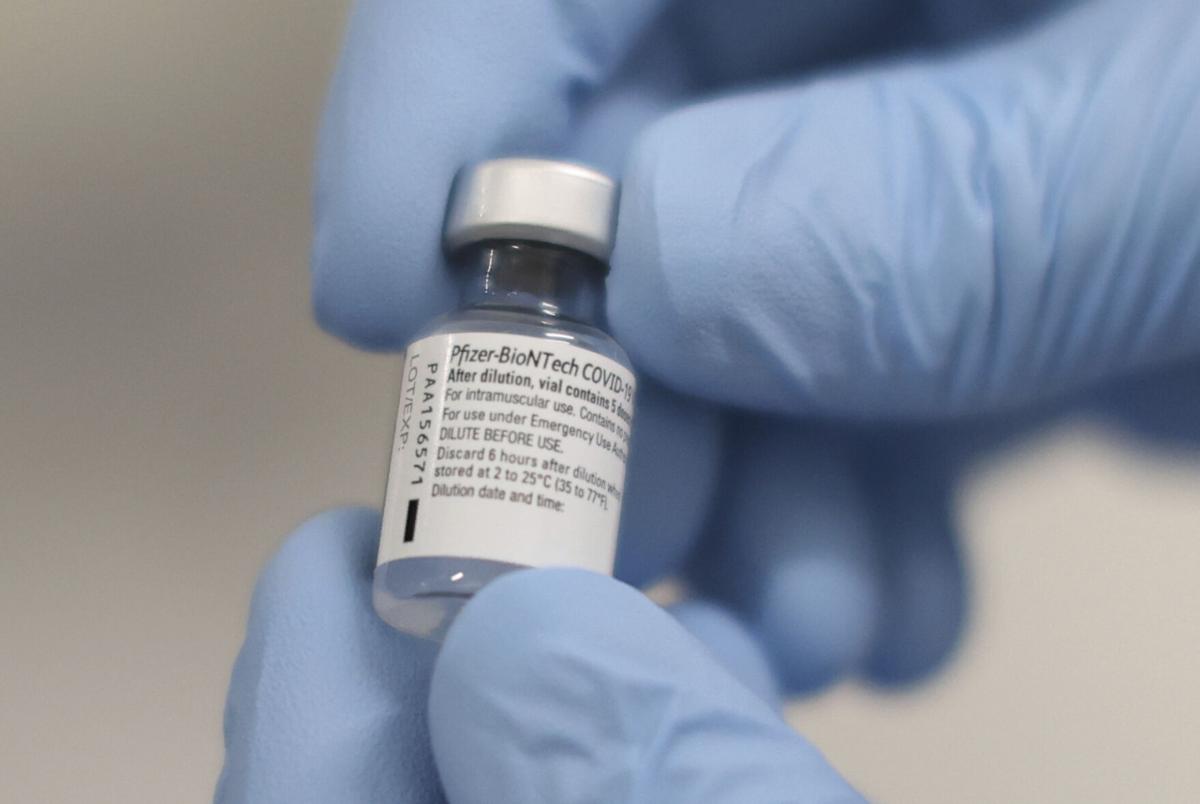
    WASHINGTON (AP) — A U.S. government advisory panel convened on Thursday to decide whether to endorse mass use of Pfizer’s COVID-19 vaccine to help conquer the outbreak that has killed close to 300,000 Americans.

    The meeting of outside advisers to the Food and Drug Administration represented the next-to-last hurdle before the expected start of the biggest vaccination campaign in U.S. history. Depending on how fast the FDA signs off on the panel’s recommendation, shots could begin within days.

    The FDA panel functions like a science court. During the scheduled daylong session, it was expected to debate and pick apart the data — in public — on whether the vaccine is safe and effective enough to be cleared for emergency use. With unprecedented interest in the normally obscure panel, the FDA broadcast the meeting via Youtube, and thousands logged on.

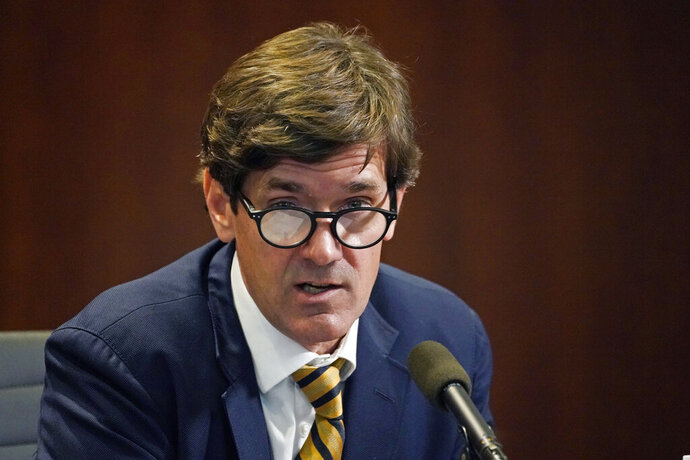
    “The American public demands and deserves a rigorous, comprehensive and independent review of the data,” said FDA’s Dr. Doran Fink, who described agency scientists working nights, weekends and over Thanksgiving to get that done.

    The FDA is not required to follow the committee’s advice but is widely expected to do so. Once that happens, the U.S. will begin shipping millions of doses of the shot.

    Later this month, the FDA is expected to pass judgment on another vaccine candidate, developed by Moderna and the National Institutes of Health, that has proved about as protective as Pfizer’s shot. A third candidate, by AstraZeneca and Oxford University, is also making its way through the pipeline.

    The initial supplies from Pfizer and Moderna will be limited and reserved primarily for health care workers and nursing home patients, with other vulnerable groups next in line until the shots become widely available on demand, something that will probably not happen until the spring.

    The meeting came as the coronavirus continues surging across much of the world, claiming more than 1.5 million lives, including about 290,000 in the U.S.

    Hanging over the meeting is a warning from British officials that people with a history of serious allergic reactions shouldn’t get the vaccine. Government authorities there are investigating two reports of reactions that occurred on Tuesday when Britain became the first country in the West to begin mass vaccinations against the scourge.

    Still, a positive recommendation and speedy U.S. approval appeared nearly certain after FDA scientists issued an overwhelmingly positive initial review of the vaccine earlier this week.

    FDA said results from Pfizer’s large, ongoing study showed that the shot, which was developed with Germany’s BioNTech, was more than 90% effective across people of different ages, races and underlying health conditions, including diabetes and obesity. No major safety problems were uncovered. Common side effects included fever, fatigue and pain at the injection site.

    “The data presented in the briefing report were consistent with what we heard before and are really exciting,” said Dr. William Moss, head of Johns Hopkins University’s International Vaccine Access Center. “Nothing that I see would delay an emergency use authorization.”

    The meeting also represented an opportunity for regulators to try to boost public confidence in the breakneck development process that has produced the Pfizer vaccine and a string of other upcoming shots with remarkable speed — less than a year after the virus was identified.

    The FDA has also faced weeks of criticism from President Donald Trump for not rushing out a vaccine before Election Day.

    “There have been a lot of questions about why it takes us so long or ‘are we being rigorous enough?’” FDA Commissioner Stephen Hahn said in an interview. “I’m hoping that people will see with our transparency that we have taken a very rigorous stance on this.”

    Hahn said the agency had already teed up the process to authorize the vaccine by filling out all the legal paperwork in advance, regardless of the ultimate decision.

    On Thursday’s agenda:

    RARE ADVERSE REACTIONS

    The FDA uncovered no major safety problems in its review of Pfizer’s 44,000-person study, including no allergic reactions of the type reported in Britain. But such studies can’t detect rare problems that might only affect a tiny slice of the general population.

    FDA reviewers noted four cases of Bell’s palsy that occurred among people getting the vaccine. They concluded the cases were probably unrelated to the vaccine because they occurred at rates that would be expected without any medical intervention. But the agency did say cases of the nerve disorder should be tracked, given that other vaccines can cause the problem.

    “I think we have to be upfront, without scaring people, that we don’t know yet about any potential, rare, long-term adverse events,” Moss said.

    EFFICACY QUESTIONS

    The FDA found the vaccine highly effective across various demographic groups. But it is unclear how well the vaccine works in people with HIV and other immune-system disorders.

    The study excluded pregnant women, but experts were expected to tease apart the data for any hints in case women get vaccinated before realizing they’re pregnant.

    A study of children as young as 12 is underway.

    IMPACT OF EMERGENCY AUTHORIZATION

    Answering some of these questions will require keeping Pfizer’s study going for many more months.

    When the FDA panel met in October, experts warned against allowing study participants who received dummy shots to switch and get the real vaccine as soon as it receives the FDA’s emergency OK. Doing that could make it impossible to get answers to certain questions, such as ho long the protection lasts.

    Pfizer and BioNTech say they want to allow such participants to get the vaccine on request or, at the latest, after six months of follow-up. The FDA hasn’t made clear if it will accept that approach.

    “FDA is adamant that they want these trials completed,” said Norman Baylor, former director of FDA’s vaccine office.

    ___

    AP writer David Koenig contributed to this story from Dallas.

    ___

    The Associated Press Health and Science Department receives support from the Howard Hughes Medical Institute’s Department of Science Education. The AP is solely responsible for all content.

  • Pandemic Cancels St. James Christmas Eve Bonfire Celebration

    Pandemic Cancels St. James Christmas Eve Bonfire Celebration

    CONVENT, La. (AP) — A Louisiana parish canceled their annual Christmas Eve bonfire celebration due to an increase in coronavirus cases, officials said.

    St. James Parish officials called off the event Wednesday, after discussing possible plans with the State Fire Marshal’s office, news outlets reported.

    Officials said they were concerned about the crowds the event could bring in and how they could maintain social distancing, since the event runs for miles along the Mississippi River levee.

    The two groups tried to find an alternative way to hold the bonfire safely but rising COVID-19 cases halted the discussion.

    On Wednesday, the parish said their positivity rate had nearly doubled, hitting 16.9%.

    “This was by no means an easy decision to make as this tradition is long standing and special to our community in particular,” parish officials said Wednesday. “We understand this has been an extremely difficult year for many of us and we have hoped for a sense of normalcy in the Christmas season especially, however, we must first and foremost protect the health, safety and well-being of our residents.”

    The Christmas Eve bonfire celebrations in St. James and other river parishes may have begun in the late 1800s. The bonfires are tepee-shaped and are said to light the way for Papa Noel on his nighttime ride to deliver gifts.

    Today the levee bonfires have become a tourist attraction and typically, bonfire construction starts after the Thanksgiving holiday.

    Parish President Pete Dufresne plans to host a Facebook Live discussion on Thursday at new noon “to address in more detail how this decision was made as well as permit refunds and deconstructing of previously built bonfires.”

    The coronavirus pandemic has led to the cancelation of public celebrations around Louisiana, including Mardi Gras parades and the Carnival season.

    Since Louisiana’s outbreak began in March, the health department has confirmed 6,393 Louisiana residents have died from the COVID-19 disease caused by the coronavirus. The number of people hospitalized with COVID-19 reached 1,537 Wednesday — more than double since last month and on track to exceed hospitalizations in the state’s last coronavirus spike in July.

    ___

    Follow AP’s coverage of the pandemic at https://apnews.com/hub/coronavirus-pandemic and https://apnews.com/UnderstandingtheOutbreak.

  • Mississippi Governor Defends Hosting Parties Amid Virus

    Mississippi Governor Defends Hosting Parties Amid Virus

    JACKSON, Miss. (AP) — Mississippi Gov. Tate Reeves on Wednesday defended his decision to hold Christmas parties at the Governor’s Mansion, despite repeatedly warning residents to avoid social gatherings as coronavirus cases surge.

    The Republican governor said he invited family, friends and state officials to the multiple parties, but he expects many will choose not to attend.

    The front part of the Governor’s Mansion is a museum that is open by appointment only, and the Reeves family lives in a private portion in the back. Reeves compared the parties to tours that have been happening during the pandemic. No more than 10 people are allowed on each tour of the historic home, and masks are required.

    “What I think we are doing by offering the public the opportunity to, for instance, tour the Governor’s Mansion, is to offer a sense of normalcy,” Reeves said during a news conference.

    Reeves, who became governor in January, said he canceled many social events for the year, including a 16th birthday party for his oldest daughter and an open house traditionally held the first Friday of December.

    In a story first reported by Mississippi Today, elected officials said they were invited to a governor’s Christmas party happening Wednesday. The governor also invited lawmakers to separate parties next week.

    Reeves has often told people not to host gatherings as the virus spreads. He issued a new executive order Wednesday that restricts social gatherings statewide to 10 people indoors and 50 outdoors when social distancing is not possible and has issued a mask mandate for all Mississippi schools and in 61 out of 82 counties in the state with the highest number of new coronavirus cases.

    The new executive order additionally limits schools’ indoor sporting events to four spectators per student participant and a maximum of 250 spectators.

    Mississippi reported more than 2,700 new confirmed cases of coronavirus Wednesday, the most ever in a single day. Before that, the record was 2,480, reported Dec. 4. Mississippi has also exceeded past records for the number of patients hospitalized with coronavirus in recent days.

    Reeves said he did not know how many people were invited to the Governor’s Mansion parties, and he did not specify how many he plans to host.

    At least 40 lawmakers and others in the state Capitol tested positive for the coronavirus during the summer, including the Republican presiding officers, House Speaker Philip Gunn and Lt. Gov. Delbert Hosemann. Some lawmakers were hospitalized. In the weeks before to the outbreak, some legislators worked shoulder to shoulder or rode on crowded elevators, and some went without masks.

    After either receiving an invitation to the governor’s party or hearing about it, some lawmakers said they did not plan to attend because they were taking precautions with the virus.

    Democrat Rep. Robert Johnson of Natchez told The Associated Press on Wednesday that he didn’t think he received an invitation, but he thinks the parties are “inappropriate.”

    “It’s a time for all of us to be diligent and try to make sure that we’re setting good examples until we get this pandemic under control,” Johnson said. “I don’t think it’s fair to represent to the public that it’s OK to go about business as usual.”

    ___

    Leah Willingham is a corps member for the Associated Press/Report for America Statehouse News Initiative. Report for America is a nonprofit national service program that places journalists in local newsrooms to report on undercovered issues.

    ___

    Follow AP coverage of the pandemic at https://apnews.com/VirusOutbreak and https://apnews.com/UnderstandingtheOutbreak.

  • Houston Authorities Target Rise In Road Rage Amid Pandemic

    Houston Authorities Target Rise In Road Rage Amid Pandemic

    HOUSTON (AP) — Houston-area authorities announced Tuesday a new task force to combat a more than 30% rise in road rage incidents this year, an increase that officials are blaming in part on the ongoing stress during the coronavirus pandemic.

    The rise in road rage incidents coincides with an overall increase in violent crime in Houston during the pandemic, including a homicide rate that could be the city’s highest in nearly 30 years.

    “We’re not psychologists here at the Houston police department … but we do know that COVID has had an impact on the collective psyche of the American people,” said Houston Police Chief Art Acevedo. “We know that we’ve seen a rise across the nation in violent crime. We know we’ve seen a rise in domestic violence.”

    More than 200 road rage incidents in which someone was shot have occurred during the first 10 months of this year, compared to 150 during the same period a year ago, Acevedo said.

    Six of these road rage incidents this year have resulted in murder.

    The most recent road rage incident in the Houston area occurred on Friday. One man was shot following a minor traffic accident, said Harris County Sheriff Ed Gonzalez. The man remains in critical condition.

    “This year has been very difficult, and there’s been a lot of loss both in our community and our nation, and we shouldn’t be compounding that suffering with unnecessary carnage on our roadways,” Gonzalez said.

    Houston police, along with the sheriff’s office and other agencies planned to have additional officers on roadways to target aggressive drivers and arrest individuals for reckless driving.

    In any road rage cases where a gun is used, authorities will also work to seize vehicles from those arrested, said Harris County District Attorney Kim Ogg.

    The rise in road rage incidents comes as Houston and other cities around the country have seen an increase in violent crime this year amid the pandemic.

    Houston authorities have also partially blamed the rise in crime this year on other issues, including rising drug and gang activity and bail reform efforts they allege have resulted in the release of violent offenders.

    In Houston, Acevedo predicted the city could have more than 400 murders by the end of the year. The last time Houston recorded more than 400 murders was in 1993, with 446 homicides.

    Family violence crimes were up by 31% this year compared to last, while such crimes committed with firearms were up 41%, according to data reported last month by Houston police.

    The spike in crime across the country has defied an easy explanation, according to experts. They have pointed to the pandemic, high unemployment and stay-at-home orders as some of the reasons.

    A recent report by the nonpartisan criminal justice think tank Council on Criminal Justice examined crime rates for 28 U.S. cities. It found that homicide rates increased by 42% during the summer and 34% in the fall compared to the summer and fall of 2019. Aggravated assaults went up by 15% in the summer and 13% in the fall of 2020, while gun assaults increased by 15% in the summer and 16% in the fall compared to the same period in 2019.

    “Several evidence-based strategies are available to address the increase in violence but subduing the COVID-19 pandemic also remains a necessary condition for reducing violence,” according to the report, which was released earlier this month.

    ___

    Follow Juan A. Lozano on Twitter: https://twitter.com/juanlozano70

  • US Virus Deaths Hit Record Levels With The Holidays Ahead

    US Virus Deaths Hit Record Levels With The Holidays Ahead

    Deaths from COVID-19 in the U.S. have soared to more than 2,200 a day on average, matching the frightening peak reached last April, and cases per day have eclipsed 200,000 on average for the first time on record, with the crisis all but certain to get worse because of the fallout from Thanksgiving, Christmas and New Year’s.

    Virtually every state is reporting surges just as a vaccine appears days away from getting the go-ahead in the U.S.

    “What we do now literally will be a matter of life and death for many of our citizens,” Washington Gov. Jay Inslee said Tuesday as he extended restrictions on businesses and social gatherings, including a ban on indoor dining and drinking at restaurants and bars.

    While the impending arrival of the vaccine is reason for hope, he said, “at the moment, we have to face reality, and the reality is that we are suffering a very dire situation with the pandemic.”

    Elsewhere around the country, North Carolina’s governor imposed a 10 p.m. curfew, and authorities in Southern California and the San Joaquin Valley sent a mass cellphone text alert Tuesday telling millions about the rapid spread of the virus and urging them to abide by the state’s stay-at-home orders.

    The virus is blamed for more than 285,000 deaths and 15 million confirmed infections in the United States.

    Many Americans disregarded warnings not to travel over Thanksgiving and have ignored other safety precautions, whether out of stubbornness, ignorance or complacency. On Saturday night, police in Southern California arrested nearly 160 people, many of them not wearing masks, at a house party in Palmdale that was held without the homeowner’s knowledge.

    Before his death Friday from complications of COVID-19, 78-year-old former Alabama state Sen. Larry Dixon asked his wife from his hospital bed to relay a warning. “Sweetheart, we messed up. We just dropped our guard. … We’ve got to tell people this is real,” his friend Dr. David Thrasher, a pulmonologist, quoted him as saying.

    Although Dixon had been conscientious about masks and social distancing, he met up with friends at a restaurant for what they called a “prayer meeting,” and three of them fell ill, Thrasher said.

    Dr. Deborah Birx, the White House coronavirus task force coordinator, offered what sounded like a subtle rebuke of the way President Donald Trump and others in the administration have downplayed the disease and undercut scientists.

    “Messages need to be critically consistent,” Birx said Tuesday at a Wall Street Journal conference of CEOs. “I think we need to be much more consistent about addressing the myths that are out there — that COVID doesn’t really exist, or that the fatalities somehow are made up, or the hospitalizations are for other diseases, not COVID, that masks actually hurt you.”

    On Thursday, a Food and Drug Administration advisory panel is widely expected to authorize emergency use of Pfizer’s COVID-19 vaccine, and shots could begin almost immediately after that. Britain on Tuesday started dispensing the Pfizer vaccine, becoming the first country in the West to begin mass vaccinations.

    Still, any vaccination campaign will take many months, and U.S. health experts are warning of a continuing surge of infections in the coming weeks as people gather for the holidays.

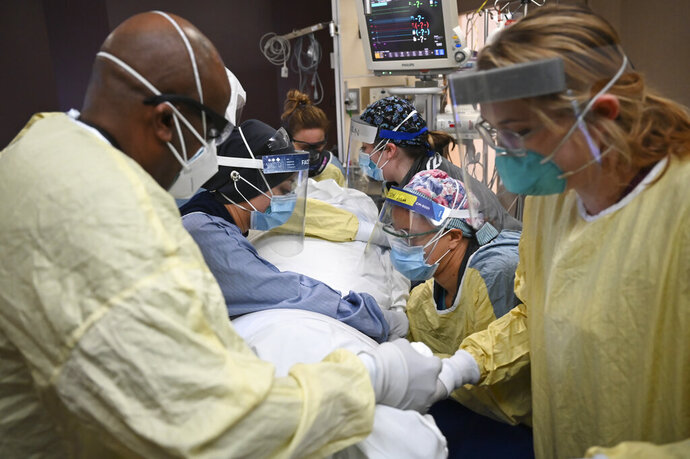
    California officials painted a dire picture as more than 22,000 residents test positive for the coronavirus each day, with about 12% inevitably showing up at hospitals in two to three weeks. They fear the spike could soon overwhelm intensive care units. Southern California’s Riverside University Health System Medical Center went so far as to open an ICU in a storage room.

    For the sixth day in a row and 11 of the last 12 days, North Carolina hit new highs in the number of people in the hospital with COVID-19. The patient count has doubled over the past month to nearly 2,400.

    In Georgia, the number of confirmed or suspected coronavirus infections has soared more than 70% in the past week, and hospitals are sounding alarms about their ability to absorb new COVID-19 patients.

    The state is averaging more than 5,000 confirmed or suspected cases per day. Even then, Georgia ranks only 44th among the states for the most new cases per capita in the past 14 days because infections are spreading so rapidly everywhere else.

    More than 2,500 COVID-19 patients were hospitalized Monday statewide. That’s below the summer peak of 3,200 but more than double the most recent low point in mid-October.

    “We are effectively reversing the gains we made after the summer surge,” said Amber Schmidtke, an epidemiologist who does a daily analysis of Georgia’s COVID-19 numbers.

    ___

    Pane reported from Boise, Idaho. La Corte reported from Olympia, Washington.

  • Louisiana Governor Talks Vaccine Plans At White House Event

    Louisiana Governor Talks Vaccine Plans At White House Event

    BATON ROUGE, La. (AP) — Meeting with other governors at a White House event Tuesday, Gov. John Bel Edwards said Louisiana expects to quickly administer its first two weeks of coronavirus vaccine doses to health care workers within 48 hours of receiving the shipments, which could begin this month.

    Louisiana is holding weekly logistics discussions to ready for distributing and administering a vaccine and expects to receive 39,000 doses in its first shipment week and 40,000 vaccines the following week, Edwards said during a talk with three other governors at President Donald Trump’s “vaccine summit.”

    “States, we’ve been in the business of doing this for a long time” distributing vaccines, Edwards said. “It’s not anything new. It’s just at a scale that we don’t typically have to do it at.”

    Louisiana’s governor was the lone Democrat during the livestreamed talk that also included governors from Tennessee, Texas and Florida. Edwards has been more conciliatory with the Trump administration than other Democrats, and his coronavirus response has won praise from the president and other White House officials. U.S. Health and Human Services Secretary Alex Azar, who moderated Tuesday’s discussion, said the governors were chosen because their states’ vaccine distribution plans were “real models for the rest of the country.”

    As vaccine availability nears, the Edwards administration’s plans for Louisiana’s first doses are coming into clearer focus, with a wider list of people eligible for the state’s earliest immunizations.

    Edwards had said hospital workers, nursing home residents and nursing home staff will be the first in line for coronavirus vaccines. But those categories are slightly broader than initially explained, and the list easily exceeds the estimated doses Louisiana is expected to receive in its early shipments — particularly since each person must receive two vaccine doses several weeks apart.

    Widespread vaccine availability isn’t expected until mid-2021 or later.

    No vaccine has been authorized for use in the United States, but the U.S. Food and Drug Administration is soon expected to allow emergency use of Pfizer’s candidate. Moderna’s vaccine also could be approved this month. If the FDA gives approval, there will be limited, rationed vaccine supplies before the end of the year.

    Governors have the ultimate say on how the vaccines will be distributed in their states.

    In addition to hospital workers who regularly encounter COVID-19 patients, Louisiana also will include EMS workers in that frontline category, according to the state health department. The hospital workers will be limited to facilities that have emergency departments, not every single hospital in Louisiana. Edwards said Tuesday this group of hospital and EMS staff will receive the first doses expected from the Pfizer shipments.

    The category of nursing home residents and staff, which will be next in line for immunization, will encompass people who live and work in other adult residential care facilities as well, such as sites that house people with developmental disabilities and state-run veterans homes. Nursing homes account for more than 40% of COVID-19 deaths in Louisiana, according to state data.

    The broader, complete list of Louisiana’s earliest vaccine recipients matches recommendations from a panel of scientific experts that advises the U.S. Centers for Disease Control and Prevention, said Aly Neel, spokesperson for the health department.

    The long-term care facilities have a combined 73,000 combined patients and staff, Neel said. The health department doesn’t have a figure for the number of EMS and hospital workers who will be eligible for a vaccine in the first phase, but Neel said it’s “tens of thousands” of people.

    Beyond the weekly logistics meetings, Edwards said Louisiana State University has run two “tabletop exercises” for the state’s vaccine collaborative, to walk through distribution and immunization scenarios.

    “Each one has been instructive because we realized we had some gaps that we needed to fill,” the governor said.

    The vaccine won’t come quick enough to stem Louisiana’s third surge in coronavirus cases and hospitalizations.

    Since Louisiana’s outbreak began in March, the health department has confirmed 6,363 Louisiana residents have died from the COVID-19 disease caused by the coronavirus. The number of people hospitalized with COVID-19 reached 1,516 Tuesday — more than double since last month and on track to exceed hospitalizations in the state’s last coronavirus spike in July.

    ___

    Follow AP’s coverage of the pandemic at https://apnews.com/hub/coronavirus-pandemic and https://apnews.com/UnderstandingtheOutbreak. Follow Melinda Deslatte on Twitter at http://twitter.com/melindadeslatte.

  • Coronavirus Deaths Surpass 4,000 In Mississippi

    Coronavirus Deaths Surpass 4,000 In Mississippi

    JACKSON, Miss. (AP) — The number of people who have died of coronavirus complications in Mississippi surpassed 4,000 on Tuesday, and health officials warned that there will be more fatalities and hospitalizations if residents continue having non-essential social gatherings.

    “We are seeing ongoing heavy case burdens — many, many cases, rising deaths and increasing strain on our health care system,” the state health officer, Dr. Thomas Dobbs, said during an online news conference.

    Dobbs said rising cases are attributable to social gatherings — funerals, parties, sporting events — where people are not following safety guidelines.

    “It’s not a joke — if we would just wear a mask in public and avoid nonessential social gatherings, the universe would be an entirely different place,” he said.

    Mississippi, with a population of about 3 million, has reported at least 4,017 deaths from COVID-19 as of Monday evening. There have been at least 167,926 total cases of coronavirus since the start of the pandemic, the Health Department said.

    That’s an increase of 1,732 cases and 56 deaths from numbers reported the day before. Forty-two deaths occurred between Nov. 24 and Monday.

    The number of coronavirus hospitalizations has peaked in recent days as numbers of new cases have surged. However, the number of intensive care unit patients has not yet reached the record highs of the summer, although most units are full, Dobb said. That’s something he expects will change soon.

    “Based on the number of the cases we’ve seen in the last week or so, we know that a large percentage of those are going to require hospital care,” Dobbs said.

    As it is, Dobbs said hospitals are unable to find healthcare facilities where they can transfer patients because everywhere is full.

    “I was talking to Jackson MED-COM, who manages patient transfers, and they can’t get patients anywhere,” Dobbs said.

    Dobbs said the health department continues to work with hospitals to try to meet the demand and find space in hospitals where patients can be housed in order to receive care.

    ___

    Leah Willingham is a corps member for the Associated Press/Report for America Statehouse News Initiative. Report for America is a nonprofit national service program that places journalists in local newsrooms to report on undercovered issues.

    ___

    Follow AP coverage of the pandemic at https://apnews.com/VirusOutbreak and https://apnews.com/UnderstandingtheOutbreak.

  • Millions Of Hungry Americans Turn To Food Banks For 1st Time

    Millions Of Hungry Americans Turn To Food Banks For 1st Time

    The deadly pandemic that tore through the nation’s heartland struck just as Aaron Crawford was in a moment of crisis. He was looking for work, his wife needed surgery, then the virus began eating away at her work hours and her paycheck.

    The Crawfords had no savings, mounting bills and a growing dread: What if they ran out of food? The couple had two boys, 5 and 10, and boxes of macaroni and cheese from the dollar store could go only so far.

    A 37-year-old Navy vet, Crawford saw himself as self-reliant. Asking for food made him uncomfortable. “I felt like I was a failure,” he says. “It’s this whole stigma … this mindset that you’re this guy who can’t provide for his family, that you’re a deadbeat.”

    Hunger is a harsh reality in the richest country in the world. Even during times of prosperity, schools hand out millions of hot meals a day to children, and desperate elderly Americans are sometimes forced to choose between medicine and food.

    Now, in the pandemic of 2020, with illness, job loss and business closures, millions more Americans are worried about empty refrigerators and barren cupboards. Food banks are doling out meals at a rapid pace and an Associated Press data analysis found a sharp rise in the amount of food distributed compared with last year. Meanwhile, some folks are skipping meals so their children can eat and others are depending on cheap food that lacks nutrition.

    Those fighting hunger say they’ve never seen anything like this in America, even during the Great Recession of 2007-2009.

    The first place many Americans are finding relief is a neighborhood food pantry, most connected to vast networks of nonprofits. Tons of food move each day from grocery store discards and government handouts to warehouse distribution centers, and then to the neighborhood charity.

    The Crawfords turned to the Family Resource Centers and Food Shelf, part of 360 Communities, a nonprofit 15 minutes from their apartment in Apple Valley, Minnesota. When needed, they receive monthly boxes of fresh produce, dairy, deli, meat and other basics — enough food to fill two grocery carts. If that runs out, they can get an emergency package to tide them over for the rest of the month.

    Crawford’s wife, Sheyla, had insisted they seek help; her hours had been cut at the day care center where she worked. At first, Crawford was embarrassed to go the food shelf; he worried he’d bump into someone he knew. He now sees it differently.

    “It didn’t make me a bad man or a terrible husband or father,” he says. “On the contrary, I was actually doing something to make sure that my wife and kids had … food to eat.”

    The history books are filled with iconic images of America’s struggles against hunger. Among the most memorable are the Depression-era photos of men standing in breadlines, huddled in long coats and fedoras, their eyes large with fear. An overhead sign reads: “Free Soup. Coffee and a Doughnut for the Unemployed.”

    This year’s portrait of hunger has a distinctively bird’s eye view: Enormous traffic jams captured from drone-carrying cameras. Cars inching along, each driver waiting hours for a box or bag of food. From Anaheim, California to San Antonio, Texas to Toledo, Ohio and Orlando, Florida and points in-between, thousands of vehicles carrying hungry people queued up for miles across the horizon. In New York, and other large cities, people stand, waiting for blocks on end.

    The newly hungry have similar stories: Their industry collapsed, they lost a job, their hours were cut, an opportunity fell through because of illness.

    Handwritten “closed” signs appeared on the windows of stores and restaurants soon after the pandemic arrived. Paychecks shrank or disappeared altogether as unemployment skyrocketed to 14.7 percent, a rate not seen in almost a century.

    Food banks felt the pressure almost immediately.

    Feeding America, the nation’s largest anti-hunger organization, scrambled to keep up as states locked down and schools — many providing free breakfasts and lunches — closed. In late March, 20 percent of the organization’s 200 food banks were in danger of running out of food.

    The problem with supply subsided, but demand has not. Feeding America has never handed out so much food so fast — 4.2 billion meals from March through October. The organization has seen a 60 percent average increase in food bank users during the pandemic: about 4 in 10 are first-timers.

    An AP analysis of Feeding America data from 181 food banks in its network found the organization has distributed nearly 57 percent more food in the third quarter of the year, compared with the same period in 2019.

    There will be no quick decline as the pandemic rages on, having already claimed more than 280,000 lives and infecting 14.7 million people across the nation.

    Feeding America estimates those facing hunger will swell to 1 in 6 people, from 35 million in 2019 to more than 50 million by this year’s end. The consequences are even more dire for children — 1 in 4, according to the group.

    Some states have been hit especially hard: Nevada, a tourist mecca whose hotel, casino and restaurant industries were battered by the pandemic, is projected to vault from 20th place in 2018 to 5th place this year in food insecurity, according to a report from Feeding America.

    In four states — Mississippi, Arkansas, Alabama and Louisiana — more than 1 in 5 residents are expected to be food insecure by year’s end, meaning they won’t have money or resources to put food on the table, the report said.

    In New Orleans one recent Saturday morning, Donna Duerr was waiting to pick up food in a drive-through donation — something that has become part of her routine since COVID-19 swept in last spring.

    Her husband was laid off from his job as a pipefitter and she’s unable to work, having undergone two surgeries — one on her spine, the other on her arm — in the last two months. She also has two grown children who’ve moved home since the pandemic began.

    “This is a hard thing to accept that you have to do this,” says a weary-sounding Duerr, her throat covered with bandages as the result of a recent operation. Every morning she monitors the local news for announcements of the next food donation; she tries to attend as many as she can, sometimes sharing the food with less-mobile neighbors.

    Duerr, 56, faces painful choices. “I either pay bills or get food,” she says, though these donations have brought some relief.

    Norman Butler is another first-timer. Shortly before Thanksgiving, he and his girlfriend, Cheryl, arrived at 3 a.m. at a drive-through food bank in a suburban New Orleans sports stadium. They joined a pre-dawn procession of mothers with their kids, the elderly and folks like him — unemployed workers.

    “You can see the look of uncertainty on their faces,” he says. “Everybody’s just worried about their next meal.”

    Before the pandemic, Butler, 53, flourished in the tourism-dominated city, working as an airport shuttle and limousine driver, a valet and hotel doorman. Since March, when the bustling streets turned silent, jobs in the city have been scarce.

    “A lot of people are in limbo,” he says. “The main thing we need is to get back to work.”

    ___

    Low-wage employees, many in the service industry, have borne the brunt of economic hardship. But the misery has reached deeper into the workforce.

    A September report commissioned by the Food Research & Action Center, an anti-hunger organization, found 1 in 4 of those reporting they didn’t have enough to eat typically had incomes above $50,000 a year before the outbreak.

    In Anchorage, Alaska, Brian and Airis Messick were coasting along in full-time jobs for companies that support the state’s oil industry. They were moving toward buying a house.

    When March arrived, everything unraveled.

    Brian, 28, the newest hire at an electrical wiring company, was laid off. Within a week, Airis, an office worker at an oil well testing firm, lost her job, too.

    Then it became a monthly game of deciding who gets paid first with their unemployment checks — the landlord or one of the many bills. They kept their car filled with gas in case they had to move.

    The Messicks and their 9-year-old son, Jayden, tried to survive on $50 to $75 a week because, she says, “that’s all we could squeeze.” They turned to a food bank for only the second time — they’d sought help after Hurricane Irma hit Florida in 2017.

    After that devastation, the Messicks, who’d met in Florida, decided to get a fresh start and move to Alaska, where Airis had grown up.

    Airis, who just turned 30, found work in August, ironically, at the state unemployment office. “I hear people’s stories all day,” she says. “I listen to moms cry about not having money to take care of their kids. My heart aches for the people who get denied.”

    Brian stays home with Jayden, who is autistic, helping him with school and driving him to appointments. Also part of the family are Cleo, a pit bull-lab mix, and Daisy, a bearded dragon.

    Airis earns too much for the family to receive state financial aid. Anchorage’s high cost-of-living, partly fueled by the expense of shipping goods to the nation’s most northern state, makes it harder to economize even with coupons and careful shopping.

    She says the family will continue to go to the food bank until the economy improves, which she expects won’t be soon.

    There should be better systems in place, she says, to help families.

    “I feel great knowing that we’re not alone, that we’re, you know, not out here being the only one suffering but,” she says, “it makes me mad to know my government failed us.”

    ___

    For communities of color, the pandemic has been a compound disaster with Blacks and Latinos reeling from disproportionately high rates of deaths, infections — and joblessness.

    Unemployment surged among Latinos to 18.9 percent this spring, higher than any other racial and ethnic group, according to federal statistics. Though it has since fallen, many are still struggling.

    More than 1 in 5 Black and Latino adults with children said as of July 2020 they sometimes or often did not have enough to eat, according to the commissioned report. That was double the rate of white and Asian households. It also found that women, households with children and people of color are at greatest risk of hunger.

    Abigail Leocadio, 34, first approached the nonprofit Society of St. Vincent de Paul in Phoenix, Arizona, during hard times about a decade ago. Her family rebounded and she completed training to become a phlebotomist, landing a job drawing blood specimens for a local lab.

    Leocadio was just 7 when her family brought her to the U.S. from their native Cuernavaca, Mexico. She currently is protected from deportation and has a work permit through the Deferred Action for Childhood Arrivals program, or DACA.

    When her husband, a restaurant cook, was laid off earlier in the pandemic, her income — barely more than the $11 state minimum wage — wasn’t enough to cover their expenses.

    Though they own a two-bedroom trailer, they pay $500 a month to rent the lot. Add to that as much as $450 in monthly electric bills and internet service so their four kids, 9 to 15, can attend class remotely. Before schools closed, the kids received free breakfasts and lunches on campus.

    “It has been hard feeding all the kiddos daily,” Leocadio said outside the trailer after a recent delivery from the charity of two boxes including canned tomatoes, dried beans, rice, breakfast cereal and the kids’ undisputed favorite: specialty Oreo cookies.

    The food, she says, provides less than half of what her family eats in four weeks, but significantly reduces their monthly bill to about $250. Before the pandemic, the family was saving to buy a house, but that money has been wiped out. Her husband, though, is back at work.

    “We always figure out things one way or another,” Leocadio says, though she’s worried about the surge in coronavirus cases and what lies ahead. “We really don’t know what’s going to happen.”

    Briana Dominguez had been depending on food pantries in the Chicago area since last fall to supplement her groceries. With two sons, ages 3 and 14, it was hard to keep up, even though she and her boyfriend both worked full-time.

    “I never thought it would be me,” she says of her visits to the Hillside Food Pantry in Evanston, Illinois. “But you do what you gotta do to survive.”

    A series of misfortunes brought them to a turning point.

    Dominguez had a miscarriage, and her father lost his job, due to the pandemic. So did her boyfriend, a trucker. In November her company, which sells ceiling tiles for hospitals and other business, eliminated her job with little notice.

    Dominguez, 34, who has a small severance, has decided to move to Georgia, where she has family and living costs are lower. Her boyfriend has found work as a customer service representative that he can do from anywhere, though it’s only $13 an hour. She traveled there in early December to scout job possibilities.

    “If I don’t do it now,” she says, “I’ll never do it.”

    ___

    While food banks have become critical during the pandemic, they’re just one path for combating hunger. For every meal from a food bank, a federal program called the Supplemental Nutrition Assistance Program, or food stamps, provides nine.

    Anti-hunger groups have lobbied Congress for a 15 percent increase in maximum food stamp benefits, A similar measure went a long way in digging the nation out of the Great Recession. A stimulus bill passed by the House this spring includes such a provision, but it has been bogged down in partisan squabbling.

    “Food banks and food pantries are doing great work,” says Luis Guardia, president of thee Food Research & Action Center. “But they simply cannot do enough to be something of the order of magnitude that we’re seeing right now. ”

    Many going to food pantries also are receiving food stamps, though eligibility varies among states.

    Aaron Crawford says the addition of $550 in food stamps the family started receiving last summer has made a significant difference in their lives.

    Others have discovered they couldn’t make it without food help, even with Social Security or other benefits.

    Phyllis Marder, 66, had both Social Security and unemployment when she arrived at the Hillside Food Pantry in Evanston, Illinois, where she’s lived in the same bungalow for 20 years.

    She’d been supplementing her benefits as an Uber drive, and when the pandemic hit, she helped workers bring home their computers and office gear. After that, she ferried medical and other front-line workers, but that came to an abrupt end with a COVID-19 scare.

    At first, Marder, didn’t tell anyone about visiting food pantries. Then she had a change of heart. “Keeping a secret makes things get worse,” she says, “… and makes me feel worse about myself, and so I decided that it was more important to talk about it.”

    Marder sometimes shared her food with neighbors and a panhandler on a freeway ramp. But she expects her food bank visits will end soon.

    In a few days, she starts a job — courtesy of the pandemic.

    She’ll be a coronavirus contract tracer, working remotely for a nearby county.

    ___

    As the year nears its end, Crawford is more confident.

    The months have been filled with setbacks and successes. Both Crawfords developed mild cases of COVID-19. Sheyla had hysterectomy surgery and was out work without pay for six weeks.

    But they’ve rebounded, too.

    Crawford has two part-time jobs, one at United Parcel Service, the second as a maintenance worker at a home for the elderly. His wife is back at work at the day care center. And their boys are receiving breakfast and lunch at their school that provides day care.

    The financial troubles that brought them to the food bank haven’t disappeared. They still have overdue bills and a car that needs repairs.

    But after many dark months, there have been moments of relief. This fall when the couple contracted COVID-19, their sons’ school sent meals and milk to help,

    And a friend had an 18-pound turkey delivered for a Thanksgiving feast. It was so big the Crawfords had to figure out how to find room for the leftovers in the refrigerator now stocked with food.

    A full fridge, Crawford says, is a welcome sight.

    “It just kind of puts you at ease,” he says. “There’s a sense of peace.”

    ___

    Sharon Cohen, a Chicago-based national writer for The Associated Press, can be reached at scohen@ap.org or on Twitter at http://twitter.com/SCohenAP. Contributing to this report were Martha Irvine in Evanston, Illinois; Rebecca Santana and Gerald Herbert in New Orleans; Anita Snow in Phoenix, Arizona; Mark Thiessen in Anchorage, Alaska; and data editor Meghan Hoyer.

  • Home Schooling Up As Mississippi School Enrollment Drops

    Home Schooling Up As Mississippi School Enrollment Drops

    JACKSON, Miss. (AP) — The Mississippi Department of Education said Monday that kindergarten enrollment has decreased and home schooling has increased this academic year, largely explaining the drop of more than 23,000 students enrolled in public schools.

    The department said in a news release that 442,627 students enrolled in Mississippi public schools as of Sept. 30. That compared to 465,913 a year earlier.

    It said kindergarten enrollment was down 4,345 from last year.

    The number of home-schooled students increased by 6,731. It was 18,758 last year and is 25,489 this year.

    Enrollment in Mississippi public schools has dropped by an average of 5,511 students each year over the past three years. The decrease this year coincides with uncertainty caused by the coronavirus pandemic, although the Department of Education news release did not cite reasons that families have chosen different paths for their children’s schooling.

    Public schools were forced to close for in-person instruction in the spring, during the final weeks of the previous academic year. This fall, they have offered a mix of in-person and online instruction.

    “Mississippi school districts have been working under extraordinary conditions to ensure all students in their communities are engaged in learning,” State Superintendent of Education Carey Wright said in the news release Monday. “Teachers, principals, districts leaders, school attendance officers and families have done a heroic job meeting the daily challenges of the pandemic.”

    The department said some students have moved out of state and some have enrolled in private schools.

    Mississippi school attendance officers have been working to ensure all compulsory school-age children whose families have not re-enrolled them in public schools are registered for some type of schooling. As of Thursday, the officers had validated the status of all but 1,156 students. The department said that figure is similar to previous years.

    Mississippi law requires children ages 6-17 to be enrolled in public or private school or a home-school program. Kindergarten is not required, but children enrolled in kindergarten are required to attend unless they are sick or have another valid reason for being absent.

  • Adams County board approves hiring COVID compliance officer

    Adams County board approves hiring COVID compliance officer

    NATCHEZ, Miss. – Adams County supervisors agreed today to hire a COVID officer to make rounds at local businesses to help ensure they’re making customers wear masks and are following other government directives to curb the spread of the coronavirus.


    Being described as an educational or communications officer, the person would not be authorized to issue tickets to violators of the mask law. He would simply tell business managers of the infractions and report them to the Adams County Sheriff’s Office and Natchez Police Department.


    “We’re not trying to arrest people. We’re just trying to make sure they’re following the guidelines,” said Adams County Emergency Management Director Brad Bradford.


    Natchez and Adams County since July have been under a locally imposed requirement for people to wear face coverings in public places where they congregate close together, but Gov. Tate Reeves has enacted a mandate that’s more expansive and restrictive, Bradford said.


    In addition to the masking requirement in Adams and 53 other Mississippi counties, the governor is limiting to 10 the number of people for inside gatherings where they can’t socially distance. The limit is 50 for outside get-togethers.

    Bradford is managing the city-county’s response to the public-health crisis.


    In asking Adams County supervisors to hire someone to patrol Natchez and Adams County businesses to ensure COVID compliance, Bradford said the person would warn managers and not customers about any infractions. He would keep track of violations and report them to city and county officials.


    All five county board members voted to hire the compliance officer, but Supervisor Wes Middleton recited his concerns about cracking down too hard on businesses that don’t enforce the mask-wearing mandate.


    “I do not think it’s businesses’ responsibility to police this,” said Middleton, who expressed hopes this will be “an education (effort), and that they act cordially and that nobody gets aggressive.”


    Adams County board President Ricky Gray pointed to the airborne virus’ rage in recent weeks as more people globally get infected. “It’s our job to protect our community by any means necessary,” Gray said.


    The state Department of Health on Monday reported a spike of 85 Adams County residents newly confirmed in the past week to be infected by the coronavirus. It’s killed 52 local residents since March. Of the 1,532 Adams County residents who’ve been diagnosed in the past nine months, 156 on Monday were classified as “active” COVID cases, according to Bradford. That’s up from 88 two weeks ago.


    Bradford said the county COVID compliance officer is to be paid $3,600 for four months on the job, with the county and city boards equally splitting the expenses. No name was mentioned at Monday’s county board meeting of who the officer would be or if someone has actually been selected.