Category: COVID-19

  • As Vaccines Arrive, Louisiana Audit Says Labs Slow To Report

    As Vaccines Arrive, Louisiana Audit Says Labs Slow To Report

    BATON ROUGE, La. (AP) — Louisiana started receiving shipments of a second coronavirus vaccine Monday, as a new audit said labs are taking so long to report COVID-19 data to the state and providing incomplete information that it’s often not useful for determining the scale of the virus outbreak.

    A week after doses of the Pfizer vaccine began shipping to states, another coronavirus vaccine — this one from Moderna — also became available for use. Gov. John Bel Edwards’s office said Louisiana received nearly 44,000 Moderna vaccine doses Monday and should get a total of 79,500 doses over the week, in addition to more than 28,000 Pfizer vaccine doses in this second week of shipments.

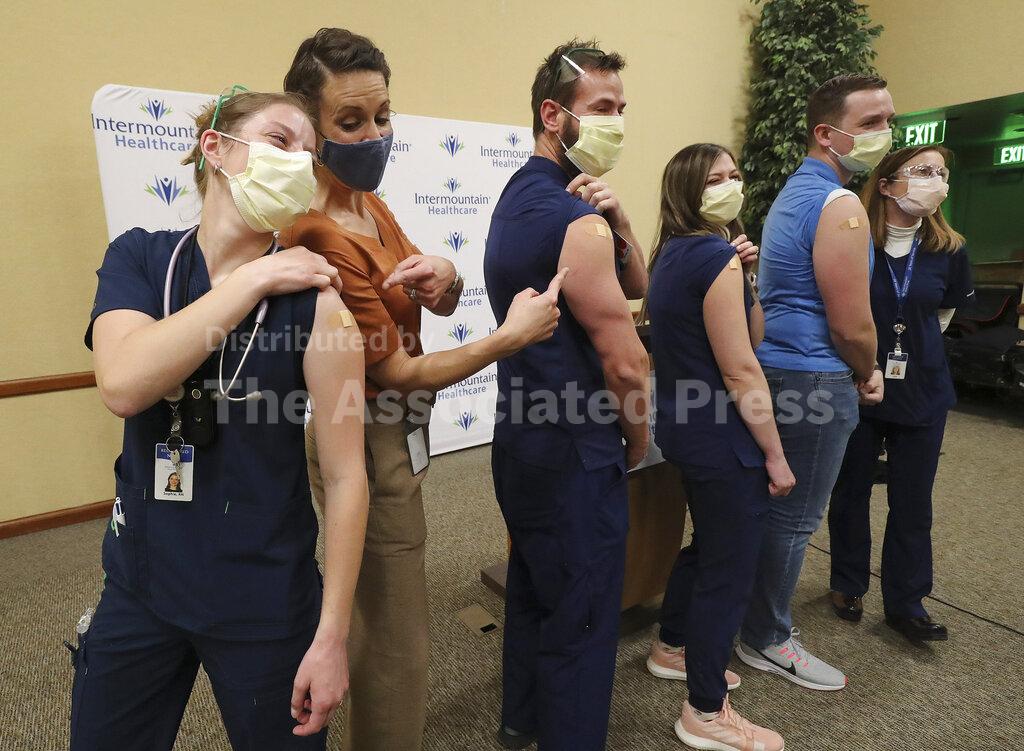
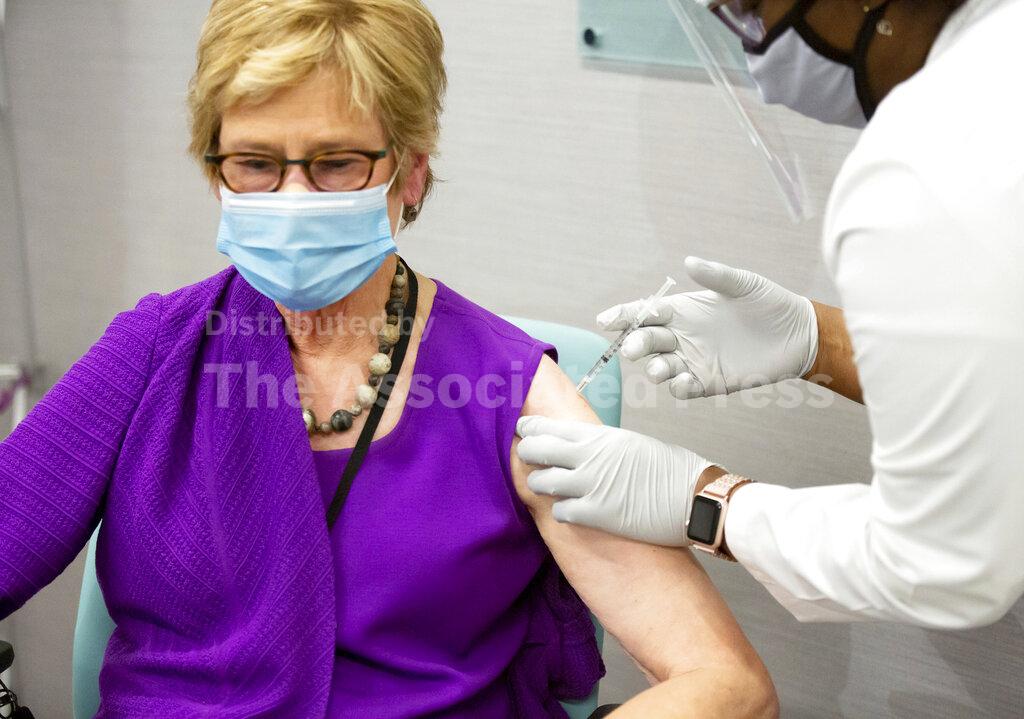
    More than half of the Moderna doses and all the Pfizer ones will go to hospital employees, EMS workers and firefighters, the Democratic governor’s office said. About 36,000 Moderna doses will be steered to people who live and work at nursing homes and other long-term care facilities. Those immunizations, to be handled by staff with CVS and Walgreens, won’t begin until Dec. 28.

    Widespread vaccination isn’t expected for months, and Louisiana is grappling with a third surge of coronavirus cases that is filling hospital beds and threatens to grow worse with holiday gatherings and travel. At least 6,775 deaths in Louisiana are confirmed from the COVID-19 disease caused by the virus, according to the state health department, a number that ticks upward every day.

    And a new audit is questioning whether the Edwards administration is receiving adequate testing information, which the governor uses to set restrictions on businesses and activities.

    The non-partisan report released Monday by Legislative Auditor Daryl Purpera’s office suggests the slow pace of laboratories’ reporting of virus test results could be hindering the health department’s ability to do adequate contact tracing and determine the rate of positive versus negative test results. Auditors said some COVID-19 tests are not being reported to the state at all.

    “The lack of complete test data could affect the reliability of the positivity rate and the state’s ability to make informed decisions during the pandemic,” the report says.

    Purpera’s office said it checked data Louisiana’s health department received through Oct. 1. Auditors found the agency had enough cross-checks to ensure numbers provided on the state’s website about coronavirus cases and deaths is not over-reported — dismissing a concern raised by some Republican lawmakers and other conservatives.

    But the auditor’s office said the lag time in lab reporting and the absence of some reporting entirely means Louisiana’s health department “cannot ensure that the data on the dashboard is complete” and could cause problems in determining what percentage of test results are positive.

    Edwards and public health leaders use the percentage of tests returning positive to determine how severe the virus outbreak is at any given time — and how intense they believe coronavirus restrictions should be to try to slow the spread of COVID-19.

    Health Secretary Courtney Phillips defended the department’s data analysis, saying it accounts for many issues raised by the auditor’s office and excludes data that could skew the positivity percentage. She called the state’s calculated positivity rate “as reliable as possible.”

    “The decisions made and public health guidance provided by reference to the positivity rate have properly informed the public and reduced disease transmission and spread,” Phillips wrote in response to the audit.

    The report says some labs did not submit test results to Louisiana’s health department within 24 hours, as required by the U.S. Centers for Disease Control and Prevention and the state, instead taking more than five days to submit more than 19% of positive COVID-19 tests.

    In addition, auditors found COVID-19 tests billed to Medicaid that were not included in state data; tests performed for the New Orleans Saints not reported to Louisiana, but to other states where players had permanent addresses; and labs that sent only partial test results.

    Of 592 labs reporting data, half of them only reported positive test results, auditors said. That could skew the state’s positivity rate higher, making it seem a community’s outbreak is more widespread than it is.

    Phillips said her agency excludes from its positivity calculations data from labs that are only submitting positive tests results.

    The health department “would agree with a characterization of the data not being ‘complete,’ but surely not unreliable,” Phillips wrote.

    ___

    Follow AP’s coverage of the pandemic at https://apnews.com/hub/coronavirus-pandemic and https://apnews.com/UnderstandingtheOutbreak. Follow Melinda Deslatte on Twitter at http://twitter.com/melindadeslatte.

  • La. High Court Returns Virus Rules Dispute To Lower Court

    La. High Court Returns Virus Rules Dispute To Lower Court

    BATON ROUGE, La. (AP) — The Louisiana Supreme Court on Monday sent a legal feud between Gov. John Bel Edwards and House Republicans over coronavirus restrictions back to district court, saying the judge ruled too quickly that the state law the GOP used to try to nullify the restrictions was unconstitutional.

    The justices wrote in their opinion that Baton Rouge Judge William Morvant should have held a full hearing on other issues raised in the lawsuit over the Democratic governor’s statewide mask mandate, business restrictions and crowd size limits aimed at combating the spread of COVID-19.

    “We find the district court acted prematurely in reaching the issue of constitutionality,” the justices wrote.

    The high court’s decision was a technical one that didn’t weigh in on the merits of the lawsuit, the governor’s regulations or the legal maneuver used by the House GOP. Instead, it requires Morvant to hold another hearing in the case.

    The Edwards administration intends to continue enforcing its COVID-19 rules while the case is pending. The governor has since issued tougher restrictions than those that drew objections from House Republicans, as Louisiana sees a spike in coronavirus cases.

    “Nothing about the Supreme Court’s decision changes the fact that the mitigation measures remain in place and that they remain as important as ever,” Edwards’ chief lawyer, Matthew Block, said in a statement.

    In October, House Speaker Clay Schexnayder and 64 other GOP lawmakers in the House — represented by Republican Attorney General Jeff Landry — invoked a never-before-used process in Louisiana law that allows a majority of legislators in either the House or Senate to sign a petition to jettison a governor’s emergency declaration.

    Edwards sued Schexnayder and lawmakers. The governor argued the petition process used by House Republicans violated the Louisiana Constitution, and he said the lawmakers also didn’t follow the law’s requirement that they consult with the state’s “public health authority” before issuing the petition.

    Morvant ruled on Nov. 12 for the governor, saying the petition was unconstitutional because Edwards’ emergency rules have the force of law and couldn’t be blocked by an action of one legislative body.

    The Louisiana Supreme Court said that decision was premature. The justices said Morvant should have first considered Edwards’ argument that the House GOP didn’t consult with the public health authority as required.

    “For well over a century, this court has consistently refrained from entertaining questions as to the constitutionality of laws except where that determination is essential to the decision,” the court wrote.

    Landry praised the ruling as showing that “Louisiana is not a dictatorship.”

    “No elected official, including the governor, can ignore or reject the checks and balances that underpin our government,” the attorney general said in a statement.

    Block said he’s confident the Supreme Court will uphold the governor’s orders when it hears the case on its merits.

    One of Louisiana’s seven Supreme Court justices, John Weimer, disagreed with his colleagues. He said both the House speaker and the governor have requested that the court decide the constitutional question, and he said the context of the current coronavirus public health emergency raises the urgency of the issue.

    “Given the context and conditions under which this case arises, I believe this court has a responsibility to address the constitutional issue presented and resolve it: a task squarely within this court’s province and duty,” Weimer wrote in his dissent.

    ___

    Follow AP’s coverage of the pandemic at https://apnews.com/hub/coronavirus-pandemic and https://apnews.com/UnderstandingtheOutbreak. Follow Melinda Deslatte on Twitter at http://twitter.com/melindadeslatte.

  • Dogs Ease Pandemic Isolation For Nursing Home Residents

    Dogs Ease Pandemic Isolation For Nursing Home Residents

    Eileen Nagle sees her family in video chats and drive-by visits, but that hasn’t made up for the lack of warm hugs in the nine months since the pandemic led her nursing home to shut its doors to visitors.

    Enter Zeus.

    “Zeus is a friendly little snowball, very happy,” said Nagle, 79, after the peppy bichon frise paid a visit to her room at Hebrew Home at Riverdale, overlooking the Hudson River in the Bronx. “Petting and playing with the dogs breaks up the day and gets you to forget about yourself for a while.”

    Hebrew Home has had a pet therapy program for 20 years; tiny Zeus and gentle giant Marley the Great Dane are the current snugglers in residence. Now, the activities department is expanding the canine corps with two new recruits in training to give residents more of the affectionate physical contact that has become so scarce and precious in the coronavirus era.

    “It’s uplifting to have Zeus come and visit me, especially with COVID and being restricted to my room,” said 80-year-old Jeff Philipson, beaming as he ran his fingers through Zeus’ silky white fur while the dog clambered on his bed. “I talk on the phone every day with my daughter and my son, but that’s as good as it can get for now.”

    When the pandemic lockdown began in March, dog therapy was suspended along with most other activities at the nursing home.

    “I decided we needed to re-energize the pet visiting program since there’s no outside visitation allowed,” said Daniel Reingold, founder of the pet therapy program and president and CEO of RiverSpring Health, nonprofit operator of 103-year-old Hebrew Home. “They’ve been on the floors bringing happiness and unconditional love to residents and staff alike.”

    The dogs belong to staff members who bring them to work every day. But the program doesn’t allow just any dog.

    “It has to be a combination of the right owner, right dog and right temperament,” said Reingold, whose own rescue dog, Kida, is one of the new recruits. “The dogs have to be assessed, follow basic commands and be able to cope with wheelchairs, elevators, medication carts and all the other things they’ll encounter on a floor.”

    Cats are also used in the pet therapy program — but only robotic ones. Hebrew Home has numerous lifelike animatronic cats that purr and meow as residents hold them in their laps and stroke their fur. “The cats are especially soothing to people with dementia,” said Catherine Farrell, director of therapeutic activities, primary dog handler and owner of Marley.

    “The love of an animal is incredible,” Farrell said. “It releases endorphins, reduces blood pressure, reduces anxiety. For people here who had animals in their life history, seeing dogs triggers memories and opens communication.”

    While Farrell has to remain 6 feet away from residents and wear a face mask and plastic shield, Marley can plop his head on their beds as they pet him.

    “To break through the social distancing barrier is really important,” Farrell said. “It’s one of the only ways they’re able to touch another living being and gain satisfaction from that physical connection.”

    But it’s not just about petting a dog, said Olivia Cohen, dog handler and assistant director of the therapeutic activities program. For some residents, the interaction can break down barriers and open communication and emotional expression, she said.

    Cohen recalls one woman who was struggling with anxiety and having trouble coping with the new environment when she moved into the home. “Nothing would get through to her to help her,” Cohen said. “But when I brought the dog to her, her complete affect changed from crying to having her face light up and telling stories about her own experiences.”

    For resident Elizabeth Pagan, dog visits are a welcome respite from the isolation she has endured since she’s been restricted to FaceTime visits with her children, grandchildren and terrier-dachshund mix Ruby.

    “It means a lot to me, makes me feel good when I pet the dogs,” said Pagan, who’s recovering from a stroke. “My favorite is Marley. He gives me a lot of comfort.”

    ——-

    “One Good Thing” is a series that highlights individuals whose actions provide glimmers of joy in hard times — stories of people who find a way to make a difference, no matter how small. Read the collection of stories at https://apnews.com/hub/one-good-thing

  • Congress Rushes Toward Vote On $900B COVID Relief Bill

    Congress Rushes Toward Vote On $900B COVID Relief Bill

    WASHINGTON (AP) — After months of Washington gridlock, Congress is set to vote on a $900 billion pandemic relief package, finally delivering long-sought cash to businesses and individuals as well as resources to vaccinate a nation confronting a frightening surge in COVID-19 cases and deaths.

    Lawmakers tacked on thousands of pages of other end-of-session business in a burst of legislation as Capitol Hill is set to close down for the year.

    The relief package, agreed to on Sunday and finally released in bill form Monday afternoon, remained on track for votes in Congress on Monday. It would establish a temporary $300 per week supplemental jobless benefit and a $600 direct stimulus payment to most Americans, along with a new round of subsidies for hard-hit businesses and money for schools, health care providers and renters facing eviction.

    The 5,593-page legislation — the longest bill in memory and probably ever — came together Sunday after months of battling, posturing and postelection negotiating that reined in a number of Democratic demands as the end of the congressional session approached. President-elect Joe Biden was eager for a deal to deliver long-awaited help to suffering people and a boost to the economy, even though it was less than half the size that Democrats wanted in the fall.

    Biden praised the bipartisan spirit that produced the measure, which he called “just the beginning.”

    Treasury Secretary Steven Mnuchin, a key negotiator, said on CNBC Monday morning that the direct payments would begin arriving in bank accounts next week.

    Democrats acknowledged it wasn’t as robust a relief package as they initially sought — or, they say, the country needs. House Speaker Nancy Pelosi vowed more to come once Biden takes office.

    “It is a first step,” she said. “We have to do more.”

    The final agreement would be the largest spending measure yet. It combined $900 billion for COVID-19 relief with a $1.4 trillion governmentwide funding plan and lots of other unrelated measures on taxes, health, infrastructure and education. The governmentwide funding would keep the government open through September.

    Passage neared as coronavirus cases and deaths spiked and evidence piled up that the economy was struggling. The legislation had been held up by months of dysfunction and bad faith. But talks turned serious in recent days as lawmakers on both sides finally faced the deadline of acting before leaving Washington for Christmas.

    The final bill bore ample resemblance to a $1 trillion summertime package put together by Senate Republican leaders, which failed to excite many GOP senators. As talks stalemated, Republicans pulled back to a smaller, $500 billion position that omitted direct payments, supplemental unemployment benefits and food aid, among other priorities.

    Negotiations only turned serious in recent weeks as failure was no longer an option and as time was running out.

    On direct payments, the bill provides $600 to individuals making up to $75,000 per year and $1,200 to couples making up to $150,000, with payments phased out for higher incomes. An additional $600 payment will be made per dependent child, similar to the last round of relief payments in the spring.

    The $300 per week bonus jobless benefit was half the supplemental federal unemployment benefit provided under the $1.8 billion CARES Act in March and would be limited to 11 weeks instead of 16 weeks. The direct $600 stimulus payment was also half the March payment, subject to the same income limits in which an individual’s payment phases out after $75,000.

    The CARES Act was credited with keeping the economy from falling off a cliff during widespread lockdowns in the spring, but Republicans controlling the Senate cited debt concerns in pushing against Democratic demands.

    Progress came after a bipartisan group of pragmatists and moderates devised a $908 billion plan that built a middle-ground position that the top four leaders of Congress — the GOP and Democratic leaders of both the House and Senate — used as the basis for their talks. The lawmakers urged leaders on both sides to back off of hardline positions.

    Republicans were most intent on reviving the Paycheck Protection Program with $284 billion, which would cover a second round of PPP grants to especially hard-hit businesses. Democrats won set-asides for low-income and minority communities.

    After the announcement, Schumer and Pelosi, D-Calif., announced additional details, including $25 billion in rental assistance, $15 billion for theaters and other live venues, $82 billion for local schools, colleges and universities, and $10 billion for child care.

    The governmentwide appropriations bill was likely to provide a last $1.4 billion installment for Trump’s U.S.-Mexico border wall as a condition of winning his signature.

    The bill was an engine to carry much of Capitol Hill’s unfinished business, including an almost 400-page water resources bill that targets $10 billion for 46 Army Corps of Engineers flood control, environmental and coastal protection projects. Another addition would extend a batch of soon-to-expire tax breaks, such as one for craft brewers, wineries and distillers.

    It also would carry numerous clean energy provisions, $7 billion to increase access to broadband, $4 billion to help other nations vaccinate their people, $14 billion for cash-starved transit systems, Amtrak and airports.

    Democrats failed in a months-long battle to deliver direct fiscal relief to states and local governments, but they successfully pressed for $22 billion to help states and local governments with COVID-19-related health expenses like testing and vaccines.

    The end-of-session rush also promised relief for victims of shockingly steep surprise medical bills, a phenomenon that often occurs when providers drop out of insurance company networks.

  • MEMA Director Hospitalized With COVID-19 Complications

    MEMA Director Hospitalized With COVID-19 Complications

    PEARL, Miss. (AP) — Mississippi’s top emergency manager is hospitalized because of COVID-19 complications.

    The Mississippi Emergency Management Agency said in a statement Sunday that Director Greg Michel has been admitted to a hospital with pneumonia, a complication from is infection with COVID-19.

    Michel tested positive for the coronavirus on Dec. 9.

    Spokesperson Malary White said the agency continues to “operate as usual while taking every precaution necessary to protect our staff.”

    White described Michel as remaining “in good spirits.”

    Michel was named to lead the agency by Gov. Phil Bryant in 2018 after then-director Lee Smithson resigned. Gov Tate Reeves, a Republican like Bryant, retained Michel.

    Michel is a retired colonel who commanded Camp Shelby in Hattiesburg from 2015 to 2017.

  • US Experts Debate: Who Should Be Next In Line For Vaccine?

    US Experts Debate: Who Should Be Next In Line For Vaccine?

    NEW YORK (AP) — Deciding that health care workers and nursing home residents should be first in line for the initial, limited supplies of COVID-19 shots wasn’t that hard a call. Now U.S. health officials have to determine who should be next.

    How high a priority, for example, should senior citizens, teachers, transit workers and supermarket employees get in the next few months as more vaccine becomes available?

    A federal panel of vaccination experts takes up that question at an emergency meeting this weekend. Its guidance is not binding, and no matter what it decides, there will be differences from state to state.

    The panel members are leaning toward putting “essential workers” next up because people like bus drivers, grocery store clerks and others who perform vital jobs that can’t be done from home are the ones getting infected most often. That is also where concerns about racial inequities in the crisis are most apparent. Many essential workers are Black and Hispanic.

    But other experts say people 65 and older should be next, along with people with certain medical conditions. Those are the ones who are dying at the highest rates, they say.

    The panel is scheduled to vote on the proposal Sunday.

    “I think we know this isn’t going to be perfect. We don’t have vaccine for everyone right away, so we’re going to have to make difficult decisions,” said Claire Hannan, executive director of an organization that represents managers of state vaccination programs.

    If essential workers are indeed next up, states already have different ideas about who among them should be closer to the front of the line.

    In Nevada, for example, teachers and child care staff will be ahead of public transportation workers, according to the state’s current plan. Then come agriculture and food workers, and then retail and utility employees.

    In South Dakota, teachers could get access before those working in food and transportation. In Arkansas, the essential workers list includes teachers, prison guards, police officers, meatpacking plant workers and mayors.

    The advice of the expert panel — the Advisory Committee on Immunization Practices — is almost always endorsed by the U.S. Centers for Disease Control and Prevention. That’s what happened earlier this month, when the group said top priority should be given to health care workers and residents of long-term care homes for the 20 million initial vaccinations this month.

    But it’s not clear things will go the same way in the next phase. CDC Director Dr. Robert Redfield has said he believes priority should be given to people 70 and older who live with children or grandchildren.

    The advisory panel’s chairman, Dr. Jose Romero, told The Associated Press he was aware of Redfield’s comments but had not spoken directly with him about it.

    Redfield declined to say if he would prioritize senior citizens over essential workers even if the panel recommended the reverse. “I look forward to listening to the advisory group’s discussion, and to receiving its recommendation for consideration,” he said in an email to the AP.

    Most states followed the panel’s recommendation that health care workers and nursing home residents get the very first doses. But there have been a few exceptions.

    Utah said long-term care residents should be in line behind health care workers, instead of sharing the front with them. Massachusetts included prisoners and homeless people in the first tier. Nevada, New Hampshire and Wyoming did the same for police officers.

    State-to-state variations are likely to increase in the next-priority groups, said the Kaiser Family Foundation’s Jennifer Kates, who has been analyzing state vaccination plans.

    “I think we’re going to see states falling out in different ways,” with some putting older people ahead of essential workers, Kates said.

    Things could get messy. For example, some experts said that if one state prioritizes certain essential workers and a neighboring state decides to give primacy to seniors, people might try crossing state lines in hopes of getting vaccinated.

    “That’s one of the issues of not having a fully national plan of immunization,” said Romero, who also is the head of the Arkansas state health department.

    The proposal before the advisory committee relies on a broad definition of essential workers set in August by the U.S. Department of Homeland Security. It counts hundreds of different jobs as part of the critical infrastructure workforce, including first responders, teachers, communications technicians, weather forecasters, sewage treatment plant employees and people who work in animal shelters.

    According to estimates presented to the advisory committee, as many as 87 million people not working in health care can be counted as essential employees.

    The nation has more than 53 million senior citizens. The CDC also counts more than 100 million Americans as having underlying medical conditions that put them at higher risk for severe COVID-related illness, though there is overlap between the two groups.

    Trade associations and worker groups have been sending emails and other communications to the committee, arguing that they should be given priority.

    Julie Russell, representing the Coronado Unified School District in California, urged that teachers and other school workers be prioritized. “We ask that you recognize the importance of the safety of our staff and how many young lives each of us touch,” she said at a meeting last weekend of the panel.

    Dr. Charles Lee of the American College of Correctional Physicians pushed for those who work in jails and prisons, plus inmates.

    Romero said the committee is likely to discuss ways to help states narrow down which essential workers should go first. For example, people who are considered essential but can work from home might be placed further down the list than those who can’t stay 6 feet away from others while on the job.

    What about the staff of the Atlanta-based CDC? In a memo to employees that was obtained by the AP, Redfield said the agency will not get a direct allotment of vaccine. However, Georgia’s plan allows for certain public health and lab workers to be in the state’s highest priority group. Some CDC staff also work at hospitals and clinics, and may be prioritized with staff at those places.

    Of course, when more vaccine comes out, “the issue of priority becomes less important,” said Dr. Eric Toner, a Johns Hopkins University scientist who has written about possible vaccination prioritization frameworks.

    “The bottom line is we just need to get as many people vaccinated as quickly as we can,” he said.

    ___

    AP writers Candice Choi and Jason Dearen in New York City and Jonathan Poet in Philadelphia contributed to this report.

    ___

    The Associated Press Health and Science Department receives support from the Howard Hughes Medical Institute’s Department of Science Education. The AP is solely responsible for all content.

  • Shutdown Deadline Looms Over COVID-19 Relief Talks

    Shutdown Deadline Looms Over COVID-19 Relief Talks

    WASHINGTON (AP) — Bearing down on a midnight shutdown deadline, congressional negotiators on an almost $1 trillion COVID-19 economic relief package remained committed to sealing an agreement Friday even as hopes for a midday announcement passed.

    Senate Majority Leader Mitch McConnell, R-Ky., said Friday morning he was “even more optimistic now than I was last night,” but Democrats launched a concerted campaign to block an effort by Republicans to rein in emergency Federal Reserve lending powers. They said the GOP proposal would deprive President-elect Joe Biden of crucial tools to manage the economy.

    The pressure was on.

    Government funding lapses at midnight Friday, and a partial, low-impact shutdown would ensue if Congress failed to pass a stopgap spending bill before then. House leaders said they would speed through such a bill to buy a few days’ time to pass any broad deal, but Senate passage of the temporary measure was by no means certain.

    Senators including Josh Hawley, R-Mo., were demanding to see what’s in the bigger COVID-19 package before they would agree to the stopgap bill, keeping the pressure on if the COVID-19 talks haven’t borne fruit by the deadline.

    Democrats came out swinging at a key obstacle: a provision by conservative Sen. Pat Toomey, R-Pa., that would close down more than $400 billion in potential Federal Reserve lending powers established under a relief bill in March. Treasury Secretary Steven Mnuchin is shutting down the programs at the end of December, but Toomey’s language goes further, by barring the Fed from restarting the lending next year, and Democrats say the provision would tie Biden’s hands and put the economy at risk.

    “As we navigate through an unprecedented economic crisis, it is in the interests of the American people to maintain the Fed’s ability to respond quickly and forcefully,” said Biden economic adviser Brian Deese. “Undermining that authority could mean less lending to Main Street businesses, higher unemployment and greater economic pain across the nation.”

    The key Fed programs at issue provided loans to small and mid-sized businesses and bought state and local government bonds, making it easier for those governments to borrow, at a time when their finances are under pressure from the pandemic.

    The Fed would need the support of the Treasury Department to restart the programs, which Biden’s Treasury secretary nominee, Janet Yellen, a former Fed chair, would likely provide. Treasury could also provide funds to backstop those programs without congressional approval and could ease the lending requirements. That could encourage more lending under the programs, which have seen only limited use so far.

    The battle obscured progress on other elements of the hoped-for agreement After being bogged down for much of Thursday, negotiators turned more optimistic, though the complexity of finalizing the remaining issues and drafting agreements in precise legislative form was proving daunting.

    The central elements appeared in place: more than $300 billion in aid to businesses; a $300-per-week bonus federal jobless benefit and renewal of soon-to-expire state benefits; $600 direct payments to individuals; vaccine distribution funds and money for renters, schools, the Postal Service and people needing food aid.

    Lawmakers were told to expect to be in session and voting this weekend.

    The delays weren’t unusual for legislation of this size and importance, but lawmakers are eager to leave Washington for the holidays and are getting antsy.

    The pending bill is the first significant legislative response to the pandemic since the landmark CARES Act passed virtually unanimously in March, delivering $1.8 trillion in aid, more generous $600 per week bonus jobless benefits and $1,200 direct payments to individuals.

    The CARES legislation passed at a moment of great uncertainty and unprecedented shutdowns aimed at stopping the coronavirus, but after that, many Republicans focused more on loosening social and economic restrictions as the key to recovery instead of more taxpayer-funded aid.

    Now, Republicans are motivated chiefly to extend business subsidies and some jobless benefits, and provide money for schools and vaccines. Democrats have focused on bigger economic stimulus measures and more help for those struggling economically during the pandemic. The urgency was underscored Thursday by the weekly unemployment numbers, which revealed that 885,000 people applied for jobless benefits last week, the highest weekly total since September.

    The emerging package falls well short of the $2 trillion-plus Democrats were demanding this fall before the election, but B iden is eager for an aid package to prop up the economy and help the jobless and poor. While he says more economic stimulus will be needed early next year, some Republicans say the current package may be the last.

    “If we address the critical needs right now, and things improve next year as the vaccine gets out there and the economy starts to pick up again, you know, there may be less of a need,” said Sen. John Thune of South Dakota.

    Most economists, however, strongly support additional economic stimulus as necessary to keep businesses and households afloat through what is widely anticipated to be a tough winter. Many forecast the economy could shrink in the first three months of 2021 without more help. Standard & Poor’s said in a report Tuesday that the economy would be 1.5 percentage points smaller in 2021 without more aid.

    The details were still being worked out, but the measure includes a second round of “paycheck protection” payments to especially hard-hit businesses, $25 billion to help struggling renters with their payments, $45 billion for airlines and transit systems, a temporary 15% or so increase in food stamp benefits, additional farm subsidies, and a $10 billion bailout for the Postal Service.

    The emerging package would combine the $900 billion in COVID-19 relief with a $1.4 trillion government-wide funding bill. Then there are numerous unrelated add-ons that are catching a ride, known as “ash and trash” in appropriations panel shorthand.

    A key breakthrough occurred earlier this week when Democrats agreed to drop their much-sought $160 billion state and local government aid package in exchange for McConnell abandoning a key priority of his own — a liability shield for businesses and other institutions like universities fearing COVID-19 lawsuits.

    __

    AP Economics Writer Christopher Rugaber contributed.

  • The Latest: Coronavirus Vaccine Provided To US Supreme Court

    The Latest: Coronavirus Vaccine Provided To US Supreme Court

    WASHINGTON — The justices on the U.S. Supreme Court are being provided with doses of the coronavirus vaccine.

    View all (12)

    That is according to a letter by Capitol Physician Brian Monahan, which says the court, along with Congress and executive branch agencies are being given a limited supply of doses “for continuity of government operations.”

    The doses are being provided under a directive by President Donald Trump that established continuity of government as a reason for vaccine prioritization. The Supreme Court and the other branches of government are supposed to be treated “in parallel.”

    ___

    THE VIRUS OUTBREAK:

    Health experts are convening to discuss the Moderna vaccine data. The panel of physicians and medical researchers is expected to endorse it, followed by the FDA’s OK soon after. A Pfizer vaccine got the go-ahead last week.

    French president Macron tests positive for the coronavirus and is self-isolating. Macron recently met with numerous European leaders. The French and Spanish prime ministers are among many top officials in quarantine.

    ___

    Follow AP’s coverage at https://apnews.com/hub/coronavirus-pandemic and https://apnews.com/UnderstandingtheOutbreak

    ___

    HERE’S WHAT ELSE IS HAPPENING:

    SEOUL, South Korea — South Korea has reported 1,062 new cases of coronavirus infections, its third straight day above 1,000 as the virus continues to slam the greater capital area where hospital beds are in short supply.

    The cases reported Friday brought the national caseload to 47,515. There have been 645 deaths from COVID-19.

    More than 760 of the new cases were in the densely populated Seoul metropolitan area, where health workers are struggling to stem transmissions.

    Health officials have raised alarm about a looming shortage in hospital beds and intensive care units.

    The viral resurgence has put pressure on the government to raise social distancing restrictions to maximum levels, something policymakers have resisted for weeks out of economic concerns.

    ___

    SALT LAKE CITY — Utah state health officials have reported 30 new deaths from COVID-19, a new single day high that follows a monthlong surge in cases.

    The tally for Thursday eclipsed the previous 24-hour high of 21 deaths reported Nov. 24.

    A total of 1,126 people have died in Utah from COVID-19 since the pandemic began.

    State health officials say most of the new deaths were people 65 and over.

    ___

    SYDNEY — Australian officials say the number of coronavirus infections from a cluster in Sydney’s northern coastal suburbs is continuing to grow.

    The chief health officer for New South Wales state says testing on Thursday and early Friday found 28 new infections. Several had been at the Avalon Beach R.S.L. Club on Dec. 11 and a nearby lawn bowling club called Avalon Bowlo on Dec. 13.

    More than 250,0000 residents of Sydney’s Northern Beaches Local Government Area were advised Thursday to work from home and remain at home as much as possible for three days. Others were advised to avoid traveling to the area.

    ___

    RIO DE JANEIRO — Brazil’s Supreme Court says coronavirus vaccination can be made mandatory, delivering a blow to the nation’s nascent anti-vaccine movement.

    However, the court also says Brazilians may not be vaccinated against their will. A court statement says Thursday’s ruling does pave the way for state and municipal governments to approve laws imposing fines or restrictive measures for anyone refusing to take a vaccine.

    President Jair Bolsonaro has repeatedly said he will not take any vaccine and opposes mandatory immunization. He has also sown skepticism about potential side effects.

    Opinion polls have indicated a growing resistance to vaccination, with about one-fifth of Brazilians surveyed by pollster Datafolha this month saying they don’t intend to get a shot. That is more than double the percentage four months earlier.

    Brazil’s health regulator Anvisa has yet to approve any shot for mass immunization.

    ___

    ATLANTA — Georgia Gov. Brian Kemp says the state will keep paying for extra nurses to assist hospitals, nursing homes and other health care facilities that have struggled to find staff and keep up with demand because of the coronavirus pandemic.

    Kemp said Thursday Georgia will commit as much as $70 million to pay staffing agencies that are providing extra nurses through March. Georgia is on track to spend $250 million on the program this year.

    The state has spent federal coronavirus aid on the program so far. Kemp hopes the federal government will free up more money to cover the costs, but spokesperson Cody Hall says Georgia will use state money if no federal money is available.

    Hospitals and nursing homes have struggled with staffing as some employees are infected or quarantined.

    ___

    LOUISVILLE, Ky. — Kentucky Gov. Andy Beshear has announced 54 deaths from COVID-19 in the previous 24 hours state’s deadliest day since the pandemic began. as he announced a record 54 new coronavirus deaths. The state also reported 3,349 new cases of COVID-19.

    Kentucky’s previous one-day record of 38 deaths was Dec. 2. The state has reported more than 3,300 confirmed or probable coronavirus deaths since the pandemic began.

    The state public health commissioner is urging people to limit social gatherings during the holiday season in order to slow the spread of the virus. Residents are recommended to limit travel and limit the size of gatherings to two households and no more than eight people.

    ___

    SAN DIEGO — A California judge says all restaurants in San Diego County can resume on-site dining with safety protocols, marking a setback to the governor’s stay-at-home order to slow the spread of the coronavirus.

    San Diego Superior Court Judge Joel Wohlfeil made that clear Thursday in explaining his ruling a day earlier protecting two strip clubs from pandemic restrictions. He says that decision also covers the thousands of restaurants in the county of 3 million people.

    County officials suspended enforcement of restrictions barring indoor and outdoor dining and live entertainment after the Wednesday ruling. But they requested Thursday’s hearing to get clarification from the judge about the scope of his decision.

    ___

    WASHINGTON — Senate Majority Leader Mitch McConnell says he is going to get vaccinated against the coronavirus in the next few days.

    The Kentucky Republican says the Capitol physician informed him that he is eligible to be among the first vaccinated “because of government continuity requirements.”

    Unlike Speaker of the House Nancy Pelosi, McConnell is not in the line of succession for the presidency but as majority leader he is in charge of running the Senate.

    McConnell says that as a polio survivor, he is especially aware of the “extraordinary promise of hope” that vaccines offer. He says he will continue to wear a mask and follow other health guidelines after being vaccinated.

    ___

    BATON ROUGE, La. — The number of people in Louisiana hospitalized with COVID-19 has reached heights exceeding the state’s summer surge of the disease that can be caused by the coronavirus.

    The more than 1,600 hospitalizations announced Thursday mutes some excitement surrounding this week’s first virus vaccinations.

    Dr. Catherine O’Neal is an infectious disease expert at Our Lady of the Lake Regional Medical Center. She says the Baton Rouge hospital admitted the most COVID-19 patients over the previous 24 hours than it has seen in a similar period since July.

    O’Neal says: “Our hospital’s full. Every hospital in the state is full.”

    Gov. John Bel Edwards says at least 7,000 of Louisiana’s hospital workers have received vaccines so far.

    ___

    LITTLE ROCK, Ark. — Arkansas’ coronavirus infections in the latest 24 hours rose above 3,000 for the first time in the pandemic.

    The Department of Health reported 3,039 new cases Thursday, raising the state’s total to 194,543. Officials said 38 people died of COVID-19, increasing the pandemic’s toll to 3,112.

    Gov. Asa Hutchinson says the new high in cases is “a milestone we did not want to reach.”

    Space in Arkansas’ intensive care units continued to shrink, with only 46 of its 1,154 ICU beds unused. About a quarter of the state’s 9,037 hospital beds were available.

    ___

    ATHENS, Greece — NBA basketball star Giannis Antetokounmpo has appeared in a commercial in his native Greece, released ahead of Christmas to urge people to observe public safety measures during the pandemic.

    “All victories start with defense,” the Milwaukee Bucks star said, speaking in Greek in the minute-long spot edited in black and white.

    The ad features photographs of Antetokounmpo growing up in an Athens neighborhood, the son of struggling Nigerian immigrants, and scenes from his participation in the games with the Greek national basketball team.

    “I have learned in life to look my opponent in the eye. But for the first time in my life, I’m playing against an invisible opponent,” the player said in the commercial. “I can’t see it but it’s there. That’s how I see the virus, Covid. Now we have to play defense.”

    The ad was launched in a tweet from Greek Prime Minister Kyriakos Mitsotakis.

    Greece launched a nationwide lockdown on Nov. 7 that will remain in effect for two months. Public health officials have issued daily appeals for people to remain cautious over the Christmas holidays, as hospitals in high-infection areas remain close to capacity.

    ___

    HARTFORD, Conn. — Labor unions are accusing Connecticut court officials of refusing to address concerns about the coronavirus and putting workers at risk of contracting COVID-19. A coalition of unions representing nearly 4,000 court system employees said Thursday that they’re calling for an immediate meeting with Chief Justice Richard Robinson and Judge Patrick Carroll III, the chief court administrator. Union officials say the Judicial Branch has not curtailed work activity in its buildings, despite rising virus cases. Carroll says judicial officials have been meeting regularly with union officials to address their concerns, and the Judicial Branch has been following coronavirus guidance from state health officials to keep people safe.

    ___

    AUSTIN, Texas — More than 1 million Texans are expected to be vaccinated for COVID-19 by the end of the month as part of the largest vaccination campaign in U.S. history, Gov. Greg Abbott said Thursday.

    Texas had received about 95,000 doses of Pfizer’s vaccine through Wednesday with another 129,000 doses to be delivered Thursday, Abbott said. That number is expected to grow if the Food and Drug Administration quickly approves a second vaccine from the drugmaker Moderna, Abbott said.

    At a press conference Thursday, Abbott said he had not yet been vaccinated but planned to do so after front-line health care workers are inoculated.

    The vaccine is arriving as cases of COVID-19 and virus-related hospitalizations are on the rise. Texas reported 9,528 people hospitalized with COVID-19 and 252 more fatalities from the disease caused by the virus Wednesday. Intensive care units in some regions were at or near full capacity, according to the Texas Department of State Health Services.

    There were 728.5 new cases per 100,000 people in Texas over the past two weeks, according to researchers at Johns Hopkins University. One in every 268 people in Texas tested positive for the virus in the past week.

    ___

    LOS ANGELES — California health authorities have reported a one-day record of 379 coronavirus deaths and more than 52,000 new confirmed cases.

    The staggering new figures released Thursday mean California has seen more than 1,000 deaths in the last five days and nearly 106,000 cases in just two days.

    Many of the state’s hospitals are now running out of capacity to treat the severest cases.

    California’s pandemic death toll now stands at 21,860. The state has also seen the most cases in the nation with more than 1.7 million confirmed.

    In Los Angeles County, the nation’s most populous, authorities reported Wednesday that two people are dying every hour as hospitals struggle to keep up with the surge of coronavirus patients.

    ___

    BIRMINGHAM, Ala. — Rep. Mike Rogers said Thursday he had tested positive for COVID-19 and was experiencing mild symptoms, becoming the second Republican member of Alabama’s congressional delegation to announce he had contracted the illness caused by the new coronavirus.

    Rogers, 62, said he was self-isolating after consulting with the House physician.

    “I am experiencing mild symptoms but otherwise I am in good spirits and looking forward to getting back to work soon,” he said in a tweet.

    Rogers, of Saks, won a 10th term representing east Alabama’s 3rd District last month.

    Rep. Robert Aderholt of Haleyville announced last month he had tested positive for COVID-19 but wasn’t experiencing symptoms. Aderholt spoke Monday at the Alabama Capitol during a ceremony that coincided with the meeting of the Electoral College

  • Louisiana’s Newest GOP Congressman Announces He Has COVID-19

    Louisiana’s Newest GOP Congressman Announces He Has COVID-19

    BATON ROUGE, La. (AP) — Louisiana’s newest member of Congress, Luke Letlow, said Friday that he’s tested positive for COVID-19 and is quarantining at home, becoming the third high-profile elected official in the state to announce a confirmed coronavirus infection this week.

    The Republican, who will be sworn into the job in January, confirmed his diagnosis on Twitter immediately after it was reported by The News-Star.

    “Thank you to everyone for your kind words and prayers. I have tested positive for COVID-19. I’m at home resting, following all CDC guidelines, quarantine protocols, and the recommendations of my doctors,” Letlow tweeted.

    Letlow won election to the 5th District seat representing northeast and central Louisiana earlier this month.

    Letlow’s announcement comes a day after Democratic U.S. Rep. Cedric Richmond, who is leaving his congressional job to work for President-elect Joe Biden’s administration, said he tested positive for COVID-19. Republican Lt. Gov. Billy Nungesser also confirmed Thursday that he is infected.

    Among Louisiana’s congressional delegation, two other members have publicly said they’ve had the coronavirus disease and have since recovered: U.S. Sen. Bill Cassidy and U.S. Rep. Mike Johnson, both Republicans.

  • US Jobless Claims Rise To 885,000 Amid Resurgence Of Virus

    US Jobless Claims Rise To 885,000 Amid Resurgence Of Virus

    WASHINGTON (AP) — The number of Americans applying for unemployment benefits rose again last week to 885,000, the highest weekly total since September, as a resurgence of coronavirus cases threatens the economy’s recovery from its springtime collapse.

    The Labor Department said Thursday that the number of applications increased from 862,000 the previous week. It showed that nine months after the virus paralyzed the economy, many employers are still slashing jobs as the pandemic forces more business restrictions and leads many consumers to stay home. The number of claims was much higher than the 800,000 that economists had expected.

    Before the coronavirus erupted in March, weekly jobless claims had typically numbered only about 225,000. The far-higher current pace reflects an employment market under stress and diminished job security for many.

    The total number of people who are receiving traditional state unemployment benefits fell to 5.5 million from 5.8 million. That figure is down sharply from its peak of nearly 23 million in May. It means that some jobless Americans are finding jobs and no longer receiving aid. But it also indicates that many of the unemployed have used up their state benefits, which typically expire after six months.

    With layoffs still elevated and new confirmed viral cases in the United States now exceeding 200,000 a day on average, the economy’s modest recovery is increasingly in danger. States and cities are issuing mask mandates, limiting the size of gatherings, restricting restaurant dining, closing gyms or reducing the hours and capacity of bars, stores and other businesses.

    “U.S. weekly jobless claims continue to head in the wrong direction,” Edward Moya, an analyst at the currency trading firm OANDA, wrote in a research note. “The labor market outlook is bleak as the winter wave of the virus is going to lead to more shutdowns.”

    On Wednesday, the Federal Reserve signaled that it expects the economy to rebound at a healthy pace next year as viral vaccines become widely distributed. But Chair Jerome Powell warned that the next three to six months will likely be painful for the unemployed and small businesses as pandemic cases spike. The Fed made clear that it’s prepared to keep interest rates ultra-low for the long run to help the economy withstand those threats.

    Many jobless Americans are now collecting checks under two federal programs that were created this year to ease the economic pain inflicted by the pandemic. But those programs are set to expire the day after Christmas. Unless Congress acts to extend that aid, benefits will end completely for an estimated 9.1 million unemployed people. In a report Wednesday, the JPMorgan Chase Institute warned that a cutoff in benefits would likely cause the families of the unemployed to slash spending and to fall behind on mortgage payments.

    Some federal aid appears likely to arrive soon. On Wednesday, congressional negotiators closed in on a $900 billion COVID-19 economic relief package that would deliver additional help to businesses, $300 per week jobless checks and $600 stimulus payments to most Americans. But there was no deal quite yet.

    The number of jobless people who are collecting aid from one of the two federal extended-benefit programs — the Pandemic Unemployment Assistance program, which offers coverage to gig workers and others who don’t qualify for traditional benefits — surged to 9.2 million from 8.6 million for the week that ended Nov. 28.

    But the number of people receiving aid under the second program — the Pandemic Emergency Unemployment Compensation program, which provides 13 weeks of federal benefits to people who have exhausted their state aid — also rose from 4.5 million to 4.8 million.

    All told, 20.6 million people are now receiving some type of unemployment benefits. (Figures for the two pandemic-related programs aren’t adjusted for seasonal variations.)

    The pandemic has been an economic as well as a health disaster. In March and April, employers slashed a dizzying 22 million jobs after the virus and the measures meant to contain it brought normal business activity to a halt. The nation’s gross domestic product — the broadest measure of economic output — plummeted from April to June at a record annual rate of 31.4%.

    The comeback started strong, boosted by a $2 trillion federal rescue package in March. But it has since lost momentum as confirmed COVID-19 cases have surged and Congress has thus far failed to enact further aid. Though GDP expanded at a record annual rate of 33.1% from July-September, the annual pace of growth is thought to be slowing significantly in the current quarter — a slump that’s considered likely to extend into early next year.

    The pace of job creation has diminished steadily — from 4.8 million added jobs in June to 1.8 million in July, 1.5 million in August, 711,000 in September, 610,000 in October and 245,000 in November.

    On Wednesday, the Commerce Department reported that retail sales skidded 1.1% in November, the biggest drop in seven months and a troubling sign at the start of the all-important holiday shopping season.

    Businesses appear to be retrenching as cases surge and the economy sputters. The data firm Womply reports that 23% of local businesses were closed Dec. 1, up steadily from 17% at the start of August. Womply also found that 41% of all local bars are closed along with 28% of restaurants and 32% of hair salons and other health and beauty shops.

    ___

    AP Economics Writer Christopher Rugaber contributed to this report.