Category: COVID-19

  • New Orleans Bars Can Continue Indoor Service Amid Pandemic

    New Orleans Bars Can Continue Indoor Service Amid Pandemic

    NEW ORLEANS (AP) — New Orleans bars won’t have to send patrons onto the street because city residents have heeded warnings that the city might have to tighten coronavirus pandemic restrictions, city officials said Wednesday.

    Numbers remain higher than they were six weeks ago and are still higher than officials would like, but don’t “cross the threshold that would close our bars to indoor seating,” said Dr. Jennifer Avegno, head of the city health department.

    “In no way are we out of the woods at all,” Mayor LaToya Cantrell said during a livestreamed news conference with Avegno. However, she said, the percentage of positive tests — which had hit 5.2% — has fallen back below 5%.

    Under Gov. John Bel Edwards’ statewide order, bars can have indoor seating only in parishes where the percentage of positive tests is below 5%.

    Over the past week, Cantrell said, the figure was 4.7%.

    Cantrell had said in social media posts on Dec. 7 that restrictions would be added unless numbers looked better this week.

    Asked whether the city can look forward to relaxing restrictions, Cantrell said they cannot be looser than statewide rules.

    She and Avegno asked city residents to continue all precautions such as wearing masks and distancing themselves from other people.

    The situation is fragile, Avegno said, with positive tests and numbers of people hospitalized with COVID-19 continuing to surge in the rest of the state and the nation. New Orleans still has many local patients admitted to hospitals and others transferred from outside the city, she said.

    New Orleans has had 17,876 of the state’s 254,489 confirmed infections and 620 of the 6,607 deaths in Louisiana from COVID-19, the disease caused by the virus.

  • Louisiana lieutenant governor tests positive for COVID-19

    Louisiana lieutenant governor tests positive for COVID-19

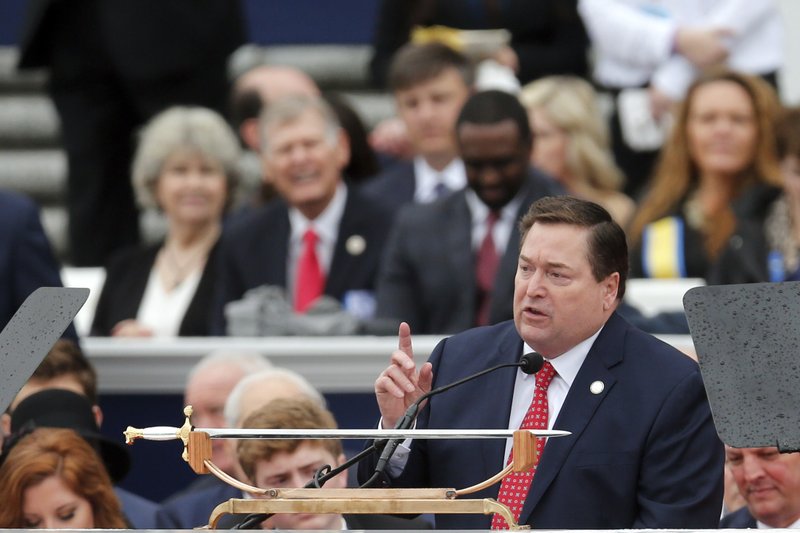
    BATON ROUGE, La. (AP) — Lt. Gov. Billy Nungesser said he has COVID-19 and is resting at home with mild symptoms, becoming Louisiana’s fourth statewide elected official to test positive for the coronavirus disease.

    Nungesser, a Republican in his second term as lieutenant governor, confirmed in a Wednesday night Twitter post that he tested positive for COVID-19.

    “Thank you to everyone for your prayers. Today, I tested positive for #COVID but have very mild symptoms. Will be resting up and feeling better soon! As we head into the holidays, my thoughts and prayers are with all those affected by COVID,” he tweeted.

    Nungesser told The News-Star that he’s “reaching out to everybody I’ve seen in the last few days” to notify them of his infection. He said his mild symptoms include a fever, but no breathing problems.

    The lieutenant governor joins three other Republican statewide elected officials in Louisiana who have previously had COVID-19 and have since recovered: U.S. Sen. Bill Cassidy, Attorney General Jeff Landry and Treasurer John Schroder.

  • Inmates Facing Big Virus Risks Not Near Top Of Vaccine Lists

    Inmates Facing Big Virus Risks Not Near Top Of Vaccine Lists

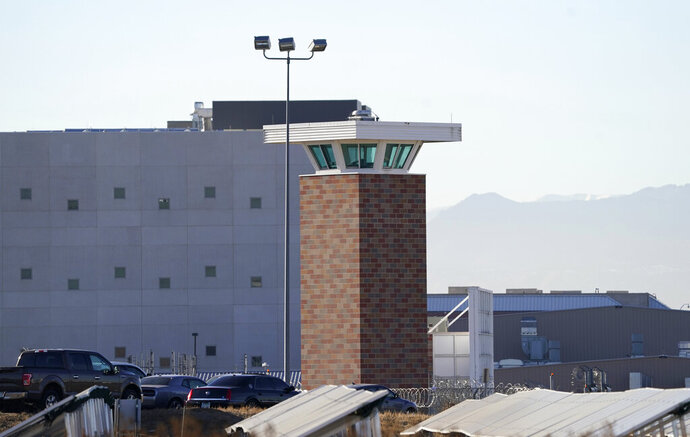
    DENVER (AP) — Amber Johnson is terrified her 63-year-old father will get the coronavirus. He has high blood pressure, asthma and is pre-diabetic, and she worries he’s especially vulnerable as an inmate in Colorado, where outbreaks in prisons are raging.

    Prisons across the U.S. have been hit hard by COVID-19. Social distancing is virtually impossible behind bars: inmates sleep in close quarters and share bathrooms. Masks, hygiene supplies and safety protocols are often lacking, and many inmates have health problems that make them susceptible to the virus.

    Johnson believes a vaccine might be the only hope for her father, Ronald Johnson, who is serving time for theft, forgery and drug possession.

    But in Colorado and most other states, prisoners aren’t near the front of the line for initial doses of COVID-19 vaccine now being distributed. Health care workers and nursing home residents are getting the first wave of shots, and many argue that those who break the law — despite living in conditions that put them at risk — shouldn’t be a priority when many others are vulnerable.

    “To think about him dying in prison is an awful thought because from what I’ve heard, if you have a loved one who dies in prison, you just kind of get the remains in a box. They cremate them and send them home,” Amber Johnson said. “You don’t have the opportunity to sit by them and hold their hand.”

    Initially, Colorado had inmates in the second phase of vaccine distribution, set for the spring, behind health workers and first responders but ahead of other adults over 65 with health conditions. Prisoners were to be treated like others in group housing, including homeless shelters and college dorms.

    But an outcry followed. Suburban Denver prosecutor George Brauchler said the plan would have allowed two men convicted of killing the son of 66-year-old state Sen. Rhonda Fields to be vaccinated before her.

    “The people who murdered her son would get it before she would,” Brauchler said.

    Democratic Gov. Jared Polis bowed to criticism last week, updating the plan to prioritize age and health risks over where people live. Jail staffers will still get the vaccine in the second phase, along with first responders.

    “Whether you’re in prison or not, if you’re 67 years old or at risk, wherever you are, you’ll have access to the vaccine when 67-year-old’s have access to vaccines,” Polis said.

    Though Colorado changed course, California, North Carolina, Maryland, Delaware, Utah, New Mexico, Nebraska, Montana and Massachusetts have prisoners among the first to get the vaccine this winter. Some states also have taken steps to reduce COVID-19 risks behind bars by releasing nonviolent offenders early.

    But even in states with the biggest prison outbreaks, inmates often weren’t on early vaccine distribution plans.

    The five states with the highest number of coronavirus cases in their prisons, according to data compiled as part of a joint project by The Associated Press and The Marshall Project — Texas, California, Florida, Michigan and Wisconsin — did not include details about how they would prioritize prisoners in their October draft reports to the Centers for Disease Control and Prevention.

    Michigan has decided to treat prisoners like everyone else, vaccinating them based on their age and health problems and not prioritizing them as a group. Jail and prison workers, however, are set to be vaccinated along with other essential workers before people 65 and older or those 16 and 64 with conditions like heart disease and diabetes that can worsen COVID-19, according to a state plan updated Sunday.

    Wisconsin is still deciding which groups should get shots after its first wave of vaccinations. Texas likely will consider prisoners along with other vulnerable populations, but plans are unclear.

    Iowa, another state with high prison infection rates, plans to put inmates and those who live in state institutions for the disabled ahead of others but behind health care workers and nursing-home residents and staff.

    The federal prison system — one of the first government agencies to receive the vaccine — plans to administer initial vaccines to staff, not inmates, according to documents obtained by the AP.

    For families of inmates, the uncertainty is gut-wrenching. They’re pleading with state officials to consider the transmission risks behind bars. Medical experts also have suggested that living arrangements in prisons call for higher priority.

    “From a public health perspective, it’s also really important because what we’ve seen is they are hot spots,” said Maria Morris, senior staff attorney at the American Civil Liberties Union’s National Prison Project. “And people are coming and going out of prison. There’s no way to avoid that.”

    That includes officers, administrative staff, lawyers and medical and mental health workers.

    More than 249,000 inmates have tested positive and nearly 1,700 have died from COVID-19 nationwide. At a prison in Colorado last week, nearly three-quarters of inmates caught the virus.

    Meanwhile, the ACLU of Colorado has been fighting for early release for some prisoners to lower their risk. Ronald Johnson has served 22 years and got his parole moved up to 2027, but his daughter worries that’s still too far away.

    Amber Johnson said her father is a nonviolent offender who has sobered up, tutors other inmates, helps in the prison church and coordinates mental health courses. She says he deserves a chance to live — and that, for her, means a vaccine.

    “The time is now,” said Johnson, who lives in Fayetteville, Arkansas. “It needs to be done urgently before somebody else dies — and somebody else will.”

  • Vaccinations For Health Care Workers Begin In Texas

    Vaccinations For Health Care Workers Begin In Texas

    DALLAS (AP) — The first doses of a COVID-19 vaccine began arriving arriving throughout the U.S. on Monday including in Texas, with health care workers first in line to receive the shots.

    The Texas Department of State Health Services said 19,500 doses of the vaccine were headed Monday to four sites in Texas: MD Anderson Cancer Center in Houston, Methodist Dallas Medical Center, Wellness 360 at UT Health San Antonio and UT Health Austin’s Dell Medical School.

    Methodist Health System began administering vaccinations at about 10:10 a.m. Monday with the first shot going to Teresa Mata, 51, an environmental services employee who cleans the emergency room at Methodist Dallas, spokesman Ryan Owens said. Mata said she was excited to be the fist person to receive it and “wanted to take the risk” because she is diabetic.

    “I love my job, but I wanted to protect other persons, I wanted to protect my family and I wanted to protect myself,” Mata said.

    Another 75,000 doses of the vaccine were scheduled to be delivered Tuesday to 19 sites in Texas, state officials said, in the largest vaccination campaign in U.S. history.

    UT Health Austin-Dell Medical School will vaccinate over 2,900 health care providers, including faculty, residents and medical students, over the next 10 days, according to Amy Young, chief clinical officer at the teaching hospital. Staff vaccinations will be staggered to always maintain a critical workforce in place.

    “Part of the reason this is so exciting is that this is our community and the world’s first step to combating this virus going forward,” Young said.

    But Young cautioned that “hope on the horizon” is no excuse to ease up on personal responsibility. She implored people to still avoid gatherings, stay six feet away from each other and wear masks when social distancing isn’t possible.

    Officials from Texas Medical Center in Houston urged public trust the vaccine. Dr. Paul Klotman, president of the Baylor College of Medicine, said in a press conference that getting vaccinated is helpful to both the individuals and their communities.

    “The thing about everyone pitching in, do it for yourself because it will help protect you, but when you get the herd immunity it will help protect people who are unable medically to get the vaccine,” Klotman said.

    Texas has seen 24,400 virus-related deaths since the pandemic began, which is second only to New York in overall death count, according to researchers from Johns Hopkins. One in every 332 people in Texas tested positive for the virus in the past week.

    On Monday, Texas health officials reported 8,771 newly confirmed cases of COVID-19 and 26 more deaths. The Department of State Health Services also reported 804 probable cases and 9,304 people hospitalized with the virus.

  • Nursing homes reported more than 400 new cases of the COVID-19 disease caused by the virus among residents in the past week

    Nursing homes reported more than 400 new cases of the COVID-19 disease caused by the virus among residents in the past week

    JACKSON, Miss. (AP) — Mississippi’s first shipment of coronavirus vaccine arrived Monday, doses that will be administered to the state’s health care professionals working on the frontlines of the pandemic.

    Mississippi received an initial batch of 25,000 doses of the vaccine developed by Pfizer Inc. and its German partner BioNTech, which are already being distributed to hospitals, State Health Officer Dr. Thomas Dobbs said during a virtual briefing with reporters.

    The state health officer said the vaccine came at a vital time for Mississippi, as coronavirus hospitalizations are reaching record highs.

    “We can’t afford to have three nurses in an ICU out of commission for two weeks,” Dobbs said. “Not only for their health, but also for the health and the health care requirements that Mississippians are going to have.”

    Stress on the state’s health care system and workforce has been a major concern in recent weeks. Hospitalizations are up from 946 on Nov. 23 to 1,188 on Dec. 13.

    Slowing outbreaks at long-term care facilities is also a priority. There are 213 current outbreaks in Mississippi long-term care facilities, according to officials. Dobbs said there should be enough doses to begin immunizing people in long-term care settings this week.

    “We are actually looking at going ahead and pulling the trigger on long-term care distribution today, and starting the process,” Dobbs said. “The vaccines won’t be in arms immediately, but we have gotten information from CDC partners that we should have enough vaccine to kick it off.”

    Officials say more of the Pfizer vaccine will arrive each week. Later this week, the FDA will decide whether to greenlight a second rigorously studied COVID-19 vaccine, made by Moderna Inc.

    The University of Mississippi Medical Center was one hospital in Mississippi that received an allotment Monday. Hospital spokesperson Marc Rolph said the doses were transferred to on-campus ultra-cold freezers for storage. UMMC received 780 vials, each containing five doses of the vaccine for a total of 3,900 doses of the vaccine.

    Packed in dry ice to stay at ultra-frozen temperatures, Mississippi’s shipment was part of 3 million doses being shipped this week throughout the country.

    The FDA, considered the world’s strictest medical regulator, said the Pfizer-BioNTech vaccine appears safe and strongly protective.

    In winning approval for widespread emergency use, the vaccine was cleared before a final study in nearly 44,000 people is complete. That research is continuing to try to answer additional questions.

    Dobbs said he wanted to be the first to receive the vaccine as a show of confidence in the shot. Dobbs, State Epidemiologist Dr. Paul Byers and three other health officials received the immunization on screen in a live video with reporters.

    “Felt like a butterfly,” Dobbs joked after receiving his first shot.

    In a tweet immediately after receiving the shot, Dobbs said he was “proud and privileged” to receive Mississippi’s first coronavirus vaccine.

    Dobbs said the vaccine is not a reason to relax precautionary measures around the virus — people should be more stringent than ever about social distancing, mask-wearing and following other safety regulations. He said the vaccinations will probably not have a major impact on new cases and hospitalizations over the next couple of weeks because so few people are being vaccinated.

    “I’m just going to say it straight up. It’s ugly right now and it’s about to get a whole lot uglier,” he said.

    The general public may not get the vaccine until the spring or summer of next year. The Department of Health said it plans to launch a campaign to help educate the public about the vaccine.

    Dobbs will update the public on how he is feeling in the days after receiving the vaccine.

    “Although there may be some mild side effects the next day, it is not only going to be better for us personally, but it’s going to be better for our families and it’s going to be better for our communities,” he said.

    The state Health Department reported Monday that Mississippi had 1,648 new confirmed cases of the highly contagious virus as of Sunday evening. The department also reported five new deaths Monday, with all of them happening on Saturday and Sunday. The state has reported nearly 181,100 cases of the virus and 4,204 deaths from it since the start of the pandemic.

    _____

    Leah Willingham is a corps member for the Associated Press/Report for America Statehouse News Initiative. Report for America is a nonprofit national service program that places journalists in local newsrooms to report on undercovered issues.

    ___

    Follow AP coverage of the pandemic at https://apnews.com/VirusOutbreak and https://apnews.com/UnderstandingtheOutbreak.

  • ‘Relieved’: US Health Workers Start Getting COVID-19 Vaccine

    ‘Relieved’: US Health Workers Start Getting COVID-19 Vaccine

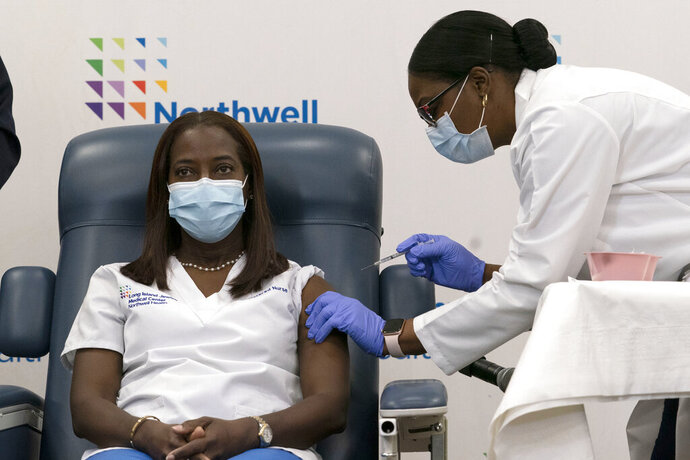
    The largest vaccination campaign in U.S. history got underway Monday as health workers in select hospitals rolled up their sleeves for shots to protect them from COVID-19 and start beating back the pandemic — a day of optimism even as the nation’s death toll neared 300,000.

    “I feel hopeful today. Relieved,” said critical case nurse Sandra Lindsay after getting a shot in the arm at Long Island Jewish Medical Center in New York.

    Shipments of precious frozen vials of vaccine made by Pfizer Inc. and its German partner BioNTech began arriving at hospitals around the country Monday.

    “This is the light at the end of the tunnel. But it’s a long tunnel,” New York Gov. Andrew Cuomo said as he watched Lindsay’s vaccination via video.

    Several other countries also have OK’d the vaccine, including the U.K., which started vaccinating last week.

    For health care workers who, along with nursing home residents, will be first in line for vaccination, hope is tempered by grief and the sheer exhaustion of months spent battling a coronavirus that still is surging in the U.S. and around the world.

    “This is mile 24 of a marathon. People are fatigued. But we also recognize that this end is in sight,” said Dr. Chris Dale of Swedish Health Services in Seattle.

    Packed in dry ice to stay at ultra-frozen temperatures, the first of nearly 3 million doses being shipped in staggered batches this week made their way by truck and by plane around the country Sunday from Pfizer’s Kalamazoo, Michigan, factory. Once they arrive at distribution centers, each state directs where the doses go next.

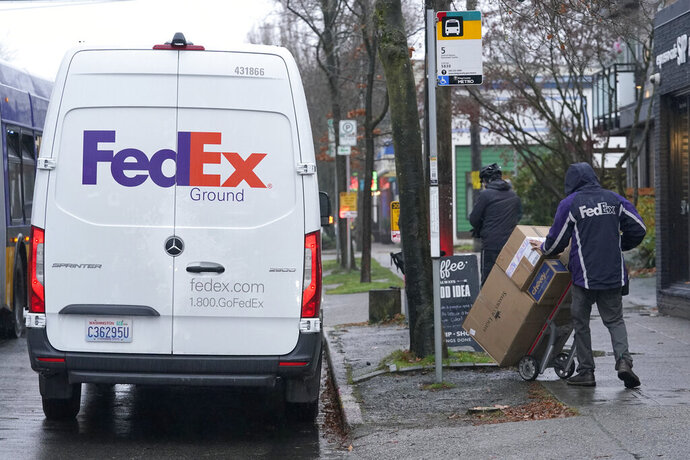
    Some hospitals across the country spent the weekend tracking their packages, refreshing FedEx and UPS websites for clues.

    More of the Pfizer-BioNTech vaccine will arrive each week. And later this week, the FDA will decide whether to green light the world’s second rigorously studied COVID-19 vaccine, made by Moderna Inc.

    Now the hurdle is to rapidly get vaccine into the arms of millions, not just doctors and nurses but other at-risk health workers such as janitors and food handlers — and then deliver a second dose three weeks later.

    “We’re also in the middle of a surge, and it’s the holidays, and our health care workers have been working at an extraordinary pace,” said Sue Mashni, chief pharmacy officer at Mount Sinai Health System in New York City.

    Plus, the shots can cause temporary fever, fatigue and aches as they rev up people’s immune systems, forcing hospitals to stagger employee vaccinations.

    A wary public will be watching closely to see whether health workers embrace vaccination. Just half of Americans say they want to get vaccinated, while about a quarter don’t and the rest are unsure, according to a recent poll by The Associated Press-NORC Center for Public Health Research.

    The FDA, considered the world’s most strict medical regulator, said the Pfizer-BioNTech vaccine appears safe and strongly protective — and laid out the data behind it in a daylong public meeting last week for scientists and consumers alike to see.

    “Please people, when you look back in a year and you say to yourself, ‘Did I do the right thing?’ I hope you’ll be able to say, ‘Yes, because I looked at the evidence,’” Dr. Francis Collins, director of the National Institutes of Health, said Sunday on NBC’s Meet the Press. “People are dying right now. How could you possibly say, ‘Let’s wait and see.’”

    Still, emergency use means the vaccine was cleared for widespread use before a final study in nearly 44,000 people is complete — and that research is continuing to try to answer additional questions. While effective against COVID-19 illness, it’s not yet clear if vaccination will stop the symptomless spread that accounts for half of all cases.

    The shots still must be studied in children, and during pregnancy. But the American College of Obstetricians and Gynecologists said late Sunday that vaccination should not be withheld from pregnant women who otherwise would qualify.

    While the vaccine was determined to be safe, regulators in the U.K. are investigating several severe allergic reactions. The FDA’s instructions tell providers not to give it to those with a known history of severe allergic reactions to any of its ingredients.

    ___

    AP journalists Tamara Lush and Kathy Young contributed to this report.

    ___

    The Associated Press Health and Science Department receives support from the Howard Hughes Medical Institute’s Department of Science Education. The AP is solely responsible for all content.

  • Virus Cases On The Rise Again At Louisiana’s Nursing Homes

    Virus Cases On The Rise Again At Louisiana’s Nursing Homes

    BATON ROUGE, La. (AP) — Coronavirus infections among Louisiana’s nursing home residents are rising to levels not seen since an earlier outbreak peak over the summer, a threatening trend that comes as the facilities could be only weeks away from receiving the first doses of a vaccine.

    Nursing homes reported more than 400 new cases of the COVID-19 disease caused by the virus among residents in the past week, The Advocate reports, the most since mid-August.

    Similarly, the 365 new infections reported among nursing home staff was the highest since August. Employees are closely watched because they are considered the most likely way for the virus to gain a foothold in those buildings.

    The increases are creating worry the coronavirus could once again wreak havoc among some of Louisiana’s most vulnerable residents just weeks before vaccinations begin.

    “We are very concerned about our congregate settings,” Gov. John Bel Edwards said. “When you have high degrees of community spread, it is virtually impossible” to keep the virus out.

    Edwards has said Louisiana could receive its first shipments of the Moderna vaccine — which state officials are dedicating to those who live and work in nursing homes and other long-term care facilities — by the end of December. Shipments begin when Moderna’s vaccine receives approval for use in the United States.

    Louisiana’s 23,000 nursing home residents have accounted for less than 5% of the state’s confirmed coronavirus cases but about 43% of the 6,426 deaths, according to the latest data available by the state health department. The state ordered a variety of measures to try to control the virus’ spread, from lockdowns to strict no-contact visitation policies to increased testing.

    But as cases have climbed across Louisiana over the past month, cases in nursing homes also have risen.

    Three Monroe nursing homes were among 10 that reported double-digit new confirmed coronavirus cases in the past week. The biggest increase was in the Northeast Louisiana War Veterans Home in Monroe, with 23 new infections — more than half the 45 total infections the home has reported since March.

    Brandee Patrick, a spokeswoman for the Louisiana Department of Veterans Affairs, said the agency noticed parallels between high numbers of cases in the community translating to infections within veteran homes. She said the department has been testing residents weekly at the five long-term care homes the agency operates in the state. With the virus surging throughout much of Louisiana, some have begun testing twice per week.

    A state-run veterans home in Reserve and another in Jackson also have been hot spots for the virus, logging 36 and 25 deaths, respectively, and dozens of infections since March.

    Nursing homes scattered around the state also have reported significant numbers of new cases.

    For example, Bayou Vista Community Care in Bunkie reported 10 new cases. Lisa Gardner, a spokesperson for Mandeville-based CommCare, which operates Bayou Vista, said testing had increased and staff have been vigilant about their use of personal protective equipment, which was scarce in the early days of the pandemic.

    The home’s residents, Gardner said, did not seem to be getting cases that were as severe as earlier this year. One resident who tested positive had to be hospitalized, another had some respiratory issues that were being managed at the home, and the rest of the cases were asymptomatic or just fighting fatigue, she said.

  • Pollstar: Live Events Industry Lost $30B Due To Pandemic

    Pollstar: Live Events Industry Lost $30B Due To Pandemic

    NEW YORK (AP) — Due to the global coronavirus pandemic, concert trade publication Pollstar puts the total lost revenue for the live events industry in 2020 at more than $30 billion.

    Pollstar on Friday released its year-end report, explaining that the live events industry should have hit a record-setting $12.2 billion this year, but instead it incurred $9.7 billion in losses. The company added that the projected $30 billion figure in losses includes “unreported events, ancillary revenues, including sponsorships, ticketing, concessions, merch, transportation, restaurants, hotels, and other economic activity tied to the live events.” Those losses accounted for more than $8 billion.

    In March hundreds of artists announced that their current or upcoming tours would need to be postponed or canceled because of the pandemic. While a small number of performers have played drive-in concerts and others have held digital concerts, the majority of artists have not played live in 2020.

    With just a few months on the road, Elton John’s “Farewell Yellow Brick Road Tour” tops the year’s Top 100 Worldwide Tours list with $87.1 million grossed between Nov. 30 through March 7. John’s tour ranked No. 2 last year with $212 million grossed.

    Celine Dion came in second this year with $71.2 million, followed by Trans-Siberian Orchestra ($58.2 million), U2 ($52.1 million) and Queen + Adam Lambert ($44.6 million). Post Malone, Eagles, Jonas Brothers, Dead & Company and Andrea Bocelli rounded out the Top 10.

    “It’s been an extraordinarily difficult year for the events industry, which has been disproportionately impacted by the coronavirus. As painful as it is to chronicle the adversity and loss our industry and many of our colleagues faced, we understand it is a critical undertaking toward facilitating our recovery, which is thankfully on the horizon,” Ray Waddell, president of Oak View Group’s Media & Conferences Division, which oversees Pollstar and VenuesNow, said in a statement Friday.

    “With vaccines, better testing, new safety and sanitization protocols, smart ticketing and other innovations, the live industry will be ramping up in the coming months, and we’re sure that at this time next year we’ll have a very different story to tell.”

  • Retailers Urge Shoppers To Buy Early Amid Shipping Crunch

    Retailers Urge Shoppers To Buy Early Amid Shipping Crunch

    NEW YORK (AP) — A number of retailers, including J.C. Penney, Lowe’s and Kohl’s, are telling shoppers they need to place their online orders soon or else pay expedited shipping fees if they want to get their packages delivered in time for the holidays.

    The earlier-than-usual deadlines come as more people turn to online shopping during the pandemic, creating a logjam for shipping companies as well as delivery delays. For some retailers, like H&M and Lego, the deadlines have passed.

    Jason Goldberg, chief commerce strategy officer at Publicis Communications, part of Publicis Groupe SA, estimates that a majority of retailers have pushed up deadlines by at least a day or two, and about a quarter by at least a week. Meanwhile, behemoths like Walmart, Target and Best Buy haven’t had to make big changes because they’ve already transformed their stores into shipping hubs for online orders. That makes them less dependent on major carriers’ national networks.

    “Everyone knows there is going to be a problem 10 days from now, but we just don’t know how big it’s going to be,” said Rob Hahn, chief operating officer at Whitebox, a fulfillment service for retailers. “So everyone is being conservative, and everyone is trying to pull forward that purchase behavior.”

    The earlier deadlines could drive more last-minute shoppers into physical stores at a time when coronavirus cases are spiking. The U.S. Centers for Disease Control and Prevention says holiday shopping in crowded stores is a “higher risk” activity.

    Ken Perkins of RetailMetrics, says he doesn’t expect “a massive crush,” but he believes customer traffic will be heavier than what stores have seen so far during the season. Shoppers will also turn more to curbside pickup in the days before Christmas.

    The warnings on earlier deadlines are needed, said Moody’s Charlie O’Shea, because if an item arrives late, frustrated shoppers blame the retailer — not the shipping company. And retailers can ill-afford to lose business at a time when many people have already cut back on their spending.

    Robin Gorman Newman, a theater producer from Great Neck, New York, ordered a few gifts online during Thanksgiving weekend, including an eyeglass case from Anthropologie. She just learned that the eyeglass case was out of stock and needed to be back-ordered.

    “I had gifts earmarked for particular people,” Newman said. Now, she says, “I will be happy if everyone gets their gifts this month.” But she said she won’t be going back to stores to pick up goods as virus cases surge.

    Retailers’ shipping networks were already strained when shoppers dramatically shifted their spending online during the early part of the pandemic — a savior for many who were afraid of going out.

    But now, with the pandemic getting worse and everyone shopping for the holidays at the same time, those networks are strained even further. Online volume is expected to triple compared to last year’s holiday season. Satish Jindel, president of ShipMatrix, which analyzes shipping package data, predicts 7 million packages a day could face delays from Thanksgiving to Christmas.

    Goldberg says the shipping problem is so acute that even Amazon, which has its own shipping network, could run out of capacity, sending shoppers to places like eBay. Amazon hasn’t released a holiday shipping deadline yet, but said in a statement that it will be delivering packages up until Christmas Eve.

    Jindel says that the three major carriers — FedEx, UPS and the U.S. Postal Service — have been holding up fairly well given the huge spike in volume, although on-time delivery declined the final week of November. Collectively, the on-time delivery was 94.2% during the Nov. 22 to Nov. 28 period, Jindel says.

    However, the U.S. Postal Service has been taking packages that UPS and FedEx won’t take and has seen a decrease in on-time delivery, says Convey Inc., which specializes in delivery tracking.

    Carriers have been slapping surcharges and putting limits on how many packages retailers can ship each day. According to a report in the Wall Street Journal last week, UPS notified drivers across the U.S. to stop picking up packages at six retailers, including L.L. Bean, Hot Topic, Newegg and Macy’s last week.

    “UPS continues to work closely with our largest customers to steer volume to capacity and ensure the UPS network is reliable for all customers,” UPS said in a statement to The Associated Press late last week. “This collaboration includes specific capacity allocations last weekend and throughout the holiday season.”

    The holiday shipping crunch has been particularly hard on small retailers that badly need the last two weeks before Christmas to make up for a loss of sales when they were forced to close at the beginning of the pandemic. But online-only small businesses are also feeling the strain.

    Lisa Pawlik is CEO and co-founder of a recently launched Austin, Texas-based startup VoChill, which makes personal wine glass chillers. She says her distributor, inundated with a backlog of orders, told her to set the ordering deadline for Dec. 11. She plans to do her own packing and shipping of the items with her family’s help.

    “We are a new brand, and I am not going to give up my customers’ experience,” Pawlik said.

    Sara Skirboll, a shopping expert at deals site RetailMeNot, said some of the delays are happening at warehouses, where it’s taking longer to get orders out the door to be shipped. Shoppers should read the fine print, she said, because even if a store is promising two-day shipping, it could take days before it leaves the warehouse.

    Compounding the problem is the fact that there is less space available on tractor trailers that move goods from warehouses to distribution centers.

    Isaac Larian, CEO of MGA Entertainment, the maker of the popular LOL dolls, says he had 200 containers, or at least $15 million worth of merchandise, stuck at the Los Angeles port for three weeks.

    The toys have since been cleared, but he says, “it’s too late for Christmas.”

    ___

    This story has been corrected to show that the CEO of VoChill is Lisa Pawlik, not Pawlic.

  • Tensions Rise Over Masks As Virus Grips Smaller US Cities

    Tensions Rise Over Masks As Virus Grips Smaller US Cities

    MISSION, Kan. (AP) — Arguments over mask requirements and other restrictions have turned ugly in recent days as the deadly coronavirus surge across the U.S. engulfs small and medium-size cities that once seemed safely removed from the outbreak.

    In Boise, Idaho, public health officials about to vote on a four-county mask mandate abruptly ended a meeting Tuesday evening because of fears for their safety amid anti-mask protests outside the building and at some of their homes.

    One health board member tearfully announced she had to rush home to be with her child because of the protesters, who were seen on video banging on buckets, blaring air horns and sirens, and blasting a sound clip of gunfire from the violence-drenched movie “Scarface” outside her front door.

    “I am sad. I am tired. I fear that, in my choosing to hold public office, my family has too often paid the price,” said the board member, Ada County Commissioner Diana Lachiondo. “I increasingly don’t recognize this place. There is an ugliness and cruelty in our national rhetoric that is reaching a fevered pitch here at home, and that should worry us all.”

    Boise police said three arrest warrants were issued in connection with the demonstrations at board members’ homes.

    In South Dakota, the mayor of Rapid City said City Council members were harassed and threatened over a proposed citywide mask mandate that failed this week even as intensive care units across the state filled with COVID-19 patients.

    The tensions are flaring amid an epic surge in U.S. deaths, hospitalizations and infections over the past several weeks.

    The U.S. topped 3,000 deaths Wednesday in what is a single-day record, according to the COVID Tracking Project. That’s surpassed the level seen during last spring’s peak in and around New York City. New cases per day have rocketed to more than 200,000 on average, and the number of patients in the hospital with COVID-19 stood at almost 105,000 on Tuesday, another all-time high.

    The grim figures led the usually stoic health director of the nation’s most populated county to become emotional. Barbara Ferrer described “a devastating increase in deaths” in Los Angeles County, with the total hitting 8,075 on Wednesday.

    “Over 8,000 people who were beloved members of their families are not coming back,” Ferrer said, fighting back tears.

    Meanwhile, protesters in Montana’s Gallatin County have gathered for two consecutive weeks outside the Bozeman home of county health officer Matt Kelley to decry regulations, including a statewide mask mandate. They have carried signs reading, “We refuse to be your experiment” and “Oxygen is essential.”

    Last week, around 80 people lined Bozeman’s Main Street to support Kelley and other health officials.

    In Montana’s Flathead County, where officials recorded 17 coronavirus-related deaths over 18 days and resistance to masks runs strong, the interim public health officer is resigning when her contract is up at year’s end, citing a lack of support from local authorities for measures to control the scourge.

    In Helena, Republicans who control both chambers of the Montana Legislature denied a request by Democratic lawmakers to require masks be worn inside the Capitol during the legislative session next month.

    In Missouri, Greene County officials recorded 51 COVID-19 deaths in the first eight days of December as hospitals overflow and hundreds of health care workers are quarantined. The area’s two major hospitals asked the city of Springfield, the county seat, to renew the city’s mask mandate before it expires in January. The county itself does not have a mask mandate, nor does the state.

    As the deaths pile up, Springfield Mortuary Services owner Brian Simmons is overseeing the embalming and cremation of COVID-19 victims as his own 48-year-old daughter battles the virus. She spent the past week hospitalized on a ventilator in one of the city’s overwhelmed hospitals.

    “You are just helpless,” he said. “There is nothing you can do about it. We haven’t seen her since she’s gone in.”

    South Dakota has suffered through the country’s worst rate of COVID-19 deaths per capita over the last week, but Gov. Kristi Noem has been ardent in her opposition to mask mandates or other aggressive efforts to slow infections.

    That hands-off approach drew vocal support at Rapid City Council meetings, even as doctors warned that the only large hospital in the western half of the state is facing a crisis and patients are being flown out of the state. The meetings drew hours of testimony from people who said the dangers of the virus are overblown and that mask requirements violate their liberties.

    Dr. Stephen Neabore, who works in the biggest hospital system in the region, said he has been frustrated as he tries to persuade people to wear masks. After working in New York City and studying medicine in England, he said, he sees a distinct skepticism toward government around him.

    “I still see people out here that will tell me that they don’t believe it’s any worse than a common cold,” he said.

    The City Council in Palmer, Alaska, rejected a mask mandate Friday for the community of 7,300 residents about 45 miles (72 kilometers) north of Anchorage.

    Opponents questioned the effectiveness of masks, wondered why a mandate more common in larger communities was even being considered, and threatened to take their business online or to the neighboring city of Wasilla, which doesn’t have a mask order.

    Many implored the City Council not to follow the steps of “liberal” Anchorage in forcing residents to require face coverings.

    “We are not Anchorage and should not be treated as if we are,” Rhonda Hayhurst said in an email to the council. “I moved out here to get away from tyranny as being imposed by the Anchorage administration.”

    Coronavirus deaths also have been rising rapidly in rural parts of Iowa, where many people disdain masks. Among the hardest hit is O’Brien County, population 13,800, where 42 deaths have been blamed on the virus.

    Ty Rushing, who covers the region as managing editor of the Northwest Iowa Review, said obituaries in his newspaper have been piling up.

    “It’s sad to say, but I think people are just numb to it or they are sticking their head in the sand about it,” Rushing said.

    In Iowa’s Harrison County, 47 deaths have been attributed to the virus out of population of about 14,000. Most of the deaths have resulted from outbreaks at nursing homes in small towns like Dunlap.

    Dunlap City Clerk Meredith Van Houten said almost everyone in the town of about 950 people has a connection to those who have died. She said one was her old neighbor.

    “It’s a horrible time right now,” Van Houten said.

    ___

    Associated Press journalists from around the globe contributed to this report.