Category: COVID-19

  • Fate Of Trump’s $2,000 Checks Now Rests With GOP-Led Senate

    Fate Of Trump’s $2,000 Checks Now Rests With GOP-Led Senate

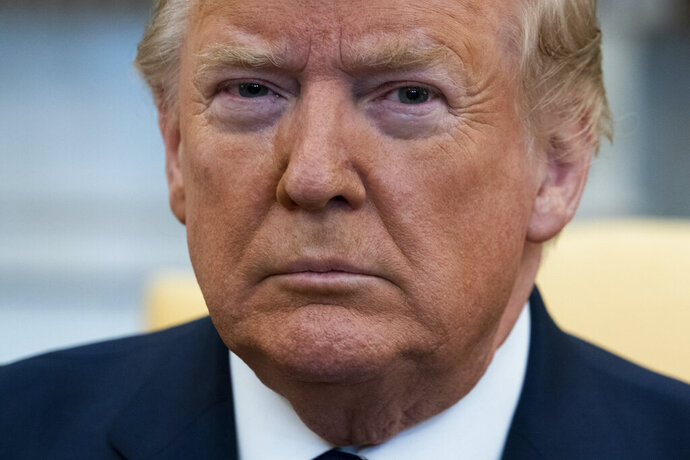
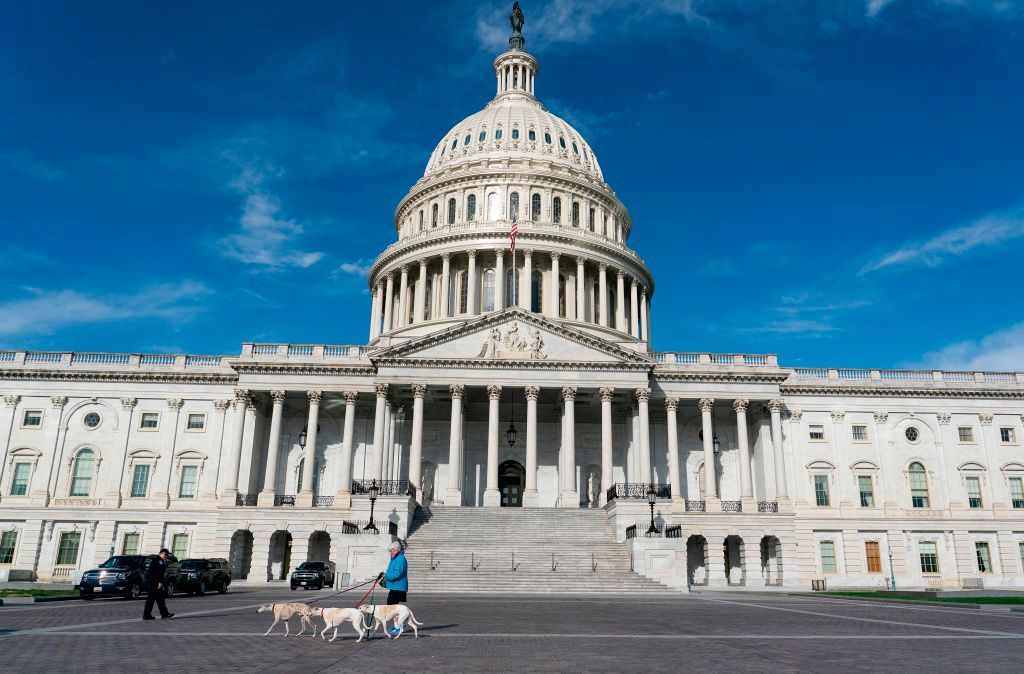
    WASHINGTON (AP) — President Donald Trump’s push for $2,000 COVID-19 relief checks now rests with the Senate after the House voted overwhelmingly to meet the president’s demand to increase the $600 stipends, but Republicans have shown little interest in boosting spending.

    After bipartisan approval by the House, Senate Democratic leader Chuck Schumer warned, “There is no good reason for Senate Republicans to stand in the way.”

    “There’s strong support for these $2,000 emergency checks from every corner of the country,” Schumer said in a statement late Monday. He called on McConnell to make sure the Senate helps “meet the needs of American workers and families who are crying out for help.”

    The House tally was a stunning turn of events. Just days ago Republicans blocked Trump’s sudden demands for bigger checks during a brief Christmas Eve session as he defiantly refused to sign the broader COVID-19 aid and year-end funding bill into law.

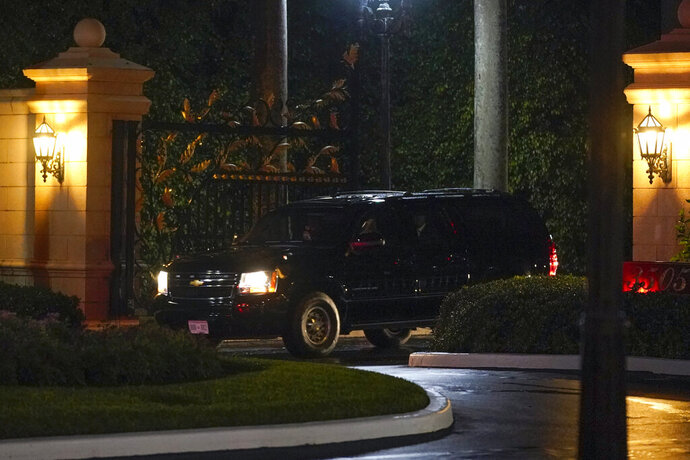
    As Trump spent days fuming from his private club in Florida, where he is spending the holidays, dozens of Republicans calculated it was better to link with Democrats to increase the pandemic stipend rather than buck the outgoing president and constituents counting on the money. Democrats led passage, 275-134, but 44 Republicans joined almost all Democrats in approval.

    Senators were set to return to session Tuesday amid similar, stark GOP divisions between those who align with Trump’s populist instincts and others who adhere to what had been more traditional conservative views against government spending. Congress had settled on smaller $600 payments in a compromise over the big year-end relief bill Trump reluctantly signed into law.

    House Speaker Nancy Pelosi declared, “Republicans have a choice: Vote for this legislation or vote to deny the American people the bigger paychecks they need.”

    The showdown could end up as more symbol than substance if Trump’s effort fizzles out in the Senate.

    The legislative action during the rare holiday week session may do little to change the $2 trillion-plus COVID-19 relief and federal spending package Trump signed into law Sunday, one of the biggest bills of its kind providing relief for millions of Americans.

    That package — $900 billion in COVID-19 aid and $1.4 trillion to fund government agencies — will deliver long-sought cash to businesses and individuals and avert a federal government shutdown that otherwise would have started Tuesday, in the midst of the public health crisis.

    But the outcome will define Trump’s GOP, putting a spotlight on the Georgia runoff election Jan. 5 where two Republican senators are in the fights of their political lives against Democrats in a pair of races that will determine which party controls the Senate next year.

    Together with votes Monday and Tuesday to override Trump’s veto of a sweeping defense bill, it’s potentially one last confrontation between the president and the Republican Party he leads as he imposes fresh demands and disputes the results of the presidential election. The new Congress is set to be sworn in Sunday.

    Rep. Kevin Brady of Texas, the ranking Republican on the Ways and Means Committee, acknowledged the division and said Congress had already approved ample funds during the COVID-19 crisis. “Nothing in this bill helps anybody get back to work,” he said.

    Aside from the direct $600 checks to most Americans, the COVID-19 portion of the bill revives a weekly pandemic jobless benefit boost — this time $300, through March 14 — as well as a popular Paycheck Protection Program of grants to businesses to keep workers on payrolls. It extends eviction protections, adding a new rental assistance fund.

    The COVID-19 package draws and expands on an earlier effort from Washington. It offers billions of dollars for vaccine purchases and distribution, for virus contact tracing, public health departments, schools, universities, farmers, food pantry programs and other institutions and groups facing hardship in the pandemic.

    Americans earning up to $75,000 will qualify for the direct $600 payments, which are phased out at higher income levels, and there’s an additional $600 payment per dependent child.

    Meantime the government funding portion of the bill keeps federal agencies nationwide running without dramatic changes until Sept. 30.

    President-elect Joe Biden told reporters at an event in Wilmington, Delaware, that he supported the $2,000 checks.

    Trump’s sudden decision to sign the bill came as he faced escalating criticism from lawmakers on all sides over his eleventh-hour demands. The bipartisan bill negotiated by Treasury Secretary Steven Mnuchin had already passed the House and Senate by wide margins. Lawmakers had thought they had Trump’s blessing after months of negotiations with his administration.

    The president’s defiant refusal to act, publicized with a heated video he tweeted just before the Christmas holiday, sparked chaos, a lapse in unemployment benefits for millions and the threat of a government shutdown in the pandemic. It was another crisis of his own making, resolved when he ultimately signed the bill into law.

    In his statement about the signing, Trump repeated his frustrations with the COVID-19 relief bill for providing only $600 checks to most Americans and complained about what he considered unnecessary spending, particularly on foreign aid — much of it proposed by his own budget.

    While the president insisted he would send Congress “a redlined version” with spending items he wants removed, those are merely suggestions to Congress. Democrats said they would resist such cuts.

    For now, the administration can only begin work sending out the $600 payments.

    Most House Republicans simply shrugged off Trump’s push, 130 of them voting to reject the higher checks that would pile $467 billion in additional costs. Another 20 House Republicans — including Minority Leader Kevin McCarthy of California, a Trump confidant — skipped the vote, despite pandemic procedures that allow lawmakers to vote by proxy to avoid travel to the Capitol. McCarthy was recovering at home from elbow surgery, his office said.

    A day after the signing, Trump was back at the golf course in Florida, the state where he is expected to move after Biden is sworn in on Jan. 20.

    ___

    Colvin reported from West Palm Beach, Florida. Associated Press writer Andrew Taylor contributed to this report.

  • Former Louisiana Gov. Edwin Edwards Out Of Hospital

    Former Louisiana Gov. Edwin Edwards Out Of Hospital

    GONZALES, La. (AP) — Former Louisiana Gov. Edwin Edwards — Louisiana’s only four-term governor — is back home after a weekend hospitalized for tests that were not related to COVID-19.

    “All is well,” family spokesman Leo Honeycutt told The News-Star on Monday. He said the tests were related to respiratory and heart issues.

    Edwards is 93 years old and was hospitalized in November with pneumonia.

    Edwards’ wife, Trina Edwards, said on Facebook on Saturday that Edwards was flown to Shreveport for a scheduled check-up. She said he did not have symptoms of COVID-19 but was tested as a precaution, and the test was negative.

    Edwards lives near Gonzales, southeast of Baton Rouge — about 230 miles (370 kilometers) from Shreveport. A statement released Saturday by Honeycutt said he flew on a plane provided by Ruston trucking and energy magnate James Davison. The two are longtime friends.

    Edwards was hospitalized Saturday in Ochsner LSU Health Medical Center. In November, he was hospitalized in Baton Rouge for pneumonia. Saturday’s statement said he had heart bypass surgery 24 years ago and gets pneumonia every year.

    “EWE just got back,” Honeycutt said Monday. “No coronavirus, no pneumonia, nothing. Happy New Year!”

    Davison, who lives in Choudrant, and Edwards are long-time friends.

    Edwards was governor from 1972 to 1980, from 1984 to 1988 and then from 1992 to 1996.

    Edwards, who has continued to say he was innocent, was convicted in May 2000 on 17 counts of racketeering, mail and wire fraud, conspiracy, and money laundering. in a plot to rig riverboat casino licenses. He served eight years in prison ending in 2011.

  • Trump Relents, Signs COVID Relief, Averts Federal Shutdown

    Trump Relents, Signs COVID Relief, Averts Federal Shutdown

    WEST PALM BEACH, Fla. (AP) — President Donald Trump has signed a $900 billion pandemic relief package, ending days of drama over his refusal to accept the bipartisan deal that will deliver long-sought cash to businesses and individuals and avert a federal government shutdown.

    The deal also provides $1.4 trillion to fund government agencies through September and contains other end-of-session priorities such as an increase in food stamp benefits.

    The signing Sunday, at his private club in Florida came as he faced escalating criticism over his eleventh-hour demands for larger, $2,000 relief checks and scaled-back spending even though the bill had already passed the House and Senate by wide margins. The bill was passed with what lawmakers had thought was Trump’s blessing, and after months of negotiations with his administration.

    His foot-dragging resulted in a lapse in unemployment benefits for millions and threatened a government shutdown in the midst of a pandemic. But signing the bill into law prevents another crisis of Trump’s own creation and ends a standoff with his own party during the final days of his administration.

    It was unclear what, if anything, Trump accomplished with his delay, beyond angering all sides and empowering Democrats to continue their push for higher relief checks, which his own party opposes.

    In his statement, Trump repeated his frustrations with the COVID-19 relief bill for providing only $600 checks to most Americans instead of the $2,000 that his fellow Republicans already rejected. He also complained about what he considered unnecessary spending by the government at large.

    “I will sign the Omnibus and Covid package with a strong message that makes clear to Congress that wasteful items need to be removed,” Trump said in the statement.

    While the president insisted he would send Congress “a redlined version” with items to be removed under the rescission process, those are merely suggestions to Congress. The bill, as signed, would not necessarily be changed.

    Democrats, who have the majority in the House, immediately vowed to prevent any cuts. Democrats “will reject any rescissions” submitted by the president, said Rep. Nita Lowey of New York, chair of the Appropriations Committee.

    Lawmakers now have breathing room to continue debating whether the relief checks should be as large as the president has demanded. The Democratic-led House supports the larger checks and is set to vote on the issue Monday, but it’s expected to be ignored by the Republican-held Senate, where spending faces opposition. For now, the administration can only begin work sending out the $600 payments.

    Republican Rep. Mo Brooks of Alabama, a conservative who supported Trump’s extraordinary and futile challenge of the election results, counted himself Monday among the opponents of a more generous relief package and Trump’s call for higher payments.

    “It’s money we don’t have, we have to borrow to get and we can’t afford to pay back,” he said on “Fox and Friends.” ”Someone’s got to show me how we’re going to pay for it. How far before we all go into debilitating insolvency and bankruptcy?”

    But Republican Rep. Elise Stefanik of New York said she was open to the idea of $2,000 checks. “Many Americans are in dire need of relief,” she said on the show.

    Altogether, Republicans and Democrats alike swiftly welcomed Trump’s decision to sign the bill into law.

    “The compromise bill is not perfect, but it will do an enormous amount of good for struggling Kentuckians and Americans across the country who need help now,” said Senate Majority Leader Mitch McConnell, R-Ky. “I thank the President for signing this relief into law.”

    House Speaker Nancy Pelosi, D-Calif., called the signing “welcome news for the fourteen million Americans who just lost the lifeline of unemployment benefits on Christmas weekend, and for the millions more struggling to stay afloat during this historic pandemic and economic crisis.”

    Others slammed Trump’s delay in turning the bill into law. In a tweet, Rep. Gerry Connolly, D-Va., accused Trump of having “played Russian roulette with American lives. A familiar and comfortable place for him.”

    Senate Democratic leader Chuck Schumer, D-N.Y., said he would offer Trump’s proposal for $2,000 checks for a vote in Senate — putting Republicans on the spot.

    “The House will pass a bill to give Americans $2,000 checks,” Schumer tweeted. “Then I will move to pass it in the Senate.” He said no Democrats will object. “Will Senate Republicans?”

    Democrats are promising more aid to come once President-elect Joe Biden takes office, but Republicans are signaling a wait-and-see approach.

    Congress will push ahead Monday, with the House expected to vote to override Trump’s veto of an annual Defense bill, confronting the president on another big issue in the final days of the session. The Senate is expected to follow on Tuesday.

    In the face of growing economic hardship, spreading disease and a looming shutdown, lawmakers spent Sunday urging Trump to sign the legislation immediately, then have Congress follow up with additional aid. Aside from unemployment benefits and relief payments to families, money for vaccine distribution, businesses and more was on the line. Protections against evictions also hung in the balance.

    “What the president is doing right now is unbelievably cruel,” Sen. Bernie Sanders, I-Vt., said of Trump’s delaying tactic before the president signed the law. “So many people are hurting. … It is really insane and this president has got to finally … do the right thing for the American people and stop worrying about his ego.”

    Republican Sen. Pat Toomey of Pennsylvania said he understood that Trump “wants to be remembered for advocating for big checks, but the danger is he’ll be remembered for chaos and misery and erratic behavior if he allows this to expire.”

    Toomey added: “So I think the best thing to do, as I said, sign this and then make the case for subsequent legislation.”

    Republican Rep. Adam Kinzinger of Illinois said too much is at stake for Trump to “play this old switcheroo game.”

    “I don’t get the point,” he said. “I don’t understand what’s being done, why, unless it’s just to create chaos and show power and be upset because you lost the election.”

    Washington had been reeling since Trump turned on the deal. Fingers pointed at administration officials, including Treasury Secretary Steven Mnuchin, as lawmakers tried to understand whether they were misled about Trump’s position.

    “Now to be put in a lurch, after the president’s own person negotiated something that the president doesn’t want, it’s just — it’s surprising,” Kinzinger said.

    ___

    Mascaro and Taylor reported from Washington. Associated Press writer Alexandra Olson in New York contributed to this report.

  • Study: Kids Get Virus At Gatherings More Often Than School

    Study: Kids Get Virus At Gatherings More Often Than School

    JACKSON, Miss. (AP) — Children are more at risk of contracting coronavirus at a social gathering than in a classroom or childcare setting, according to a study released by the University of Mississippi Medical Center.

    The study, conducted in partnership with U.S. Centers for Disease Control and Prevention, was featured in the U.S. Centers for Disease Control and Prevention’s Dec. 18 Morbidity and Mortality Weekly Report.

    Researchers surveyed patients younger than 18 who had tested positive for the virus in emergency departments and outpatient health facilities during September, October and November.

    The study found that compared with children who tested negative, those who tested positive were more likely to have attended gatherings and have had visitors at home. Additionally, parents or guardians of children who were infected were less likely to report wearing masks at those gatherings.

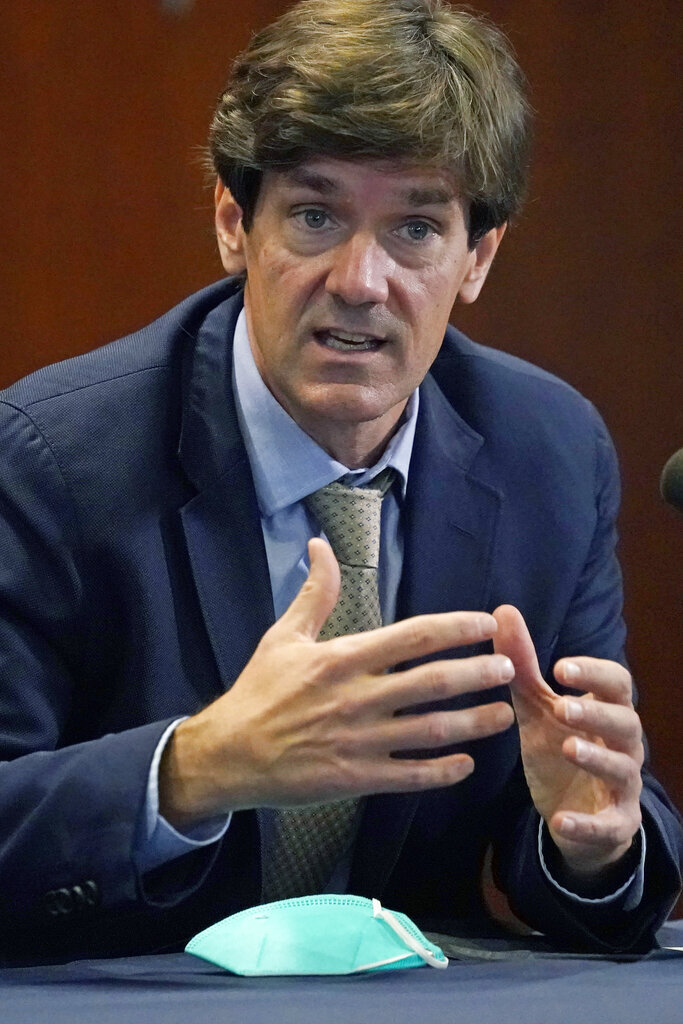
    “Household contacts versus a contact at school appeared to be more important in a child’s risk for being infected,” said Dr. Charlotte Hobbs, professor of pediatric infectious diseases at UMMC and lead author on the study’s findings. Co-authors include experts from the University of Mississippi School of Nursing and the Mississippi State Department of Health.

    State Epidemiologist Dr. Paul Byers, who contributed to the research study, said the report highlights what health professionals have seen “played out time and time again” during the pandemic.

    “It is imperative that we arm parents and families with the information needed to prevent infection in themselves and their children,” Byers said.

    Hobbs said protecting children from becoming infected with coronavirus is essential to keeping the state’s schools and daycares open.

    “We all know the vital nature of school for our children developmentally, academically and socially,” she said.

    ___

    Follow AP coverage of the pandemic at https://apnews.com/VirusOutbreak and https://apnews.com/UnderstandingtheOutbreak.

  • Pfizer To Supply US With Additional 100M Doses Of Vaccine

    Pfizer To Supply US With Additional 100M Doses Of Vaccine

    WASHINGTON (AP) — Pfizer said Wednesday it will supply the U.S. government with an additional 100 million doses of its COVID-19 vaccine under a new agreement between the pharmaceutical giant and the Trump administration.

    Pfizer and its German partner BioNTech said that will bring their total current commitment to 200 million doses for the U.S. That should be enough to vaccinate 100 million people with the two-shot regimen. The government also has an option to purchase an additional 400 million doses.

    “This new federal purchase can give Americans even more confidence that we will have enough supply to vaccinate every American who wants it by June 2021,” said Health and Human Services Secretary Alex Azar in a statement. The cost to taxpayers: $1.95 billion for the additional 100 million doses.

    To aid vaccine production, the government said it is using its authority under a Cold War-era law that allows it to direct private manufacturing.

    Pfizer’s vaccine was the first to be approved for emergency use by the Food and Drug Administration. It has now been joined by another two-shot vaccine from Moderna, developed in close collaboration with the National Institutes of Health. The government began shipping the Pfizer vaccine to states last week, and the one from Moderna this week.

    The priority groups for first vaccination include health care workers and nursing home residents. Gradually more Americans will have access to the free vaccines, which have been shown to be highly effective in clinical studies undertaken so far.

    Separately, HHS announced it has joined forces with another big pharma company — Merck— to support the large-scale manufacture of a promising treatment for patients suffering from severe COVID-19 illness.

    The treatment, still under investigation and not yet approved by the FDA, is known as MK-7110. It has the potential to minimize the damaging effects of an overactive immune response to COVID-19. This immune overdrive unleashes a cascade of effects on the human body, complicating the life-saving efforts of doctors and nurses.

    The government is paying Merck about $356 million to fast-track production of its treatment under the auspices of Operation Warp Speed, a joint effort between HHS, the Pentagon, and drug companies to develop vaccines and treatments for COVID-19. It’s the same collaboration that led to Moderna’s vaccine. The money will allow Merck to deliver up to 100,000 doses by June 30, if the FDA clears the treatment for emergency use.

    The current wave of COVID-19 is straining hospitals in a number of states, from California to Pennsylvania, and Oklahoma to Rhode Island. Having better treatments would help keep patients out of intensive care, improving their chances of survival and reducing the burden and stress on hospital staff.

    Under the Pfizer deal announced Wednesday, the company will deliver at least 70 million of the additional vaccine doses by June 30, with the remaining 30 million to be delivered no later than July 31.

    “With these 100 million additional doses, the United States will be able to protect more individuals and hopefully end this devastating pandemic more quickly,” Pfizer CEO Albert Bourla said in a statement. “We look forward to continuing our work with the U.S. government and healthcare providers around the country.”

    Pfizer initially had a contract through Operation Warp Speed to supply the government with 100 million doses of its vaccine. The drugmaker will receive nearly $2 billion for that deal as well.

    The Associated Press previously reported that the government was close to reaching the just-announced deal with Pfizer in exchange for helping the company gain better access to manufacturing supplies.

    A law dating back to the Korean War gives the government authority to direct private companies to produce critical goods in times of national emergency. Called the Defense Production Act, it’s expected to help Pfizer secure some raw materials needed for its vaccine.

    “Operation Warp Speed and the Department of Health and Human Services are using the Defense Production Act to support the production of the six OWS-related vaccines, including Pfizer,” said HHS spokesman Michael Pratt. “Through the selective application of DPA authorities, OWS helps prioritize access to the critical materials and supplies necessary to expand vaccine production in support of U.S. government contracts.”

    The other four vaccines are undergoing trials to determine their effectiveness and better understand their overall safety.

    Pfizer and BioNTech undertook their own vaccine development, maintaining a more arms-length relationship with the government. But approval of their vaccine won them immediate name recognition, raising hopes of taming a pandemic that has killed more than 320,000 Americans and hobbled much of the economy. Local TV stations across the country began broadcasting scenes of doctors and nurses garbed in hospital scrubs receiving the first vaccinations. Some polls showed easing skepticism about getting vaccinated.

    After early failures with testing, Trump administration officials are hoping to write a very different ending with vaccines. Operation Warp Speed has financed the development, manufacture and distribution of millions of doses, with the goal of providing a free vaccine to any American who wants one.

    Operation Warp Speed is on track to have about 40 million doses of vaccine by the end of this month, of which about 20 million would be allocated for first vaccinations. Distribution of those doses would span into the first week of January. Both the Pfizer and Moderna vaccines require two shots to be fully effective.

    ___

    Associated Press writer Jonathan Lemire contributed to this report.

  • Trump Threatens COVID Relief, Pelosi Urges ‘Sign The Bill’

    Trump Threatens COVID Relief, Pelosi Urges ‘Sign The Bill’

    WASHINGTON (AP) — President Donald Trump has threatened to torpedo Congress’ massive COVID-19 relief and year-end package, upending a hard-fought compromise in the midst of a raging pandemic and deep economic uncertainty by demanding changes fellow Republicans have opposed.

    View all (5)

    Trump assailed the bipartisan $900 billion bill and broader government funding package in a video he tweeted out Tuesday night and suggested he may not sign the legislation. That revives threats of a federal government shutdown. He called on lawmakers to increase direct payments for most Americans from $600 to $2,000 for individuals and $4,000 for couples.

    House Speaker Nancy Pelosi urged Trump in a Wednesday tweet to “sign the bill to keep government open!”

    Pelosi wrote in a letter to colleagues “the entire country knows that it is urgent for the President to sign this bill.”

    The final text of the more than 5,000-page bill was still being prepared by Congress and was not expected to be sent to the White House for Trump’s signature before Thursday or Friday, an aide said.

    Following Trump’s threat, Pelosi all but dared his Republican allies in Congress to meet the demand for far higher direct payments. She said she would offer the proposal for a vote on Thursday. But it would be offered under a procedure that allows just one lawmaker to block a vote and during a so-called pro forma session, with few lawmakers expected to attend.

    Republicans complain Trump’s proposal costs too much, but have not said if they will block it.

    Railing against a range of provisions in the broader year-end funding package, including for foreign aid, Trump in his video message told lawmakers to “get rid of the wasteful and unnecessary items from this legislation and to send me a suitable bill.”

    Trump did not specifically vow to veto the bill, and there may be enough support for the legislation in Congress to override him if he does. But if Trump were to upend the sprawling legislation, the consequences would be severe, including no federal aid to struggling Americans and small businesses, and no additional resources to help with vaccine distribution. In addition, because lawmakers linked the pandemic relief bill to an overarching funding measure, the government would shut down on Dec. 29.

    The relief package was part of a hard-fought compromise bill that includes $1.4 trillion to fund government agencies through September and contains other end-of-session priorities such as money for cash-starved transit systems, an increase in food stamp benefits and about $4 billion to help other nations provide a COVID-19 vaccine for their people.

    Lawmakers spent months in a stalemate over pandemic relief funds, even as COVID-19 cases soared across the country. Democrats had pushed for higher payments to Americans, but compromised with Republicans to allow a deal to proceed.

    “At last, the President has agreed to $2,000. Democrats are ready to bring this to the Floor this week by unanimous consent. Let’s do it!,” Pelosi said in an earlier tweet.

    Republicans have been reluctant to spend more on pandemic relief and only agreed to the big year-end package as time dwindled for a final deal. And Sen. Chuck Schumer, the Senate Democratic leader, said that “Trump needs to sign the bill to help people and keep the government open,” and Congress would step up for more aid after.

    Trump’s call for changes to the legislation will test his sway with a Republican Party he has held tight control of throughout his presidency. Several Senate Republicans, including Majority Leader Mitch McConnell, have begun to gingerly break with Trump and acknowledge his defeat to President-elect Joe Biden, a step Trump has refused to take. McConnell has also warned Republicans against disputing the election on Jan. 6, when Congress must formally affirm the results.

    Shortly after castigating the relief bill, Trump challenged McConnell and Sen. John Thune, the No. 2 Senate Republican who has also said any effort to overturn Biden’s victory would be futile. Trump said he would back a primary challenge to Thune when he is up for reelection in 2022.

    Trump’s threats to hold up the pandemic legislation could also complicate matters for Republicans in Georgia, where two runoff races to determine control of the Senate will be held in January. Sens. David Perdue and Kelly Loeffler have been running as ardent supporters of Trump and will now face questions about whether they will back his call for more money for Americans.

    Jon Ossoff, Perdue’s Democratic opponent, tweeted simply on Tuesday night: “$2,000 checks now.”

    The relief package was brought forward Monday afternoon and sped through the House and Senate in a matter of hours as lawmakers worked to close the books on the year. While many lawmakers complained about being given so little time to read the bill, they overwhelmingly voted for it as local businesses and constituents seek economic relief from the pandemic

    The Senate cleared the huge relief package by a 92-6 vote after the House approved it by another lopsided vote, 359-53. Those votes totals would be enough to override a veto should Trump decide to take that step.

    After months of partisanship and politicking about pandemic relief, the logjam broke after Biden urged his party to accept a compromise with top Republicans that is smaller than many Democrats would have liked.

    The relief bill Trump is criticizing would establish a temporary $300 per week supplemental jobless benefit and a $600 direct stimulus payment to most Americans, along with a new round of subsidies for hard-hit businesses, restaurants and theaters and money for schools, health care providers and renters facing eviction.

    Earlier in the day, Biden applauded lawmakers for their work. He described the package as far from perfect, “but it does provide vital relief at a critical time.”

    He also said more relief would be needed in the months ahead. “We have our first hint and glimpse of bipartisanship,” Biden said. “In this election, the American people made it clear they want us to reach across the aisle and work together.”

  • Edwards Keeps Virus Rules As COVID-19 Hospitalizations Surge

    Edwards Keeps Virus Rules As COVID-19 Hospitalizations Surge

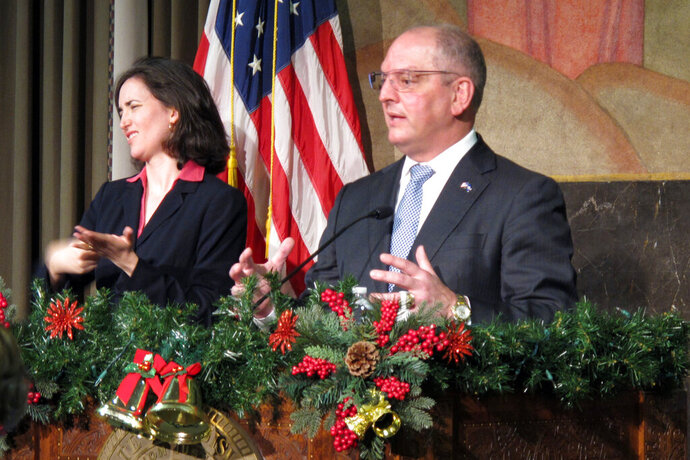
    BATON ROUGE, La. (AP) — Warning the holidays threaten to exacerbate Louisiana’s latest coronavirus surge, Gov. John Bel Edwards said Tuesday he’s keeping the current COVID-19 restrictions on businesses and activities across a Christmas season he’s cautioning shouldn’t look like previous ones.

    The Democratic governor’s rules, which he toughened in late November, were set to expire Wednesday. Edwards said he renewed them through Jan. 13, announcing the decision as Louisiana reached its highest number of hospitalized COVID-19 patients since April.

    “It remains a very perilous situation for the state with respect to COVID,” Edwards said.

    He added: “If we insist on traveling and having those holiday-related activities and gatherings like we normally would, then we’re obviously going to be in even more trouble.”

    The decision to maintain restrictions wasn’t a surprise. Edwards already had said he wouldn’t loosen the limits, which include a statewide mask mandate. The only question going into Tuesday’s announcement had been whether he would tighten them further, which he decided against.

    While the start of vaccinations has offered hope of an end to the pandemic, it remains months before widespread immunizations will be available. At least 22,000 people in Louisiana — hospital workers and EMS employees — have received their first of two vaccinations so far, according to new tracking information released on the state health department’s website Tuesday.

    Vaccinations for people who live and work at nursing homes and other long-term care facilities are set to begin in Louisiana next week.

    Edwards said he hasn’t decided who will be next in line for shots after those groups.

    He’s sifting through the latest recommendations from a panel of scientific experts that advises the U.S. Centers for Disease Control and Prevention. Those suggestions called for states to next prioritize people 75 and older and essential workers such as firefighters, teachers and grocery workers.

    The governor said he expects Louisiana to largely follow that proposal. If the state makes adjustments, Edwards said, “they’re going to be on the margins. So, our priorities will not look markedly different.”

    Under Edwards’ continuing Phase 2 rules, restaurants, gyms, salons, casinos, malls and other nonessential businesses will have to continue limiting customer numbers to 50% of their occupancy rate. Crowds at churches will stay restricted to 75% of occupancy including for Christmas services.

    Most bars likely will remain limited to takeout, delivery and outside seating, because their parishes don’t meet the low percentages of coronavirus tests returning positive required to allow indoor drinking at bars. Indoor gatherings for weddings and events will continue to be limited to 75 people or a maximum of 25% occupancy, whichever is less. Outdoor gatherings have looser limits.

    Louisiana is in its third spike of coronavirus cases, hospitalizations and deaths since the state’s outbreak began in mid-March.

    The health department said Tuesday that 1,647 people are hospitalized with the COVID-19 disease caused by the coronavirus, higher than the hospitalization numbers of Louisiana’s summer surge. Public health leaders are concerned the facilities could soon be overwhelmed if the virus’ spread worsens because of holiday gatherings.

    “There is more COVID circulating now in the state than there ever has been before,” said Dr. Joe Kanter, the governor’s chief public health adviser.

    The state is averaging more than 2,000 new confirmed cases of the coronavirus daily over the last week. At least 6,813 people are confirmed to have died from COVID-19 in the state, according to health department data.

    The governor’s restrictions are being challenged in court by House Republicans, who sought to nullify a previous version of the rules. A district judge had ruled the process used by the GOP lawmakers unconstitutional, but the Louisiana Supreme Court overturned that decision on a procedural issue and sent the case back to the lower court judge for a new hearing.

    ___

    Follow AP’s coverage of the pandemic at https://apnews.com/hub/coronavirus-pandemic and https://apnews.com/UnderstandingtheOutbreak. Follow Melinda Deslatte on Twitter at http://twitter.com/melindadeslatte.

  • COVID Cases In Mississippi Surpass 200,000 Before Christmas

    COVID Cases In Mississippi Surpass 200,000 Before Christmas

    JACKSON, Miss. (AP) — The total number of coronavirus cases in Mississippi surpassed 200,000 Wednesday, two days before the Christmas holiday when health officials said they expect a spike due to social gatherings.

    During a virtual briefing with the news media Tuesday, Dr. Thomas Dobbs, Mississippi’s state health officer, pleaded with residents to adhere to state guidelines around masks and social distancing on Christmas. The safest way to celebrate the holiday is to confine gatherings to nuclear family only, Dobbs said.

    “Be aware of the superspreader at your dinner table,” he said. “Please know how vulnerable we can be when we mix people who are younger and older.”

    One holiday-related event in the state has already caused an outbreak, according to local news reports.

    The Sun Herald reports that at least 10 people on the Mississippi coast have tested positive after a week of events tied to the Biloxi Yacht Club.

    The club held the Commodore’s Ball, an evening of dinner and dancing in cocktail attire, inside the yacht club Dec. 12. Organizers say mask-wearing and social distancing was enforced. However, now-deleted social media posts showed attendees pictured without masks dancing shoulder to shoulder, according to The Herald.

    The next day, families were invited to the club to visit with Santa and Mrs. Claus. The marina committee met in-person on Tuesday afternoon, followed by a board meeting on Wednesday.

    Jay Lee, the club’s incoming leader, told the Sun Herald that most of the people who tested positive were at the marina committee meeting. Several people who had been at the ball attended the marina committee meeting at the club, but not everyone who tested positive attended the ball, Lee said.

    The Biloxi Yacht Club is still planning to hold a dinner on New Year’s Eve, Lee said. He said club’s officers will meet after Christmas to make a final decision about the event.

    The Ocean Springs Yacht Club has postponed their annual Commodore’s Ball, typically held on New Year’s Eve, because of the pandemic.

    The state Health Department reported Wednesday that Mississippi had 2,634 new confirmed cases of the highly contagious virus as of Tuesday evening. The department also reported 43 new deaths Wednesday, with 37 of them happening between Oct. 30 and Tuesday. The state has reported 200,325 cases of the virus and 4,533 deaths from it since the start of the pandemic.

    ___

    Follow AP coverage of the pandemic at https://apnews.com/VirusOutbreak and https://apnews.com/UnderstandingtheOutbreak.

  • Consumer Relief: COVID Bill To End ‘Surprise’ Medical Bills

    Consumer Relief: COVID Bill To End ‘Surprise’ Medical Bills

    WASHINGTON (AP) — People with private health insurance will see the nasty shock of “surprise” medical bills virtually gone, thanks to the coronavirus compromise passed by Congress.

    The charges that can run from hundreds to tens of thousands of dollars come from doctors and hospitals that are outside the network of a patient’s health insurance plan. It’s estimated that about 1 in 5 emergency visits and 1 in 6 inpatient admissions will trigger a surprise bill.

    Although lawmakers of both parties long agreed that the practice amounted to abusive billing, a lobbying war between doctors and insurers had thwarted a compromise, allowing the impasse to become a symbol of dysfunction in Washington.

    “This has been a profoundly distressing pocketbook issue for families for years,” said Karen Pollitz, a health insurance expert with the nonpartisan Kaiser Family Foundation. “Some of these bills are onerous, and they all strike people as completely unfair.”

    The compromise would take patients and their families out of the financial crosshairs by limiting what they can be billed for out-of-network services to a fee that’s based on in-network charges. The amount consumers pay would get counted toward their in-network annual deductible.

    Insurers and service providers would submit their billing disputes to an independent dispute resolution process, which will follow certain guidelines. The main provisions of the legislation would take effect Jan. 1, 2022.

    “Generally speaking, keeping the consumer out of it and forcing the providers to be the ones to settle is a positive,” said Eagan Kemp, a policy expert with Public Citizen, a liberal advocacy group. Although states have been moving to curb surprise billing, federal action was needed because states do not have jurisdiction over large employer plans that cover tens of millions of workers and their families.

    Key elements of the legislation would:

    — Hold patients harmless from surprise bills stemming from emergency medical care. That would apply if the patient is seen at an out-of-network facility, or if they are treated by an out-of-network clinician at an in-network hospital. In either case, the patient could only be billed based on their plan’s in-network rate.

    — Protect patients admitted to an in-network hospital for a planned procedure when an out-of-network clinician gets involved. This can happen when a surgeon is called in to assist in the operating room, or if the anesthesiologist on duty is not part of the patient’s plan.

    — Generally require out-of-network service providers to give patients 72-hour notice of their estimated charges. Patients would have to agree to receive out-of-network care for the hospital or doctor to then bill them.

    — Bar air ambulance services from sending patients surprise bills for more than the in-network cost sharing amount. Air ambulance charges have become a bigger problem in states where patients have to travel long distances to get to the best hospitals. However, ground ambulance services will not face the same restrictions, and the legislation only calls for more study of their billing practices.

    The compromise legislation involved two years of work from dozens of lawmakers of both parties and key committees, including Energy and Commerce and Ways and Means in the House, and Health, Education, Labor and Pensions in the Senate.

    Surprise bills hit patients and their families when they are most vulnerable — after a medical emergency or following a complex surgical procedure. Often patients are able to negotiate lower charges by working with their insurers and the medical provider. But the process usually takes months, adding stress and anxiety. Sometimes it doesn’t work out and the bills are sent to collection agencies.

    “Our constituents have done everything right at the doctor’s office or hospital yet still found themselves stuck with surprise medical bills, sometimes to the tune of tens of thousands of dollars,” said Sens. Maggie Hassan, D-N.H., and Bill Cassidy, R-La. “And frequently, they have to fight these bills at the same time they are facing a medical crisis.”

    According to the Kaiser Foundation, 18% of emergency visits lead to at least one out-of-network charge for people covered by large employers, as do 16% of in-network inpatient admissions. New York and Texas have among the highest rates.

    The problem is a direct of result of high health care costs. To try to keep premiums in check, insurers set up networks of hospitals and doctors who agree in advance on payment levels. But some high-demand clinicians, such as emergency room doctors and anesthesiologists, have an incentive to stay out of at least some networks, trying to maximize their earning power. That dynamic has grown more complicated as profit-seeking investors buy out medical practices that have greater billing leverage.

    Insurers were cool to the compromise, saying the structure of the dispute resolution process could lead to higher payouts that then feed premium increases. Some Democrats had advocated using a predetermined price list to resolve billing disputes, but that struck Republicans and other Democrats as too close to government rate setting.

    “Our for-profit health care system really allows companies to make money in the different gaps of the system,” said Kemp, the health care advocate from Public Citizen. “This is a hopeful day. I thought between the insurers and the providers, there wasn’t going to be surprise billing legislation passed.”

    Public programs like Medicare and Medicaid prohibit or restrict such billing practices.

  • US Deaths In 2020 Top 3 Million, By Far Most Ever Counted

    US Deaths In 2020 Top 3 Million, By Far Most Ever Counted

    NEW YORK (AP) — This is the deadliest year in U.S. history, with deaths expected to top 3 million for the first time — due mainly to the coronavirus pandemic.

    Final mortality data for this year will not be available for months. But preliminary numbers suggest that the United States is on track to see more than 3.2 million deaths this year, or at least 400,000 more than in 2019.

    U.S. deaths increase most years, so some annual rise in fatalities is expected. But the 2020 numbers amount to a jump of about 15%, and could go higher once all the deaths from this month are counted.

    That would mark the largest single-year percentage leap since 1918, when tens of thousands of U.S. soldiers died in World War I and hundreds of thousands of Americans died in a flu pandemic. Deaths rose 46% that year, compared with 1917.

    COVID-19 has killed more than 318,000 Americans and counting. Before it came along, there was reason to be hopeful about U.S. death trends.

    The nation’s overall mortality rate fell a bit in 2019, due to reductions in heart disease and cancer deaths. And life expectancy inched up — by several weeks — for the second straight year, according to death certificate data released Tuesday by the Centers for Disease Control and Prevention.

    But life expectancy for 2020 could end up dropping as much as three full years, said Robert Anderson of the Centers for Disease Control and Prevention.

    The CDC counted 2,854,838 U.S. deaths last year, or nearly 16,000 more than 2018. That’s fairly good news: Deaths usually rise by about 20,000 to 50,000 each year, mainly due to the nation’s aging, and growing, population.

    Indeed, the age-adjusted death rate dropped about 1% in 2019, and life expectancy rose by about six weeks to 78.8 years, the CDC reported.

    “It was actually a pretty good year for mortality, as things go,” said Anderson, who oversees CDC death statistics.

    The U.S. coronavirus epidemic has been a big driver of deaths this year, both directly and indirectly.

    The virus was first identified in China last year, and the first U.S. cases were reported this year. But it has become the third leading cause of death, behind only heart disease and cancer. For certain periods this year, COVID-19 was the No. 1 killer.

    But some other types of deaths also have increased.

    A burst of pneumonia cases early this year may have been COVID-19 deaths that simply weren’t recognized as such early in the epidemic. But there also have been an unexpected number of deaths from certain types of heart and circulatory diseases, diabetes and dementia, Anderson said.

    Many of those, too, may be related to COVID. The virus could have weakened patients already struggling with those conditions, or could have diminished the care they were getting, he said.

    Early in the epidemic, some were optimistic that car crash deaths would drop as people stopped commuting or driving to social events. Data on that is not yet in, but anecdotal reports suggest there was no such decline.

    Suicide deaths dropped in 2019 compared with 2018, but early information suggests they have not continued to drop this year, Anderson and others said.

    Drug overdose deaths, meanwhile, got much worse.

    Before the coronavirus even arrived, the U.S. was in the midst of the deadliest drug overdose epidemic in its history.

    Data for all of 2020 is not yet available. But last week the CDC reported more than 81,000 drug overdose deaths in the 12 months ending in May, making it the highest number ever recorded in a one-year period.

    Experts think the pandemic’s disruption to in-person treatment and recovery services may have been a factor. People also are more likely to be taking drugs alone — without the benefit of a friend or family member who can call 911 or administer overdose-reversing medication.

    But perhaps a bigger factor are the drugs themselves: COVID-19 caused supply problems for dealers, so they are increasingly mixing cheap and deadly fentanyl into heroin, cocaine and methamphetamine, experts said.

    “I don’t suspect there are a bunch of new people who suddenly started using drugs because of COVID. If anything, I think the supply of people who are already using drugs is more contaminated,” said Shannon Monnat, a Syracuse University researcher who studies drug overdose trends.

    ___

    The Associated Press Health and Science Department receives support from the Howard Hughes Medical Institute’s Department of Science Education. The AP is solely responsible for all content.