Category: COVID-19

  • Analysis: Politics Infuse Mississippi Governor’s Budget Plan

    Analysis: Politics Infuse Mississippi Governor’s Budget Plan

    JACKSON, Miss. (AP) — Mississippi Gov. Tate Reeves is using his state budget proposal to appeal to a conservative voting base. He’s proposing a new $3 million “Patriotic Education Fund” because he says young people are being filled with ideas that undermine the belief in American greatness.

    The Republican governor released his recommendations last week for a $6 billion budget for the fiscal year that begins July 1.

    “Across the country, young children have suffered from indoctrination in far-left socialist teachings that emphasize America’s shortcomings over the exceptional achievements of this country,” the Reeves budget document says. “Revisionist history has aimed to tear down American institutions, and it is poisoning a generation.”

    Reeves has been a staunch supporter of President Donald Trump. On Nov. 2, the Republican president created created a “1776 Commission” to promote Trump’s vision of patriotic education. Trump had criticized The New York Times’ “1619 Project,” which examined the long-term consequences of slavery in the United States.

    Reeves unveiled his budget Nov. 16 on a Facebook live session. He said young people need to be taught “the good and the bad” about “what makes America the greatest place on earth, what makes America — these United States of America — the greatest country in the history of mankind.”

    Reeves did not offer specifics about what would be taught as patriotic. For example, could it include lessons about people who challenged Mississippi’s deeply segregated society in the 1960s? Were they patriotic? Mississippi’s governor at the time, Democrat Ross Barnett, did not think so.

    “We must not and we cannot allow the liberals, the left-wing elements of this nation, which are present in both major political parties (to) infiltrate our ranks through our schools and other media and brainwash our youth,” Barnett said in 1962.

    A clip of Barnett can be seen at about the 9-minute mark in “The Toughest Job,” a movie about Democrat William Winter, who was elected Mississippi governor in 1979.

    History professor Robert Luckett told The Associated Press on Thursday that Reeves, in proposing a “Patriotic Education Fund” is using “dog whistle” phrases to appeal to conservatives by raising the specter of socialism spreading in the U.S.

    “Frankly, it strikes me as just kind of a political ploy and a political statement in the current climate we’re in, especially in these waning days of the Trump administration,” said Luckett, director of the Margaret Walker Center at Jackson State University.

    Luckett said “there’s something very anti-intellectual about and something dangerous” about the idea that historians should stop evaluating information.

    There’s no guarantee, of course, that the proposed “Patriotic Education Fund” will survive.

    Governors can make spending suggestions, but budget-writing is a legislative responsibility. Mississippi legislators have a long tradition of ignoring governors’ ideas. Reeves knows this because he did it during eight years as lieutenant governor, when he presided over the Senate and alternated years, with the House speaker, as chairman of the 14-member Joint Legislative Budget Committee.

    On Dec. 7, the Budget Committee will release its own set of spending recommendations for the year that begins July 1. More budget discussions will happen after the legislative session starts in January. All 122 members of the House and all 52 members of the Senate are supposed to vote on final spending plans by early April.

    In Reeves’ budget proposal, he largely ignores his own 2019 campaign promise to increase teacher pay all four years during this term as governor. He recommends bonuses for teachers in high-performing schools or in schools that improve in academic ratings.

    He also proposes reducing spending for schools that don’t offer in-person instruction during the coronavirus pandemic. The next budget year is months away, but Reeves made his recommendations as Mississippi and other states are seeing a surge in new virus cases.

    ____

    Emily Wagster Pettus has covered Mississippi government and politics since 1994. Follow her on Twitter: http://twitter.com/EWagsterPettus.

  • Pfizer Seeking Emergency Use Of Its COVID-19 Vaccine In US

    Pfizer Seeking Emergency Use Of Its COVID-19 Vaccine In US

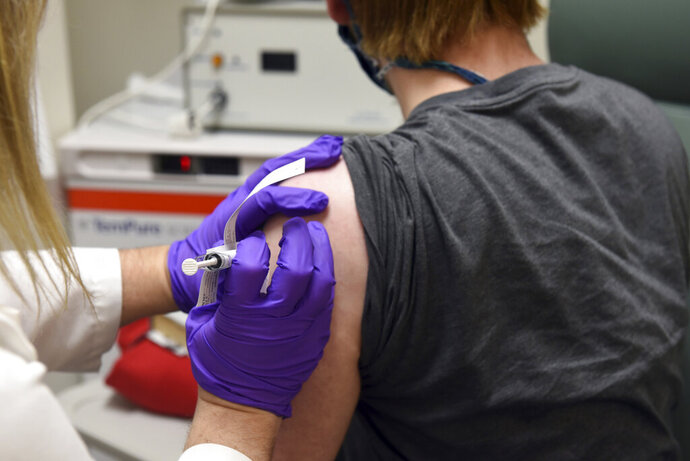
    Pfizer said Friday it is asking U.S. regulators to allow emergency use of its COVID-19 vaccine, starting the clock on a process that could bring limited first shots as early as next month and eventually an end to the pandemic — but not until after a long, hard winter.

    The action comes days after Pfizer Inc. and its German partner BioNTech announced that its vaccine appears 95% effective at preventing mild to severe COVID-19 disease in a large, ongoing study.

    The companies said that protection plus a good safety record means the vaccine should qualify for emergency use authorization, something the Food and Drug Administration can grant before the final testing is fully complete. In addition to Friday’s FDA submission, they have already started “rolling” applications in Europe and the U.K. and intend to submit similar information soon.

    “Our work to deliver a safe and effective vaccine has never been more urgent,” Pfizer CEO Albert Bourla said in a statement.

    With the coronavirus surging around the U.S. and the world, the pressure is on for regulators to make a speedy decision.

    “Help is on the way,” Dr. Anthony Fauci, the top U.S. infectious disease expert said on the eve of Pfizer’s announcement, adding that it’s too early to abandon masks and other protective measures. “We need to actually double down on the public health measures as we’re waiting for that help to come.”

    Friday’s filing would set off a chain of events as the FDA and its independent advisers debate if the shots are ready. If so, still another government group will have to decide how the initial limited supplies are rationed out to anxiously awaiting Americans.

    How much vaccine is available and when is a moving target, but initial supplies will be scarce and rationed. Globally, Pfizer has estimated it could have 50 million doses available by year’s end.

    About 25 million may become available for U.S. use in December, 30 million in January and 35 million more in February and March, according to information presented to the National Academy of Medicine this week. Recipients will need two doses, three weeks apart. The U.S. government has a contract to buy millions of Pfizer-BioNTech doses, as well as other candidates than pan out, and has promised shots will be free.

    Not far behind is competitor Moderna Inc.’s COVID-19 vaccine. Its early data suggests the shots are as strong as Pfizer’s, and that company expects to also seek emergency authorization within weeks.

    Here’s what happens next:

    MAKING THE DATA PUBLIC

    The public’s first chance to see how strong the evidence really is will come in early December at a public meeting of the FDA’s scientific advisers.

    So far, what’s known is based only on statements from Pfizer and BioNTech. Of 170 infections detected to date, only eight were among people who’d received the actual vaccine and the rest had gotten a dummy shot. On the safety side, the companies cite results from 38,000 study participants who’ve been tracked for two months after their second dose. That’s a milestone FDA set because historically, vaccine side effects don’t crop up later than that.

    “We’ll drill down on these data,” said FDA adviser Dr. Paul Offit of the Children’s Hospital of Philadelphia.

    Think of it like science on trial. A few days before the meeting, the FDA will release its own internal analysis. That sets the stage for the advisers’ daylong debate about any signs of safety concerns and how the new vaccine technology works before rendering a verdict.

    They’ll recommend not just whether FDA should allow broader use of the vaccine generally but if so, for whom. For example, is there enough proof the vaccine works as well for older, sicker adults as for younger, healthier people?

    There’s still no guarantee. “We don’t know what that vote’s going to be,” said former FDA vaccine chief Norman Baylor.

    EMERGENCY USE ISN’T THE SAME AS FULL APPROVAL

    If there’s an emergency green light, “that vaccine is still deemed investigational. It’s not approved yet,” Dr. Marion Gruber, chief of FDA’s vaccine office, told the National Academy of Medicine this week.

    That means anyone offered an emergency vaccination must get a “fact sheet” describing potential benefits and risks before going through with the shot, she said.

    There will be a lot of unknowns. For example, the 95% protection rate is based on people who developed symptoms and then were tested for the virus. Can the vaccinated get infected but have no symptoms, able to spread the virus? How long does protection last?

    That’s why the 44,000-person study needs to keep running — something difficult considering ethically, participants given dummy shots at some point must be offered real vaccine, complicating the search for answers.

    “I’m curious,” said Barry Colvin, 52, of White Plains, New York, who is taking part in that study at NYU Langone Health.

    But he’s not in a great hurry to find out which group he’s in. “You need to hang in there for a while to understand and answer a lot of the other questions that remain unknown.”

    Additionally at least for now, pregnant women won’t qualify because they weren’t studied. Pfizer only recently began testing the vaccine in children as young as 12.

    A decision on Pfizer-BioNTech’s vaccine won’t affect other COVID-19 vaccine candidates in the pipeline, which will be judged separately.

    MANUFACTURING

    Brewing vaccine is more complex than typical drug manufacturing, yet the millionth dose to roll out of Pfizer’s Kalamazoo, Michigan, factory must be the same purity and potency as every dose before and after.

    That means the FDA decision isn’t just based on study data, but on its determination that the vaccine is being made correctly.

    The Pfizer-BioNTech vaccine — and Moderna’s shots — are made with brand-new technology. They don’t contain the actual coronavirus. Instead, they’re made with a piece of genetic code for the “spike” protein that studs the virus.

    That messenger RNA, or mRNA, instructs the body to make some harmless spike protein, training immune cells to recognize it if the real virus eventually comes along.

    GETTING INTO PEOPLE’S ARMS

    Another government group — advisers to the Centers for Disease Control and Prevention — decides who is first in line for scarce doses. Health and Human Services Secretary Alex Azar said he hopes that decision can be made at the same time as FDA’s.

    The Trump administration’s Operation Warp Speed has worked with states to line up how many doses they’d need to cover the populations offered vaccine first.

    Pfizer will ship those supplies as ordered by the states — only after FDA gives the OK.

    Company projections of how much it will ship each month are just predictions, Baylor warned.

    “It’s not like a pizza,” he said. Manufacturing is so complex that “you don’t necessarily end up with what you thought.”

    ___

    AP video journalist Kathy Young contributed to this report.

    ___

    The Associated Press Health and Science Department receives support from the Howard Hughes Medical Institute’s Department of Science Education. The AP is solely responsible for all content.

  • Caddo Parish Weighs $500 For Covid-Impacted Families

    Caddo Parish Weighs $500 For Covid-Impacted Families

    SHREVEPORT, La. (AP) — Caddo Parish is weighing whether to pay $500 to families who have been impacted by the coronavirus pandemic, local media report.

    According to the Times of Shreveport, legislation was introduced Thursday by Caddo Parish Commissioner Stormy Gage-Watts at a parish council meeting that would pay $500 to 500 eligible families.

    Families would have to apply and meet income requirements, give proof of income and a statement of how the pandemic has impacted their family’s finances. The money would be available on a first-come basis. The money used to pay for the payments would come from money already set aside for emergency, disaster assistance, the newspaper reported.

    “Just a couple of years ago, we were able to be able to provide allocations for tornado victims so we did that through a special fund which is an emergency ordinance and this is the same thing. It’s no different,” Gage-Watts told KTBS.

    The station says there will be a public hearing on the issue on December 3.

  • US Jobless Claims Rise To 742,000; Millions To Lose Aid

    US Jobless Claims Rise To 742,000; Millions To Lose Aid

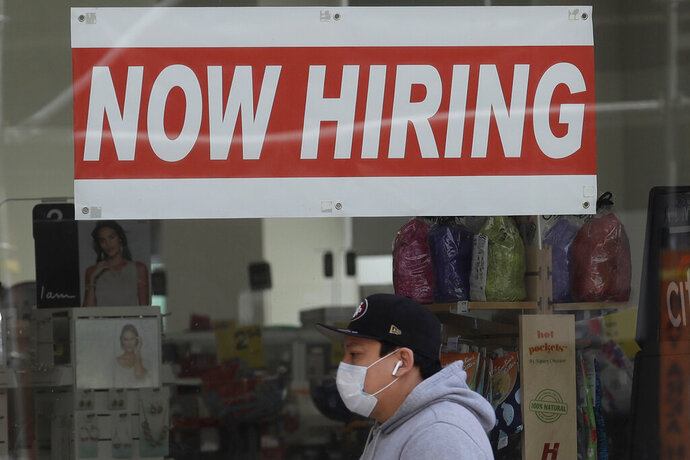
    WASHINGTON (AP) — The number of Americans seeking unemployment aid rose last week to 742,000, the first increase in five weeks and a sign that the resurgent viral outbreak is likely slowing the economy and forcing more companies to cut jobs.

    The worsening pandemic and the arrival of cold weather could accelerate layoffs in the weeks ahead. Of the roughly 20 million Americans now receiving some form of unemployment benefits, about half will lose those benefits when two federal programs expire at the end of the year.

    “The risk of further job and income loss is high now from business operations being curtailed,” said Rubeela Farooqi, chief U.S. economist at High Frequency Economics, a forecasting firm. “Also, expiration of federal benefits later this year will put renewed strain on household incomes. Overall, the labor market remains under stress.”

    The Labor Department’s report Thursday showed that applications for jobless aid rose from 711,000 in the previous week. In March, when the pandemic first intensified, the number had soared to 6.9 million. Before then, applications typically hovered about 225,000 a week.

    The surge in confirmed viral infections, and worry about its effect on the economy, are putting pressure on financial markets. The Dow Jones Industrial Average declined in early trading Thursday for a third day.

    The economy’s modest recovery is increasingly at risk, with newly confirmed daily infections in the United States having exploded 80% over the past two weeks to the highest levels on record. More states and cities are issuing mask mandates, limiting the size of gatherings, restricting restaurant dining, closing gyms or reducing the hours and capacity of bars, stores and other businesses. At least 15 states have tightened curbs on businesses to try to slow infections.

    Evidence is emerging that consumers are losing confidence in the economic outlook and pulling back on shopping, eating out and other activities. Spending on 30 million credit and debit cards tracked by JPMorgan Chase fell 7.4% earlier this month compared with a year ago. That marked a sharp drop from two weeks earlier. Consumer sentiment also declined in early November and is down nearly 21% from a year ago, according to a University of Michigan survey.

    And retail sales rose just 0.3% in October, the smallest gain since stores reopened in April after a nationwide shutdown in March. The weak gain suggests that consumers began pulling back on spending even before many new restrictions on businesses were imposed.

    The number of people who are continuing to receive traditional unemployment benefits fell to 6.4 million, the government said Thursday, from 6.8 million. Some of that decline reflects more hiring. But it also indicates that many jobless people have used up their state unemployment aid — which typically expires after six months — and have transitioned to a federal extended benefits program that lasts 13 more weeks.

    Yet that extended benefit program is one of two federal supports that are set to expire at year’s end, eliminating benefits for 9.1 million people, according to a report Wednesday from The Century Foundation. Congress has so far failed to agree on any new stimulus package for jobless individuals and struggling businesses. The cutoff of aid will sharply reduce income for the unemployed, force a further reduction in their spending and perhaps weaken the economy.

    One of those programs is Pandemic Unemployment Assistance, which made self-employed and contract workers eligible for unemployment aid for the first time. PUA was established by a multi-trillion-dollar aid package that Congress enacted in the spring.

    The second measure in the stimulus package provided the additional 13 weeks of benefits for unemployed people who have used up their state benefits.

    When those two programs expire on Dec. 26, the Century Foundation estimates that 12 million people will lose their benefits. About 2.9 million will probably transition to a state extended benefit program that can last from six to 20 weeks, the report said. The rest will lose benefits that average about $320 a week nationally.

    The expiration of benefits will make it harder for the unemployed to make rent payments, afford food or keep up with utility bills. Most economists agree that because unemployed people tend to quickly spend their benefits, such aid is effective in boosting the economy.

    Cutting off benefits with so many people still receiving them would be unusually early compared with previous recessions. In the Great Recession of 2008-2009, the government extended unemployment benefits to 99 weeks, and the additional aid lasted through 2013. When that program ended, about 1.3 million people lost benefits — a fraction of the number who would lose their aid at the end of this year.

    “We’re still down 10 million jobs since the pandemic began,” said Elizabeth Pancotti, co-author of the Century Foundation report and a policy advisor at Employ America, a left-leaning think tank. “We’re heading into the winter, we’re seeing additional business closures, consumer demand is already falling….Cutting off benefits seems inhumane to me.”

    In March and April, when the pandemic erupted in the United States, tens of millions of people applied for jobless aid. Though many of them have been rehired or have landed new jobs, those who haven’t found work began exhausting their six months of state aid as early as September.

    Most of them would then shift to the Pandemic Emergency Unemployment Compensation program, which provides 13 additional weeks. Yet the Century Foundation estimates that 3.5 million people will have used up all of those 13 weeks before the year ends. An additional 950,000 people will have run out of the 39 weeks provided by the PUA program by then, too.

  • Heading Into Holidays, US COVID-19 Testing Strained Again

    Heading Into Holidays, US COVID-19 Testing Strained Again

    NEW YORK (AP) — With coronavirus cases surging and families hoping to gather safely for Thanksgiving, long lines to get tested have reappeared across the U.S. — a reminder that the nation’s testing system remains unable to keep pace with the virus.

    The delays are happening as the country braces for winter weather, flu season and holiday travel, all of which are expected to amplify a U.S. outbreak that has already swelled past 11.5 million cases and 250,000 deaths.

    Laboratories warned that continuing shortages of key supplies are likely to create more bottlenecks and delays, especially as cases rise across the nation and people rush to get tested before reuniting with relatives.

    “As those cases increase, demand increases and turnaround times may increase,” said Scott Becker, CEO of the Association of Public Health Laboratories. “So it’s like a dog chasing its tail.”

    Lines spanned multiple city blocks at testing sites across New York City this week, leaving people waiting three or more hours before they could even enter health clinics. In Los Angeles, thousands lined up outside Dodger Stadium for drive-thru testing.

    “This is insane,” said 39-year-old Chaunta Renaud as she entered her fourth hour waiting to enter a so-called rapid testing site in Brooklyn on Tuesday. Renaud and her husband planned to get tested before Thanksgiving, when they will drive to pick up her mother for the holiday. “We got tested before and it wasn’t anything like this,” she said.

    On the one hand, the fact that testing problems are only now emerging — more than a month into the latest virus surge — is a testament to the country’s increased capacity. The U.S. is testing over 1.5 million people per day on average, more than double the rate in July, when many Americans last faced long lines.

    But experts like Johns Hopkins University researcher Gigi Gronvall said the U.S. is still falling far short of what’s needed to control the virus.

    Gronvall said the current testing rate “is on its way, but it’s nowhere close to what’s needed to shift the course of this epidemic.” Many experts have called for anywhere between 4 million and 15 million daily tests to suppress the virus.

    Trump administration officials estimate the U.S. has enough tests this month to screen between 4 million and 5 million people a day. But that doesn’t fully reflect real-world conditions. The tests used at most testing sites rely on specialized chemicals and equipment that have been subject to chronic shortages for months.

    Adm. Brett Giroir, the U.S. official overseeing testing, downplayed reports of lines and delays earlier this week. In some cases, he said, lines are caused by a lack of scheduling by testing locations, which should stagger appointments.

    “I’m sure that is going to happen from time to time, but we’re aggressively helping states in any way that we can if there are those kinds of issues,” Giroir said Monday.

    Marguerite Wynter, 28, stood in line for more than two hours to get a test Monday at a Chicago site. She plans on flying to see her mother in Massachusetts for Thanksgiving and staying through Christmas. Massachusetts requires visitors to quarantine for two weeks or show proof of a negative test.

    “It’s just more to be safe being around my family,” Wynter said. “It’s just to have peace of mind to know that I’m OK.”

    In California, health officials have given mixed messages about whether residents should get tested before the holiday.

    San Francisco’s Department of Emergency Management warned that people should not use a test to determine if they can travel. But Contra Costa County, across the bay, suggested anyone insistent on gathering with friends or relatives should get tested.

    On Tuesday, federal regulators authorized the first rapid coronavirus test that can be done at home. It delivers results in 30 minutes and will cost roughly $50. But the test kit from Lucira Health will be available by prescription only, and it won’t be rolled out nationally until the spring.

    As bad as the wait for testing has become, it is still better than in July, when the U.S. was almost entirely dependent on tests that often take two or more days for labs to process, even under ideal conditions. As cases surged past 70,000 per day, many people had to wait a week or more to learn their results, rendering the information almost worthless for isolating and tracking cases.

    In recent months, federal health officials have distributed roughly 60 million rapid, point-of-care tests that deliver results in 15 minutes. Those have helped ease some of the pressure on large labs. But not enough.

    Since Sept. 15, the daily count of U.S. tests has increased nearly 100%, based on a seven-day rolling average. However, the daily average of new COVID-19 cases has increased over 300%, to more than 161,000 as of Wednesday, according to an AP analysis.

    This week, Quest Diagnostics warned that mushrooming demand for testing has increased its turnaround time to slightly more than two days.

    The lab company said operations are being squeezed by shortages of testing chemicals, pipettes — the slender tubes used to measure and dispense chemicals — and other supplies. Those items are produced by a small number of manufacturers worldwide.

    Facing supply constraints and spiking demand, many hospitals have been forced to send some COVID-19 tests out to large labs like Quest for processing, delaying results for patients.

    “If I can do the COVID test in-house, we’re talking a small numbers of hours. If I have to send it to a reference lab, we’re talking about days,” said Dr. Patrick Godbey, laboratory director at Southeast Georgia Regional Medical Center.

    Godbey emphasized a stark point that health officials have been making for months: The U.S. outbreak is too large to be contained by testing alone. Americans must follow basic measures such as wearing masks, social distancing and frequent hand-washing.

    “You can’t test yourself out of a pandemic,” said Godbey, who is also president of the College of American Pathologists.

    On Tuesday, in line outside a Brooklyn urgent care clinic — her second attempt to get tested that day — Monica Solis, 28, echoed that sentiment. “The lines are a reminder we’re still going through this and we don’t have a perfect response yet,” she said.

    ___

    Perrone reported from Washington. Associated Press data journalist Nicky Forster in New York contributed to this report, as did AP writers Stefanie Dazio and Brian Melley in Los Angeles; Sophia Tareen in Chicago; and Janie Har in San Francisco.

    ___

    The Associated Press Health and Science Department receives support from the Howard Hughes Medical Institute’s Department of Science Education. The AP is solely responsible for all content.

  • Not Just COVID: Nursing Home Neglect Deaths Surge In Shadows

    Not Just COVID: Nursing Home Neglect Deaths Surge In Shadows

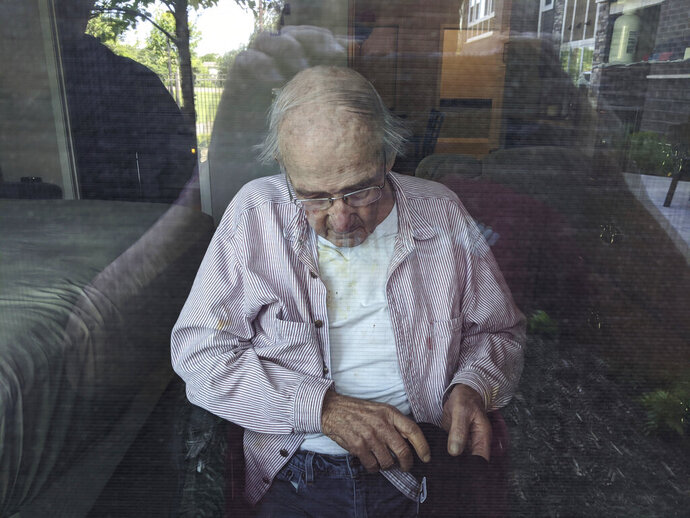
    When COVID-19 tore through Donald Wallace’s nursing home, he was one of the lucky few to avoid infection.

    He died a horrible death anyway.

    Hale and happy before the pandemic, the 75-year-old retired Alabama truck driver became so malnourished and dehydrated that he dropped to 98 pounds and looked to his son like he’d been in a concentration camp. Septic shock suggested an untreated urinary infection, E. coli in his body from his own feces hinted at poor hygiene, and aspiration pneumonia indicated Wallace, who needed help with meals, had likely choked on his food.

    “He couldn’t even hold his head up straight because he had gotten so weak,” said his son, Kevin Amerson. “They stopped taking care of him. They abandoned him.”

    As more than 90,000 of the nation’s long-term care residents have died in a pandemic that has pushed staffs to the limit, advocates for the elderly say a tandem wave of death separate from the virus has quietly claimed tens of thousands more, often because overburdened workers haven’t been able to give them the care they need.

    Nursing home watchdogs are being flooded with reports of residents kept in soiled diapers so long their skin peeled off, left with bedsores that cut to the bone, and allowed to wither away in starvation or thirst.

    Beyond that, interviews with dozens of people across the country reveal swelling numbers of less clear-cut deaths that doctors believe have been fueled not by neglect but by a mental state plunged into despair by prolonged isolation ̶ listed on some death certificates as “failure to thrive.”

    A nursing home expert who analyzed data from the country’s 15,000 facilities for The Associated Press estimates that for every two COVID-19 victims in long-term care, there is another who died prematurely of other causes. Those “excess deaths” beyond the normal rate of fatalities in nursing homes could total more than 40,000 since March.

    These extra deaths are roughly 15% more than you’d expect at nursing homes already facing tens of thousands of deaths each month in a normal year.

    “The healthcare system operates kind of on the edge, just on the margin, so that if there’s a crisis, we can’t cope,” said Stephen Kaye, a professor at the Institute on Health and Aging at the University of California, San Francisco, who conducted the analysis. “There are not enough people to look after the nursing home residents.”

    Comparing mortality rates at homes struck by COVID-19 with ones that were spared, Kaye also found that the more the virus spread through a home, the greater the number of deaths recorded for other reasons. In homes where at least 3 in 10 residents had the virus, for example, the rate of death for reasons besides the virus was double what would be expected without a pandemic.

    That suggests the care of those who didn’t contract the virus may have been impacted as healthcare workers were consumed attending to residents ill from COVID-19 or were left short-handed as the pandemic infected employees themselves.

    Chronic understaffing at nursing homes has been one of the hallmarks of the pandemic, with a few homes even forced to evacuate because so many workers either tested positive or called in sick. In 20 states where virus cases are now surging, federal data shows nearly 1 in 4 nursing homes report staff shortages.

    On New York’s Long Island, Dawn Best saw that firsthand. Before COVID-19 arrived at Gurwin Jewish Nursing Home, she was pleased with the care her 83-year-old mother Carolyn Best received. She enjoyed activities, from tai-chi classes to visits from a pony, and was doted on by staff.

    But when the lockdown started and the virus began to spread in the home, Best sensed the staff couldn’t handle what they had been dealt. The second time her mother, a retired switchboard operator, appeared on screen for a scheduled FaceTime call, she looked awful, her eyes closed as she moaned, flailed her arms above her head and just kept repeating “no.” Best insisted a doctor check her out.

    A few hours later, the doctor called, seemingly frantic, saying she only had a moment to talk.

    “The COVID is everywhere,” Best remembered her saying. “It’s in every unit. The doctors have it, the nurses have it and your mother may have it.”

    In the end, 59 residents at Gurwin would be killed by the virus, but Best’s mother never contracted it. She died instead of dehydration, her daughter said, because the staff was so consumed with caring for COVID-19 patients that no one made sure she was drinking.

    “My mom went from being unbelievably cared for to dead in three weeks,” said Best, who provided medical documents noting her mother’s dehydration. “They were in over their head more than anyone could imagine.”

    Representatives for Gurwin said they could not comment on Best’s case. The home’s administrator, Joanne Parisi, said “COVID-19 has affected us all” but that “our staff at Gurwin has been doing heroic work.”

    West Hill Health and Rehab in Birmingham, Alabama, where Wallace lived prior to his Aug. 29 death, said he was “cared for with the utmost compassion, dedication and respect.” Wallace’s son provided medical documents outlining the conditions he described.

    The nursing home trade group American Health Care Association disputed that there has been a widespread inability of staff to care for residents and dismissed estimates of tens-of-thousands of non-COVID-19 deaths as “speculation.”

    Dr. David Gifford, the group’s chief medical officer, said the pandemic created “challenges” in staffing, particularly in states like New York and New Jersey hit hard by COVID-19, but added that, if anything, staffing levels have improved because of a drop in new admissions that has lightened the patient load.

    “There have been some really sad and disturbing stories that have come out,” Gifford said, “but we’ve not seen that widespread.”

    Another industry group, LeadingAge, which represents not-for-profit long-term care facilities, said staffing challenges are real, and that care homes are struggling in the face of federal inaction to provide additional stimulus money to help pay for more workers.

    “These incidents, stemming from the challenges being faced by too many committed and caring nursing home providers during this pandemic, are horrific and heartbreaking,” said Katie Smith Sloan, LeadingAge’s president. “I hope that these tragedies will wake up politicians and the public.”

    When facilities sealed off across the country in March, advocates and inspectors were routinely kept out too, all while concerning reports trickled in, not only of serious injuries from falls or major medical declines, but of seemingly banal problems that posed serious health issues for the vulnerable.

    Mairead Painter, Connecticut’s long-term care ombudsman, said with dentists shut out, ill-fitting dentures went unfixed, a factor in mounting accounts of malnutrition, and with podiatrists gone, toenails went untrimmed, posing the possibility of painful conditions in diabetes patients.

    Even more widespread, as loved ones lost access to homes, was critical help with residents’ feeding, bathing, dressing and other tasks. The burden fell on aides already working tough shifts for little pay.

    “I don’t think anyone really understood how much time friends and family, volunteers and other people spent in the nursing home and supplemented that hands-on care,” Painter said.

    Strict rules barring in-person visitation persist in many homes, but as families and advocates have inched back inside, they’ve frequently been stunned by what they found.

    When June Linnertz returned to her father’s room at Cherrywood Pointe in Plymouth, Minnesota, in June for the first time in three months, she was struck by a blast of heat and a wall thermometer that hit 85 degrees. His sheets were soaked in sweat, his hair was plastered to his head and he was covered in bruises Linnertz would learn came from at least a half-dozen falls. His nails had been uncut so long, they curled over his fingertips and his eyes crusted over so badly he couldn’t get them open.

    The father, 78-year-old James Gill, screamed, thinking he had gone blind, and Linnertz grabbed an aide in a panic. She snipped off his diaper, revealing genitals that were deep red and skin sloughing off.

    Two days later, Gill was dead from Lewy Body Dementia, according to a copy of his death certificate provided to the AP. Linnertz always expected her father to die of the condition, which causes a progressive loss of memory and movement, but never thought he would end his days in so much needless pain.

    “What the pandemic did was uncover what was really going on in these facilities. It was bad before, but it got exponentially worse because you had the squeeze of the pandemic,” Linnertz said. “If we weren’t in a pandemic, I would have been in there … This wouldn’t have happened.”

    The assisted living facility’s parent company, Ebenezer, said: “We strongly deny the allegations made about the care of this resident,” adding that it follows “strict regulatory staffing levels” required by law.

    Cheryl Hennen, Minnesota’s long-term care ombudsman, said dozens of complaints have poured in of bedsores, dehydration and weight loss, and other examples of neglect at various facilities, such as a man who choked to death while he went unsupervised during mealtime. She fears many more stories of abuse and neglect will emerge as her staff and families are able to return to homes.

    “If we can’t get in there, how do we know what’s really happening?” she said. “We don’t know what we can’t see.”

    The nagging guilt of unnecessary death is one Barbara Leak-Watkins understands. It was just in February that her 87-year-old father, Alex Leak, went for a check-up and got lab work that made Leak-Watkins think the Army veteran, contractor and farmer would be with her for a long time to come.

    “You’re going to outlive all of us,” Leak-Watkins remembered the doctor saying.

    As nursing home outbreaks of COVID-19 proliferated, Leak-Watkins prayed that he be spared. The prayer was answered, but Leak was nonetheless found unresponsive on the floor at Brookdale Northwest in Greensboro, North Carolina, his eyes rolled back and his tongue sticking out.

    After he arrived at the hospital, a doctor there called Leak-Watkins with word: Her father had gone so long without water his potassium levels rocketed and his kidneys started failing. He’d be dead two weeks later of lactic acidosis, according to his death certificate, a fatal buildup of acid in the body when the kidneys stop working. For a man whose military service so drilled the need for hydration into him that he always had a bottle of water at hand, his daughter had never considered he could go thirsty.

    “The facility is short-staffed … underpaid and overworked,” Leak-Watkins said. If they “can’t provide you with liquids and fluids to hydrate yourself, there’s something wrong.”

    The daughter is considering filing a lawsuit but a North Carolina law granting long-term care facilities broad immunity from suits claiming negligence in injuries or death during the pandemic could stymie her efforts. Similar laws and executive orders have been enacted in more than two dozen states.

    The owner of the father’s facility, Brookdale Senior Living, said it couldn’t comment on individual cases but that “the health, happiness and wellbeing of each of our residents will always be our priority.”

    Around the country, the heartache repeats, not only among families who have already buried a member, but also those who feel they are watching a slow-moving disaster.

    In Hendersonville, Tennessee, Tara Thompson was able to see her mother for the first time in more than six months when she was hospitalized in October. The 79-year-old had dropped about 20 pounds, her eyes sunken and her legs looking more like forearms. Doctors at the hospital said she was malnourished and wasting muscle. There were bedsores on her backside and a gash on her forehead from a fall at the home. Her vocabulary had shrunk to nearly nothing and she’d taken to pulling the blankets over her head.

    The facility Thompson’s mother lived in had been engulfed in virus outbreaks, with more than half its residents testing positive and dozens of employees infected, too. She never caught it, but shaken by the lack of care, Thompson transferred her mother to a new home.

    “It has nothing to do with the virus. She’s declined because she’s had absolutely no contact with anybody who cares about her,” she said. “The only thing they have to live for are their families and, at the end of their life, you’re taking away the only thing that matters to them.”

    “Failure to thrive” was among the causes listed for Maxine Schwartz, a 92-year-old former cake decorator whose family had been encouraged prior to the lockdown by how well she’d adjusted to her nursing home, Absolut Care of Aurora Park, in upstate New York. Her daughter, Dorothy Ann Carlone, would coax her to eat in the dining room each day and they’d sing songs and have brownies back in her room. Several times a week, Schwartz walked the length of the hallway for exercise.

    When the lockdown began March 13, Carlone feared what would happen without her there. She pleaded to staff: “If you don’t let me in to feed her, she won’t eat, she will starve.”

    On March 25, when a staffer at the home sent a photo of Schwartz, Carlone was shocked how thin she was. Carlone was told her mother hadn’t been eating, even passing up her favorite brownies.

    Two days later, Carlone got an urgent call and when she arrived at the home, her mother’s skin was mottled, she was gasping for breath and her face was so drawn she was nearly unrecognizable. An hour later, she died.

    Dawn Harsch, a spokeswoman for the company that owns Absolut Care, noted a state investigation found no wrongdoing and that “the natural progression of a patient like Mrs. Schwartz experiencing advanced dementia is a refusal to eat.”

    Carlone is unconvinced.

    “She was doing so good before they locked us out,” Carlone said. “What did she think when I wasn’t showing up? That I didn’t love her anymore? That I abandoned her? That I was dead?”

    Before the lockdown, Carlone’s mother would wait by an elevator for her to arrive each day. She thinks of her mother waiting there when her visits stopped and knows the pain of the isolation must have played a role in her death.

    “I think she gave up,” she said.

    ___

    Sedensky and Condon reported from New York. AP data journalist Larry Fenn and investigative researcher Randy Herschaft contributed to this report.

  • Pfizer: COVID-19 Shot 95% Effective, Seeking Clearance Soon

    Pfizer: COVID-19 Shot 95% Effective, Seeking Clearance Soon

    Pfizer said Wednesday that new test results show its coronavirus vaccine is 95% effective, is safe and also protects older people most at risk of dying — the last data needed to seek emergency use of limited shot supplies as the catastrophic outbreak worsens across the globe.

    The announcement from Pfizer and its German partner BioNTech, just a week after they revealed the first promising preliminary results, comes as the team is preparing within days to formally ask U.S. regulators to allow emergency use of the vaccine.

    They also have begun “rolling submissions” for the vaccine with regulators in Europe, the U.K. and Canada and soon will add this new data.

    Pfizer and BioNTech had initially estimated the vaccine was more than 90% effective after 94 infections had been counted in a study that included 44,000 people.

    With the new announcement, the companies now have accumulated 170 infections in the study — and said only eight of them occurred in volunteers who got the actual vaccine rather than a dummy shot. One of those eight developed severe disease, the companies said.

    “This is an extraordinarily strong protection,” Dr. Ugur Sahin, BioNTech’s CEO and co-founder, told The Associated Press.

    The companies have not yet released detailed data on their study, and results have not been analyzed by independent experts. Also still to be determined are important questions such as how long protection lasts and whether people might need boosters.

    But all eyes are on the progress of potential vaccines as the grim infection toll jumps in the U.S. and abroad as winter weather forces people indoors, in the close quarters that fuels viral spread.

    Pfizer and BioNTech said the vaccine was more than 94% effective in adults over age 65, though it is not clear exactly how that was determined with only eight infections in the vaccinated group to analyze and no breakdown provided of those people’s ages.

    Sahin said there were enough older adults enrolled in the study and among the placebo recipients who became infected that he is confident “this vaccine appears to work in the higher-risk population.”

    Earlier this week Moderna, Inc. announced that its experimental vaccine appears to be 94.5% effective after an interim analysis of its late-stage study.

    Similar results from two vaccines both made with a brand-new technology — using a snippet of the genetic code of the coronavirus to train the body to recognize if the real virus comes along — likely will add to experts’ reassurance about the novel approach.

    While initial supplies will be scarce and rationed, as the supply grows Sahin said the companies have a responsibility to help ensure access for lower income countries as well.

    Pfizer and BioNTech also say now have the required data on the vaccine’s safety needed to seek emergency authorization from the Food and Drug Administration.

    The companies didn’t disclose safety details but said no serious vaccine side effects have been reported, with the most common problem being fatigue after the second vaccine dose, affecting about 4% of participants.

    The study has enrolled nearly 44,000 people in the U.S. and five other countries. The trial will continue to collect safety and effectiveness data on volunteers for two more years.

    Pfizer and BioNTech said they expect to produce up to 50 million vaccine doses globally in 2020 and up to 1.3 billion doses in 2021.

    U.S. officials have said they hope to have about 20 million vaccine doses each from Moderna and Pfizer available for distribution in late December. The first shots are expected to be offered to vulnerable groups like medical and nursing home workers, and people with serious health conditions.

    ___

    AP medical writer Lauran Neergaard contributed to this report.

    ___

    The Associated Press Health and Science Department receives support from the Howard Hughes Medical Institute’s Department of Science Education. The AP is solely responsible for all content.

  • Federal Prison Left Inmates With Virus In Housing For A Week

    Federal Prison Left Inmates With Virus In Housing For A Week

    WASHINGTON (AP) — A federal prison complex in Louisiana that emerged as an early coronavirus hotspot — with hundreds of inmates suffering from the virus — failed to comply with federal health guidance and left inmates with the virus in their housing units for a week without being isolated, the Justice Department’s inspector general said Tuesday.

    The inspector general’s findings after a remote inspection of the Federal Correctional Complex in Oakdale, Louisiana, comes as the Bureau of Prisons continues to struggle with an exploding number of coronavirus cases in its prisons.

    Health officials have been warning for more than a decade about the dangers of epidemics in jails and prisons, which are ideal environments for virus outbreaks. Across the country, 182,776 inmates at state and federal prisons have been diagnosed with COVID-19, according to data compiled by The Marshall Project and The Associated Press.

    In federal prisons alone, 140 inmates have died of COVID-19, including eight at FCC Oakdale.

    The inspector general’s report alleges prison officials at FCC Oakdale failed to comply with the guidance from the Centers for Disease Control and Prevention and the Bureau of Prisons’ headquarters for isolating and quarantining inmates.

    “Some inmates who had tested positive were left in their housing units for up to 6 days without being isolated,” the report concluded.

    Correction officers and other staff members at the prison were also never told they would be interacting with inmates who had tested positive with COVID-19 and were not given proper personal protective gear, the watchdog’s report said.

    While top officials at the prison asserted they had an abundant supply of protective equipment on hand, staff members told the inspector general’s office they did not have proper equipment. The report also found that in some cases staff members “did not understand the necessity” of wearing proper protection when interacting with inmates who had tested positive for the virus.

    In one instance, a staff member told investigators he didn’t have access to an N95 mask or a surgical mask when he was in close contact with infected inmates and two others said they wore only surgical masks. One of those employees later tested positive for the virus.

    Another employee said he didn’t wear an N95 mask while escorting sick inmates to a local hospital “because his supervisor told him that he did not need to wear one,” the report said. Union officials said some staff members refused to escort sick inmates because they weren’t given the appropriate gear.

    In early April, the Bureau of Prisons told the AP that local health officials told the federal government there was no need to test inmates anymore for the coronavirus and those showing symptoms should be presumed to have it. But a spokesman for the Louisiana Department of Health said at the time that officials did not tell the prison to stop testing prisoners. He said state officials advised the prison, in the absence of testing, to isolate prisoners with symptoms.

    The report also found that an outbreak at the prison forced correction officers to work longer shifts and in some instances as long as 40 hours straight, a chronic issue within the federal prison system.

    In a statement, the Bureau of Prisons said it identified areas where its strategies to mitigate the spread of COVID-19 were not being applied consistently and began remedies, including changing personnel. The agency said the remedies “essentially mirrored” the issues identified in the report.

    For years, union officials have been sounding the alarm about the chronic understaffing within the Bureau of Prisons, though the system allows for the use of excessive overtime. There’s nothing stopping guards from working multiple shifts per day, and the staffing levels have reached a point where officers at some facilities, like the New York City jail where wealthy financier Jeffrey Epstein took his own life, work mandatory overtime nearly every week.

    The report is the result of remote inspections being conducted by the inspector general’s office after Attorney General William Barr asked Inspector General Michael Horowitz to take a look at the federal prisons that were emerging as hot spots and identify any concerns and ways the Justice Department could improve the work being done.

  • Number Of Students With Virus Doubled Within Week, Data Show

    Number Of Students With Virus Doubled Within Week, Data Show

    JACKSON, Miss. (AP) — Newly confirmed cases of the coronavirus among students in Mississippi have nearly doubled in a week’s time, according to data released by the department of health.

    The number of students who tested positive for coronavirus increased from 579 from Nov. 2 through Nov. 6 to more than 1,000 from Nov. 9 to Nov. 13. Last week, schools reported 70 outbreaks, which means more than three cases were reported within a confined setting over the course of two weeks.

    “You see that things are really starting to heat up,” State Epidemiologist Dr. Paul Byers said Tuesday during a virtual briefing with reporters. Byers was addressing coronavirus developments in Mississippi’s school system.

    More than 14,000 students in Mississippi have been placed in quarantine within the last week, according to the state. That’s compared with about 9,000 students during the previous week.

    Children generally don’t appear to get sick or experience symptoms as often as adults when they’re infected with coronavirus. However, since the start of the pandemic, at least three children have died of complications from the virus, Byers said.

    Several teachers have died from Covid-19 since students returned to school, although Mississippi’s State Health Officer Dr. Thomas Dobbs said it can be difficult to pinpoint exactly where a person became infected, and whether it was a result of being in the classroom.

    “There are teachers who have died, and linking it specifically to an outbreak is hard to do,” Dobbs said. “But is it possible, and has it likely occurred? Yes.”

    Most recently, a teacher’s aide at Hernando Elementary School in DeSoto County, which is reporting the most coronavirus cases in the entire state, died from coronavirus complications, DeSoto County Schools confirmed to WREG-TV on Monday.

    Schools are required to report on a weekly basis the numbers of teachers and students who test positive for coronavirus or are in quarantine, as well as the number of outbreaks in a school. The data released by the Mississippi State Department of Health for this past week was based on data reported by 880 of the 1,200 schools in the state.

    The health department is now tracking how many schools have opted to temporarily transition to virtual learning because of outbreaks. More than 65 schools have gone virtual within the last week becasue of outbreaks or an increased number of teachers and students in quarantine, Byers said.

    The Mississippi State Department of Health said Tuesday that Mississippi, with a population of about 3 million, has reported more than 135,800 confirmed coronavirus cases and at least 3,581 deaths from COVID-19 as of Monday evening. That’s an increase of 905 cases and 36 deaths from the day before. Nineteen deaths occurred between Nov. 10 and Nov. 16 and were identified later using death certificates.

    While most people who contract the coronavirus recover after suffering only mild to moderate symptoms, it can be deadly for older patients and those with other health problems.

    ___

    Leah Willingham is a corps member for the Associated Press/Report for America Statehouse News Initiative. Report for America is a nonprofit national service program that places journalists in local newsrooms to report on undercovered issues.

    ___

    Follow AP coverage of the pandemic at https://apnews.com/VirusOutbreak and https://apnews.com/UnderstandingtheOutbreak.

  • States Plead For More Federal Help As Virus Outbreak Worsens

    States Plead For More Federal Help As Virus Outbreak Worsens

    With more shutdowns looming and a vaccine months away from wide distribution, governors across the U.S. are pleading for more help from Washington ahead of what is shaping up to be a bleak winter.

    Renewed restrictions on indoor businesses, the coming end of unemployment benefits for millions of Americans and overloaded hospitals have led governors to paint a dire picture of the months ahead unless the federal government steps in with more money and leadership to help them shore up their damaged budgets and beat back the resurgence of the coronavirus.

    Between now and June 2022, state and local governments could be facing a shortfall or $400 billion or more by some estimates.

    Casey Katims, federal liaison for Washington Gov. Jay Inslee, said there is a “dire and urgent need for congressional action to support workers and families.” He said the state is facing a significant budget shortfall because of the pandemic and can’t wait until President-elect Joe Biden is sworn in Jan. 20.

    “We need help by the end of this year,” Katims said.

    Illinois Gov. J.B. Pritzker signed a budget over the summer with a $5 billion deficit, which he and lawmakers assumed would be covered by a second federal coronavirus relief package that has not materialized.

    “Every state … every city is suffering from failure of revenues because of COVID-19,” said Pritzker, a Democrat. “The federal government is really the only resource that we all have to turn to.”

    On Tuesday, Pritzker was scheduled to join other governors of Great Lakes states — Democrats and Republicans alike — in calling for help with testing, contact tracing and hospital staffing, in addition to more money for businesses, schools and the unemployed.

    The cost of distributing tens of millions of doses of a vaccine in 2021 is also emerging as a major concern for governors. The Association of State and Territorial Health Officers and the Association of Immunization Managers have called on Congress to provide $8.4 billion for vaccine distribution.

    A new infusion of federal money does not appear to be on the way anytime soon. A lame-duck session of Congress and a presidential administration on its way out have chilled the prospects for a deal.

    Congressional Democrats and Republicans generally say a new stimulus bill is needed, but they disagree on the scope of it. Some Republicans are opposed to another round of checks directly to most taxpayers, and some don’t want Washington to “bail out” state and local governments that had financial struggles before the pandemic.

    On Tuesday, Senate Majority Leader Mitch McConnell said the Democrats’ approach includes “huge sums of money for state and city governments with no linkage to demonstrated COVID needs” and comes as tax revenues in some states are ahead of where they were at this time in 2019.

    “But Democrats still want coronavirus relief for the entire country held hostage over a massive slush fund for their own use,” the Kentucky Republican said.

    The virus is blamed for almost a quarter-million deaths and over 11 million confirmed infections in the U.S.

    State and local governments have been pushing for more federal help since spring, when Congress and President Donald Trump agreed to a series of measures worth nearly $3 trillion to deal with the outbreak.

    The aid included a big boost, since expired, to weekly unemployment benefits, along with grants and loans for businesses and assistance to state, territorial, local and tribal governments.

    States have used the money for testing and contact tracing, assisting businesses, helping residents with utility bills and rent and expanding broadband access for students attending school remotely. But they have not generally been allowed to use it for one of their major needs: replacing declining tax revenue to keep regular government services running.

    The needs have become more urgent as the virus rampages across virtually every state. California and Texas each have exceeded 1 million cases. California Gov. Gavin Newsom this week barred indoor restaurant dining and imposed other restrictions.

    As intensive care units fill up, some Republican governors once reluctant to impose mask mandates have reversed course, and some cities and states are threatening fines against businesses that violate restrictions on social gatherings.

    Biden this week called for Congress to immediately adopt a version of a $2.4 trillion stimulus bill passed by the House, but not the Senate, in May: “This is about keeping Americans afloat.”

    A vaccine appears to be on the horizon after two companies announced that early trials show their versions are at least 90% effective. But the powerful freezers needed to store the doses, protective equipment for the workers and the task of getting the vaccine into every community and administering the shots are becoming logistical and financial challenges.

    The Center on Budget and Policy Priorities estimates that state, local, territorial and tribal government budgets will be short collectively by $275 billion to $415 billion through June 2022 if they use all their reserve money to help deal with the virus. Moody’s Analytics said that for states alone, the shortfall could range from $196 billion to $396 billion, depending on how bad the virus outbreak gets.

    Kansas Gov. Laura Kelly, a Democrat, said she is pushing the state’s GOP-dominated congressional delegation for more federal help. She said that Kansas is on course to award federally funded grants totaling $57.5 million to about 3,000 businesses, but that twice as many have applied for help.

    “We’re looking at the basics of infrastructure in public safety and in public health, in mental health, in education and in every other kind of critical public service provided by state and local governments,” Kelly said.

    ___

    Mulvihill reported from Davenport, Iowa, and La Corte from Olympia, Washington. Associated Press writers John Hanna in Topeka, Kansas; John O’Connor in Springfield, Illinois; and Keith Ridler in Boise, Idaho, contributed to this report.