Category: COVID-19

  • New Orleans Mayor Unable To Meet With Biden

    New Orleans Mayor Unable To Meet With Biden

    NEW ORLEANS (AP) — New Orleans Mayor LaToya Cantrell was unable to join a small group of mayors and governors meeting with President Joe Biden on Friday.

    WGNO-TV reports that Cantrell was scheduled to meet with Biden Friday morning, but her office said she was unable to attend “due to White House health screening and safety protocols.”

    “We are currently working to determine her COVID status and will update the media” later Friday, Cantrell’s office said in a statement.

    The group was invited by Biden to discuss the importance of state and local funds in the next stimulus and relief packages being considered by Congress.

    Biden’s $1.9 trillion economic stimulus plan includes $350 billion in coronavirus relief for state and local governments.

  • Mississippi circuit judge dies of COVID-19 complications

    Mississippi circuit judge dies of COVID-19 complications

    RALEIGH, Miss. (AP) — A 71-year-old Mississippi judge has died of complications of COVID-19, the state Administrative Office of Courts said in a statement Tuesday.

    Circuit Judge Eddie H. Bowen of Raleigh died Sunday, about three weeks after he tested positive for the coronavirus and about a week after he was admitted to Magee General Hospital.

    Bowen was one of two judges in the 13th Judicial District in Covington, Jasper, Simpson and Smith counties. He was appointed to the bench by then-Gov. Haley Barbour in 2010.

    Bowen was a district attorney for 11 years before becoming a judge. He spent 19 years in private law practice.

    A memorial service is scheduled for Saturday at the Smith County Courthouse in Raleigh. Tutor Funeral Home is in charge of arrangements.

  • Louisiana Sheriff Moves To Drop Virus Suit Against China

    Louisiana Sheriff Moves To Drop Virus Suit Against China

    A Louisiana sheriff is dropping a lawsuit filed in May seeking damages from China because of the spread of the new coronavirus.

    The Tangipahoa Sheriff’s Office filed a motion to dismiss the lawsuit Monday in federal court in New Orleans.

    Sheriff Daniel Edwards’ lawsuit was filed as a class-action suit on behalf of sheriffs throughout the nation.

    The suit said there was evidence that the virus originated in a laboratory in China — a contention discounted by experts. It said the spread of the virus and the resulting effect on commerce in the United States caused sheriffs to lose revenue from various fees and taxes, including those tied to property values. And, the suit said, it drove up the sheriffs’ costs of running jails, requiring testing of inmates and guards.

    Monday’s court filing gave no reason for seeking dismissal.

    Legal experts had said there was little likelihood the Tangipahoa suit and others like it filed in the past year by various governments against China would succeed under sovereign immunity laws protecting one nation from being sued in another nation.

    China last month sent a letter to the court saying it was refusing to serve documents on defendants in the case, saying it would be an infringement of sovereignty.

    Edwards’ office did not immediately respond to a request for comment.

  • Louisiana governor to get first dose of COVID-19 vaccine

    Louisiana governor to get first dose of COVID-19 vaccine

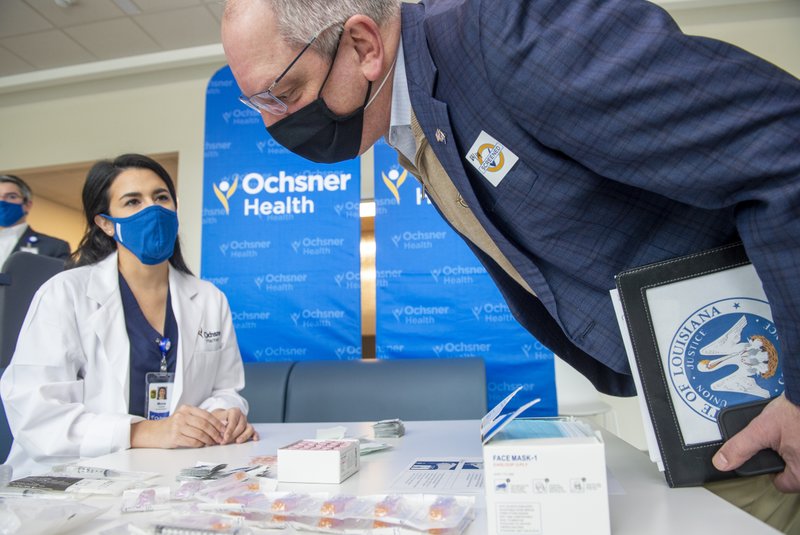
    BATON ROUGE, La. (AP) — Gov. John Bel Edwards will receive his first dose of the coronavirus vaccine Tuesday, a day after he expanded access to the shots to include Louisiana government officials involved in pandemic response work.

    The Democratic governor was scheduled to get his vaccination in the afternoon at the Pennington Biomedical Research Center campus in Baton Rouge, along with several other state officials who are newly able under Louisiana’s latest eligibility criteria.

    Edwards had said he’s ready for the shot, telling reporters: “I’m pretty excited about being able to do that. I’m looking forward to it.”

    While at Pennington, the governor is expected to announce the creation of a new mass vaccination site in Baton Rouge, involving the biomedical research center run by Louisiana State University and Our Lady of the Lake Regional Medical Center.

    Edwards widened Louisiana residents’ access to the coronavirus vaccine Monday, to lower the eligibility age from 70 to 65 and to newly include state and local officials handling COVID-19 response work, any remaining law enforcement not in previous priority groups and workers for the March 20 special congressional election.

    With those additions, nearly 1.2 million of Louisiana’s 4.6 million residents are eligible for the two-dose Pfizer and Moderna vaccines — though demand greatly exceeds the state’s available supply.

    More than 404,000 people in Louisiana have received at least their first dose of the two-dose immunization so far, with about 131,000 people getting both doses, according to health department data.

  • Mississippi: 2% of COVID vaccines go to out-of-state people

    Mississippi: 2% of COVID vaccines go to out-of-state people

    JACKSON, Miss. (AP) — About 2% of the COVID-19 vaccinations given so far in Mississippi have gone to people with out-of-state addresses, state health officials said Monday.

    Mississippi guidelines say the vaccination is available to anyone 65 or older or to those who are least 16 years old and have underlying health conditions that might make them more vulnerable to the virus.

    The state’s top public health officials said Monday that the vaccination is supposed to be limited to Mississippi residents, or to people from other states who work in Mississippi. However, they said people giving the shots do not check identification or verify that out-of-state residents work in Mississippi.

    “We don’t want to create barriers,” the state health officer, Dr. Thomas Dobbs, said in response to questions during an online news conference. “To get a vaccine in Mississippi, you’re supposed to be a resident or work here. If you get a vaccine here and you don’t do either, when you fill out the application, you’re being dishonest. Right? So, there is a step in the process where we have to depend upon people’s ethical behavior. It’s obviously unethical to be misleading and lie on your enrollment.

    “But we don’t want to have someone who’s older and doesn’t have a driver’s license having an impediment to getting a vaccine because they don’t have a driver’s license, or they don’t have ID,” Dobbs said.

    As of Monday, 334,000 people had received either a first dose or both doses of the COVID-19 vaccination in Mississippi. That included 6,777 people with out-of-state addresses, said Dr. Paul Byers, the state epidemiologist.

    The New Orleans Advocate/The Times-Picayune recently reported that Louisiana residents are traveling to Mississippi to be vaccinated, and that some are turning to online discussion groups to get information about where to go. Louisiana has tighter vaccination eligibility guidelines. On Monday, it lowered the age of eligibility from 70 to 65, but it still lists fewer underlying health conditions than Mississippi in making people eligible.

    Both Louisiana and Mississippi also make the vaccines available to health care workers and to people who live in nursing homes or other long-term care facilities.

    Mississippi has 21 drive-thru vaccination sites, with 19 of those operated by the state and two by county governments. Starting Feb. 23, another drive-thru site will open in Bolivar County, in the parking lot of the Delta State University football stadium. Vaccinations are also available at some health care clinics, including community health centers.

    The Health Department said Monday that 31 Walmart stores in Mississippi will start receiving doses of COVID-19 vaccines Tuesday. Vaccination appointments must be made through the company’s website, and an email address is required.

    Dobbs also said the state Health Department is taking steps to address the disparity in vaccination numbers for Black residents. About 38% of Mississippi residents are Black, but about 19% of COVID-19 vaccinations in the state so far have been given to Black people. That is an increase in the percentage over recent weeks, but Dobbs said more progress is needed.

    “It’s a challenge for Mississippi, and it’s a challenge for our nation,” Dobbs said.

    He said the issue of access to vaccinations in Black communities “is huge.”

    “We have identified select partners that are more efficient at reaching Black populations, and we also are looking at other innovative approaches that you’ll see in coming days,” Dobbs said.

    He said some “community partners” are doing vaccinations through mobile clinics, including some at Black churches.

    The state Health Department reported Monday that Mississippi had 635 new confirmed cases of the virus as of Sunday evening. The department also reported one new death. The state has reported at least 282,313 cases of the virus and 6,270 related deaths since the start of the pandemic.

  • Texas Likely To Partner With FEMA For Vaccine ‘Super Sites’

    Texas Likely To Partner With FEMA For Vaccine ‘Super Sites’

    AUSTIN, Texas (AP) — Texas will likely partner with the Federal Emergency Management Agency to open two vaccination “super sites” in Dallas and Houston, and more could be on the way, Gov. Greg Abbott said Monday.

    Abbott tweeted those vaccine locations would be open every day and operate for eight weeks, handling up to 6,000 shots per day. The governor said adding more sites is possible, but his office did not immediately release further details, including whether that meant Texas would get more vaccine doses or if those sites would pull vaccine from other areas.

    The Texas news comes a week after California partnered with FEMA to open two mass vaccination centers under President Joe Biden’s push to create 100 such sites nationwide in 100 days.

    According to state health officials, nearly 2.5 million Texans have received at least one dose of vaccine, and nearly 780,000 are fully vaccinated. As of Sunday, Texas had 9,652 COVID-19 patients in hospitals and a death toll of 38,643.

  • New Variants Raise Worry About COVID-19 Virus Reinfections

    New Variants Raise Worry About COVID-19 Virus Reinfections

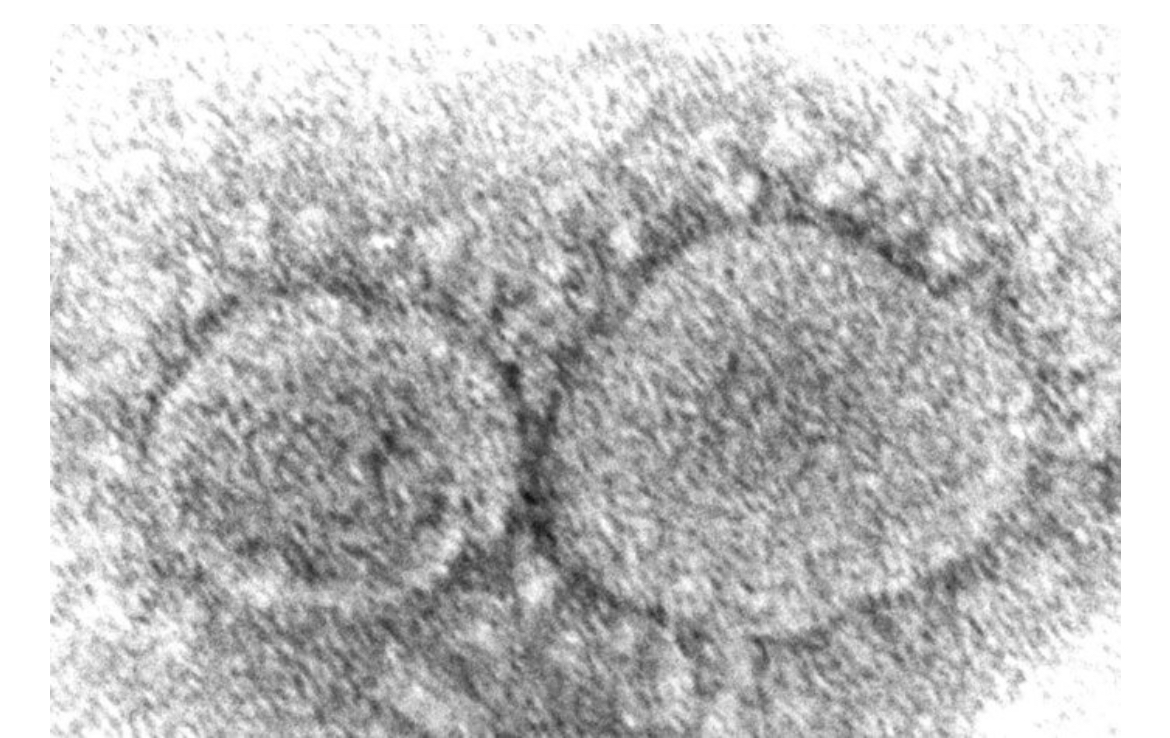
    Evidence is mounting that having COVID-19 may not protect against getting infected again with some of the new variants. People also can get second infections with earlier versions of the coronavirus if they mounted a weak defense the first time, new research suggests.

    How long immunity lasts from natural infection is one of the big questions in the pandemic. Scientists still think reinfections are fairly rare and usually less serious than initial ones, but recent developments around the world have raised concerns.

    In South Africa, a vaccine study found new infections with a variant in 2% of people who previously had an earlier version of the virus.

    In Brazil, several similar cases were documented with a new variant there. Researchers are exploring whether reinfections help explain a recent surge in the city of Manaus, where three-fourths of residents were thought to have been previously infected.

    In the United States, a study found that 10% of Marine recruits who had evidence of prior infection and repeatedly tested negative before starting basic training were later infected again. That work was done before the new variants began to spread, said one study leader, Dr. Stuart Sealfon of the Icahn School of Medicine at Mount Sinai in New York.

    “Previous infection does not give you a free pass,” he said. “A substantial risk of reinfection remains.”

    Reinfections pose a public health concern, not just a personal one. Even in cases where reinfection causes no symptoms or just mild ones, people might still spread the virus. That’s why health officials are urging vaccination as a longer-term solution and encouraging people to wear masks, keep physical distance and wash their hands frequently.

    “It’s an incentive to do what we have been saying all along: to vaccinate as many people as we can and to do so as quickly as we can,” said Dr. Anthony Fauci, the U.S. government’s top infectious disease expert.

    “My looking at the data suggests … and I want to underline suggests … the protection induced by a vaccine may even be a little better” than natural infection, Fauci said.

    Doctors in South Africa began to worry when they saw a surge of cases late last year in areas where blood tests suggested many people had already had the virus.

    Until recently, all indications were “that previous infection confers protection for at least nine months,” so a second wave should have been “relatively subdued,” said Dr. Shabir Madhi of the University of the Witwatersrand in Johannesburg.

    Scientists discovered a new version of the virus that’s more contagious and less susceptible to certain treatments. It now causes more than 90% of new cases in South Africa and has spread to 40 countries including the United States.

    Madhi led a study testing Novavax’s vaccine and found it less effective against the new variant. The study also revealed that infections with the new variant were just as common among people who had COVID-19 as those who had not.

    “What this basically tells us, unfortunately, is that past infection with early variants of the virus in South Africa does not protect” against the new one, he said.

    In Brazil, a spike in hospitalizations in Manaus in January caused similar worry and revealed a new variant that’s also more contagious and less vulnerable to some treatments.

    “Reinfection could be one of the drivers of these cases,” said Dr. Ester Sabino of the University of Sao Paulo. She wrote an article in the journal Lancet on possible explanations. “We have not yet been able to define how frequently this is happening,” she said.

    California scientists also are investigating whether a recently identified variant may be causing reinfections or a surge of cases there.

    “We’re looking at that now,” seeking blood samples from past cases, said Jasmine Plummer, a researcher at Cedars-Sinai Medical Center in Los Angeles.

    Dr. Howard Bauchner, editor-in-chief of the Journal of the American Medical Association, said it soon would report on what he called “the Los Angeles variant.”

    New variants were not responsible for the reinfections seen in the study of Marines — it was done before the mutated viruses emerged, said Sealfon, who led that work with the Naval Medical Research Center. Other findings from the study were published in the New England Journal of Medicine; the new ones on reinfection are posted on a research website.

    The study involved several thousand Marine recruits who tested negative for the virus three times during a two-week supervised military quarantine before starting basic training.

    Among the 189 whose blood tests indicated they had been infected in the past, 19 tested positive again during the six weeks of training. That’s far less than those without previous infection — “almost half of them became infected at the basic training site,” Sealfon said.

    The amount and quality of antibodies that previously infected Marines had upon arrival was tied to their risk of getting the virus again. No reinfections caused serious illness, but that does not mean the recruits were not at risk of spreading infection to others, Sealfon said.

    “It does look like reinfection is possible. I don’t think we fully understand why that is and why immunity has not developed” in those cases, said an immunology expert with no role in the study, E. John Wherry of the University of Pennsylvania.

    “Natural infections can leave you with a range of immunity” while vaccines consistently induce high levels of antibodies, Wherry said.

    “I am optimistic that our vaccines are doing a little bit better.”

    ___

    The Associated Press Health and Science Department receives support from the Howard Hughes Medical Institute’s Department of Science Education. The AP is solely responsible for all content.

  • Britain to test mixing and matching of COVID-19 vaccines

    Britain to test mixing and matching of COVID-19 vaccines

    British scientists are starting a study Thursday to find out if it’s OK to mix and match COVID-19 vaccines.

    The vaccines being rolled out now require two doses, and people are supposed to get two shots of the same kind, weeks apart.

    Guidelines in Britain and the U.S. say the vaccines aren’t interchangeable, but can be mixed if the same kind isn’t available for the second dose or if it’s not known what was given for the first shot.

    Participants in the government-funded study will get one shot of the AstraZeneca vaccine followed by a dose from Pfizer, or vice versa.

    “This study will give us greater insight into how we can use vaccines to stay on top of this nasty disease,” said Jonathan Van Tam, the U.K.’s deputy chief medical officer.

    He said that given the challenges of immunizing millions of people amid a global vaccine shortage, there would be advantages to having data that could support more “flexible” immunization campaigns.

    COVID-19 vaccines all train the body to recognize the coronavirus, mostly the spike protein that coats it. The ones from AstraZeneca and Pfizer use different technologies. AstraZeneca’s uses a common cold virus to carry the spike gene into the body. Pfizer’s is made by putting a piece of genetic code called mRNA — the instructions for that spike protein — inside a little ball of fat.

    The British research is scheduled to run 13 months and will also test different intervals between doses, four weeks and 12 weeks apart.

    A study published this week on the Russian-made Sputnik V vaccine showed it was about 91% effective in preventing COVID-19. Some immunologists credit the fact that the vaccine uses two slightly different shots, made with similar technology to AstraZeneca’s.

    But the AstraZeneca and Pfizer vaccines are “so different that it’s really hard to know if that would work,” said Alexander Edwards, an associate professor in biomedical technology at Britain’s University of Reading.

    Matthew Snape, the new study’s leader at Oxford University, which helped develop the AstraZeneca vaccine, called for British volunteers over age 50 to sign up; scientists are hoping to enroll more than 800 people.

    If the vaccines can be used interchangeably, “this will greatly increase the flexibility of vaccine delivery,” he said in a statement. ”(It) could provide clues as to how to increase the breadth of protection against new virus strains.”

    In recent weeks, Britain, the European Union and numerous other countries have been hit with vaccine supply issues: AstraZeneca said it would dramatically reduce the expected number of doses it could deliver due to manufacturing delays and Pfizer also slowed deliveries while it upgraded its Belgian factory.

  • Study Finds COVID-19 Vaccine May Reduce Virus Transmission

    Study Finds COVID-19 Vaccine May Reduce Virus Transmission

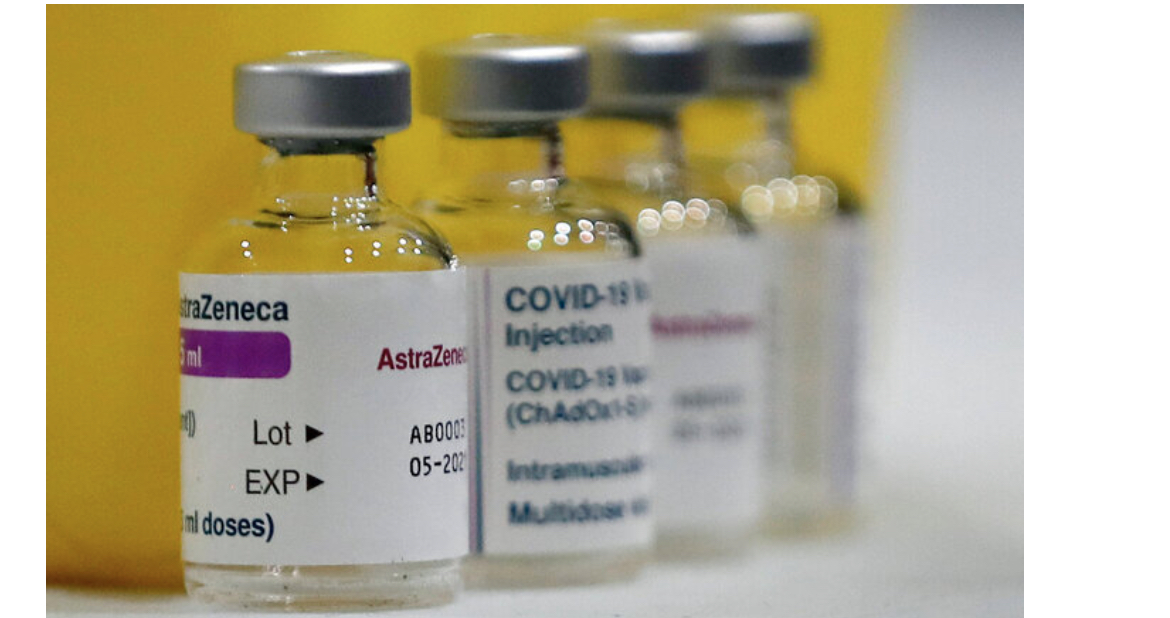
    AstraZeneca’s COVID-19 vaccine does more than prevent people from falling seriously ill — it appears to reduce transmission of the virus and offers strong protection for three months on just a single dose, researchers said Wednesday in an encouraging turn in the campaign to suppress the outbreak.

    The preliminary findings from Oxford University, a co-developer of the vaccine, could vindicate the British government’s controversial strategy of delaying the second shot for up to 12 weeks so that more people can be quickly given a first dose. Up to now, the recommended time between doses has been four weeks.

    The research could also bring scientists closer to an answer to one of the big questions about the vaccination drive: Will the vaccines actually curb the spread of the coronavirus?

    It’s not clear what implications, if any, the findings might have for the two other major vaccines being used in the West, Pfizer’s and Moderna’s.

    In the United States, Dr. Anthony Fauci, the nation’s top infectious disease expert, dismissed the idea of deliberately delaying second shots, saying the U.S. will “go by the science” and data from the clinical trials. The two doses of the Pifzer and Moderna vaccines are supposed to be given three and four weeks apart.

    Still, the research appears to be good news in the desperate effort to arrest the spread of the virus and also suggests a way to ease vaccine shortages and get shots into more arms more quickly.

    The makers of all three vaccines have said that their shots proved to be anywhere from 70% to 95% effective in clinical trials in protecting people from illness caused by the virus. But it was unclear whether the vaccines could also suppress transmission of the virus — that is, whether someone inoculated could still acquire the virus without getting sick and spread it to others.

    As a result, experts have been saying that even people who have been vaccinated should continue to wear masks and keep their distance from others.

    Oxford’s study, however, found that the vaccine not only prevented severe disease but appeared to cut transmission of the virus by two-thirds. The study has not been peer-reviewed yet.

    Volunteers in the study underwent regular nasal swabs. The level of virus-positive swabs — from both those who had COVID-19 symptoms and those who had none – was 67% lower in the vaccinated group.

    “That’s got to have a really beneficial effect on transmission,” Oxford lead researcher Sarah Gilbert said at a meeting of the New York Academy of Sciences.

    The researchers also looked at how likely people who have been vaccinated are to get a symptom-free infection. In one subset of volunteers, there were 16 asymptomatic infections among the vaccinated and 31 in an unvaccinated comparison group.

    Pfizer and Moderna also are studying the effect of their vaccines on asymptomatic infections.

    Only the Pfizer and Moderna vaccines are being used in the United States. Britain is using both AstraZeneca’s and Pfizer’s. AstraZeneca’s has also been authorized by the 27-nation European Union. Pfizer has not endorsed the British government’s decision to lengthen the time between doses.

    Mene Pangalos, executive vice president of biopharmaceuticals research and development at AstraZeneca, said that no patients experienced severe COVID-19 or required hospitalization three weeks after receiving a first dose, and that effectiveness appeared to increase up to 12 weeks after the initial shot.

    “Our data suggest you want to be as close to the 12 weeks as you can” for the second dose, Pangalos said.

    British Health Secretary Matt Hancock said the study “backs the strategy that we’ve taken” to make sure more people have gotten at least one shot. Britain’s decision has been criticized as risky by other European countries.

    Stephen Evans of the London School of Hygiene and Tropical Medicine said the study’s suggestion that a single dose protected people for 12 weeks was “useful but not definitive.”

    He said that the authors themselves acknowledged their research was not designed to investigate the vaccine’s dosing schedule and that their conclusions were based on statistical modeling, not actual patients tracked over time.

    “It certainly isn’t very strong evidence, but there is also no indication this is the wrong thing to do,” Evans said of Britain’s strategy.

    One of the Oxford researchers, Dr. Andrew Pollard, said scientists also believe the AstraZeneca vaccine will continue to offer protection against new variants of COVID-19, though they are still waiting for data on that. Fast-spreading mutant versions have caused alarm around the world.

    “If we do need to update the vaccines, then it is actually a relatively straightforward process. It only takes a matter of months, rather than the huge efforts that everyone went through last year to get the very large-scale trials run,” Pollard told the BBC.

    Meanwhile, a U.N.-backed program to supply COVID-19 vaccines to the neediest people worldwide is gearing up after a troubled start. The COVAX Facility announced plans Wednesday for an initial distribution of some 100 million doses by the end of March and more than 200 million more by the end of June to dozens of countries.

    Nearly all of the doses expected for the first phase are due to come from AstraZeneca and its partner, the Serum Institute of India. The rollout will be contingent on the World Health Organization authorizing the AstraZeneca shot for emergency use, which is expected to happen this month.

    Some 190 countries and territories are participating in COVAX, which has seen rich nations scoop up vaccine supplies, sometimes at premium prices.

    The pandemic’s worldwide death toll has eclipsed 2.2 million, including about 447,000 in the U.S., according to Johns Hopkins University data.

    New cases per day in the U.S. and the number of Americans in the hospital with COVID-19 have dropped sharply in the past few weeks, but deaths are still running at close to all-time highs at an average of around 3,100 a day. Deaths often lag behind the infection curve, because it can take weeks to sicken and die from COVID-19.

    As the Super Bowl approaches, Fauci is warning people against inviting others over for Super Bowl parties, urging viewers to “just lay low and cool it” to avoid turning Sunday’s big game into a super spreader event.

    “You don’t want parties with people that you haven’t had much contact with,” he told NBC’s “Today” show. “You just don’t know if they’re infected.”

    __

    Associated Press reporters Jill Lawless, Maria Cheng, Jamey Keaten and Ricardo Alonso-Zaldivar and contributed to this report.

    ___

    Follow all of AP’s pandemic coverage at https://apnews.com/hub/coronavirus-pandemic, https

  • 30,000 New Vaccination Appointments Already Booked

    30,000 New Vaccination Appointments Already Booked

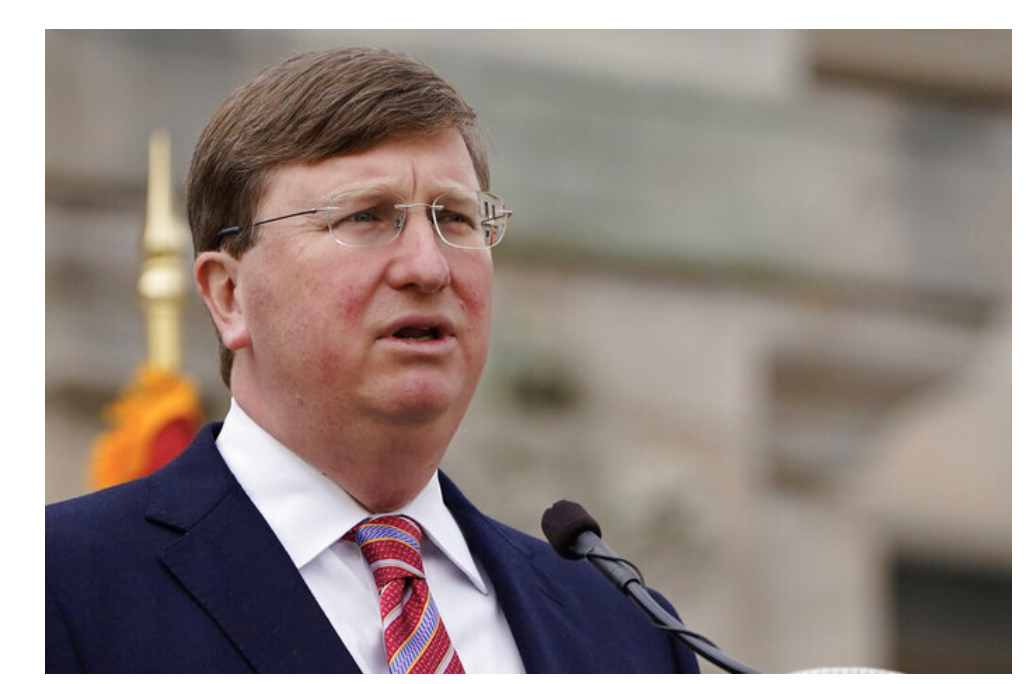
    JACKSON, Miss. (AP) — There were no more new appointments left Tuesday to get the first dose of the coronavirus vaccine in Mississippi, two hours after Gov. Tate Reeves announced 30,000 new appointments were going live.

    “Please act quickly to schedule for yourself or a loved one who qualifies!” the Republican governor tweeted.

    Coronavirus inoculations in Mississippi are being done at hospitals, community health centers, private clinics and at 21 state-run drive-thru sites. The appointments Reeves was tweeting about Tuesday were at the drive-thru sites.

    Vaccinations in Mississippi are currently available for people 65 and older, health care workers and those who are at least 16 and have health conditions that might make them more vulnerable to the virus.

    Appointments have been filling up quickly due to high demand. Reeves announced Friday on Twitter that 15,000 new appointments had come free, and they were also all booked within two hours.

    Mississippi has received approximately 37,000 doses of the vaccine a week from the federal government for the last three weeks. That vaccine is then split among the drive-thru sites, clinics and other health care providers.

    State Health Officer Dr. Thomas Dobbs said Department of Health officials were told last week by the federal government to expect a 16% increase over the next few weeks. Dobbs said they hoped to use the increases to bump up the number of vaccine doses given at its drive-thru sites.

    Around 217,000 residents in Mississippi had received at least one dose of coronavirus vaccine as of Monday, according to the Department of Health.