Category: COVID-19

  • US Unemployment Claims Jump To 965,000 As Virus Takes Toll

    US Unemployment Claims Jump To 965,000 As Virus Takes Toll

    WASHINGTON (AP) — The number of people seeking unemployment aid soared last week to 965,000, the most since late August and a sign that the resurgent virus has likely escalated layoffs.

    The latest figures for jobless claims, issued Thursday by the Labor Department, remain at levels never seen until the virus struck. Before the pandemic, weekly applications typically numbered around 225,000. They spiked to nearly 7 million last spring, after nationwide shutdowns took effect. Applications declined over the summer but have been stuck above 700,000 since September.

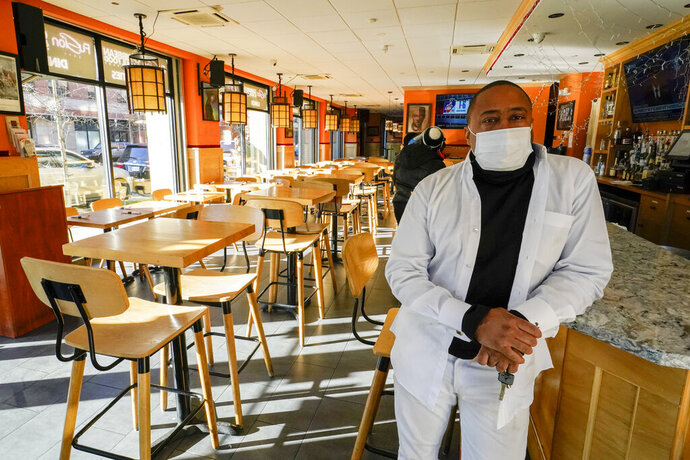
    The high pace of layoffs coincides with an economy that has faltered as consumers have avoided traveling, shopping and eating out in the face of soaring viral caseloads. More than 4,300 deaths were reported Tuesday, another record high. Shutdowns of restaurants, bars and other venues where people gather in California, New York and other states have likely forced up layoffs.

    Some states and cities are resisting shutdowns, partly out of fear of the economic consequences but raising the risk of further infections. Minnesota allowed in-person dining to resume this week. Michigan is poised to do the same. Some bars and restaurants in Kansas City are extending their hours.

    Economists say that once coronavirus vaccines are more widely distributed, a broader recovery should take hold in the second half of the year. The incoming Biden administration, along with a now fully Democratic-led House and Senate, is also expected to push more rescue aid and spending measures that could accelerate growth.

    Yet many analysts also worry that with millions of Americans still unemployed and as many as one in six small companies going out of business, people who have been hurt most by the downturn won’t likely benefit from a recovery anytime soon.

    “While prospects for the economy later in 2021 are upbeat, the labor market recovery has taken a step backward,” said Nancy Vanden Houten, an economist at Oxford Economics, “and we expect claims to remain elevated, with the risk that they rise from last week’s levels.”

    Last week’s applications for aid might have been elevated in part because state employment offices had been closed over the holidays, requiring some jobless people to wait until last week to apply. The addition of a $300-a-week federal unemployment benefit, as part of a rescue aid package enacted late last month, may have also encouraged more people to apply, Vanden Houten said.

    Many people in the arts and entertainment fields have lost most or all of their incomes as the coronavirus has shut down performance venues. They include Shelby Lewis, a classical trumpet player in Baton Rouge, Louisiana, who hasn’t performed since early March, when he played Bach with a Kansas City musical chamber.

    Lewis, 48, is receiving $400 in weekly unemployment aid, including the new $300 federal benefit, and his wife is still working. He appreciates the federal aid, which freelance musicians like him haven’t been eligible for in the past.

    Fearful, though, that many classical music groups will permanently close, Lewis is shifting his career back to photography and design, which he did for a decade before becoming a full-time musician.

    “I think there is generally going to be a decline for small regional orchestras,” he said.

    In addition to last week’s first-time applications for unemployment aid, the government said Thursday that 5.3 million Americans are continuing to receive state jobless benefits, up from 5.1 million in the previous week. It suggests that fewer people who are out of work are finding jobs.

    About 11.6 million people received jobless aid from two federal programs in the week that ended Dec. 26, the latest period for which data is available. One of those programs provides extended benefits to people who have exhausted their state aid. The other supplies benefits to self-employed and contract workers.

    Those two programs had expired near the end of December. They were belatedly renewed, through mid-March, in the $900 billion rescue aid package that Congress approved and President Donald Trump signed into law. That legislation also included $600 relief checks for most adults and a supplemental unemployment benefit payment of $300 a week. Congressional Democrats favor boosting the checks to $2,000 and extending federal aid beyond March, as does President-elect Joe Biden.

    The U.S. job market’s weakness was made painfully clear in the December employment report that the government issued last week. Employers shed jobs for the first time since April as the pandemic tightened its grip on consumers and businesses.

    The figures also depicted a sharply uneven job market: The losses last month were concentrated among restaurants, bars, hotels and entertainment venues — places that provide in-person services that some governments have restricted or that consumers are avoiding. Educational services, mostly colleges and universities, also cut workers in December. So did film and music studios.

    Most other large industries, though, reported job gains. Many economists had expected last spring that job losses would spread to more industries. Though all sectors of the economy initially laid off workers, most of them have avoided deep job cuts. Manufacturing, construction, and professional services like engineering and architecture, for example, all added jobs in December.

    At the same time, many companies seem reluctant to sharply ramp up hiring. A government report Tuesday showed that employers advertised fewer open jobs in November than in October. The decline, while small, was widespread across most industries. Even now, the nation has nearly 10 million fewer jobs than it did before the pandemic sent the economy into a deep recession nearly a year ago, having recovered just 56% of the jobs lost in the spring.

    ___

    AP Business Writer Alexandra Olson contributed to this report from New York.
  • Calls To Reopen Classrooms Grow As Teachers Get Vaccinated

    Calls To Reopen Classrooms Grow As Teachers Get Vaccinated

    State leaders around the U.S. are increasingly pushing for schools to reopen this winter — pressuring them, even — as teachers begin to gain access to the vaccine against the raging pandemic.

    View all (14)

    Ohio’s governor offered to give vaccinations to teachers at the start of February, provided their school districts agree to resume at least some in-person instruction by March 1. In Arizona, where teachers began receiving shots this week, the governor warned schools that he expects students back in the classroom despite objections from top education officials and the highest COVID-19 diagnosis rate in the nation over the past week.

    “We will not be funding empty seats or allowing schools to remain in a perpetual state of closure,” said Republican Gov. Doug Ducey. “Children still need to learn, even in a pandemic.”

    The U.S. recorded an all-time, one-day high of 4,327 deaths on Tuesday, according to Johns Hopkins University. The nation’s overall death toll from COVID-19 has topped 380,000, closing in fast on the number of Americans killed in World War II. Confirmed infections have reached about 23 million.

    President-Elect Joe Biden initially pledged to reopen a majority of the nation’s schools within his first 100 days but recently revised the goal to most of the country’s K-8 schools. He has said teachers should be eligible for vaccinations as soon as possible after those who are at highest risk.

    Some states aren’t waiting, but the process can be scattershot.

    Meika Mark, a ninth-grade English teacher in Orange County, New York, got vaccinated Tuesday at a hospital, using a link a friend texted her.

    “It’s just word of mouth: ‘Here’s a link and hopefully you get a slot,‘” said Mark, who contracted the virus in March and spent the rest of the school year teaching remotely. “I know of a woman who had her husband sit in front of a computer literally all day and just click the refresh button until an appointment came up.”

    Mark, 34, is now doing some in-person teaching and is grateful for the added layer of protection.

    “I don’t want to go through it again,” said Mark, who still has headaches from her bout with COVID-19.

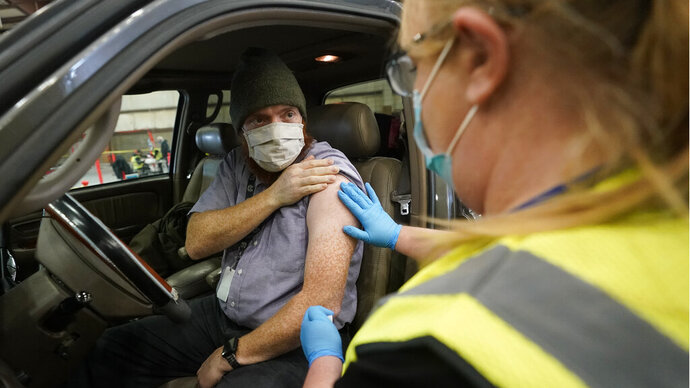
    High school band director Michael Crookston was among the first teachers to get a vaccination in Utah, which is among the earliest states to give priority to educators. Crookston has been in the classroom since the new school year began, despite having diabetes, which puts him at greater risk from the coronavirus.

    “It’s been a thing I’ve been looking forward to, a little bit like Christmas,” said Crookston, who teaches at Davis High School, north of Salt Lake City, where he used a parent’s donation to buy 12 air filters for his band room, as well as face masks and covers on students’ instruments.

    Utah Gov. Spencer Cox has said he wants to vaccinate all teachers by the end of February.

    Salt Lake City, the state capital, has been hit hard by the virus and was the only district in Utah to stay all-remote this school year. That has angered some GOP leaders, who have threatened to withhold the $1,500 bonuses planned for the rest of the state’s teachers.

    An estimated 10.3 million Americans have received their first shot of the vaccine, or about 3% of the population, according to the Centers for Disease Control and Prevention. That is an increase of 1 million from the day before, indicating that the vaccination drive is ramping up after a slow start.

    But the U.S. is still well short of the hundreds of millions who experts say will need to be inoculated to vanquish the outbreak.

    A report released Wednesday by the CDC adds to the evidence suggesting that children aren’t the main drivers of community transmission. It found that increases in reported cases among adults were not preceded by increases among children and teens. The findings suggest young adults may contribute more to the spread than children do.

    Chicago began a phased-in reopening of its schools this week, with about 5,000 pre-kindergarten and special education returning to classrooms and other grades planned in the weeks to follow. Illinois teachers are not eligible for vaccines yet, but Chicago officials are providing virus tests on school grounds for staff.

    New York State expanded vaccine eligibility to teachers this week. But in New York City, the nation’s largest school district, with 1.1 million students, Mayor Bill de Blasio said Wednesday that while that opens up “a world of possibility,” middle and high schools will remain closed indefinitely.

    California Gov. Gavin Newsom has proposed a $2 billion plan to pay for testing, protective equipment and other safety enhancements to reopen the lowest grades as soon as Feb. 16.

    But educators said it is too soon to know when California’s 600,000 teachers can expect to be vaccinated. Jeff Freitas, president of the California Federation of Teachers, said vaccinations have to come first, then schools can talk about reopening.

    “We cannot put our own lives, the lives of our students, and our communities at risk during what is clearly an escalating crisis in our state,” the union leader said.

    California’s rollout of vaccines has been slower than anticipated, with the first phase, involving health care workers and nursing home residents, still underway.

    On Wednesday, Chiefs of Change, a bipartisan group of school administrators, called on state and federal officials to make teachers and other school employees immediately eligible for vaccinations and provide more resources to conduct testing and contact tracing in school districts.

    “Those individuals are very uncomfortable and they’re very scared about coming back into school, no matter how safe we make it,” said Robert Runcie, superintendent of Broward County’s public schools in Florida.

    Mark, the New York teacher, said her colleagues are “chomping at the bit” to get vaccinated. But she knows it will be a while until she can teach in-person full time again.

    “I told my students before that every day is one day closer to normalcy,” she said. “I think if we just remind ourselves of that, it just helps to pause and live in the moment for a minute.”

    ___

    Whitehurst reported from Salt Lake City; Terry Tang contributed from Phoenix, and Carolyn Thompson from Buffalo, New York.

  • Edwards Keeps Same COVID-19 Rules, Urges Work From Home

    Edwards Keeps Same COVID-19 Rules, Urges Work From Home

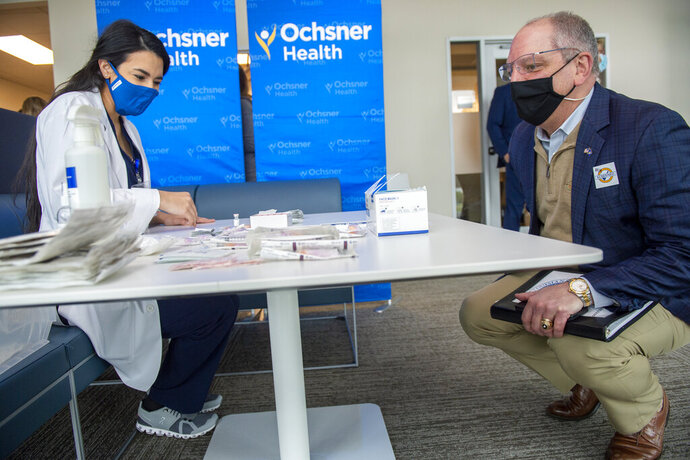
    BATON ROUGE, La. (AP) — With an unrelenting coronavirus spike bearing down on Louisiana, Gov. John Bel Edwards called on the state’s employers Tuesday to keep as many workers as possible in their homes, but he didn’t tighten restrictions on businesses any further.

    The Democratic governor said he’s renewed the same coronavirus rules that he’s had in place since late November, which were slated to expire Wednesday. Those rules include a statewide mask mandate, limits on crowd sizes, provisions keeping bars limited to outdoor and takeout service and restrictions on the number of customers allowed in nonessential businesses such as restaurants, gyms and salons.

    Edwards said the state is starting to see a worsening outbreak because of activities over the holidays. But he said the case spikes appear to be driven more by informal gatherings in people’s homes, rather than trips to restaurants or bars.

    “The mitigation measures really do work, but only to the extent that people follow them,” he said.

    While he stopped short of toughening the rules, Edwards called on Louisiana’s business owners to allow workers to do their jobs remotely where feasible, rather than in offices around the state. He said that would help limit unnecessary exposure to the COVID-19 illness caused by the virus.

    Edwards said he’ll keep the current coronavirus rules in place for at least another four weeks, though he’s indicated people and businesses should expect to face restrictions until wider distribution of the coronavirus vaccine is available — likely to be months away.

    While off to a slow start, Louisiana’s pace of vaccinations appeared to be improving, under data released Tuesday by the state health department. The agency said Louisiana has received 320,000 doses of Pfizer and Moderna coronavirus vaccines through this week. Nearly 160,000 doses had been administered by Tuesday, with more than 21,600 people completing both doses of the two-dose vaccine.

    The vaccine in Louisiana is available to health care employees, EMS workers, firefighters, people with kidney failure, anyone age 70 or older and people who live and work at nursing homes and other long-term care facilities. About 850,000 people fall into those categories, according to Edwards administration estimates.

    While people wait for the vaccine, Louisiana continues to grapple with record numbers of COVID-19 cases and hospitalizations.

    The state is averaging more than 2,800 new confirmed infections each day over the last week. More than 7,500 COVID-19 deaths in the state have been confirmed since March, with dozens more added each day in recent weeks. And 2,035 COVID-19 patients were hospitalized Tuesday, according to the health department data.

    “We’ve not yet seen the suggestion that we are peaking and going down,” said Dr. Joe Kanter, the governor’s chief public health adviser. “Things are as bad now as they’ve ever been. We do anticipate they’re going to get worse.”

    Under Edwards’ current Phase 2 rules, restaurants, gyms, salons, casinos, malls and other nonessential businesses will have to continue limiting customer numbers to 50% of their occupancy rate. Crowds at churches will stay restricted to 75% of occupancy.

    Bars will remain limited to takeout, delivery and outside seating, because no parish meets the low percentages of coronavirus tests returning positive required to allow indoor drinking at bars. Indoor gatherings for weddings and events will continue to be limited to 75 people or a maximum of 25% occupancy, whichever is less. Outdoor gatherings have looser limits.

    The governor’s restrictions are being challenged in court by House Republicans.

    Before Edwards announced renewal of the coronavirus rules, his Environmental Quality Secretary Chuck Carr Brown announced he tested positive for COVID-19 and had mild symptoms. Brown said in a statement that he’s receiving treatment with monoclonal antibodies to try to keep his symptoms from worsening.

    “From the onset of the epidemic, we have emphasized mask-wearing and social distancing at the agency, but obviously some fatigue with the strict measures has set in,” Brown said. “We will rededicate ourselves to making sure we don’t let our guards down for even an instant.”

    ___

    Follow AP’s coverage of the pandemic at https://apnews.com/hub/coronavirus-pandemic and https://apnews.com/UnderstandingtheOutbreak. Follow Melinda Deslatte on Twitter at http://twitter.com/melindadeslatte.

  • Member Of Mississippi Board Of Health Dies Of COVID-19

    Member Of Mississippi Board Of Health Dies Of COVID-19

    JACKSON, Miss. (AP) — A member of Mississippi’s state Board of Health has died of coronavirus-related complications.

    Dr. Ed Dalton Barham, of Clinton, died last Saturday, according to an obituary. He was 79.

    Barham, known as Tad or Taddy, had served on the board since 2012, after being appointed by former Gov. Phil Bryant. He was elected chairman in 2017.

    “He felt it was a privilege and an honor to serve in a leadership position to help promote public health in Mississippi,” his family wrote in his obituary.

    Barham was a graduate of Mississippi College and George Washington School of Medicine. He served in the U.S. Army and at Walter Reed Army Medical Center. He spent eight years at Walter Reed teaching and practicing radiology, reaching the rank of Lieutenant Colonel.

    Barham served as Chief of Radiology at Doctor’s Hospital, the V.A. Medical Center, River Oaks Hospital and Woman’s Hospital in Mississippi. He practiced the majority of his professional life — over 35 years — at Woman’s Hospital, according to his family. At the time of his death, he was serving as the Chief Medical Officer and Chairman of the Board of Woman’s Hospital.

    The state Health Department reported Wednesday that Mississippi had 1,942 new confirmed cases of the virus as of Tuesday evening. The department also reported 31 deaths Wednesday. The state has reported nearly 243,899 cases of the virus and 5,315 related deaths since the start of the pandemic.

    ___

    Follow AP coverage of the pandemic at https://apnews.com/UnderstandingtheOutbreak.

  • COVID spikes while vaccine distribution accelerates

    COVID spikes while vaccine distribution accelerates

    NATCHEZ. Miss. – The widening spread of COVID in Natchez compelled the mayor and city aldermen to hold their bimonthly meeting virtually Tuesday rather than gathering together after some City Hall staffers were exposed to the virus and are now quarantined.


    Natchez Mayor Dan Gibson reiterated his “urgent call” for everybody to continue wearing masks in public, washing hands and staying as physically apart as possible from others outside their households .


    Adams County this past week experienced its largest weekly spike in new COVID-19 cases since March, when the Mississippi Department of Health began compiling data about the coronavirus. The latest count of Adams County residents who’ve been infected totaled 1,981 – up 135 from the 1,846 on Jan. 4.


    At least 65 Adams County residents have died from the highly contagious respiratory disease. Among them is Adams County Tax Collector Rose Patterson, who died Monday. Gibson and city aldermen extended sympathy to her family at Tuesday’s meeting.


    While they’ve been meeting in-person at the Natchez Convention Center since July, the mayor and aldermen opted Tuesday to convene via teleconference webcast live on the city’s Facebook page.


    COVID vaccinations are ramping up in Natchez and throughout the country. Inoculations in Mississippi are being phased in quicker than earlier planned. Gov. Tate Reeves announced Tuesday that people at least age 65 or who have a chronic medical condition — such as cancer, obesity or heart disease — are now eligible for the vaccination.


    Drive-through vaccinations are being provided in Natchez at the Adams County Health Department on U.S. 61 north. The next  inoculations will be given there Thursday, according to the Department of Health. Appointments are required and can be made via the Department of Health’s website: www.msdh.ms.gov. Appointments can also be made by telephoning 877-978-6453 or 601-965-4071


    COVID vaccines are also being distributed to private medical facilities. As of Monday, none in Natchez were listed by the state Department of Health as vaccination sites. The closest are medical facilities in Fayette, Port Gibson and Brookhaven A list of vaccinations sites can be viewed at www.msdh.ms.gov


    .

    The next phase of vaccinations in Mississippi will innoculate educators and first-responders, such as police officers. Additional phases will be implemented in the coming weeks to eventually include anybody who wants to be inoculated.


    Among those exposed to someone with the virus is Natchez Fire Chief Robert Arrington. Meeting via teleconference Tuesday with the mayor and city board while quarantined at home, Arrington expressed hopes tests will show he’s not infected. He noted how vulnerable firefighters are to the virus when responding to calls. The board on Tuesday did adopt a policy to require Natchez firefighters to be tested for COVID before returning to work for their multi-day shifts.


    While vaccines get distributed to protect people from COVID, more people will be infected until widespread public immunity is achieved. Mississippi has imposed various restrictions and mandates to slow the spread of the coronavirus. They include the requirement to wear masks in public places where crowds congregate and limits on the number of people gathered together. While the current mandates expire Friday, Reeves indicated they will be extended.


  • US Shifts To Speed Vaccinations; Won’t Hold Back 2nd Doses

    US Shifts To Speed Vaccinations; Won’t Hold Back 2nd Doses

    WASHINGTON (AP) — Barely a month into a mass vaccination campaign to stop the COVID-19 pandemic, the Trump administration unexpectedly shifted gears Tuesday to speed the delivery of shots. A slow start had triggered widespread concern from states and public health officials.

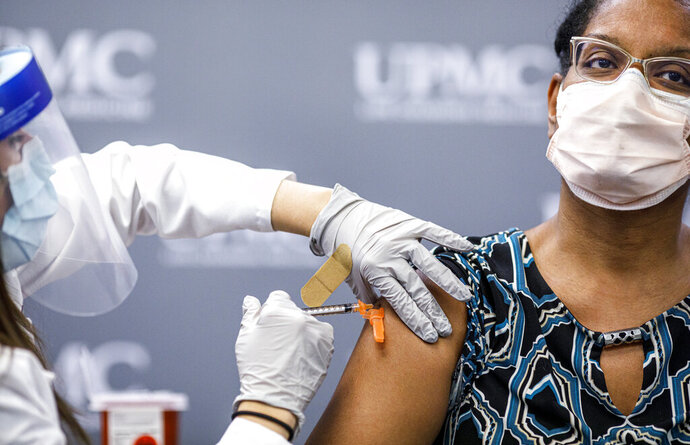
    Now, Health and Human Services Alex Azar has announced two major changes. First, the government will no longer hold back required second doses of the Pfizer-BioNTech and Moderna vaccines, practically doubling supply. Second, states should immediately start vaccinating other groups lower down the priority scale, including people age 65 and older, and younger people with certain health problems.

    The move better aligns the outgoing administration with the new Biden-Harris team. On Friday, President-elect Joe Biden said he will rapidly release most available vaccine doses to protect more people. He said he supported immediately releasing vaccines that health authorities were holding back out of caution, to guarantee they would be available for people needing their second dose.

    “We had been holding back second doses as a safety stock,” Azar said on ABC. “We now believe that our manufacturing is predictable enough that we can ensure second doses are available for people from ongoing production. So everything is now available to our states and our health care providers.”

    Simultaneously, he gave states the green light to dramatically expand the pool of people eligible to receive vaccines.

    “We are calling on our governors to now vaccinate people aged 65 and over, and under age 65 with a (health condition) because we have got to expand the group,” he said.

    As of Monday morning, the government had distributed about 25.5 million doses to states, U.S. territories and major cities. But only about 9 million people had received their first shot. That means only about 35% of the available vaccines had been administered.

    Initially, the shots were going to health care workers and nursing home residents. Those 75 and older were next in line. But problems arose even in vaccinating that limited pool of people. Some hospital and nursing home workers have been hesitant to get the vaccine. Scheduling issues created delays in getting shots to nursing homes.

    Some states, including Arizona, have or are planning to open up mass vaccination centers, aiming to inoculate thousands of people a day in a single location. In Florida, Gov. Ron DeSantis opened up vaccinations to people 65 and older. In other states, local health authorities have started asking residents 65 an older to register, in anticipation the vaccination campaign would be expanded.

    “We’ve got to get to more channels of administration,” said Azar. “We’ve got to get it to pharmacies, get it to community health centers.

    “We will deploy teams to support states doing mass vaccination efforts if they wish to do so,” he added.

    Although Azar said the shift was a natural evolution of the Trump administration’s efforts, as recently as Friday he had raised questions about whether Biden’s call to accelerate supplies was prudent. The Trump administration, which directed a crash effort to develop and manufacture vaccines, is hoping to avoid a repeat of earlier debacles with coronavirus testing. Dubbed “Operation Warp Speed,” the effort has produced two highly effective vaccines, with more on the way.

    Each state has its own plan for who should be vaccinated, based on recommendations from the federal Centers for Disease Control and Prevention. The CDC recommendations give first priority to health care workers and nursing home residents.

    But the slow pace of the vaccine rollout has frustrated many Americans at a time when the coronavirus death toll has continued to rise. More than 376,000 people have died, according to the Johns Hopkins database.

    U.S. Surgeon General Jerome Adams said hundreds of thousands of people are getting vaccinated every day across the nation, but the pace of inoculations needs to improve.

    “We’re in a race against this virus and quite frankly, we’re behind,” Adams told “Fox & Friends.” “The good news is that 700,000 people are getting vaccinated every single day. We’re going to hit 1 million people and we need to continue to pick up that pace.”

    In Philadelphia, health department spokesman James Garrow, said the new direction from Washington will take time to figure out before it impacts vaccine distribution in the city. “This is a wholesale change out of the blue after months of planning,” Garrow said.

    Washington, D.C. on Monday opened up vaccines to residents 65 years and older and the system was quickly overwhelmed. People reported problems with the website for registration and hours-long waits to register by phone. A message on the city’s website Tuesday morning read, “All 6,700 of the available vaccination appointments for the week of 1/11/21 were filled.”

    Biden is expected to give a speech Thursday outlining his plan to speed vaccines to more people in the first part of his administration. His transition team has vowed to release as many vaccine doses as possible, rather than continuing the Trump administration policy of holding back millions of doses to ensure there would be enough supply to allow those getting the first shot to get a second one.

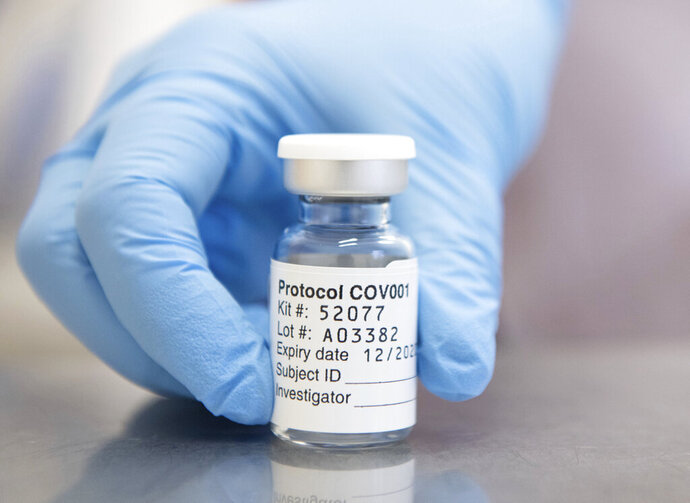
    The Pfizer-BioNTech vaccine requires a second shot about three weeks after the first vaccination. Another vaccine, this one produced by Moderna, requires a second shot about four weeks afterward. One-shot vaccines are still undergoing testing.

    ___

    AP writers Candice Choi in New York and Carole Feldman in Washington contributed.

  • US shifts to speed vaccinations; won’t hold back second doses

    US shifts to speed vaccinations; won’t hold back second doses

    As of Monday morning, the government had distributed about 25.5 million doses to states, U.S. territories and major cities.

    WASHINGTON (AP) — Barely a month into a mass vaccination campaign to stop the COVID-19 pandemic, the Trump administration unexpectedly shifted gears Tuesday to speed the delivery of shots. A slow start had triggered widespread concern from states and public health officials.

    Now, Health and Human Services Alex Azar has announced two major changes. First, the government will no longer hold back required second doses of the Pfizer-BioNTech and Moderna vaccines, practically doubling supply. Second, states should immediately start vaccinating other groups lower down the priority scale, including people age 65 and older, and younger people with certain health problems.

    The move better aligns the outgoing administration with the new Biden-Harris team. On Friday, President-elect Joe Biden said he will rapidly release most available vaccine doses to protect more people. He said he supported immediately releasing vaccines that health authorities were holding back out of caution, to guarantee they would be available for people needing their second dose.

    “We had been holding back second doses as a safety stock,” Azar said on ABC. “We now believe that our manufacturing is predictable enough that we can ensure second doses are available for people from ongoing production. So everything is now available to our states and our health care providers.”

    Simultaneously, he gave states the green light to dramatically expand the pool of people eligible to receive vaccines.

    “We are calling on our governors to now vaccinate people aged 65 and over, and under age 65 with a (health condition) because we have got to expand the group,” he said.

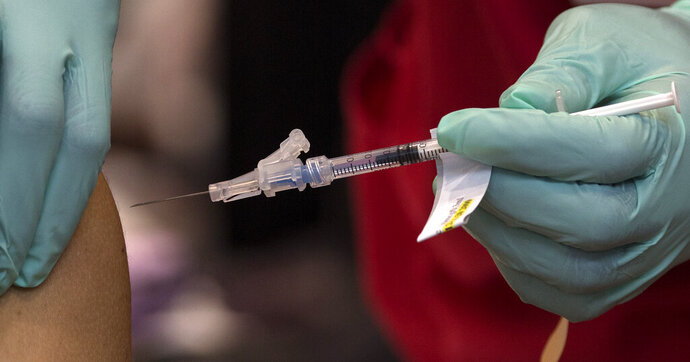
    As of Monday morning, the government had distributed about 25.5 million doses to states, U.S. territories and major cities. But only about 9 million people had received their first shot. That means only about 35% of the available vaccines had been administered.

    Initially, the shots were going to health care workers and nursing home residents. Those 75 and older were next in line. But problems arose even in vaccinating that limited pool of people. Some hospital and nursing home workers have been hesitant to get the vaccine. Scheduling issues created delays in getting shots to nursing homes.

    Some states, including Arizona, have or are planning to open up mass vaccination centers, aiming to inoculate thousands of people a day in a single location. In Florida, Gov. Ron DeSantis opened up vaccinations to people 65 and older. In other states, local health authorities have started asking residents 65 an older to register, in anticipation the vaccination campaign would be expanded.

    “We’ve got to get to more channels of administration,” said Azar. “We’ve got to get it to pharmacies, get it to community health centers.

    “We will deploy teams to support states doing mass vaccination efforts if they wish to do so,” he added.

    Although Azar said the shift was a natural evolution of the Trump administration’s efforts, as recently as Friday he had raised questions about whether Biden’s call to accelerate supplies was prudent. The Trump administration, which directed a crash effort to develop and manufacture vaccines, is hoping to avoid a repeat of earlier debacles with coronavirus testing. Dubbed “Operation Warp Speed,” the effort has produced two highly effective vaccines, with more on the way.

    Each state has its own plan for who should be vaccinated, based on recommendations from the federal Centers for Disease Control and Prevention. The CDC recommendations give first priority to health care workers and nursing home residents.

    But the slow pace of the vaccine rollout has frustrated many Americans at a time when the coronavirus death toll has continued to rise. More than 376,000 people have died, according to the Johns Hopkins database.

    U.S. Surgeon General Jerome Adams said hundreds of thousands of people are getting vaccinated every day across the nation, but the pace of inoculations needs to improve.

    “We’re in a race against this virus and quite frankly, we’re behind,” Adams told “Fox & Friends.” “The good news is that 700,000 people are getting vaccinated every single day. We’re going to hit 1 million people and we need to continue to pick up that pace.”

    In Philadelphia, health department spokesman James Garrow, said the new direction from Washington will take time to figure out before it impacts vaccine distribution in the city. “This is a wholesale change out of the blue after months of planning,” Garrow said.

    Washington, D.C. on Monday opened up vaccines to residents 65 years and older and the system was quickly overwhelmed. People reported problems with the website for registration and hours-long waits to register by phone. A message on the city’s website Tuesday morning read, “All 6,700 of the available vaccination appointments for the week of 1/11/21 were filled.”

    Biden is expected to give a speech Thursday outlining his plan to speed vaccines to more people in the first part of his administration. His transition team has vowed to release as many vaccine doses as possible, rather than continuing the Trump administration policy of holding back millions of doses to ensure there would be enough supply to allow those getting the first shot to get a second one.

    The Pfizer-BioNTech vaccine requires a second shot about three weeks after the first vaccination. Another vaccine, this one produced by Moderna, requires a second shot about four weeks afterward. One-shot vaccines are still undergoing testing.

    ___

    AP writers Candice Choi in New York and Carole Feldman in Washington contributed.

  • Louisiana Food Stamp Benefits Grow Under Virus Aid Package

    Louisiana Food Stamp Benefits Grow Under Virus Aid Package

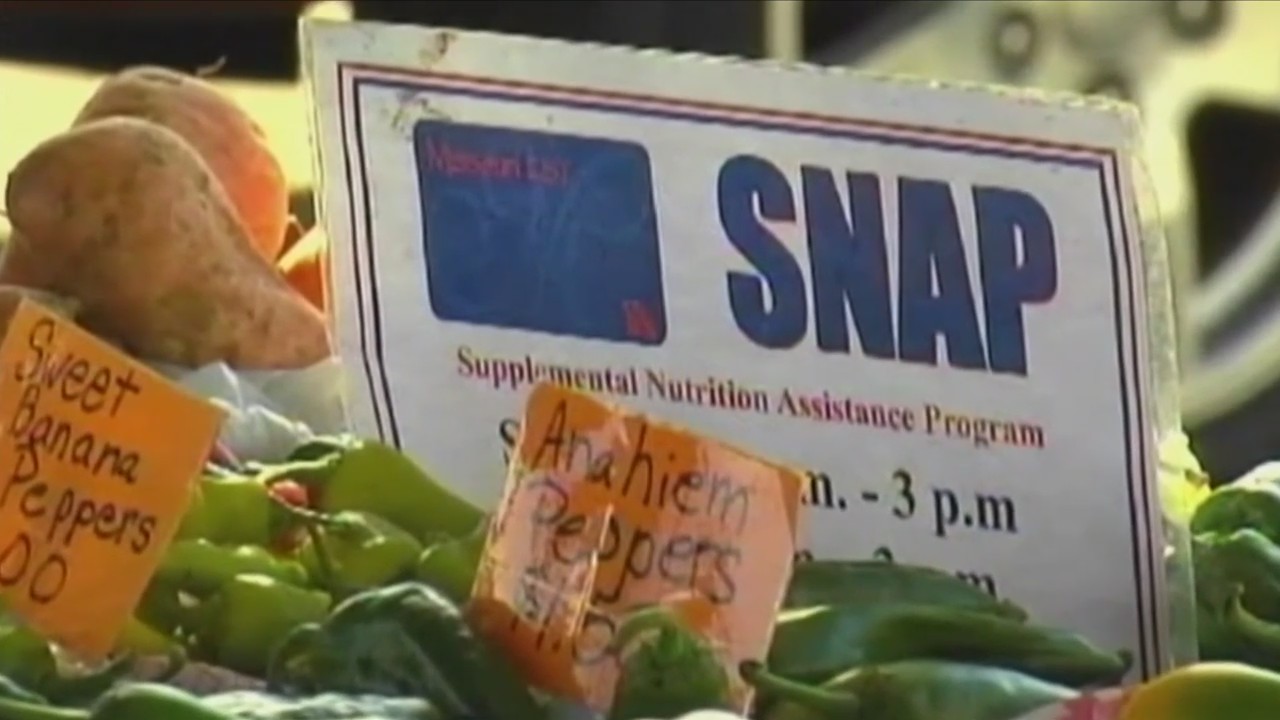
    BATON ROUGE, La. (AP) — Louisiana families are eligible for a 15% boost in their food stamp benefits through June, under the federal coronavirus aid package passed by Congress.

    The state said any increases due to people receiving benefits through the Supplemental Nutrition Assistance Program, known as SNAP or more commonly as food stamps, started being transferred to benefit cards Friday.

    The latest federal coronavirus legislation didn’t expand eligibility for food stamps. But The Times-Picayune/The New Orleans Advocate reports that state officials said several key provisions will increase SNAP’s reach.

    Shavana Howard, an assistant secretary for the Louisiana Department of Children and Family Services, said the program will no longer count federal extended unemployment benefits as income, which previously put SNAP out of reach for 44,165 applicants between March and July and ousted 2,185 households receiving benefits. Howard said many students who also did not qualify for food stamps because a portion of their parents’ income was counted against them will qualify this time.

    “I am very excited to see that Congress really acted for the people who really need the help,” Howard said.

    In Louisiana, a family of three, would previously have received a maximum allotment of $535 per month, but will now get $616 for qualifying food purchases.

    Hunger has soared in Louisiana since the onset of the pandemic, and the problem worsened as the state was hit with storm after storm during a record 2020 hurricane season. From February to November, the state added 95,228 households to food stamp rolls and finished November with 456,000 households receiving SNAP benefits, an increase of 26%.

  • Analysis: Health Care, Education, Incentives On 2021 Agendas

    Analysis: Health Care, Education, Incentives On 2021 Agendas

    JACKSON, Miss. (AP) — With the Mississippi legislative session just beginning, officials are starting to reveal their public policy wish lists, including proposals to increase teacher pay and improve the availability of health care services.

    The Senate Democratic Caucus chairman, Derrick Simmons of Greenville, repeated last week what he and many other Democrats have said for years — that Mississippi should expand Medicaid to cover tens of thousands of people who earn modest salaries and don’t receive health insurance through their jobs. Expansion is optional under the 2010 health care overhaul signed by then-President Barack Obama, and Mississippi is one of 12 states that have not chosen the option.

    The federal government pays most of the Medicaid tab, and Democrats say enrolling more people would boost Mississippi’s economy by supporting hospitals and other health care providers.

    Expansion is a longshot, though, because Republican Gov. Tate Reeves and Republicans who control the state House and Senate have long said that they believe it could become a budget buster, and they don’t want to put more people on a government program.

    Republican Lt. Gov. Delbert Hosemann has released more details about his legislative agenda than many others in the Capitol, and a teacher pay raise tops his list.

    Hosemann also told reporters last week that he wants Mississippi to revise the tax breaks and other incentives it uses to attract new businesses. Hosemann said the Senate will propose an incentive program called MFLEX — think, Mississippi and flexible.

    He said the state needs to eliminate some rarely used incentives and create simpler rules that are easy to understand.

    “If you’re moving a company with 100 employees to Mississippi, you can sit at your desk and calculate what the salaries are, how much it’s going to cost you and (get) an exact quote of what your benefits will be,” Hosemann said.

    The MFLEX proposal would require companies that receive incentives to provide health insurance for their employees. Those offering higher salaries would get more favorable treatment from the state. And the companies would be required to file annual reports so people could know whether the companies are fulfilling the promises they made to the state, Hosemann said.

    Hosemann’s legislative wish list this year also includes creating a state tourism agency. He wants to break tourism promotion away from the Mississippi Development Authority, the agency that pushes for job creation. It’s unclear whether his idea will get support from House leaders or from Reeves.

    The governor has said little about his own legislative agenda. When he released his state budget proposals in November, Reeves did not include a teacher pay raise, but he said he would ask legislators to put $3 million into a “patriotic education fund.”

    “Across the country, young children have suffered from indoctrination in far-left socialist teachings that emphasize America’s shortcomings over the exceptional achievements of this country. Revisionist history has aimed to tear down American institutions, and it is poisoning a generation,” Reeves’ budget document said.

    During a Senate Education Committee hearing last week, Democratic Sen. David Blount of Jackson quoted that document and asked state Superintendent of Education Carey Wright whether such indoctrination is happening in Mississippi schools.

    “Let me put it this way: That’s not in our standards to be taught,” Wright said.

    Wright said if she were to receive a complaint about such teaching, she would contact the local superintendent.

    Although $3 million is a relatively small amount of money in a $6 billion state budget, Blount’s questions show that the governor’s request will not be fulfilled without scrutiny — and it might not be fulfilled at all.

    ____

    Emily Wagster Pettus has covered Mississippi government and politics since 1994. Follow her on Twitter: http://twitter.com/EWagsterPettus.

  • Vaccine Rollout Hits Snag As Health Workers Balk At Shots

    Vaccine Rollout Hits Snag As Health Workers Balk At Shots

    The desperately awaited vaccination drive against the coronavirus in the U.S. is running into resistance from an unlikely quarter: Surprising numbers of health care workers who have seen firsthand the death and misery inflicted by COVID-19 are refusing shots.

    It is happening in nursing homes and, to a lesser degree, in hospitals, with employees expressing what experts say are unfounded fears of side effects from vaccines that were developed at record speed. More than three weeks into the campaign, some places are seeing as much as 80% of the staff holding back.

    “I don’t think anyone wants to be a guinea pig,” said Dr. Stephen Noble, a 42-year-old cardiothoracic surgeon in Portland, Oregon, who is postponing getting vaccinated. “At the end of the day, as a man of science, I just want to see what the data show. And give me the full data.”

    Alarmed by the phenomenon, some administrators have dangled everything from free breakfasts at Waffle House to a raffle for a car to get employees to roll up their sleeves. Some states have threatened to let other people cut ahead of health care workers in the line for shots.

    “It’s far too low. It’s alarmingly low,” said Neil Pruitt, CEO of PruittHealth, which runs about 100 long-term care homes in the South, where fewer than 3 in 10 workers offered the vaccine so far have accepted it.

    Many medical facilities from Florida to Washington state have boasted of near-universal acceptance of the shots, and workers have proudly plastered pictures of themselves on social media receiving the vaccine. Elsewhere, though, the drive has stumbled.

    While the federal government has released no data on how many people offered the vaccines have taken them, glimpses of resistance have emerged around the country.

    In Illinois, a big divide has opened at state-run veterans homes between residents and staff. The discrepancy was worst at the veterans home in Manteno, where 90% of residents were vaccinated but only 18% of the staff members.

    In rural Ashland, Alabama, about 90 of some 200 workers at Clay County Hospital have yet to agree to get vaccinated, even with the place so overrun with COVID-19 patients that oxygen is running low and beds have been added to the intensive care unit, divided by plastic sheeting.

    The pushback comes amid the most lethal phase in the outbreak yet, with the death toll at more than 350,000, and it could hinder the government’s effort to vaccinate somewhere between 70% and 85% of the U.S. population to achieve “herd immunity.”

    Administrators and public health officials have expressed hope that more health workers will opt to be vaccinated as they see their colleagues take the shots without problems.

    Oregon doctor Noble said he will wait until April or May to get the shots. He said it is vital for public health authorities not to overstate what they know about the vaccines. That is particularly important, he said, for Black people like him who are distrustful of government medical guidance because of past failures and abuses, such as the infamous Tuskegee experiment.

    Medical journals have published extensive data on the vaccines, and the Food and Drug Administration has made its analysis public. But misinformation about the shots has spread wildly online, including falsehoods that they cause fertility problems.

    Stormy Tatom, 30, a hospital ICU nurse in Beaumont, Texas, said she decided against getting vaccinated for now “because of the unknown long-term side effects.”

    “I would say at least half of my coworkers feel the same way,” Tatom said.

    There have been no signs of widespread severe side effects from the vaccines, and scientists say the drugs have been rigorously tested on tens of thousands and vetted by independent experts.

    States have begun turning up the pressure. South Carolina’s governor gave health care workers until Jan. 15 to get a shot or “move to the back of the line.” Georgia’s top health official has allowed some vaccines to be diverted to other front-line workers, including firefighters and police, out of frustration with the slow uptake.

    “There’s vaccine available but it’s literally sitting in freezers,” said Public Health Commissioner Dr. Kathleen Toomey. “That’s unacceptable. We have lives to save.”

    Nursing homes were among the institutions given priority for the shots because the virus has cut a terrible swath through them. Long-term care residents and staff account for about 38% of the nation’s COVID-19 fatalities.

    In West Virginia, only about 55% of nursing home workers agreed to the shots when they were first offered last month, according to Martin Wright, who leads the West Virginia Health Care Association.

    “It’s a race against social media,” Wright said of battling falsehoods about the vaccines.

    Ohio Gov. Mike DeWine said only 40% of the state’s nursing home workers have gotten shots. North Carolina’s top public health official estimated more than half were refusing the vaccine there.

    SavaSeniorCare has offered cash to the 169 long-term care homes in its 20-state network to pay for gift cards, socially distanced parties or other incentives. But so far, data from about a third of its homes shows that 55% of workers have refused the vaccine.

    CVS and Walgreens, which have been contracted by a majority of U.S. nursing homes to administer COVID-19 vaccinations, have not released specifics on the acceptance rate. CVS said that residents have agreed to be immunized at an “encouragingly high” rate but that “initial uptake among staff is low,” partly because of efforts to stagger when employees receive their shots.

    Some facilities have vaccinated workers in stages so that the staff is not sidelined all at once if they suffer minor side effects, which can include fever and aches.

    The hesitation isn’t surprising, given the mixed message from political leaders and misinformation online, said Dr. Wilbur Chen, a professor at the University of Maryland who specializes in the science of vaccines.

    He noted that health care workers represent a broad range of jobs and backgrounds and said they are not necessarily more informed than the general public.

    “They don’t know what to believe either,” Chen said. But he said he expects the hesitancy to subside as more people are vaccinated and public health officials get their message across.

    Some places have already seen turnarounds, such as Our Lady of the Lake Regional Medical Center in Baton Rouge, Louisiana.

    “The biggest thing that helped us to gain confidence in our staff was watching other staff members get vaccinated, be OK, walk out of the room, you know, not grow a third ear, and so that really is like an avalanche,” said Dr. Catherine O’Neal, chief medical officer. “The first few hundred that we had created another 300 that wanted the vaccine.”

    ___

    Contributing to this report were Associated Press writers Jake Bleiberg in Dallas; Heather Hollingsworth in Mission, Kansas; Janet McConnaughey in New Orleans; Candice Choi in New York; Kelli Kennedy in Fort Lauderdale, Florida; Jay Reeves in Birmingham, Alabama; Brian Witte in Annapolis, Maryland; Jeffrey Collins in Columbia, South Carolina; John Seewer in Toledo, Ohio; Melinda Deslatte in Baton Rouge, Louisiana; and Bryan Anderson in Raleigh, North Carolina.