Category: Louisiana News

  • Court To Rehear Law On Adoptions Of Native American Children

    Court To Rehear Law On Adoptions Of Native American Children

    NEW ORLEANS (AP) — A federal appeals court announced Thursday that it will take a second look at an emotionally fraught lawsuit governing the adoption of Native American children.

    In August, a three-judge panel of the 5th U.S. Circuit Court of Appeals upheld the Indian Child Welfare Act of 1978. It was a defeat for non-Indian families in multiple states who had adopted or sought to adopt American Indian children.

    On Thursday, the New Orleans-based court said a majority of its active judges have voted to re-hear the case. It means Native American tribes and the federal government will again have to defend the law, which they say is critical to protect and preserve Native American culture and families.

    A hearing date has not been set.

    The lead plaintiffs in the lawsuit challenging the law are Chad and Jennifer Brackeen, a Texas couple who fostered a baby eligible for membership in both the Navajo and Cherokee tribes. The boy’s parents voluntarily terminated their parental rights and the Brackeens petitioned to adopt him. After legal battles, they were able to keep him when a placement with a Navajo family fell through. They hope to adopt his younger half-sister, according to briefs.

    Other plaintiffs include Jason and Danielle Clifford of Minnesota, who were unable to adopt a child who lived with them after having been shuttled among foster homes. “The Cliffords’ family was literally torn apart,” their attorney told the appeals court judges during arguments in March.

    Texas, Indiana and Louisiana have also joined the lawsuit, siding with the would-be adoptive families.

    Defendants include the federal government and numerous intervening Native American organizations and tribes who back the law. They say that without it, many Native American children will be lost to their families and tribes.

    “Tribal nations are still reeling from generations of our families being separated,” Tyson Johnston, vice president of the Quinault Indian Nation said in March after a 5th Circuit hearing. “So, even though we’ve had good policy like the Indian Child Welfare Act, it’s going to take us many more generations to rectify those past wrongs.”

    Opponents of the law called it an unconstitutional race-based intrusion on states’ powers to govern adoptions. But two members of the three-judge panel that ruled this year disagreed.

    The opinion written by Judge James L. Dennis said the law’s definition of an “Indian child” is a political classification. It said the definition is broad, “extending to children without Indian blood, such as the descendants of former slaves of tribes who became members after they were freed, or the descendants of adopted white persons,” Dennis wrote.


  • Donald Trump Works Up A Sweat At A Louisiana Campaign Rally

    Donald Trump Works Up A Sweat At A Louisiana Campaign Rally

    MONROE, La. (AP) — President Donald Trump worked up a sweat in a steamy Louisiana arena Wednesday night as he attempted to boost Republican businessman Eddie Rispone’s effort to unseat incumbent Democratic Gov. John Bel Edwards in the nation’s last governor’s race of the year.

    “It may be 120 degrees in this room,” Trump told the crowd at the end of a rally in the northeastern Louisiana city of Monroe.

    “Somebody is saving on air conditioning,” Trump joked. “That’s all right. You’ve always got to save a little money. You go home and you lose about nine pounds and you say, ‘What happened?’”

    The gubernatorial runoff election in Louisiana offers Trump an opportunity to pick up a win in a rare Democratic-held governor’s seat in the Deep South and change the narrative after a pair of apparent setbacks this week for the Republican party in Kentucky and Virginia.

    “You’re going out to replace a radical, liberal Democrat as your governor,” Trump said. “John Bel Edwards has not done the job.”

    Trump is going all in with the Louisiana governor’s race.

    The White House confirmed he would visit Bossier City on Nov. 14, two days before Louisiana voters head to polls. Trump also visited Lake Charles last month to encourage voters to back one of the Republicans ahead of the state’s open primary. Because no candidate won a majority in the October primary, the top two vote-getters — Edwards and Rispone — advanced to the Nov. 16 runoff.

    Trump told the friendly audience that a vote for Rispone is a vote for his agenda, which he said Democrats have tried to hamstring through an impeachment inquiry.

    “The American people are fed up with Democrat lies, hoaxes, smears, slanders and scams. The Democrats’ shameful conduct has created an angry majority. And that’s what we are,” Trump said. “We’re a majority, and we’re angry, that will vote the do-nothing Democrats out of office in 2020.”

    With Wednesday’s visit to Monroe, Trump waded into the heart of the congressional district represented by Republican Ralph Abraham, the third-place finisher in last month’s gubernatorial primary. Both Rispone and Edwards are competing for Abraham’s voters. Polls show a tight race, with few undecided and both campaigns hoping Trump will mobilize voters in their bases.

    Trump called Abraham “a better man” than him for getting behind Rispone after a hard-fought primary. Abraham urged voters to get out the vote for Rispone.

    “Eddie, let’s get this thing done,” Abraham said. “Put the horse in the barn.”

    A longtime Republican political donor who has poured millions of his own dollars into the campaign, Rispone has tied his candidacy to Trump, introducing himself to voters in TV ads by talking about his support for the president.

    “We need a pro-Trump, good servant,” Rispone said at the rally. “Someone who is not beholden to special interests, … someone like Trump.”

    The owner of an industrial contracting firm, Rispone avoids many specifics about what he would do in office. He regularly compares himself to Trump, declaring both are “conservative outsiders.”

    Edwards, a former state lawmaker and military veteran, has downplayed national issues in favor of a defense of his own performance. Both anti-abortion and pro-gun, Edwards in many ways doesn’t match the platform of the national Democratic Party. But he holds positions that helped him draw support in 2015 from the Republican and independent voters he needs to win again.

    At a campaign stop Wednesday in Monroe, Edwards pointed to the Kentucky governor’s race, where results showed Democrat Andy Beshear in the lead by a few thousand votes over Republican Gov. Matt Bevin, a Trump ally. Edwards said Kentucky voters didn’t cast their ballots based on Trump’s visits, and he expects Louisiana voters won’t either. Trump had joined Bevin at a Kentucky rally hours before Tuesday’s vote.

    “The people of Louisiana, like the people of Kentucky, they will decide this race based on Louisiana issues, not Washington, D.C., issues,” Edwards said.

    At the Monroe rally, Trump was also joined by Louisiana’s two Republican senators and two of its biggest TV celebrities: “Duck Dynasty” star Willie and Phil Robertson.

    “I got it down to this,” said Phil Robertson. “If you are pro-God and pro-America and pro-gun and pro-duck hunting, that’s all I want.”

    ___

    Deslatte reported from Baton Rouge.

    ___

    Follow Melinda Deslatte on Twitter at http://twitter.com/melindadeslatte

  • Man, 29, gets 99 years as habitual offender for robbery

    GRETNA, La. (AP) — A 29-year-old Louisiana man has been sentenced to 99 years for robbing a 74-year-old man who was carrying Thanksgiving groceries into his house last year.

    In a news release, the Jefferson Parish District Attorney’s Office says a judge sentenced Wayne Norman of Marrero on Monday to 75 years but resentenced him Wednesday to 99, as a habitual offender.

    The statement says jurors convicted Norman last week. Prosecutors presented evidence that Norman followed the man from a bank to a grocery store, and then to the man’s driveway, where he was robbed.

    Shortly afterward, sheriff’s deputies chased a stolen vehicle, which hit a utility pole. Authorities say Norman ran, leaving some clothes in a backyard shed and hiding in a children’s closet, where he was caught with some of the robbery victim’s property.

  • City Council Approves $3.8 Million Pay Increase For Police

    City Council Approves $3.8 Million Pay Increase For Police

    LAFAYETTE, La. (AP) — A Louisiana city council has approved a $3.8 million pay increase for police officers, raising starting pay from $34,600 to $40,000.

    News outlets report Lafayette City-Parish Council unanimously approved the increase Tuesday for all Lafayette officers, except the chief. The department requested the raise to keep officers from leaving in search of better pay.

    Mayor-President Joel Robideaux previously said the entire $3.8 million won’t be taken from the state’s general fund.

    Chief Financial Officer Lorrie Toups says the 2019-20 budget is already expected to use more than $11 million from the savings.

    The council also introduced a pay increase ordinance for firefighters and Consolidated Government employees. The council is expected to vote on Nov. 19.

    Toups says the combined increase would cost $7.3 million, depleting the general fund by 2023.

  • 44 Percent Of Louisiana Schools Need Improvement Plans

    44 Percent Of Louisiana Schools Need Improvement Plans

    NEW ORLEANS (AP) — Five hundred seventy-one Louisiana public schools, or about 44 percent, have “persistently struggling groups of students” and are now required to develop improvement plans.

    Louisiana’s Department of Education released performance data Wednesday as part of the state’s compliance with the federal Every Student Succeeds Act.

    Among the 571 schools are 271 labeled as needing “comprehensive improvement,” for persistent low overall grades or poor graduation rates.

    Three hundred other schools — including some with high overall grades — must work to improve performance among sub-groups of students. Those groups include English language learners; low-income students and those with disabilities.

    The department pointed to promising findings, including more schools earning A and B grades. And the number of school systems earning A grades increased from four to nine since last year.

  • Cat Island Refuge Closed Because Of High Water

    Cat Island Refuge Closed Because Of High Water

    ST. FRANCISVILLE, La. (AP) — Federal officials are temporarily closing a wildlife refuge in Louisiana because of high water on the Mississippi River.

    An announcement Monday by the U.S. Fish and Wildlife Service says water has reached 24 feet at the Baton Rouge tide gauge, forcing the agency to shut down Cat Island National Wildlife Refuge.

    The acreage north of Baton Rouge is shut down occasionally when river levels get too high.

    The statement says the refuge won’t reopen until water levels fall.

  • Man Gets Probation For Raping Assisted Living Center Client

    Man Gets Probation For Raping Assisted Living Center Client

    ALEXANDRIA, La. (AP) — A Louisiana man has been sentenced to two years’ supervised probation for raping a 40-year-old resident of an assisted living facility in 2016.

    The Daily Town Talk reports 63-year-old Bernard Jones pleaded guilty Monday to a felony charge of cruelty to the infirm.

    He had faced up to four years of hard labor if convicted of his initial charge of first-degree rape at his trial that was set to start this week. Jones also was ordered Monday to avoid all contact with the victim and the victim’s family.

    It’s unclear why it took more than three years for the case to go to trial, why Jones took a plea deal at the last minute and how Jones was connected to the victim. The facility hasn’t been publicly named.

    ___

    Information from: Alexandria Daily Town Talk, http://www.thetowntalk.com

  • Aid OK’d For Businesses Affected By Hotel’s Partial Collapse

    Aid OK’d For Businesses Affected By Hotel’s Partial Collapse

    BATON ROUGE, La. (AP) — Businesses in New Orleans affected by the partial collapse of a hotel under construction are eligible for low-interest federal disaster loans through the U.S. Small Business Administration.

    The Hard Rock Hotel was under construction when part of it collapsed Oct. 12. Three people were killed.

    Gov. John Bel Edwards requested the SBA assistance after talking with New Orleans Mayor LaToya Cantrell and other officials. The loan declaration covers Orleans, Jefferson, Plaquemines, St. Bernard and St. Tammany parishes. Edwards says he hopes the loans will help businesses recover and continue operating.

    Tanya N. Garfield, director of SBA’s Disaster Field Operations Center-West, says the loans of up to $2 million can be used to pay bills, including payroll. Applicants may apply online or call SBA’s Customer Service Center.

    The application deadline is Aug. 5.

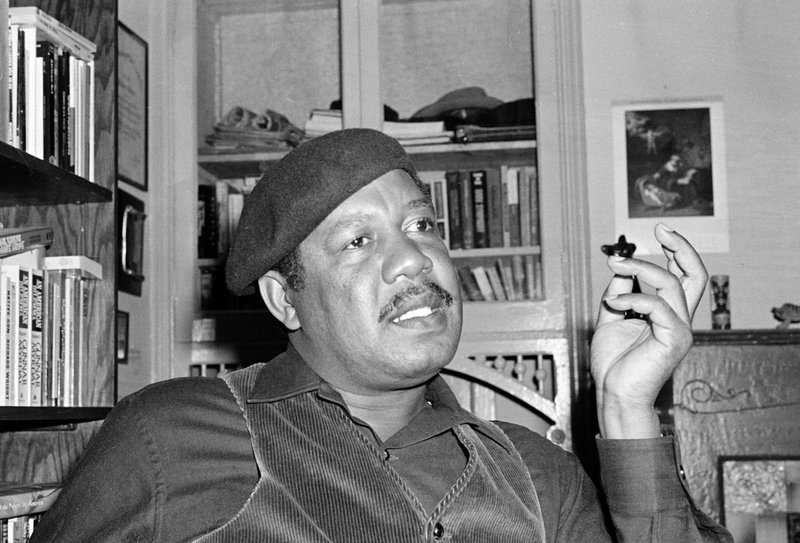
  • Acclaimed novelist Ernest Gaines dies at 86

    Acclaimed novelist Ernest Gaines dies at 86

    NEW ORLEANS (AP) — Novelist Ernest J. Gaines, whose poor childhood on a small Louisiana plantation germinated stories of black struggles that grew into universal tales of grace and beauty, has died. He was 86.

    The Baton Rouge Area Foundation, which sponsors a literary award in Gaines’ honor, confirmed he died Tuesday in his sleep of cardiac arrest at his home in Oscar, Louisiana.

    “Ernest Gaines was a Louisiana treasure,” foundation president and CEO John Davies said in a statement. “He will be remembered for his powerful prose that placed the reader directly into the story of the old South, as only he could describe it. We have lost a giant and a friend.”

    Louisiana Gov. John Bel Edwards said in a statement that Gaines “used his immense vision and literary talents to tell the stories of African Americans in the South. We are all blessed that Ernest left words and stories that will continue to inspire many generations to come.”

    “A Lesson Before Dying,” published in 1993, was an acclaimed classic. Gaines was awarded a “genius grant” that year by the MacArthur Foundation, receiving $335,000.

    Both “The Autobiography of Miss Jane Pittman” (1971) and “A Gathering of Old Men” (1984) became honored television movies.

    The author of eight books, Gaines was born on a plantation in Pointe Coupee Parish. His first writing experience was writing letters for illiterate workers who asked him to embellish their news to far-off relatives. Bayonne, the setting for Gaines’ fiction, was actually New Roads, Louisiana, which Gaines left for California when he was 15.

    Although books were denied him throughout his childhood because of Louisiana’s strict segregation, which extended even to libraries, he found the life surrounding him rich enough to recollect in story after story through exact and vivid detail.

    In “A Lesson Before Dying,” for example, the central figure is the teacher at the plantation school outside town. Through the teacher, whose profession Gaines elevates to a calling, the novelist explores the consistent themes of his work: sacrifice and duty, the obligation to others, the qualities of loving, the nature of courage.

    Gaines found that using his storytelling gifts meant more than militant civil rights action. “When Bull Connor would sic the dogs, I thought, ‘Hell, write a better paragraph.’

    “In 1968, when I was writing ‘The Autobiography of Miss Jane Pittman,’ my friends said, ‘Why write about a 110-year-old lady when all of this is going on now?’ And I said, ‘I think she’s going to have something to say about it.’”

    What Gaines’ characters said about it achieved a power and timelessness that made him a distinctive voice in American literature. Much of the appeal of his books is their seeming simplicity and straightforward story line. “I can never write big novels,” he always maintained. But the questions he explored were the eternal ones great writers confront: what it means to be human, what a human lives and dies for.

    A large, gentlemanly man with a certain bohemian air — braces and berets were favorite attire — and a stately manner, Gaines was devoted to friends and family. When he married in 1993 at age 60, he celebrated in Lafayette, New Orleans, Miami, and San Francisco, so the gatherings could include his intimates. Dianne Saulney Gaines is an assistant district attorney for Dade County, Florida. The couple divided their time among various abodes but spent the MacArthur money on a year in France and other travels.

    Gaines spent the fall teaching creative writing at the then-University of Southwestern Louisiana in Lafayette (now University of Louisiana at Lafayette) since 1983. It’s only about an hour’s drive from his childhood home.

    He could not write and teach at the same time. He needed five or six hours each day devoted to writing and “I can’t write a couple of days and skip two or three days.”

    “A Lesson Before Dying” took seven years.

    “I work five days a week, just like a regular job. I get up in the morning, do a little exercise, eat a little breakfast. I’m at my desk by nine in the morning, work until three with a little break for lunch,” he said.

    His literary influences were eclectic. Since he got a late start as a reader, he read with a vengeance.

    “I discovered John Steinbeck … then Willa Cather … then the great 19th Century Russian and French writers, writers like DeMaupassant and Flaubert. Then I discovered Ivan Turgenyev, the great Russian classicist. He wrote small novels where everyone wrote big novels. … (Turgenyev’s) ‘Fathers and Sons’ was one of my favorite books when I was a young man. It was my Bible when I was writing my first novel, ‘Catherine Carmier’ (1964),” he said.

    Other books include “Of Love and Dust” (1967), “Bloodline” (1968), “A Long Day in November” (1971), and “In My Father’s House” (1978).

    Among his numerous awards, Gaines received prestigious grants from the National Endowment for the Arts and the Rockefeller and Guggenheim Foundations. He held honorary doctorates from five colleges and universities.

    The Ernest Gaines Award for Literary Excellence will continue as his legacy. It will be presented Jan. 30 to a rising African American author.

  • New Orleans debuts new $1.3B airport terminal with amenities

    New Orleans debuts new $1.3B airport terminal with amenities

    NEW ORLEANS (AP) — The old Louis Armstrong New Orleans International Airport in Louisiana will soon be a thing of the past.

    State and city officials cut the ribbon Tuesday on the city’s new $1.3 billion airport terminal, which is scheduled to open to the public Wednesday. The airport is located in the New Orleans suburb of Kenner.

    The 927,000-square-foot (86,100-square-meter) facility features music venues, three rooms for mothers to bring small children, and other amenities such as charging locations for electronic devices at 50 percent of the seats at the gates. There are also 8,000 available parking spaces.

    “It is a modern airline experience here. It’s going to be night and day from the old terminal. It’s light. It’s bright. It’s got all the amenities,” said Cindy Perrino, the New Orleans representative for Southwest Airlines.

    The terminal had been scheduled to open in May 2018, but the opening was pushed back after various delays.

    A number of New Orleans restaurants are featured at the new terminal, and the city’s mayor, LaToya Cantrell, said local musicians will perform daily at the airport.

    “You can come early and enjoy New Orleans right here in our terminal,” the mayor said at Tuesday’s ceremony.

    All flights scheduled to arrive at the old terminal after 8 p.m. Tuesday will be moved to the new terminal, save for a few Southwest Airlines flights.

    The old airport was built in 1959. Construction on the new terminal began in January 2016.