Category: Mississippi News

  • Mobile sports betting will remain illegal in Mississippi after legislation dies

    Mobile sports betting will remain illegal in Mississippi after legislation dies

    JACKSON, Miss. (AP) — Mobile sports betting will remain illegal in Mississippi after legislative negotiators failed to advance a final proposal Monday.

    The House and Senate passed versions of the Mississippi Mobile Sports Wagering Act earlier in the state’s legislative session. The bill would have allowed Mississippi to join the 30 other states where mobile sports betting is legal. Sports wagering has been permitted in the state for years, but online betting has remained illegal amid fears the move could harm the bottom line of the state’s casinos.

    To assuage the concerns of casinos and lawmakers who represent areas where gambling is big business, the bill would have required betting companies to contract with brick-and-mortar establishments.

    Estimates show Mississippi could bring in over $25 million a year in tax revenue, said Republican Rep. Casey Eure of Saucier, the bill’s prime sponsor. Legalization would also undercut the influence of illicit offshore sports betting platforms in Mississippi, which leads the nation in illegal online sports betting Google searches, according to data presented by lawmakers.

    During legislative debates, some lawmakers raised concerns that gambling platforms would have no incentive to partner with smaller casinos, and most of the money would instead flow to the Mississippi Gulf Coast’s already bustling casinos.

    A small group of negotiators had until Monday night to file a final proposal for consideration before the full Legislature. That deadline passed without a final product for lawmakers to consider.


  • Bill dies for redistricting southwest Mississippi courts

    Bill dies for redistricting southwest Mississippi courts

    NATCHEZ, Miss. – Legislative efforts have died to redraw Mississippi’s judicial districts that would have altered the circuit and chancery courts for Adams County and its neighboring counties.

    The judicial redistricting bill died Monday when House-Senate negotiators couldn’t agree on a final version to pass into law. Earlier versions of the bill passed the House and Senate in recent weeks, but lawmakers couldn’t resolve differences that precluded a compromise.

    The House of Representatives originated the bill in March to sketch out new court districts statewide, and the Senate bulked it up with a new map that put Adams County with Pike County along with other less populous southwest Mississippi counties.

    The Adams County Board of Supervisors came out in opposition to the legislation at the behest of District Attorney Tim Cotton. They want to keep the 6th Circuit Court District as is with just Adams, Franklin, Wilkinson and Amite counties presided over by its two Natchez-based judges elected by voters. The bill would have enlarged the district by adding Pike, Jefferson and Claiborne counties.

    The 17th Chancery Court District currently has Adams County with Wilkinson, Jefferson and Claiborne counties with two Natchez-based judges elected by voters. The Senate-passed bill would have expanded it to also include Pike, Franklin and Amite counties.

    The addition of Pike County (population 39,000) to the two judicial districts raised the possibilities of judges and the DA being elected from the McComb area. Natchez and Adams County have about 28,000 people.

    The bill’s lead proponent – Senate Judiciary Chairman Brice Wiggins, R-Pascagoula – has said more counties need to be grouped together because of southwest Mississippi’s declining population and low count of court cases compared to other parts of Mississippi.

    House Bill 722 called for redrawing court districts throughout Mississippi.

    Judicial redistricting is dead for now as the state Legislature winds down its annual session, Wiggins said, “but we are committed to coming back next year and building on what the Senate did this year.”
  • Conservative states challenge federal rule on treatment of transgender students

    Conservative states challenge federal rule on treatment of transgender students

    Several Republican state attorneys general are challenging a federal regulation that seeks to protect the rights of transgender students in the nation’s schools by banning blanket policies that bar transgender students from school bathrooms aligning with their gender, among other provisions.

    The officials argue the new policies would hurt women and girls, trample free speech rights and create burdens for the states, which are among those with laws adopted in recent years that conflict with the new regulations.

    “This is federal government overreach, but it’s of a degree and dimension like no other,” Louisiana Attorney General Liz Murrill said in a news conference Monday.

    One lawsuit was filed in U.S. District Court in Monroe, Louisiana on Monday, the same day the Education Department regulations on how to enforce Title IX were officially finalized. The top state government lawyers for Idaho, Louisiana, Mississippi and Montana want the court to delay the date they take effect, which is scheduled for Aug. 1.

    Alabama, Florida, Georgia and South Carolina, along with four advocacy organizations filed a suit in federal court in Tuscaloosa, Alabama on Monday, and Texas filed a similar suit in federal court in Amarillo.

    The attorney general’s office in Indiana said that state was joining a lawsuit to be filed in Tennessee on Tuesday. Tennessee’s attorney general’s office said they are leading a multi-state suit to be filed, but did not confirm details.

    Top government officials from South Dakota said in a news release that the state “looks forward to joining efforts to enjoin this Rule.”

    Filing in multiple federal courts gives the states a better chance that one of them will put the rule on hold nationally.

    “The Final Rule drives a dagger through the heart of Title IX’s mandate,” states contend in the Louisiana court filing. “The central feature of the Final Rule is the Department’s extraordinary move to transform Title IX’s prohibition of discrimination based on ‘sex’ to include discrimination based on ‘gender identity,’” which the lawyers call “a wildly ambiguous term.”

    The regulation, left unchallenged, could invalidate several state laws adopted in recent years — and it could preempt some under consideration by state lawmakers, including in Louisiana. The regulation applies to all schools that receive federal funding.

    The states say the rule prohibits single-sex bathrooms and locker rooms, “compels school officials both to use pronouns associated with a student’s claimed ‘gender identity’ and to force students to do so as well,” and that it “cannot help but sound the death knell for female sports.”

    Even without the regulation, whether transgender girls can be kept out of girls sports is an unsettled legal question. Last week, a federal appeals court ruled in a 2-1 decision that West Virginia cannot bar one teenage transgender athlete from her school’s girls track and field and cross country teams. The state government said it was appealing to the U.S. Supreme Court.

    The federal rule opposes sweeping policies to allow transgender people from using the school bathrooms that align with their gender. At least 11 states, including Alabama, have such laws in their books already.

    The lawsuit says that even though the regulation does not address sports participation specifically, it would apply there, too. In the last few years, at least 25 states have adopted laws keeping transgender girls out of girls sports competitions — all in the name of preserving girls sports.

    President Joe Biden’s administration previously planned to announce a policy forbidding schools from enacting outright bans on transgender girls in girls sports, but it has backed off that plan and did not include it as part of the regulation.

    Still, advocates on both sides of the issue say that the new rule seems to bar at least complete bans of those sports laws.

    The regulation is also murky when it comes to laws intended to protect students and/or teachers from discipline if they misgender transgender or binary students by using the wrong pronouns for them; at least four states have such laws. The regulation says that using the wrong pronoun “can constitute discrimination on the basis of sex under Title IX in certain circumstances.” But it also spells out that a “stray remark” doesn’t constitute harassment.

    A handful of states — including Texas on Monday — have told local school districts not to change their policies against sex discrimination in light of the new regulation.

    It’s no surprise that the conservative states would challenge the regulation.

    Attorneys general often sue over federal administrative actions, especially those from presidents of the opposite party. And the battle over the rights of transgender kids has become a huge political issue over the last few years and remains one in this presidential election year.
  • Mississippi lawmakers expected to vote on Medicaid expansion plan with work requirement

    Mississippi lawmakers expected to vote on Medicaid expansion plan with work requirement

    JACKSON, Miss. (AP) — Mississippi lawmakers are expected to vote this week on a proposal that would expand Medicaid coverage to tens of thousands more people, but it includes a work requirement that might not win federal approval.

    The state House and Senate passed separate expansion plans earlier this year. With the four-month legislative session pushing into its final days, negotiators from the two chambers submitted a compromise moments before a Monday night deadline. They declined to answer questions after emerging from a closed-door meeting, but the proposal was filed in legislative clerks’ offices.

    The plan would require the new Medicaid recipients to be employed at least 100 hours a month in a job that does not provide private health insurance. Or, they could fit into other categories, such as being a fulltime student or the parent of a child younger than 6.

    If the federal government rejects Mississippi’s work requirement, the state Division of Medicaid would be required to continue seeking approval each year — an acknowledgement that a different federal administration might provide a different decision.

    Georgia is the only state with a Medicaid work requirement, and it is suing the federal government to try to keep the mandate in place. The work requirement was approved by then-President Donald Trump’s administration, but the Biden administration announced in December 2021 that it was revoking the approval. That prompted Georgia officials to sue.

    Mississippi is one of the poorest states in the U.S., and advocates say covering tens of thousands more people with Medicaid could help them manage chronic health conditions such as asthma and diabetes.

    The federal health overhaul signed by then-President Barack Obama in 2010 allowed states to expand Medicaid, largely to people who work low-wage jobs without insurance. Mississippi is among the 10 states that have resisted expansion.

    Republican Gov. Tate Reeves has said for years that he does not want to put more Mississippi residents on government programs. But dynamics in the Republican-controlled Legislature changed this year with the selection of a new House speaker, Jason White, who said expansion could help some of Mississippi’s financially struggling hospitals.

    The House voted by a wide bipartisan margin in late February to expand Medicaid coverage to about 200,000 people who earn up to 138% of the federal poverty level, or $20,120 annually for one person. Mississippi has about 3 million residents, and its Medicaid program covered 374,823 people in March.

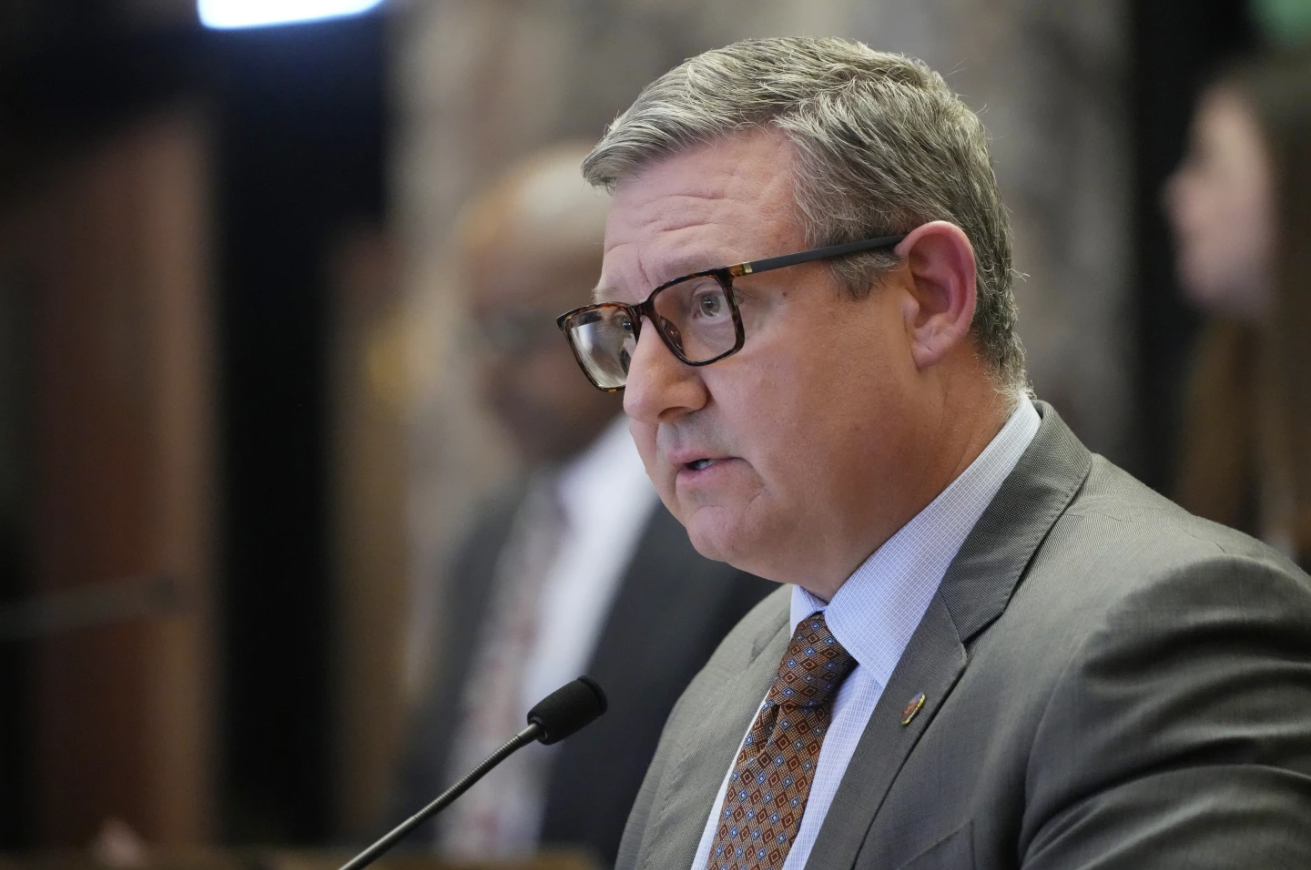
    In late March, the Senate passed its own pared-down version that would extend eligibility to people earning up to 100% of the federal poverty level, just over $15,000 for one person. Senate Medicaid Committee Chairman Kevin Blackwell, a Republican from Southaven, said about 80,000 people would become eligible for coverage but he thought about half that number would enroll.

  • Mississippi Senate agrees to a new school funding formula, sending plan to the governor

    Mississippi Senate agrees to a new school funding formula, sending plan to the governor

    JACKSON, Miss. (AP) — Mississippi would ditch a complex school funding formula that legislators have largely ignored since it became law a generation ago and replace it with a new plan that some lawmakers say is simpler to understand, under a bill headed to Republican Gov. Tate Reeves.

    A bill with the new formula passed the 52-member state Senate on Saturday with three votes in opposition, a day after it passed the House 113-0. Republicans control both chambers.

    The new plan, called the Mississippi Student Funding Formula, would replace the Mississippi Adequate Education Program (MAEP) — a formula that legislators have fully funded only two years since it became law in 1997.

    House and Senate leaders said the new plan would give school districts a boost in funding for students who can be more expensive to educate. For example, extra money would be calculated for students who live in poverty, those with special needs or dyslexia, those learning English as a second language, or those enrolled in gifted programs or career and technical education programs.

    “It’s clear. It’s concise. It gets money to our districts to help our students,” Senate Education Committee Chairman Dennis DeBar said.

    Reeves has not taken a public stance on the new formula, which legislators first released Friday.

    Democratic Sen. Hob Bryan was instrumental in pushing MAEP into law. He said Saturday that legislative leaders should provide side-by-side comparisons of how much money school districts might receive under full funding of MAEP and full funding of the new formula, calculated over several years.

    “In violation of the law year after year after year, this Legislature has refused to fund the basic funding formula,” Bryan said. “School districts don’t know how much money they’re going to get — not because of the existing formula. They don’t have any more security with the new formula.”

    The Mississippi Student Funding Formula would put about $217 million more into schools for the coming year than legislators budgeted for MAEP this academic year — but this was one of the years MAEP was not fully funded. Legislators shortchanged MAEP by nearly $176 million this year, according to research by The Parents’ Campaign, a group that advocates for public schools.

    Republican Sen. Angela Hill of Picayune joined Bryan and Republican Sen. Kathy Chism of New Albany in voting against the bill Saturday. Hill said she has concerns about funding for students learning English as a second language. Hill said the U.S. border with Mexico is “wide open.”

    “We have people pouring across the border from all over the world,” Hill said.

  • Thompson presents funds for Forks to Freedom project


    NATCHEZ — At a press conference Friday at Asbury United Methodist Church in Bolton, U.S. Rep. Bennie Thompson announced a number of community project fundings in Mississippi’s Second Congressional District.

    Natchez Mayor Dan Gibson and Ward 2 Alderman Billie Joe Frazier were at the conference to receive a $1 million appropriation on behalf of Natchez that will go toward the first phase of the Forks to Freedom Park project.

    Also attending was Jacqueline Marsaw, the county liaison with Thompson at his office in Adams County.

    “It was a real honor to be there with Congressman Thompson accepting this great appropriation for Natchez,” Gibson said. “It was in a meeting with him over a year ago that we first began seeking federal funds to help us begin our Forks to Freedom Park project. And this appropriation will help now to get Phase 1 development of the green space at both Revels Plaza and the future site of the Natchez U.S. Colored Troops monument on the north end of the Bluff.”

    Gibson said Thompson announced he had saved the Natchez presentation for last.

    “He truly is excited about what we are doing to build unity by telling our whole story. Today was especially rewarding to enjoy such camaraderie with Congressman Thompson, a gentleman who truly is serving his constituents in Natchez with sincere passion and great statesmanship,” Gibson said.

    Frazier echoed those comments.

    “Congressman Thompson made a number of presentations of appropriations that will benefit not only Adams County but surrounding counties, as well,” Frazier said.

    Frazier said Thompson has been more visible in Adams County and produced more for the county than any other U.S. representative in recent memory.

    “I told Congressman Thompson we have some more projects in Natchez we need to get taken care of and he said to let him know what we need. The Congressman is truly taking care of his district,” Frazier said.

    Presentations Friday afternoon in Bolton also included funds for an art center at a high school in Kosciusko; funds for an innovation center at Alcorn State University; funds for a workforce development program for the Southwest Mississippi Community Development District; a $1 million appropriation to a special needs camp near Crystal Springs; a $3 million appropriation to Hope Financial for low-income housing, among others.

    The post Thompson presents funds for Forks to Freedom project appeared first on Mississippi’s Best Community Newspaper.

    This article was written by The Natchez Democrat. To view the original article on the Natchez Democrat’s site, Click Here

  • Mississippi lawmakers haggle over possible Medicaid expansion as their legislative session nears end

    Mississippi lawmakers haggle over possible Medicaid expansion as their legislative session nears end

    JACKSON, Miss. (AP) — Top Mississippi lawmakers started negotiating Tuesday on what could become a landmark plan to expand Medicaid coverage to tens of thousands of people in one of the poorest states in the U.S.

    But even with Republicans controlling both the state House and Senate, it’s far from clear that they will reach a compromise during the final days of their four-month session that is scheduled to end by early May.

    Mississippi is among the 10 states that have not expanded Medicaid coverage to people who work low-wage jobs that don’t provide private health insurance. Expansion is an option under the federal health care overhaul signed into law in 2010 by then-President Barack Obama.

    Republican Gov. Tate Reeves has said for years that he opposes putting more people on government programs.

    Expansion is getting its first serious discussion in the Mississippi Capitol this year because the new House speaker, Republican Jason White, says it is one of his priorities.

    The House voted by a wide bipartisan margin in late February to expand Medicaid coverage to about 200,000 people who earn up to 138% of the federal poverty level, or $20,120 annually for one person. Mississippi has about 3 million residents, and its Medicaid program covered 374,823 people in March.

    In late March, the Senate passed its own pared-down version that would extend eligibility to people earning up to 100% of the federal poverty level, just over $15,000 for one person. Senate Medicaid Committee Chairman Kevin Blackwell, a Republican from Southaven, said about 80,000 people would become eligible for coverage but he thought about half that number would enroll.

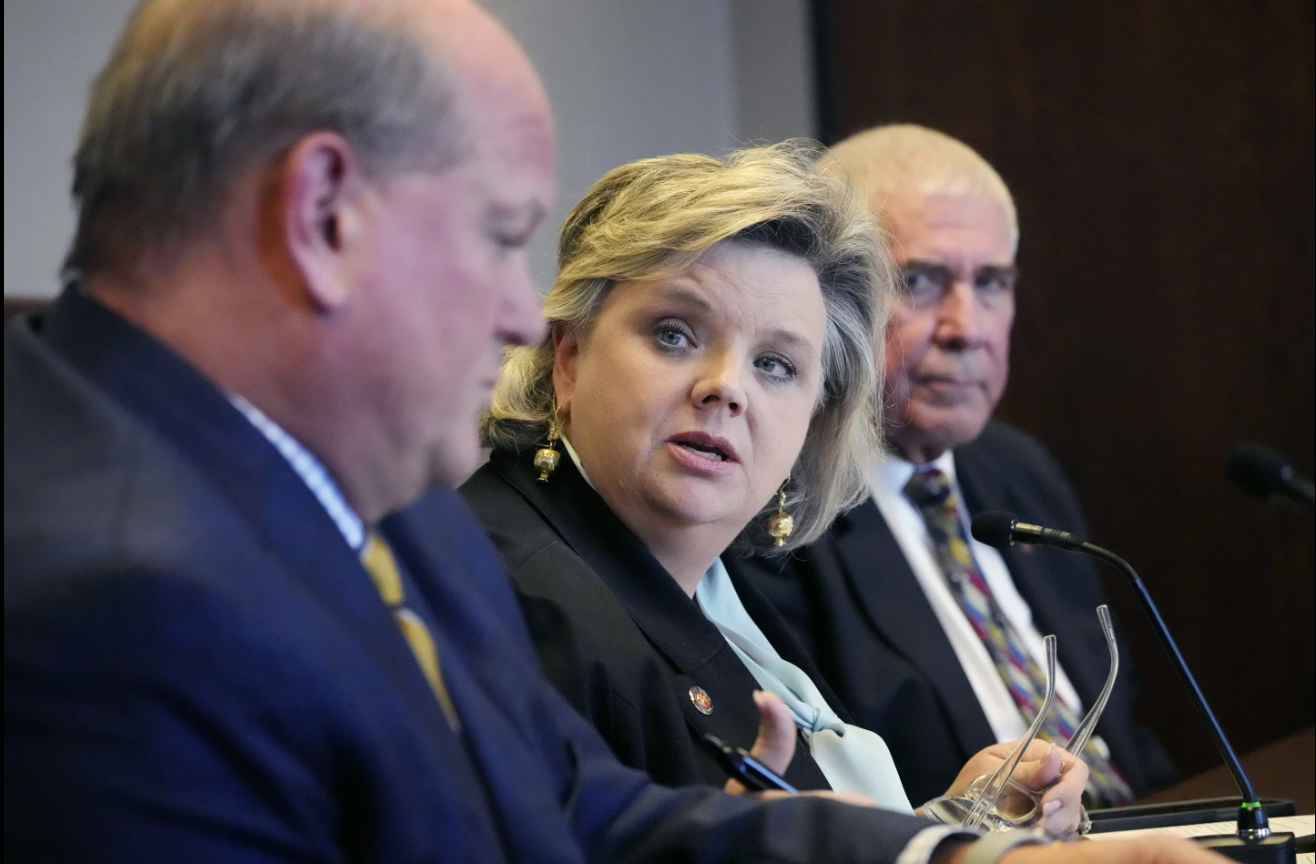
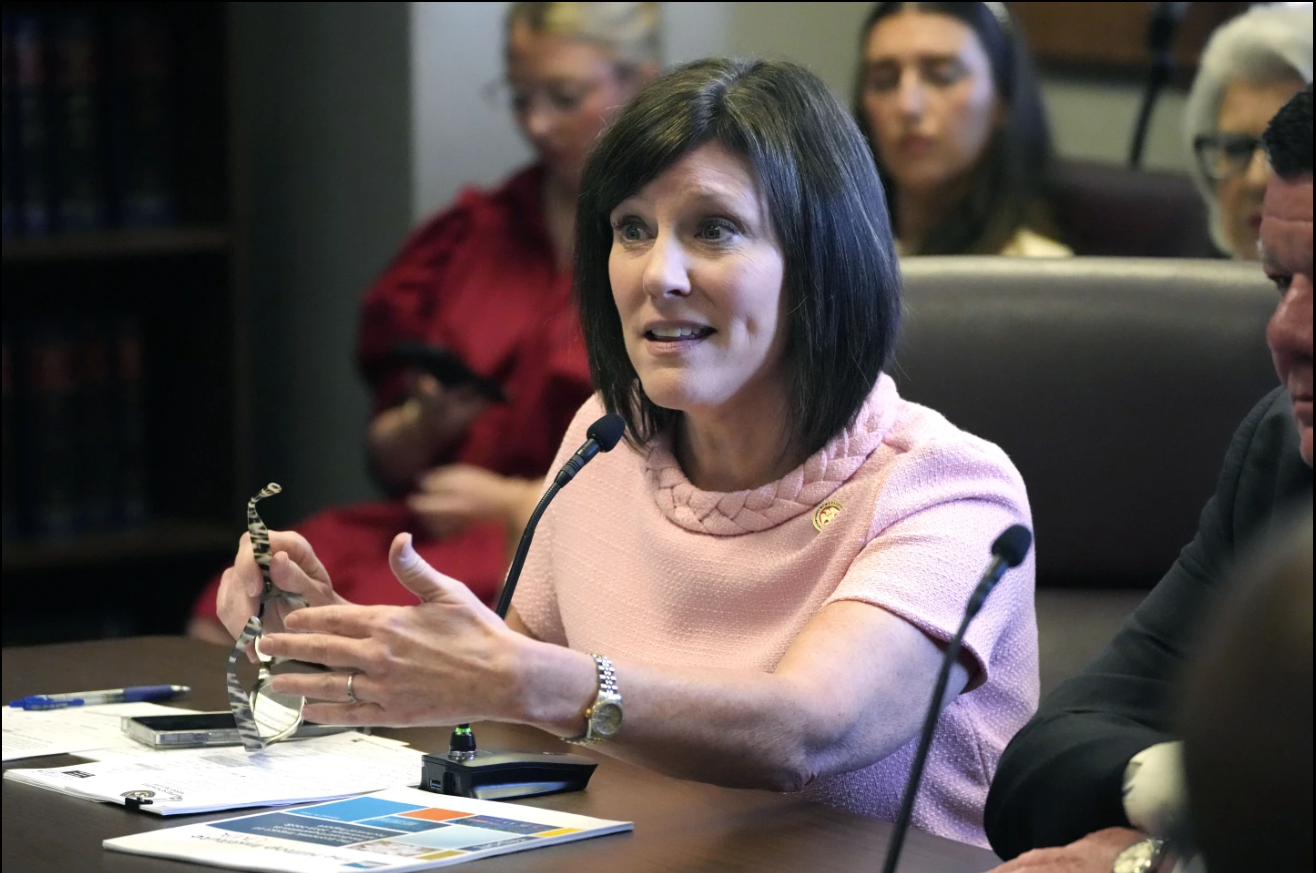
    House Medicaid Committee Chairwoman Missy McGee, a Republican from Hattiesburg, offered a compromise Tuesday. It would allow Mississippi to receive the full amount of federal money possible for Medicaid expansion. People earning up to 100% of the federal poverty level would be covered by Medicaid, while those earning between 100% and 138% of the federal poverty level would receive subsidies to buy insurance through a federal health insurance exchange.

    Senators offered no new proposals Tuesday and did not immediately respond to the one from the House. Blackwell said it’s significant that the two chambers are discussing expansion, but he cautioned against moving fast.

    “In the House’s case, I think you guys want to jump in the sports car and zoom right to expansion — damn the roadblocks and let’s get there,” Blackwell said. “Those of us in the Senate want to take sort of a more slower approach to that.”

    McGee responded: “I don’t feel like we have been in a Ferrari very long. I think we have been waiting 10 years. … We don’t need to push this off any longer for our low-income yet hardworking Mississippians.”

    Mississippi legislators usually meet in private to negotiate final versions of bills, but they agreed this year to hold open meetings on Medicaid expansion. Tuesday’s meeting ended up as standing-room only, with some spectators arriving hours early.

  • Mississippi lawmakers move toward restoring voting rights to 32 felons as broader suffrage bill dies

    Mississippi lawmakers move toward restoring voting rights to 32 felons as broader suffrage bill dies

    JACKSON, Miss. (AP) — Mississippi legislators advanced bills Monday to give voting rights back to 32 people convicted of felonies, weeks after a Senate leader killed a broader bill that would have restored suffrage to many more people with criminal records.

    The move is necessary due to Mississippi’s piecemeal approach to restoring voting rights to people convicted of felony offenses who have paid their debts to society. It also reflects the legacy of the state’s original list of disenfranchising crimes, which springs from the Jim Crow era. The attorneys who have sued to challenge the list say authors of the state constitution removed voting rights for crimes they thought Black people were more likely to commit.

    To have voting rights restored, people convicted of any of the crimes must get a pardon from the governor or persuade lawmakers to pass individual bills just for them, with two-thirds approval of the House and Senate. Lawmakers in recent years have passed few of those bills, and they passed none in 2023.

    “I certainly don’t think this is the best way to do it,” said Republican Rep. Kevin Horan of Grenada, who chairs the House Judiciary B Committee. “There comes a point in time where individuals who have paid their debt to society, they’re paying taxes, they’re doing the things they need to do, there’s no reason those individuals shouldn’t have the right to vote.”

    Despite lawmakers’ dismay with the current process, some are trying to restore suffrage for select individuals. On Monday, lawmakers on House and Senate Judiciary committees passed a combined 32 bills. The bills were introduced after a House hearing on Wednesday highlighted the difficulties some former felons face in regaining the right to vote.

    Mississippi is among the 26 states that remove voting rights from people for criminal convictions, according to the Brennan Center for Justice.

    Under the Mississippi Constitution, people lose the right to vote for 10 felonies, including bribery, theft and arson. The state’s previous attorney general, a Democrat, issued a ruling in 2009 that expanded the list to 22 crimes, including timber larceny and carjacking.

    In 1950, Mississippi dropped burglary from the list of disenfranchising crimes. Murder and rape were added in 1968. Attorneys representing the state in one lawsuit argued that those changes “cured any discriminatory taint,” and the conservative 5th U.S. Circuit Court of Appeals court agreed in 2022.

    Two lawsuits in recent years have challenged Mississippi’s felony disenfranchisement. The U.S. Supreme Court said in June that it would not reconsider the 2022 5th Circuit decision. The same appeals court heard arguments on the other case in January and has not issued a ruling.

    In March, the Republican-controlled Mississippi House passed a bill that would have allowed automatic restoration of voting rights for anyone convicted of theft, obtaining money or goods under false pretense, forgery, bigamy or “any crime interpreted as disenfranchising in later Attorney General opinions.” But the bill died after Senate Constitution Committee Chairwoman Angela Hill, a Republican from Picayune, refused to bring it up.

    Horan said the Republican House majority would only bring up individual suffrage bills for those who committed nonviolent offenses and had been discharged from custody for at least five years. Democratic Rep. Zakiya Summers of Jackson said she appreciated the House and Senate committees for passing the individual bills, but decried the death of the larger House bill.

    “That failed action plus the testimony we received during last week’s hearing are proof the system is broken,” Summers said. “We should right this historic, oppressive wrong by passing legislation that fully restores all who have been disenfranchised despite the conviction.”

  • A man escaped Sudan’s bloody civil war. His mysterious death in Missisippi has sparked suspicion

    A man escaped Sudan’s bloody civil war. His mysterious death in Missisippi has sparked suspicion

    JACKSON, Miss. (AP) — As a child, Dau Mabil escaped war-torn Sudan and built a new life in Mississippi. This month, fishermen found the body of the 33-year-old Mabil floating in a river, prompting calls for a federal investigation into his disappearance and death.

    Mabil, who lived in Jackson with his wife, went missing in broad daylight on March 25 after going for a walk on a trail connecting the Mississippi Civil Rights Museum with other city landmarks. His brother, Bul Mabil, cast doubt on initial autopsy results published Thursday, which a sheriff said did not uncover signs of foul play.

    Bul Mabil said he is dissatisfied with the way authorities have handled the case.

    “I can’t believe this would happen to someone who came here from a war-torn country,” he said in an interview with The Associated Press. ”I was expecting much better government in this country. But this is the way the United States operates. It is so appalling.”

    Democratic U.S. Rep. Bennie Thompson of Mississippi, whose district includes Jackson, sent a letter to Attorney General Merrick Garland requesting a Justice Department investigation. Thompson said civil rights organizations had contacted his office about the case, and his letter described Mabil as an “African male, who is married to Mrs. Karissa Bowley, a white female.”

    Family members and concerned citizens spent weeks searching for Dau Mabil, who was captured by a surveillance camera walking near the trail. In an interview, Bul Mabil said he raced to Jackson from his home in Houston on March 26 after hearing of his brother’s death from a family friend. He said he began looking into the case on his own, alongside the Capitol Police, a state law enforcement agency that operates in part of Jackson.

    At the same time, Bowley led rallies and information campaigns on behalf of her missing husband, asking for the public’s help to find him. She did not respond to a text or phone call seeking comment.

    Fishermen spotted a body on April 13 in the Pearl River in Lawrence County, about 60 miles (97 kilometers) south of Jackson. Days later, officials confirmed the remains were those of Dau Mabil.

    Bul Mabil said his brother’s death has been devastating for him and his mother, who still lives in a refugee camp.

    The brothers were among the thousands of young refugees brought to the U.S. during their country’s bloody civil war. After they arrived, Julie Hines Mabus, the ex-wife of former Mississippi Gov. Ray Mabus, started a foundation that helped the children settle in Jackson. She described Dau Mabil as “soft-spoken, a smile on his face, a little twinkle in his eye.”

    “To get here was miraculous and then for Bul to get his brother here was even more miraculous,” Hines Mabus told the AP. “It was sort of like a homecoming. And now for Bul to face this with his brother, it’s just heartbreaking.”

    Bul Mabil filed emergency legal papers to ensure his brother’s body wouldn’t be released to Bowley and her family until an autopsy was performed by both the state crime lab and an independent medical examiner. On Thursday, Hinds County Chancery Judge Dewayne Thomas granted the request, pausing release of the body and ordering a second autopsy.

    In a subsequent court filing, Bowley’s attorney said her client “embraces” the judge’s order for an additional autopsy, with the condition it be conducted only after all law enforcement entities finish investigating.

    Bul Mabil cast doubt on a statement from Lawrence County Sheriff Ryan Everett, who first reported the results of the initial autopsy Thursday. Everett said the autopsy did not reveal foul play, but an official determination may be made later, pending further testing.

    Bailey Martin, a spokesperson for the state Department of Public Safety, said the state crime lab performed the autopsy. The department expects to receive DNA confirmation next week.

    Bul Mabil’s attorneys said they hope an independent autopsy can be done within the next week.

    Capitol Police conducted an “insufficient” investigation, Bul Mabil said. One of this attorneys, Carlos Tanner, said his client was “being left in the dark about the suspicious circumstances” about his brother’s disappearance and death.

    Vallena Greer, a Jackson woman who took in and raised Dau Mabil, said he thrived in America. He received a school award for his improved English speaking skills and was a talented soccer player.

    At the time of his disappearance, Dau Mabil worked as a manager at a Jackson restaurant and planned on returning to school to earn a computer science degree.

    “He did well for what America wants immigrants to be,” Bul Mabil said. “We called Mississippi our second home. We didn’t know something like this would happen to one of us.”

  • Mississippi legislators won’t smooth the path this year to restore voting rights after some felonies

    Mississippi legislators won’t smooth the path this year to restore voting rights after some felonies

    JACKSON, Miss. (AP) — Kenneth Almons says he began a 23-year sentence in a Mississippi prison just two weeks after graduating from high school, and one of his felony convictions — for armed robbery — stripped away voting rights that he still has not regained decades later.

    Now 51, Almons told lawmakers Wednesday that he has worked hard and remained law-abiding since his release, and he wants to be able to vote.

    “It would mean I am no longer considered a nobody,” Almons said. “Because when you don’t have a voice, you’re nobody.”

    Mississippi is among the 26 states that remove voting rights from people for criminal convictions, according to the Brennan Center for Justice.

    Mississippi’s original list of disenfranchising crimes springs from the Jim Crow era, and attorneys who have sued to challenge the list say authors of the state constitution removed voting rights for crimes they thought Black people were more likely to commit.

    Under the Mississippi Constitution, people lose the right to vote for 10 felonies, including bribery, theft and arson. The state’s previous attorney general, a Democrat, issued a ruling in 2009 that expanded the list to 22 crimes, including timber larceny and carjacking.

    In 1950, Mississippi dropped burglary from the list of disenfranchising crimes. Murder and rape were added in 1968. Attorneys representing the state in one lawsuit argued that those changes “cured any discriminatory taint,” and the conservative 5th U.S. Circuit Court of Appeals court agreed in 2022.

    To have voting rights restored, people convicted of any of the crimes must get a pardon from the governor or persuade lawmakers to pass individual bills just for them, with two-thirds approval of the House and Senate. Lawmakers in recent years have passed few of those bills, and they passed none in 2023.

    Two lawsuits in recent years have challenged Mississippi’s felony disenfranchisement. The U.S. Supreme Court said in June that it would not reconsider the 2022 5th Circuit decision.

    The same appeals court heard arguments on the other case in January and has not issued a ruling.

    In March, the Republican-controlled Mississippi House voted 99-9 to pass a bill that would have allowed automatic restoration of voting rights for anyone convicted of theft, obtaining money or goods under false pretense, forgery, bigamy or “any crime interpreted as disenfranchising in later Attorney General opinions.” The restoration would occur five years after conviction or after release from prison, whichever is later.

    Senate Constitution Committee Chairwoman Angela Hill, a Republican from Picayune, killed the bill when she didn’t bring it up for consideration before a March 21 deadline. In response to questions Wednesday, Hill told The Associated Press she blocked it because “we already have some processes in place” to restore voting rights person by person.

    Rep. Kabir Karriem, a Democrat from Columbus, led a House hearing Wednesday and said restoring voting rights “is a fundamental human rights issue.”

    “Let us remember that the fight for voting rights is a fight for justice, equality and democracy itself,” Karriem said.

    Rep. Zakiya Summers, a Democrat from Jackson, served as an election commissioner before winning a House seat in 2019. She said a constituent called her upset one year because he went to his longtime precinct and his name had been removed from the list of registered voters. Summers found out the man had been convicted of a disenfranchising felony.

    Democratic Sen. Hillman Frazier of Jackson filed a bill to restore the man’s voting rights, and the Legislature passed it. But Summers said some 55,000 Mississippians with felony convictions remain disenfranchised.

    “It shouldn’t matter if you have a relationship with your legislator that you can get your voting rights restored,” Summers said.

    More than 50 bills have been filed this year to restore voting rights for specific people. Legislators could consider those until the end of the four-month session, which is set for early May.