Category: Mississippi News

  • Adams County supervisors seek to revive disbanded swimming pool commission

    Adams County supervisors seek to revive disbanded swimming pool commission

    NATCHEZ, Miss.  – County supervisors are seeking people to appoint to the commission that oversees the Natchez-Adams County swimming pool. The city and county boards suspended the commission last year because it was dysfunctional.


    The Board of Supervisors on Monday agreed to solicit commission candidates wanting to be considered as the public pool is approaching the summer swimming season.


    After pool commission members resigned last year – prompted partly by a dispute over alcoholic beverages being allowed at private pool parties – Adams County supervisors and Natchez aldermen voted last May to disband the commission and get city-county employees to manage the pool.


    The six-member pool panel got depleted last year after all members resigned except chairman Jimmy Ware, who oversaw the aquatic center’s operations. This came after the city and county boards in 2022 vetoed commission members’ policy to allow alcoholic beverages being consumed at the swimming pool during private after-hours parties. 


    The city and county boards were each divided 3-2 last year in voting to oust Ware and leave the commission vacancies unfilled for the duration. The majority favored having paid employees manage the pool while the minority argued that Ware was doing a good job as an appointed pool commissioner. They said city officials had been trying to “micromanage” the public pool’s operations.


    The community’s only public swimming pool is jointly owned and funded by the city and county. The Liberty Park facility has been plagued by management instability since it opened in 2018. The Jackson-based YMCA was initially contracted to manage it, but it pulled out in 2019. The city and county boards appointed a pool commission to manage it, but it failed  to meet for many months in 2022 and 2023 after the dispute erupted over commission members’ policy for alcoholic beverages. Aldermen said they would oust pool commission members who defied the directive against booze.

  • Mississippi ex-deputy gets 20-year sentence in racist torture of 2 Black men

    Mississippi ex-deputy gets 20-year sentence in racist torture of 2 Black men

    JACKSON, Miss. (AP) — A former Mississippi sheriff’s deputy was sentenced Tuesday to about 20 years in prison for his part in torturing two Black men last year.

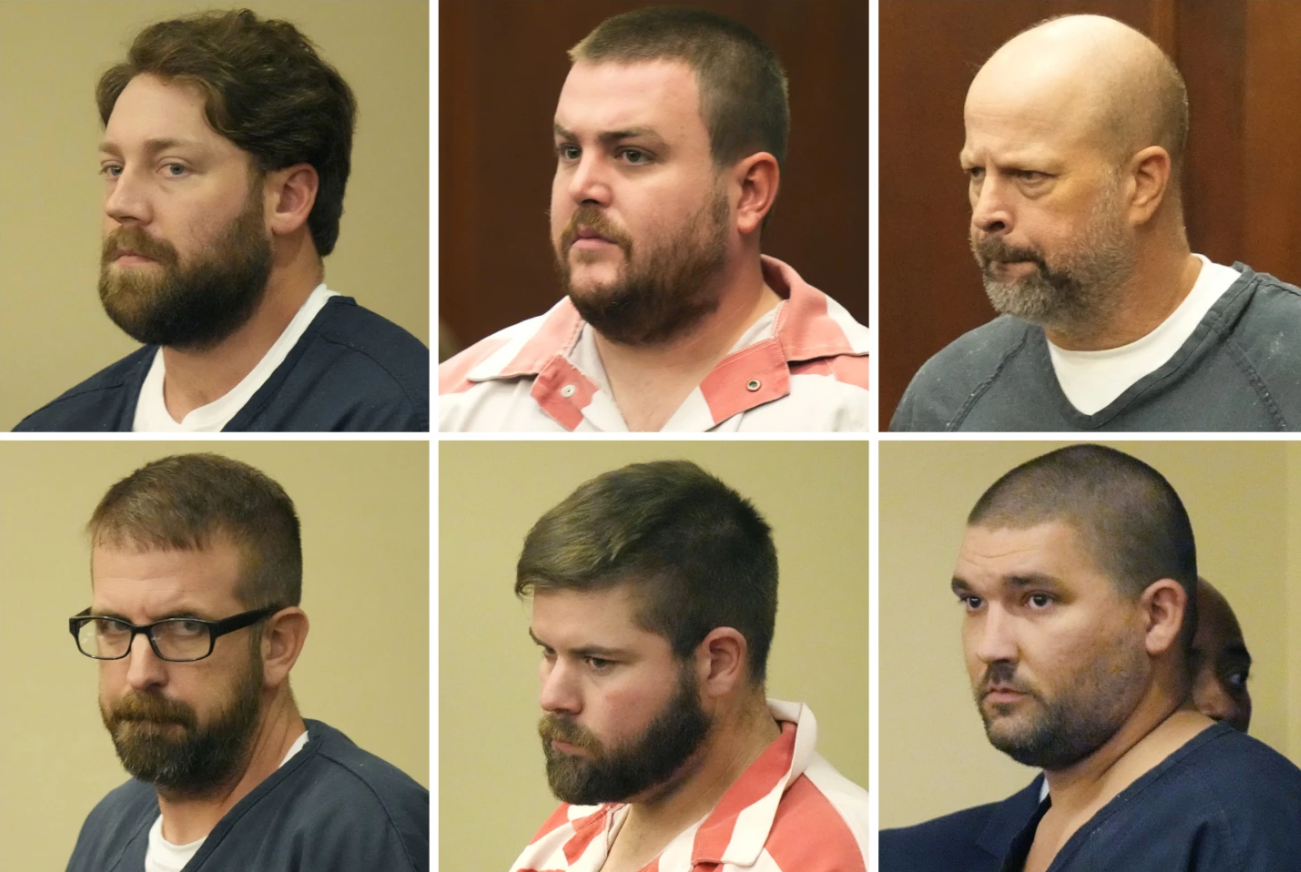
    Hunter Elward was sentenced by U.S. District Judge Tom Lee, who handed down a 241-month sentence. Lee is also due to sentence five other former law enforcement officers who admitted to subjecting Michael Corey Jenkins and Eddie Terrell Parker to numerous acts of racist torture.

    Before sentencing, Lee called Elward’s crimes “egregious and despicable,” and said a “sentence at the top of the guidelines range is justified — is more than justified.” He continued: “It’s what the defendant deserves. It’s what the community and the defendant’s victims deserve.”

    In January 2023, the group of six burst into a Rankin County home without a warrant and assaulted Jenkins and Parker with stun guns, a sex toy and other objects. Elward admitted to shoving a gun into Jenkins’ mouth and firing in a “mock execution” that went awry.

    The terror began on Jan. 24, 2023, with a racist call for extrajudicial violence.

    A white person phoned Rankin County Deputy Brett McAlpin and complained that two Black men were staying with a white woman at a house in Braxton, Mississippi. McAlpin told Deputy Christian Dedmon, who texted a group of white deputies so willing to use excessive force they called themselves “The Goon Squad.”

    Once inside, they handcuffed Jenkins and his friend Parker and poured milk, alcohol and chocolate syrup over their faces. They forced them to strip naked and shower together to conceal the mess. They mocked the victims with racial slurs and shocked them with stun guns.

    After a mock execution went awry when Jenkins was shot in the mouth, they devised a coverup that included planting drugs and a gun. False charges stood against Jenkins and Parker for months.

    Ahead of sentencing, Jenkins and Parker called for the “stiffest of sentences” at a news conference Monday.

    “It’s been very hard for me, for us,” Jenkins said. “We are hoping for the best and preparing for the worst.”

    Jenkins suffered a lacerated tongue and broken jaw. He still has trouble speaking and eating.

    Malik Shabazz, an attorney representing both men, said the result of the sentencing hearings could have national implications.

    “Michael Jenkins and Eddie Parker continue to suffer emotionally and physically since this horrific and bloody attack by Rankin County deputies,” Shabazz said. “A message must be sent to police in Mississippi and all over America, that level of criminal conduct will be met with the harshest of consequences.”

    Months before federal prosecutors announced charges in August 2023, an investigation by The Associated Press linked some of the deputies to at least four violent encounters with Black men since 2019 that left two dead and another with lasting injuries.

    The officers charged include McAlpin, Dedmon, Elward, Jeffrey Middleton and Daniel Opdyke of the Rankin County Sheriff’s Department and Joshua Hartfield, a Richland police officer. They pleaded guilty to charges including conspiracy against rights, obstructions of justice, deprivation of rights under color of law, discharge of a firearm under a crime of violence, and conspiracy to obstruct justice. Court papers identified Hunter Elward as one of the Goon Squad members. The others identified as part of the squad were Middleton and Opdyke.

    Most of their lawyers did not respond to emails requesting comment Monday. Jason Kirschberg, representing Opdyke, said: “Daniel has accepted responsibility for his actions, and his failures to act. … He has admitted he was wrong and feels deep remorse for the pain he caused the victims.”

    On the federal charges, Elward faced a maximum sentence of 120 years plus life in prison and $2.75 million in fines, as does Dedmon. Hartfield faces a possible sentence of 80 years and $1.5 million, McAlpin faces 90 years and $1.75 million, Middleton faces 80 years and $1.5 million, and Opdyke could be sentenced to 100 years with a $2 million fine.

    The former officers agreed to prosecutor-recommended sentences ranging from five to 30 years in state court, but time served for separate convictions at the state level will run concurrently with the potentially longer federal sentences.

    The majority-white Rankin County is just east of the state capital, Jackson, home to one of the highest percentages of Black residents of any major U.S. city.

    The officers warned Jenkins and Parker to “stay out of Rankin County and go back to Jackson or ‘their side’ of the Pearl River,” court documents say, referencing an area with higher concentrations of Black residents.

    In the gruesome crimes committed by men tasked with enforcing the law, federal prosecutors saw echoes of Mississippi’s dark history, including the 1964 killing of three civil rights workers after a deputy handed them off to the Ku Klux Klan.

  • Mississippi ballot initiative process faces narrowing path to being restored

    Mississippi ballot initiative process faces narrowing path to being restored

    JACKSON, Miss. (AP) — A push to revive Mississippi’s ballot initiative process is in peril as proposals are receiving weak support from Senate Republicans, and the House and Senate are pushing significantly different plans.

    In a narrow 26-21 vote Thursday, the state Senate gave first approval to a bill that would allow Mississippi residents to put some policy proposals on statewide ballots. But several Senate Republicans, who dominate the chamber, voted against the proposal that already contains core differences from a competing measure passed by the House in January.

    “I would call it on life support at this point,” said Sen. David Parker, the Republican sponsor of the Senate proposal, when asked about reviving the initiative process.

    A state Supreme Court ruling in 2021 invalidated the process for putting issues on statewide ballots. During 2022 and 2023, the House and Senate disagreed on details for a new initiative process. House Speaker Jason White has said restoring initiatives was a core concern of most voters he spoke to during the 2023 election.

    The House passed a resolution in January to restore the ballot initiative process through a constitutional amendment, which would eventually require a two-thirds majority vote in the Senate. The Senate bill, which heads to the House, would not require a two-thirds vote because it wouldn’t change the state constitution, but it contains provisions that could be a tough sell in the lower chamber.

    Under the House proposal, an initiative would need more than 150,000 signatures in a state with about 1.9 million voters. In order to be approved, an initiative would need to receive at least 40% of the total votes cast.

    The Senate version would require 67% of the total votes cast — a key point a contention between the chambers.

    Parker and some other senators said the higher signature threshold was necessary to guard against out-of-state interests pouring money into the state to get issues on the ballot through the initiative process.

    “We take the initiative process very seriously, and if something makes it on to the ballot, we expect there to be an outpouring of people with the desire to change our laws for that to pass,” Parker said.

    Both the House and Senate proposals would not allow initiatives to alter the state’s abortion laws. Lawmakers have cited the Mississippi Legislature’s role in defending a state law that laid the groundwork for the U.S. Supreme Court to upend abortion rights nationwide.

    Following the Senate vote Thursday, Republican Rep. Fred Shanks, who helped author the House resolution, said restoring the initiative process would remain a legislative priority despite its narrow path to passage.

    “The House stands on pushing the ballot initiative back to the people. It was the first issue we took up this session,” Shanks said. “We are eager to work with (the Senate).”

    Starting in the 1990s, Mississippi had a process for people to put proposed state constitutional amendments on the ballot. Mississippi dropped to four congressional districts after the 2000 census, but initiative language was never updated. That prompted the state Supreme Court to invalidate the process.


  • Mississippi will allow quicker Medicaid coverage during pregnancy to try to help women and babies

    Mississippi will allow quicker Medicaid coverage during pregnancy to try to help women and babies

    JACKSON, Miss. (AP) — A new Mississippi law will allow earlier Medicaid coverage for pregnant women in an effort to improve health outcomes for mothers and babies in a poor state with the nation’s worst rate of infant mortality.

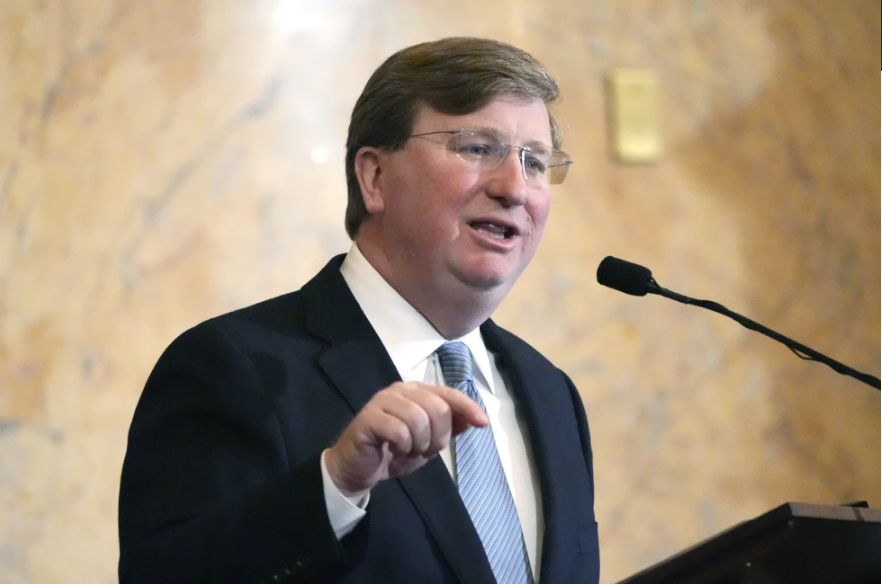
    The “presumptive eligility” legislation signed Tuesday by Republican Gov. Tate Reeves will become law July 1. It says Medicaid will pay for a pregnant woman’s outpatient medical care for up to 60 days while her application for the government-funded insurance program is being considered.

    Processing Medicaid applications can take weeks, and physicians say early prenatal care is vital.

    The advocacy group Mississippi Black Women’s Roundtable praised the new law, which passed the Republican-controlled Legislature with bipartisan support.

    “This represents a significant step forward in the effort to create better health for women and their families,” the group said in a statement.

    Black infants in Mississippi were nearly twice as likely as white ones to die over the past decade, according to a report unveiled Jan. 18 by the state Department of Health.

    Presumptive Medicaid eligibility during pregnancy would be based on questions about income, asked by health care providers such county health department workers. If a woman’s Medicaid application is ultimately rejected because her income is too high, Medicaid would still pay for services provided during the time of presumptive eligibility.

    House Medicaid Committee Chairwoman Missy McGee, a Republican from Hattiesburg, said the total cost to the Medicaid program will be just under $600,000 a year.

    About 41% of births in the U.S. and 57% in Mississippi were financed by Medicaid in 2022, according to the health policy research group KFF. Only Louisiana had a larger share of births covered by Medicaid that year, at 61%.

    In Mississippi, Medicaid coverage for pregnant women 19 and older is based on income. A woman in that age category who has no dependents can receive up to about $29,000 and qualify for Medicaid during pregnancy. One with three dependents can get as much as $59,700 and qualify.

    Mississippi Medicaid coverage is available to all income levels for those who are pregnant and younger than 19.

    In 2023, Mississippi extended postpartum Medicaid coverage from two months to a full year, with Reeves saying the change was part of a “new pro-life agenda” to help mothers in a state where abortion is tightly restricted.

    Mississippi is among 10 states that haven’t expanded Medicaid eligibility to include people earning up to 138% of the federal poverty level, or $20,120 annually for a single person. Expansion is allowed under the federal health overhaul that then-President Barack Obama signed into law in 2010.

    The Mississippi House recently voted for Medicaid expansion. The state Senate has not voted on an expansion proposal this year, and Reeves has said for years that he opposes adding people to government programs.


  • Mississippi holds primaries for 4 seats in the US House and 1 in the Senate

    Mississippi holds primaries for 4 seats in the US House and 1 in the Senate

    JACKSON, Miss. (AP) — Mississippians head to the polls with party primaries for all four of the state’s U.S. House seats and one U.S. Senate seat.

    Polls are open from 7 a.m. to 7 p.m. CDT Tuesday. If runoff elections are needed, they will be held April 2. The general election is Nov. 5.

    Here’s a look at the candidates who are vying for the nominations.

    HOUSE DISTRICT 1

    Rep. Trent Kelly is unopposed for the Republican nomination in north Mississippi’s 1st Congressional District. He is a former district attorney and has been in the House since winning a 2015 special election. Kelly is a member of the House Armed Services Committee.

    Dianne Dodson Black and Bronco Williams are competing in the Democratic primary.

    Black is a business owner and was the Democratic nominee in the 1st District in 2022. She says she wants to support President Joe Biden’s economic policies, restore abortion rights and limit access to semi-automatic rifles.

    Williams, a theater and Spanish teacher, says he wants the U.S. to invest in alternative energy sources, improve transportation and increase access to health care.

    ____

    HOUSE DISTRICT 2

    Rep. Bennie Thompson is unopposed for the Democratic nomination in the 2nd Congressional District, which encompasses most of the city of Jackson and rural areas in the Delta and along the Mississippi River. Thompson has been in the House since he won a 1993 special election. He is the ranking Democrat on the House Homeland Security Committee.

    The three candidates in the Republican primary are Ron Eller, Andrew Scott Smith and Taylor Turcotte.

    Eller is a military veteran and physician assistant who ran unsuccessfully for the Republican nomination in the 2nd District in 2022. He says he supports construction of a U.S.-Mexico border wall and expansion of domestic energy production.

    Smith has worked in farming and commercial real estate. He says he wants to rejuvenate agriculture, rebuild infrastructure, reinforce the southern U.S. border and require more transparency in government.

    Turcotte has worked in advertising and as a regional sales manager for a vacuum cleaner company. She says she is running because she wants to secure the U.S. borders.

    ____

    HOUSE DISTRICT 3

    Republican Rep. Michael Guest is unopposed in the primary and the general election in central Mississippi’s 3rd Congressional District. Guest is a former district attorney who was first elected to the U.S. House in 2018. He is chairman of the House Ethics Committee and vice chairman of the Homeland Security Committee.

    ____

    HOUSE DISTRICT 4

    Rep. Mike Ezell faces two challengers in the Republican primary in south Mississippi’s 4th Congressional District.

    Ezell is a former sheriff and was first elected to the House in 2022. He has voted to impeach Homeland Security Secretary Alejandro Mayorkas and to end U.S. military assistance to Ukraine. Former President Donald Trump endorsed him this year.

    Carl Boyanton and Michael McGill are challenging Ezell in the Republican primary.

    Boyanton has owned a produce distribution company. He ran unsuccessfully for the Republican nomination for the 4th District U.S. House seat in 2020 and 2022. He says he wants to enact term limits, eliminate some federal agencies and limit government spending.

    McGill is a military veteran. He says he wants to improve power grids, highways and other infrastructure, increase funding for mental health services and eliminate pay disparities between women and men.

    Craig Elliot Raybon is unopposed for the Democratic nomination in the 4th District.

    ____

    SENATE

    Sen. Roger Wicker faces two challengers in the Republican primary — Ghannon Burton and Dan Eubanks.

    Wicker was appointed to the Senate in 2017 by then-Gov. Haley Barbour after fellow Republican Trent Lott stepped down. Wicker is an attorney and served in the Mississippi state Senate before winning a U.S. House seat in north Mississippi in 1994. He is the ranking member of the Armed Services Committee and has pushed to expand shipbuilding for the U.S. military. He has been endorsed by Trump.

    Burton is a military veteran. He says he believes the 2020 presidential election was rigged, and he criticizes Wicker for voting to certify the results. Burton says he wants to close the U.S. border but he believes “globalists want it open.” Burton says he believes COVID-19 vaccines are poison.

    Eubanks is a state representative and a Presbyterian pastor. He says he believes “J-6ers” — people charged in the Jan. 6, 2021, riot at the U.S. Capitol — have been denied due process and are “rotting away in jail.” Eubanks says he wants to reduce federal spending and he believes Wicker’s record is “anything but conservative.”

    Ty Pinkins is unopposed for the Democratic nomination. He is an attorney and ran unsuccessfully for Mississippi secretary of state in 2023. He says he wants to fight poverty and improve access to health care.

  • Could Biden and Trump win their party’s nominations this week? What to watch in the next contests

    Could Biden and Trump win their party’s nominations this week? What to watch in the next contests

    NEW YORK (AP) — President Joe Biden and his likely Republican challenger, Donald Trump, are on track to win enough delegates this week to become their parties’ presumptive nominees, ushering in a bruising eight-month campaign for the White House.

    Elections in four states on Tuesday will likely give Biden and Trump the delegates they need to clinch the nominations. Their trajectories are hardly in doubt after dominant performances in last week’s Super Tuesday contests forced the last major primary challengers out of the race.

    But for many voters who aren’t attuned to the daily twists and turns of the nation’s turbulent politics, this week could be a crystalizing moment, reinforcing that another Biden-Trump campaign is virtually guaranteed whether Americans want it or not. And that rematch — the first in a U.S. presidential election since 1956 — is poised to deepen searing political and cultural divides.

    Here’s what we’re watching:

    WILL TRUMP CLINCH?

    Tuesday should be a wakeup call for those who still doubt that Trump, who is facing 91 felony counts in four separate criminal cases, will represent the Republican Party in the general election this fall.

    The former president is on track to win enough delegates to become the Republican Party’s presumptive presidential nominee — if he continues to dominate the way he has throughout the primary season. And with no major opposition on the ballot, there is every reason to believe he will.

    As of Sunday, Trump was 140 delegates short of the 1,215 needed to win the Republican nomination at the party’s national convention this summer. There are 161 Republican delegates at stake on Tuesday in Georgia, Mississippi, Washington state and Hawaii.

    With a strong showing on Tuesday, Trump can sweep all the delegates in Georgia, Mississippi and Washington state. Hawaii allocates delegates proportionally so other candidates could win a few, even with a small share of the vote.

    WHAT ABOUT BIDEN?

    Democrats who did not want Biden to run again are about to be disappointed.

    Like Trump, Biden is on the verge of securing sufficient delegates to become the Democratic Party’s presumptive presidential nominee.

    The president enters Tuesday 102 delegates short of the 1,968 needed to win the Democratic nomination. There are 254 Democratic delegates at stake delegates at stake Tuesday in Georgia, Mississippi and Washington state, in addition to party-run contests for the Northern Mariana Islands and Democrats Abroad that conclude that day.

    With no major opponents, Biden is on pace to reach that mark. But he’s also facing continued resistance from his party’s left flank that threatens to tarnish the achievement.

    A collection of progressive activists and faith leaders in Georgia and other states is encouraging Democratic primary participants not to vote for any presidential candidate. That’s after a protest “uncommitted” vote in Michigan recently secured two delegates.

    The symbolic protest is meant as a warning on Biden’s reelection over his support for Israel’s war against Hamas in Gaza.

    While Biden’s campaign says it’s not worried, the president must unite his party behind him if he hopes to defeat Trump in November.

    Following a fiery State of the Union address that he says fueled a jaw-dropping $10 million in donations in just 24 hours, Biden has an opportunity to build new momentum with a strong showing Tuesday.

    GEORGIA PREVIEW

    Georgia has emerged as one of the nation’s premier swing states in recent years. And both candidates are eager to put up a strong showing and flex their organizational muscle in what is effectively a dress rehearsal for November’s far more consequential general election.

    The state was a pivotal battleground in 2020 — so close that Trump finds himself indicted here for his push to “find 11,780 votes” and overturn Biden’s victory.

    Both candidates made Georgia a priority in the days leading up to Tuesday’s primary. But they offered very different messages in dueling rallies over the weekend.

    Trump’s Saturday rally opened with a message asking attendees to support the people serving jail time for their roles in the Jan. 6 Capitol insurrection. The former president then appeared with MAGA firebrand Rep. Marjorie Taylor Greene, R-Ga., whom he called “brave” for yelling at Biden during his State of the Union address. Trump also highlighted his private meeting the night before with Hungarian Prime Minister Viktor Orbán, who has rolled back democracy in his country.

    Biden, working to energize his coalition of voters of color, young people and suburbanites, pointed to Trump’s controversial associates and his embrace of the far right. “Our freedoms are literally on the ballot this November,” he said.

    IS THIS RACE ABOUT TO CHANGE?

    With both candidates poised to clinch their nominations, we are about to move formally from the primary to the general election phase of the 2024 election.

    But it’s fair to say we don’t know exactly what that will look like.

    Typically at this moment, candidates will shift their message to speak to a broader swath of voters — especially moderates and independents — that play a more influential role in general elections compared to the hardcore base voters that decide primaries.

    But if this weekend was any indication, Trump is showing little interest — or ability — to embrace a more inclusive or moderate tone. He’s still falsely insisting that the 2020 election was stolen and praising those who stormed the Capitol on one of the darkest days in modern U.S. history.

    We’ll be paying close attention to the tone of his official response — and his social media posts — after he clinches the nomination.

    On the Democratic side, we’re about to learn whether Biden’s coalition changes its view of the race as the reality sets in that this election is now a binary choice between Biden and Trump. Biden’s campaign is betting big that’s the case.

    On the eve of Tuesday’s primaries, the Democratic president unveiled a new campaign ad as part of a $30 million battleground-state investment casting himself as more effective than Trump — despite concerns about Biden’s age.

    Trump won’t make it easy on Biden. A super PAC backing Trump released a new ad that asks, “If Biden wins, can he even survive till 2029?”

    Buckle up. The next eight months could get bumpy.

     

  • Mississippi legislators are moving toward a showdown on how to pay for public schools

    Mississippi legislators are moving toward a showdown on how to pay for public schools

    JACKSON, Miss. (AP) — A conflict is building among Mississippi legislative leaders over whether to tweak an education funding formula or ditch it and set a new one.

    The state Senate voted Thursday, without opposition, to make a few changes to the Mississippi Adequate Education Program, which has been in law since 1997. The action came a day after the House voted to abandon MAEP and replace it with a new formula.

    MAEP is designed to give school districts enough money to meet midlevel academic standards. It is based on several factors, including costs of instruction, administration, operation and maintenance of schools, and other support services.

    “It also allows superintendents of districts to know roughly what they are getting every year because we have an objective formula,” Senate Education Committee Chairman Dennis DeBar, R-Leakesville, said Thursday.

    The Senate proposal could require local communities to pay a slightly larger percentage of overall school funding. It also specifies that if a student transfers from a charter school to another public school, the charter school would not keep all of the public money that it received for that student.

    Legislators have fully funded MAEP only two years, and House leaders say that is an indication that a new formula is needed.

    The formula proposed by the House is called INSPIRE — Investing in the Needs of Students to Prioritize, Impact and Reform Education. It would be based on a per-student cost determined by a group of 13 people, including eight superintendents of school districts.

    House Education Committee Vice Chairman Kent McCarty, a Republican from Hattiesburg, said INSPIRE would be more equitable because school districts would receive extra money if they have large concentrations of poverty or if they enroll large numbers of students who have special needs or are learning English as a second language.

    The House voted 95-13 to pass the INSPIRE plan and send it to the Senate for more work. The Senate bill moves to the House. The two chambers must resolve their differences, or abandon any proposed changes, before the legislative session ends in early May.

    The House Democratic leader, Rep. Robert Johnson of Natchez, said Thursday that INSPIRE is based on statistics from an unknown source. He suggested conservative groups hostile to public education could be behind the legislation.

    “All they’ve tried to do is destroy public education,” Johnson said of the groups. “They love it, they think it’s great. And all they’ve ever been for is charter schools, vouchers and public money to private schools. … Pie in the sky. Fake numbers.”

    House Education Committee Chairman Rep. Rob Roberson, a Republican from Starkville, said a “communication breakdown” occurred Wednesday over information provided to Johnson during Wednesday’s House debate. Roberson said financial figures came from lawmakers who sought advice from a range of groups.

    During a news conference Thursday, House Speaker Jason White said the House Republican majority is not prepared to relent on its view that lawmakers should eliminate MAEP.

    “It is time to once and for all acknowledge that the MAEP formula is a thing of the past,” White said. “Very few understand it, and it certainly has not been followed.”

  • Mississippi House votes to change school funding formula, but plan faces hurdles in the Senate

    Mississippi House votes to change school funding formula, but plan faces hurdles in the Senate

    JACKSON, Miss. (AP) — The Mississippi House voted Wednesday to set a new formula to calculate how much money the state will spend on public schools — a step toward abandoning a formula that has put generations of legislators under political pressure because they have fully funded it only two years since it was put into law in 1997.

    The proposal is in House Bill 1453, which passed with broad bipartisan support on a vote of 95-13.

    Work is far from finished. The bill will move to the Senate, which is also controlled by Republicans and has a separate proposal to revise but not abandon the current formula, known as the Mississippi Adequate Education Program.

    MAEP is designed to give school districts enough money to meet midlevel academic standards. Senators tried to revise it last year, but that effort fell short.

    The formula proposed by the House is called INSPIRE — Investing in the Needs of Students to Prioritize, Impact and Reform Education. Republican Rep. Kent McCarty of Hattiesburg said it would create a more equitable way of paying for schools because districts would receive extra money if they have large concentrations of poverty or if they enroll large numbers of students who have special needs or are learning English as a second language.

    “This puts money in the pockets of the districts that need it the most,” McCarty, vice chairman of the House Education Committee, said Wednesday.

    Republican Rep. Rob Roberson of Starkville, the committee chairman, said INSPIRE would put more money into public schools than has ever been spent in Mississippi, one of the poorest states in the U.S.

    “It bothers me that we have children out there that do not get a good education in this state,” Roberson said. “It should make you mad, too.”

    Full funding of MAEP would cost nearly $3 billion for the budget year that begins July 1, according to the state Department of Education. That would be about $643 million more than the state is spending on the formula during the current year, an increase of about 17.8%.

    Democratic Rep. Bob Evans of Monticello asked how full funding of INSPIRE would compare to full funding of MAEP.

    McCarty — noting that he was only 3 years old when MAEP was put into law — said legislators are not discussing fully funding the formula this session. He said INSPIRE proposes putting $2.975 billion into schools for the coming year, and that would be “more money than the Senate is proposing, more money than we’ve ever even thought about proposing on this side of the building.”

    McCarty also said, though, that decisions about fully funding INSPIRE would be made year by year, just as they are with MAEP.

    Affluent school districts, including Madison County and Rankin County in the Jackson suburbs, would see decreases in state funding under INSPIRE, McCarty said.

    Nancy Loome is director of the Parents’ Campaign, a group that has long pushed legislators to fully fund MAEP. She cautioned in a statement that the House proposal would eliminate “an objective formula for the base per-student cost, which is supposed to reflect the true cost of educating a Mississippi student to proficiency in core subjects.”

    “Any total rewrite of our school funding formula needs careful, deliberate thought with input from those most affected by it: public school educators and parents of children in public schools,” Loome said.

    Under the House proposal, a 13-member group made up mostly of educators would recommend revisions at least once every four years in the per-student cost that would be the base of the INSPIRE formula. The cost would be adjusted for inflation each year.

    Twenty-one school districts sued the state in August 2014, seeking more than $235 million to make up for shortfalls from 2010 to 2015 — some of the years when lawmakers didn’t fully fund MAEP. The Mississippi Supreme Court ruled in 2017 that legislators are not obligated to spend all the money required by the formula.


  • Mississippi lawmakers moving to crack down on machine gun conversion devices

    Mississippi lawmakers moving to crack down on machine gun conversion devices

    JACKSON, Miss. (AP) — Legislation advancing in Mississippi — where lawmakers are typically loathe to introduce new gun restrictions — would ban most devices used to convert semi-automatic firearms into fully automatic ones.

    Under a bill passed by the state Senate on Wednesday, local prosecutors could charge people who possess and manufacture modified machine guns. Conversion devices, which are made with 3D printers and can be bought on the internet, make it so that a legal semi-automatic gun can fire multiple rounds at a rapid clip. The proliferation of these devices has led to deadly crimes, Republican Sen. Scott DeLano said.

    “These are very deadly devices. They are killing machines,” DeLano said. “This is not something a law-abiding citizen would need to have.”

    Lawmakers were moved to introduce the bill after a Mississippi sheriff’s deputy was shot and killed during a traffic stop by a suspect who had a modified machine gun. George County Deputy Jeremy Malone died after he stopped a vehicle U.S. 98 in early January.

    The National Rifle Association, which often lobbies against gun control provisions, helped write portions of the bill because it is “cognizant to this threat to our law enforcement community,” DeLano said.

    While federal law restricts conversion devices, Mississippi does not have a state law banning them. As a result, police can only confiscate the devices. Local prosecutors cannot charge people for modifying machine guns. Instead they must rely on federal prosecutors, who have been overwhelmed with the number of cases in Mississippi, DeLano said.

    People can still obtain a federal license to purchase some modified guns.

    The bill now heads to the House, which has already passed a similar proposal the Senate could consider. Both bills are named after Malone, the slain officer.

  • School funding and ballot initiatives are among issues surviving in Mississippi Legislature

    School funding and ballot initiatives are among issues surviving in Mississippi Legislature

    JACKSON, Miss. (AP) — Mississippi legislators are considering proposals to rewrite the funding formula for public schools. Senate Bill 2332 would revise the Mississippi Adequate Education Program, the formula that has been fully funded only twice since it became law in 1997. House Bill 1453 would set a new formula that would send more money to poorer districts.

    Tuesday was the deadline for House and Senate committees to consider general bills and constitutional amendments that originated in their own chamber. Bills that survived will move to the full House and Senate for more debate. Budget and revenue bills have later deadlines.

    Here is the status of some general bills:

    ALIVE

    BALLOT INITIATIVE — House Concurrent Resolution 11, Senate Bill 2770 and Senate Concurrent Resolution 527 would revive an initiative process, allowing people to petition to put many issues on the statewide ballot. The state Supreme Court ruled in 2021 the ballot initiative process was invalid. The House and Senate both have proposals that would prohibit changes to abortion laws through a statewide election. Republicans have said abortion restrictions should be off-limits because of the Legislature’s role in laying the groundwork for the U.S. Supreme Court to upend abortion rights nationwide.

    MEDICAID EXPANSION — House Bill 1725 would expand Medicaid benefits to hundreds of thousands more residents in one of the poorest states in the U.S. The House passed the bill on a bipartisan vote of 98-20, following years of opposition from Republicans, including Gov. Tate Reeves, who is still against the policy. That bill heads to the Senate, which has its own proposal, Senate Bill 2735, that will serve as a foundation for further negotiations. If lawmakers in both chambers vote to expand Medicaid, it would be a landmark shift. Mississippi is one of 10 states that have not expanded Medicaid under the health overhaul that then-President Barack Obama signed into law in 2010.

    MISSISSIPPI UNIVERSITY FOR WOMEN — Senate Bill 2715 would require Mississippi University for Women to become part of Mississippi State University on July 1, 2025. The campus in Columbus would remain open but would be known as “The W at Mississippi State University.”

    ELECTION DEEPFAKES — House Bill 1689 would make it a crime to disseminate any deepfake picture, video recording, electronic image or digital representation of speech or conduct within 90 days of an election. Senate Bill 2577 has a similar ban on the use of artificial intelligence to create fake material that is disseminated within 90 days of an election.
    JACKSON WATER — Senate Bill 2628 would create a state-appointed regional board to govern the water system in the capital city of Jackson. The federal government put an independent administrator in charge of the system in 2022 after infrastructure problems left many residents and businesses without running water for weeks. Under the bill, the governing board would take over after the administrator leaves. Mayor Chokwe Antar Lumumba opposes the bill, saying it’s an example of the majority-white and Republican-led Legislature trying to seize control from a majority-Black city.

    DEFINING SEX — House Bill 1607, the “Mississippi Women’s Bill of Rights,” specifies that a “person’s biological sex, either male or female, as observed or clinically verified at birth” is different from “gender identity or other terms intended to convey a person’s subjective sense of self.” The bill says that “biological differences between the sexes are enduring and, in some circumstances, may warrant the creation of separate social, educational, athletic or other spaces in order to ensure safety or allow members of each sex to succeed and thrive.”

    BATHROOMS — Senate Bill 2753 would prohibit people from entering restrooms for the “opposite sex.” The bill would block transgender people, including those who have transitioned, from using restrooms that match their gender identity. The legislation requires public buildings to have single-sex restrooms and changing areas, or unisex spaces designated for one person. A person caught entering the wrong restroom or changing room could be sued.

    DEAD

    PRISONS — Senate Bill 2353 would have closed most parts of the Mississippi State Penitentiary at Parchman over four years, sending most inmates to a private prison several miles away. The Justice Department said in 2022 that Parchman had violated inmates’ constitutional rights by failing to protect them from violence, meet their mental health needs or take adequate steps for suicide prevention, and by relying too much on prolonged solitary confinement. The department’s two-year investigation began after after an outburst of violence in late 2019 and early 2020 that left some inmates dead and others injured.

    UNIVERSITY CLOSURES — Senate Bill 2726 would have directed the state board that governs higher education to close three of the state’s eight public universities. Republican Sen. John Polk, the bill’s sponsor, said the state is spending too much for some universities that have declining enrollment. The bill drew widespread opposition from legislators, college administrators and alumni, who said the state needs more educated workers. Legislative leaders said they wanted to create a task force to look into the issue, and another bill that would do that is still alive.

    DIVERSITY, EQUITY AND INCLUSION — House Bill 127 and Senate Bill 2402 would have banned diversity, equity and inclusion programs, known as DEI, on college campuses. Rep. Becky Currie and Sen. Angela Hill, both Republicans, introduced the bills amid a nationwide push among GOP lawmakers to crack down on diversity initiatives. State Auditor Shad White, a Republican, had been pushing lawmakers to extricate DEI from public universities after he published a report showing the institutions were spending millions on the programs instead of student scholarships.

    ABORTION ADVERTISING — House Bill 31 would have prohibited advertising about abortion services that are outlawed in Mississippi but available in other states.

    CONFEDERATE SYMBOL — Senate Bill 2217 would have required the removal of a painting in an upper level of the state Capitol rotunda that depicts two men hoisting a Confederate battle flag.