Tag: coronavirus

  • Ex-NFL Kicker, Saints Hero Tom Dempsey Dies At 73

    Ex-NFL Kicker, Saints Hero Tom Dempsey Dies At 73

    Dempsey died late Saturday while struggling with complications from the COVID19 coronavirus.

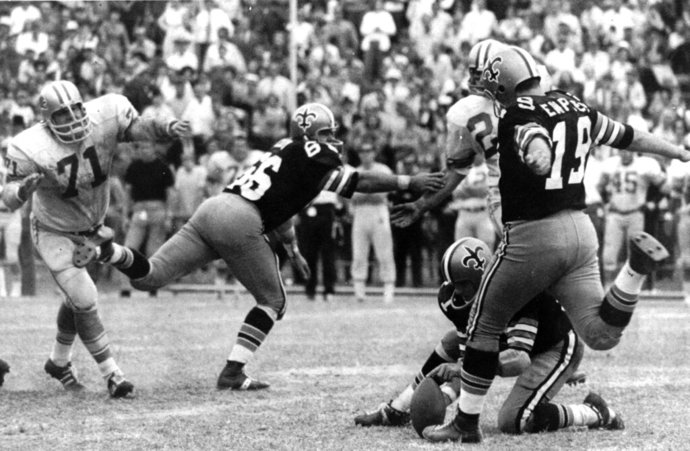
    NEW ORLEANS (AP) — Former NFL kicker Tom Dempsey, who played in the NFL despite being born without toes on his kicking foot and made a record 63-yard field goal, died late Saturday while struggling with complications from the new coronavirus, his daughter said. He was 73 years old.

    The Times-Picayune/The New Orleans Advocate first reported Dempsey’s death. Ashley Dempsey said Sunday that her father, who has resided in an assisted living home for several years after being diagnosed with dementia, tested positive for the coronavirus a little more than a week ago.

    The Orleans Parish coroner has yet to release an official cause of death.

    Dempsey’s game-winning field goal against Detroit on Nov. 8, 1970, stood as an NFL record for 43 years until the Broncos’ Matt Prater broke it with a 64-yarder in Denver in 2013.

    Dempsey spent 11 seasons in the NFL: His first two seasons were with New Orleans (1969-70), the next four with Philadelphia, then two with the Los Angeles Rams, one with the Houston Oilers and the final two with Buffalo. He retired after the 1979 season.

    “Tom’s life spoke directly to the power of the human spirit and exemplified his resolute determination to not allow setbacks to impede following his dreams and aspirations,” Saints owner Gayle Benson said in a statement. “He exemplified the same fight and fortitude in recent years as he battled valiantly against illnesses but never wavered and kept his trademark sense of humor.”

    Dempsey was born in Milwaukee without four fingers on his right hand and without toes on his right foot. He kicked straight on with a flat-front shoe that drew protests from some who saw the specially made kicking shoe as an unfair advantage. Former Dallas Cowboys President Tex Schramm compared the shoe to “the head of a golf club.”

    But Dempsey would counter that by saying he was merely doing the best he could to use the foot with which he was born, and for the most part, NFL officials, including then-Commissioner Pete Rozelle, agreed. Still, in 1977, the NFL passed what is widely known as the “The Dempsey Rule,” mandating that shoes worn by players with “an artificial limb on his kicking leg must have a kicking surface that conforms to that of a normal kicking shoe.”

    Dempsey returned to New Orleans after retiring from the league. About seven years ago, he was diagnosed with dementia and later moved to an assisted living home, where he contracted the coronavirus in March during the pandemic that has hit the city — and nursing home — particularly hard. He is survived by wife Carlene, three children, a sister and grandchildren.

    His kick has remained part of Saints lore and for a long time stood as one of the greatest moments in the history of a franchise that didn’t make the playoffs until its 21st season in 1987, and didn’t win a playoff game until the 2000 season.

    At the time of the kick, the Superdome had yet to be build and the Saints played home games in the old Tulane Stadium, which was demolished in 1979.

    The Lions led 17-16 after a short field goal with 11 seconds left.

    With no timeouts, the Saints managed to move the ball to their own 45 with 2 seconds left after Billy Kilmer completed a pass to Al Dodd along the sideline.

    According to a media reports, special teams coach Don Heinrich was heard barking, “Tell Stumpy to get ready to go in and kick a long one.”

    At that time, goalposts were on the goal line, not behind the end zone. The spot of the kick was the Saints 37.

    “I was more concerned about kicking it straight because I felt I could handle the distance,” Dempsey told the Times-Picayune. “I knew I was going to get a perfect snap from Jackie Burkett and a perfect hold from Joe Scarpati. It was all up to me. I hit it sweet.”

    Kilmer told the Times-Picayune he remembers standing on the sideline seeing Lions players across the field laughing as Dempsey lined up for the momentous kick.

    “They thought Tom had no chance,” Kilmer said.

    But Dempsey ended up carried off the field on the shoulders of teammates and recalled spending all night at a Bourbon Street bar, celebrating.

    “We were there, with all the guys, until the wee hours,” he said. “From what I can recall, I had a great time.”

    Both the shoe with which Dempsey kicked the 63-yarder and the ball are in the Saints Hall of Fame in New Orleans, into which Dempsey was inducted in 1989. The Pro Football Hall of Fame in Canton, Ohio, has another of Dempsey’s specially made kicking shoes, but Dempsey wanted the mementos of the record-breaking kick to remain in New Orleans.

  • Louisiana Glass, 3D Artists Making Ventilator Splitters, Face Shields

    Louisiana Glass, 3D Artists Making Ventilator Splitters, Face Shields

    The artists are creating the pieces for medical professionals to use when personal protection equipment and ventilators have run out and it’s a matter of life or death, time and urgency

    SHREVEPORT, La. (AP) — Sanctuary Arts School and Glass Studio, in Shreveport, is leading a statewide initiative to donate emergency-use equipment to hospital workers and first responders caring for coronavirus COVID-19 patients.

    Ark-La-Tex 3D Technology, also in Shreveport, is collaborating with the nonprofit to produce 3D printed attachments for face shields. Sanctuary will be distributing splitters for ventilators which would allow multiple patients to use one machine.

    Hospitals across the United States have declared the need for more equipment to protect their medical staff and care for patients with COVID-19.

    The artists are creating the pieces for medical professionals to use when personal protection equipment and ventilators have run out and it’s a matter of life or death, time and urgency, said Eric Hess, co-founder of Sanctuary Arts School and Glass Studio.

    “In a time of emergency, you do what you need to do to protect your medical community and protect the patients,” Hess said. “These doctors don’t have the supplies and are basically doing whatever they need to do to survive and continue to provide the best care they can in the community.”

    MAKE GLASS IN CASE OF EMERGENCY

    The concept is spurred from a 2006 study, “A Single Ventilator for Multiple Simulated Patients to Meet Disaster Surge” by medical professionals Greg Neyman and Charlene Babcock Irvin for the Society for Academic Emergency Medicine.

    The study concluded: “A single ventilator may be quickly modified to ventilate four simulated adults for a limited time. The volumes delivered in this simulation should be able to sustain four 70-kg individuals. While further study is necessary, this pilot study suggests significant potential for the expanded use of a single ventilator during cases of disaster surge involving multiple casualties with respiratory failure.”

    Hess was in self-quarantine when a friend shared information about a glass artist making ventilator splitters in Boulder, Colorado. After further research and discussion, Hess and his business partner, Michelle Pennington, decided to make the emergency supplies would be a way to help and possibly save lives.

    “Glass artists all over the country now are starting to develop these,” Hess said.

    The splitter is a Y-shaped attachment made from durable, medical-grade glass rods or tubes using the framework technique. Splitters connect to ventilator hoses and may supply oxygen to two to four patients at once and may be used multiple times.

    Ark-La-Tex 3D Technology is using a heavy-duty, biodegradable plastic to create headpieces that connects to a clear face shield. The designers will add the clear face shield, as well, to deliver a completed shield, said Matt Hopper, co-owner.

    Several orders are in motion for Louisiana hospitals as the medical industry prepares for the worst as cases of coronavirus persist.

    William Breaux is the manager of respiratory care at West Jefferson Medical Center in Marrero, outside of New Orleans. He and fellow staff and board members are considering alternatives in the case of a shortage and plan to test the glass ventilator splitter.

    “This is going to give us another option if we don’t have enough ventilators,” Breaux said.

    In a hypothetical situation, if there is one ventilator left, a doctor may have to tell a 70-year-old patient that the last ventilator is going to a 27-year-old patient, Breaux said. The splitter is to avoid the worst-case scenario.

    “It’s better than going, ‘I’m sorry, I don’t have a ventilator for you and you’re going to die,’” said Breaux. “It may come to that. We don’t know what’s going to happen.”

    It will be up to the medical facilities to determine if the products are something they can use. It’s a novel concept and they must consider liability; however, the pandemic has called for unprecedented measures.

    “This is what we call thinking outside the box,” Breaux said. “This is not something that probably would be approved.”

    A physician will have to be willing to try it in an emergency circumstance, which has a high probability during the pandemic, he said.

    On March 26, New York Gov. Andrew Cuomo announced the approval of a policy allowing two coronavirus patients to use a single ventilator. The New York-Presbyterian Hospital’s split-ventilation protocol was approved by the New York State Department of Health, according to ABC News.

    Although controversial, it’s better than nothing when it comes down to saving a patient’s life.

    “It’s not approved but we’re doing a lot of things that we wouldn’t normally do because of what’s going on,” Breaux said.

    MEDICAL SUPPLIES AND DEMAND

    In addition to the splitters, the Louisiana artists are creating face shields using 3D-printed frames.

    There are more than 3,000 out for order, including equipment for first responders and service professionals, such as firefighters, police, EMTs, social workers, and senior living staff throughout the state. Hess expects requests will quickly top 30,000 items.

    Orders include 200 face shields for LSU anesthesiologists with up to 6,000 needed to supply all the doctors, Hess said. Two orders of 200 and 250 face shields will be sent to groups of nurses in New Orleans.

    The orders continue to come in and the artists are stepping up production to meet the demand, and possibly extend services to hospitals outside of the state.

    New Orleans is a high priority as they have a higher number of COVID-19 cases and facing a shortage of equipment, Hess said.

    Sanctuary enlisted flameworkers throughout Louisiana to make the splitters—and possibly other glass-based items needed by the medical community during the coronavirus pandemic.

    Flameworking is different from glass blowing. The artists make the splitters by hand using a miniature flame and glass to manipulate the medical-grade borosilicate glass. The technique allows the artist to be precise in the glasswork, Hess said.

    Ark-La-Tex 3D Technology has four machines in production in its shop and a fellow 3D print designer is loaning another two to three printers. Bossier Parish Community College’s Division of Technology, Engineering and Mathematics and Louisiana State University-Shreveport’s Technology Lab will produce some of the items using several of their printers. About a dozen machines will be going at one time, Hopper said. The goal is to have hundreds made hourly to meet demands, Hess said.

    “The more 3D printers we have the more we can produce these items,” Hess said.

    In the outreach initiative, medical professions are asked for a list of other needed items, so the artist may determine if they can assist in making other products.

    “We also have the ability to print other parts as needed. We’re on standby depending on what the hospitals and doctors are asking for,” Hopper said.

    The equipment is of no cost to the hospitals. All artists are donating their time, labor, and materials.

    Public donations are requested to continue production. Proceeds will be used to cover glass and plastic material and distribution costs.

    “We’re just trying to make sure the artists don’t deplete their funds by buying the glass and the plastic and the materials they need to produce the (equipment) for the hospitals,” Hess said.

    Ark-La-Tex 3D Technology has worked with medical professionals before on projects. The team has partnered with Shriners Hospital for Children in Shreveport to make a couple of 3D printed prosthetic hands, Hopper said. The local company also strategized how to create 3D scans of amputee parts to transform into 3D models to create a form-fitting cast that can be then be used for prosthetics, such as arms and legs.

    The project is outside of Sanctuary’s traditional functions, but Hess is driven to support those on the front lines of the pandemic.

    “I’m really worried about the mental situation in the future of these doctors,” Hess said. “Imagine being somewhere in medical care and not only are you concerned about you and bringing these diseases home to your family, but you’re there and you run out of a ventilator and all of a sudden someone’s gasping for air and you can’t help them. You have no more ventilators. I can’t even begin to imagine what these people in the medical community are going to have to deal with emotionally.”

    Donations may be sent to Sanctuary Arts School and Glass Studio via PayPal.

    By TIANA KENNELL, The Shreveport Times


  • Louisiana Shrimp Association Donates Shrimp To Food Pantry

    Louisiana Shrimp Association Donates Shrimp To Food Pantry

    A food pantry in New Orleans has received nearly 2,500 pounds of shrimp to help families in need during the COVID-19 pandemic.

    BATON ROUGE, La. (AP) — Second Harvest Food Bank is the recipient of the donation, announced Friday by Lt. Gov. Billy Nungesser and the Louisiana Seafood Promotion and Marketing Board. The donation, which will cover a few pounds each for families, was given by Ronnie Anderson and David and Kim Chauvin, owners of Bluewater Shrimp Company, based in Dulac, Louisiana.

    “I’ve always told people outside Louisiana that when they are here, we will treat them like family. This donation is an example of how we in Louisiana treat each other like family with leaders in the Louisiana shrimp industry stepping up to help in this time of need,” Nungesser said.

    Second Harvest supports more than 700 community partners and programs across 23 parishes, distributing more than 32 million meals to more than 210,000 people annually, according to its website.

    Nungesser said he will encourage state government to also purchase all excess inventories of Louisiana shrimp to send to the Second Harvest Food Bank. That move, he said, follows his earlier request to Louisiana’s congressional delegation to include Louisiana Gulf Coast seafood products on a list of approved purchases for the U.S. Department of Agriculture.

    Doing that, he said, will help the state’s seafood industry which produces $2.4 billion in product annually. One in every 70 jobs in the state is related to the seafood industry, he said.

  • Mississippi Churches Take Services Online, Into Parking Lots

    Mississippi Churches Take Services Online, Into Parking Lots

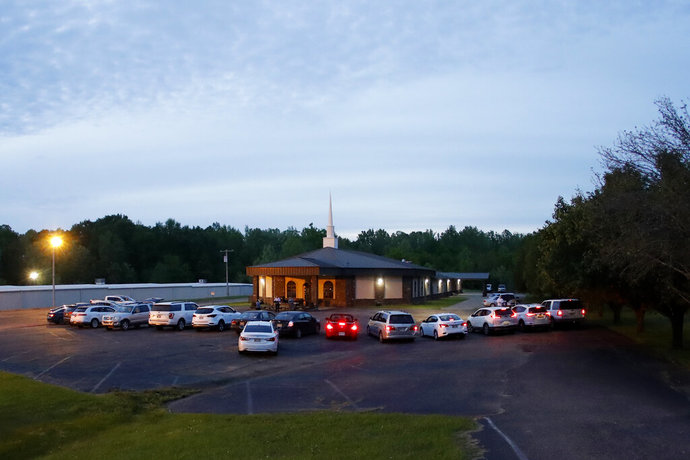
    JACKSON, Miss. (AP) — Some Mississippi houses of worship are offering online services during the coronavirus pandemic. Others are inviting people to sit in vehicles outside the sanctuary to have socially distant prayer and maybe to hear a pastor’s message over the radio.

    Gov. Tate Reeves says he does not believe government has the power to shut down churches, but he strongly prefers that people not gather in parking lots for worship.

    “It’s just hard to overcome our natural tendency to get out and say hello,” Reeves said Friday.

    Mississippi is under the Republican governor’s statewide stay-at-home order that began Friday evening and extends until the morning of April 20. People are being told to minimize their errands to essentials like grocery shopping.

    The state Health Department said Saturday that Mississippi has more than 1,400 confirmed coronavirus cases and 35 deaths. The state has about 3 million residents.

    Many people moving around their communities may not know they have contracted the virus until well after they’ve infected others. Most infected people experience mild or moderate symptoms, such as fever and cough that clear up in two to three weeks, but a fraction suffering more severe illnesses can require ventilators to survive. As the caseload rapidly grows, hospitals are bracing for a wave of patients.

    Mississippi public schools remain closed through at least April 17. If that decision remains in place, the first day back would be April 20, when the stay-at-home order is set to expire. Reeves said Friday that he will continue to evaluate whether to extend the school closures, but he didn’t specify how soon he might make a decision.

    A Jackson attorney who is in isolation at home as she recovers from COVID-19 said people in Mississippi need to take the virus more seriously. Felisha Sheppard said she got tested after losing her sense of taste and smell, then felt she had overreacted because she lacked other symptoms.

    The test came back positive. Sheppard told WJTV-TV she doesn’t know how she got exposed to the virus.

    “I have friends who are still accumulating with one another,” Sheppard said. ”I started thinking, to most people, this is just an elusive idea. It’s happening in other places.”


  • Son: Jazz Great Ellis Marsalis Jr. Dead At 85 From Pneumonia Brought On By COVID-19

    Son: Jazz Great Ellis Marsalis Jr. Dead At 85 From Pneumonia Brought On By COVID-19

    Four of Ellis’s six sons are accomplished musicians.

    NEW ORLEANS (AP) — Ellis Marsalis Jr., the jazz pianist, teacher and patriarch of a New Orleans musical clan, has died after battling pneumonia brought on by the new coronavirus, one of his six sons said late Wednesday. He was 85.

    “Pneumonia was the actual thing that caused his demise. But it was pneumonia brought on by COVID-19,” Ellis Marsalis III confirmed in an Associated Press phone interview.

    He said he drove Sunday from Baltimore to be with his father as he was hospitalized in Louisiana, which has been hit hard by the outbreak. Others in the family spent time with him, too.

    Four of the jazz patriarch’s six sons are musicians: Wynton, trumpeter, is America’s most prominent jazz spokesman as artistic director of jazz at New York’s Lincoln Center. Branford, saxophonist, led The Tonight Show band and toured with Sting. Delfeayo, a trombonist, is a prominent recording producer and performer. And Jason, a percussionist, has made a name for himself with his own band and as an accompanist. Ellis III, who decided music wasn’t his gig, is a photographer-poet in Baltimore.

    “He went out the way he lived: embracing reality,” Wynton Marsalis tweeted, alongside pictures of his father.

    In a statement, Mayor LaToya Cantrell said of the man who continued to perform regularly until December: “Ellis Marsalis was a legend. He was the prototype of what we mean when we talk about New Orleans jazz. He was a teacher, a father, and an icon — and words aren’t sufficient to describe the art, the joy and the wonder he showed the world.”

    Because Marsalis opted to stay in New Orleans for most of his career, his reputation was limited until his sons became famous and brought him the spotlight, along with new recording contracts and headliner performances on television and tour.

    “He was like the coach of jazz. He put on the sweatshirt, blew the whistle and made these guys work,” said Nick Spitzer, host of public radio’s American Routes and a Tulane University anthropology professor.

    The Marsalis “family band” seldom played together when the boys were younger but went on tour in 2003 in a spinoff of a family celebration, which became a PBS special when the elder Marsalis retired from teaching at the University of New Orleans.

    Harry Connick Jr., one of his students at the New Orleans Center for the Creative Arts, was a guest. He’s one of many now-famous jazz musicians who passed through Marsalis’ classrooms. Others include trumpeters Nicholas Payton and Terence Blanchard, saxophonists Donald Harrison and Victor Goines, and bassist Reginald Veal.

    Marsalis was born in New Orleans, son of the operator of a hotel where he met touring black musicians who couldn’t stay at the segregated downtown hotels where they performed. He played saxophone in high school; he also played piano by the time he went to Dillard University.

    Although New Orleans was steeped in traditional jazz, and rock ‘n’ roll was the new sound in the 1950s, Marsalis preferred bebop and modern jazz.

    Spitzer described Marsalis as a “modernist in a town of traditionalists.”

    “His great love was jazz a la bebop — he was a lover of Thelonious Monk and the idea that bebop was a music of freedom. But when he had to feed his family, he played R&B and soul and rock ‘n’ roll on Bourbon Street,” Spitzer said.

    The musician’s college quartet included drummer Ed Blackwell, clarinetist Alvin Batiste and saxophonist Harold Battiste, playing modern.

    Ornette Coleman was in town at the time. In 1956, when Coleman headed to California, Marsalis and the others went along, but after a few months Marsalis returned home. He told the New Orleans Times-Picayune years later, when he and Coleman were old men, that he never figured out what a pianist could do behind the free form of Coleman’s jazz.

    Back in New Orleans, Marsalis joined the Marine Corps and was assigned to accompany soloists on the service’s weekly TV programs on CBS in New York. There, he said, he learned to handle all kinds of music styles.

    Returning home, he worked at the Playboy Club and ventured into running his own club, which went bust. In 1967 trumpeter Al Hirt hired him. When not on Bourbon Street, Hirt’s band appeared on national TV — headline shows on The Tonight Show and The Ed Sullivan Show, among others.

    Marsalis got into education about the same time, teaching improvisation at Xavier University in New Orleans. In the mid-1970s, he joined the faculty at the New Orleans magnet high school and influenced a new generation of jazz musicians.

    When asked how he could teach something as free-wheeling as jazz improvisation, Marsalis once said, “We don’t teach jazz, we teach students.”

    In 1986 he moved to Virginia Commonwealth University in Richmond. In 1989, the University of New Orleans lured him back to set up a jazz studies program.

    Marsalis retired from UNO in 2001 but continued performing, particularly at Snug Harbor, a small club that anchored the city’s contemporary jazz scene — frequently backing young promising musicians.

    His melodic style, with running improvisations in the right hand, has been described variously as romantic, contemporary, or simply “Louisiana jazz.” He was always on acoustic piano, never electric, and even in interpreting old standards there’s a clear link to the driving bebop chords and rhythms of his early years.

    He founded a record company, ELM, but his recording was limited until his sons became famous. After that he joined them and others on mainstream labels and headlined his own releases, many full of his own compositions.

    He often played at the New Orleans Jazz and Heritage Festival. And for more than three decades he played two 75-minute sets every Friday night at Snug Harbor until he decided it was exhausting. Even then, he still performed on occasion as a special guest.

    On Wednesday night, Ellis III recalled how his father taught him the meaning of integrity before he even knew the word.

    He and Delfeayo, neither of them yet 10, had gone to hear their father play at a club. Only one man — sleeping and drunk — was in the audience for the second set. The boys asked why they couldn’t leave.

    “He looked at us and said, ‘I can’t leave. I have a gig.’ While he’s playing, he said, ‘A gig is a deal. I’m paid to play this set. I’m going to play this set. It doesn’t matter that nobody’s here.’ ”

    Marsalis’ wife, Dolores, died in 2017. He is survived by his sons Branford, Wynton, Ellis III, Delfeayo, Mboya and Jason.

  • Churchgoers Flock To Hear Louisiana Pastor Despite Virus Ban

    Churchgoers Flock To Hear Louisiana Pastor Despite Virus Ban

    “The whole situation just puts everyone at risk.”

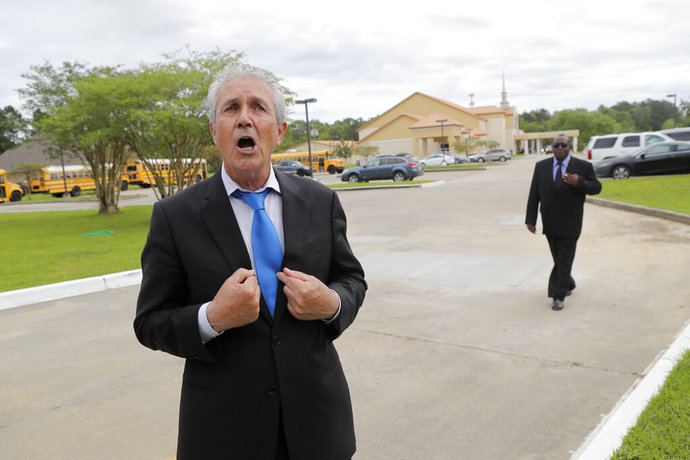
    CENTRAL, La. (AP) — Buses and cars filled a Louisiana church parking lot for another service Tuesday evening as worshippers flocked to hear a Louisiana pastor who is facing misdemeanor charges for holding services despite a ban on gatherings amid the coronavirus pandemic.

    A few protesters turned out, too, including a man shouting through a bullhorn against those gathering at the Life Tabernacle Church in the city of Central, where pastor Tony Spell has been holding services. Another demonstrator held up a sign reading: “God don’t like stupid.”

    Afterward, people began leaving the church, some chatting outside the front doors, and many appearing to not be adhering to social distancing recommendations to remain at least six feet (2 meters) apart. Hugs and handshakes were shared freely as people said their goodbyes and departed.

    Hours earlier on Tuesday, Spell was issued a summons for holding services previously at the church in violation of the governor’s order banning gatherings.

    “Come out, Tony. Come tell us why you’re endangering people’s lives,” the man with the bullhorn shouted Tuesday evening, directing his words at the pastor.

    Flanked by some of his congregation, including children and older people, Spell emerged from the church later Tuesday night and said he is going to keep his church doors open. He said he doesn’t consider keeping his doors open any different than keeping the doors of Walmart open. Spell also compared going to church to going to the hospital, but for spiritual healing.

    “We are needy people. Our souls are lost,” he said. “We need help, and the church is the salvation center of the soul, the sanctuary where we come together and meet.”

    Around Louisiana, more than 5,200 people have confirmed virus infections, and 239 state residents have died, according to the Louisiana health department.

    The order from Gov. John Bel Edwards prohibits gatherings of more than 10 people, said East Baton Rouge Parish District Attorney Hillar Moore. Each violation carries a maximum penalty of six months in jail and a $500 fine, Moore said.

    “The whole situation just puts everyone at risk,” Moore said. “We ask everyone to abide by the governor’s order.”

    The governor has urged church leaders instead to continue their services online or in smaller groups to lessen the risks.

    Spell had previously confirmed he was facing misdemeanor charges. He said when reached by phone earlier that he was read his rights and fingerprinted — but the summons wasn’t deterring him. He said he would continue to defy the ban.

    “We’re still here and still assembling and having church,” Spell said. Asked why he was defying the governor’s orders, he said, “Because the Lord told us to.”

    Asked whether he was concerned about the pandemic, Spell said: “I’m no more concerned than I would be going to Walmart or Home Depot.”

    Moore said earlier that additional charges could be issued if Spell continued to disobey Edwards’ ban on gatherings. He said the pastor wasn’t booked into jail earlier because parish officials are trying to lessen the jail population amid the risks of the highly contagious virus.

    Earlier, Central Assistant Police Chief Darren Sibley had said officers had no plans to try to stop Tuesday night’s prayer service. But he said they would “document everything and forward everything to the district attorney.”

    “He is doing this for publicity,” Sibley said of Spell. “He is putting the citizens of the community at risk. And he is putting the people in his congregation at risk.”

    Edwards has issued a “stay at home” order that he said he will extend through the end of April to combat the spread of the COVID-19 disease caused by the coronavirus, which is threatening to overwhelm hospitals with patients.

    For most people, the coronavirus causes mild or moderate symptoms, such as fever and cough. But for others, especially older adults and people with existing health problems, the virus can cause severe symptoms like pneumonia and be fatal.

    Edwards said Tuesday that law enforcement authorities had been “extremely patient” with Spell and had “done everything that they could” to get him to comply with the governor’s order before issuing the summons.

    “I’m going to appeal to them one more time: Please stop what you’re doing,” Edwards said. “The overwhelming majority of our faith leaders have found other ways to engage with their parishioners.”

  • AUDIO – Astronaut Chris Hadfield Shares Tips For Dealing With Social Isolation

    AUDIO – Astronaut Chris Hadfield Shares Tips For Dealing With Social Isolation

    Hadfield commanded the International Space Station for six months

    Retired Canadian astronaut Chris Hadfield spent most of his adult life as a pilot and astronaut.  He flew on two Space Shuttle missions, one Soyuz mission, and commanded the International Space Station (ISS) for roughly six months in 2013.

    Chris chronicled life on the space station and took lots of pictures of the Earth and posted them on various social media platforms during his time on the ISS, and gained a ton of followers.  He even played the ISS’s guitar in space.  So if anyone is an expert on isolation and what to do, it’s Chris.  Here are his tips.


  • Interview With Bethani Douglas From Masks For The Miss Lou

    Interview With Bethani Douglas From Masks For The Miss Lou

    Local Group Makes Masks For First Responders

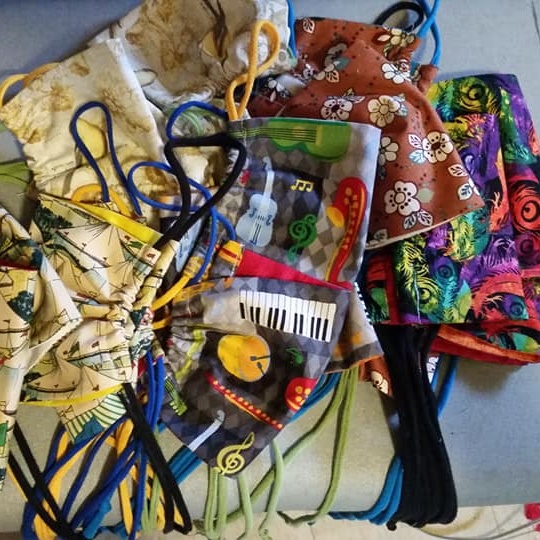
    What started out as a simple idea here in the Miss-Lou area quickly caught fire and in less than a week, a Facebook Group dedicated to making masks for doctors, medical staff and first responders reached nearly 2,000 members!

    The group has come up with designs and patterns for beginning and advanced stitchers, they’ve coordinated donations of both supplies and money, and they’ve even set up a drop-off point at the Vidalia Markets for anyone who would like to donate bolts of fabric or elastic to the effort.

    Bethani Douglas is one of the Facebook Group’s administrators, and she talked with Andrew Michael on March 30th about the group’s efforts, and how people can join the Facebook Group and help.


    Click here to check out the Facebook Group and request to join it.


  • Louisiana governor: stay-home order ‘may well’ be extended

    Louisiana governor: stay-home order ‘may well’ be extended

    NEW ORLEANS (AP) — Orders closing many Louisiana businesses and keeping people home to slow the spread of COVID-19 ‘may well’ have to be extended past April 13, Gov. John Bel Edwards said Sunday.

    He spoke as the numbers of Louisiana residents falling ill and dying from the new coronavirus continued to rise and as a large church near Baton Rouge continued to flout a statewide ban on gatherings of more than 10 people. And New Orleans’ police chief said the department has received hundreds of complaints about gatherings.

    Texas, which said Friday that anyone flying from New Orleans to Texas would have to self-quarantine for two weeks, tightened down further on Louisiana. Gov. Greg Abbott said state troopers will patrol highways on the Louisiana state line and require “everyone stopped” to self-isolate, with drivers filling out a form to state where in Texas they will do so. It wasn’t immediately clear how aggressive those patrols would be.

    Edwards and New Orleans Mayor LaToya Cantrell spoke to reporters at a briefing that was livestreamed from outside the city’s convention center, which is being transformed into a 1,000-bed hospital.

    That hospital, for recovering patients who no longer need ventilators or intensive care, will open by April 5, as will a nearby 250-bed center for some people awaiting test results, Edwards said. They won’t be walk-in and won’t allow visitors, he said.

    The highly contagious virus that causes COVID-19 generally brings on mild or no symptoms but can cause serious illness. Nearly a third of the 3,500 people diagnosed in Louisiana are hospitalized, and about one-third of those patients — 380 on Sunday — need ventilators, state data show.

    Edwards said that he has asked for 5,000 ventilators from the federal stockpile and ordered 7,000 from suppliers over the past several weeks. He has received 192.

    “We are looking at every breathing device” that might possibly be used with patients who have trouble breathing on their own, he said.

    More than 150 patients have died in Louisiana. Edwards noted that they include 33-year-old April Dunn of his Office of Disability Affairs. The death toll also included the first federal prison inmate — a man with “serious preexisting conditions” who was being held in Oakdale, Lousiana, the U.S. Bureau of Prisons said Saturday.

    Cases have been identified in nearly all of Louisiana’s 64 parishes. The five exceptions are all rural.

    The number of nursing homes and other long-term care facilities with at least two apparently related cases has rose from 11 on Saturday to 20 on Sunday, the state Department of Health reported.

    In Central, a city of nearly 29,000 outside Baton Rouge, an estimated 500 people entered Life Tabernacle for the first of three Sunday services.

    “Other congregations are using the Internet, Skype, and other safe ways to congregate. Why can’t they? What makes them so special?” said Paul Quinn, who lives nearby.

    He said it’s more than city police can handle, and state police should enforce the ban. Neither Central Police Chief Roger Corcoran nor a spokesman for Louisiana State Police responded immediately to requests for comment.

    Members of the congregation are posing a serious health hazard, Quinn said, adding “They don’t know how many people they’re affecting, and they don’t seem to care.”

    Timothy Spell, father of Pastor Tony Spell, said Life Tabernacle has a right to assembly, is not forcing anyone to attend services, is not breaking any laws and will continue to hold services at the church.

    Flagrant disregard of statewide social distancing measures is selfish and “grossly irresponsible,” Edwards said.

  • Country Star Joe Diffie Dies At 61 From Complications From Coronavirus

    Country Star Joe Diffie Dies At 61 From Complications From Coronavirus

    Diffie Is Survived By Five Children And His Wife Tara

    Music Row Magazine and multiple other music industry publications confirmed the news Sunday afternoon (3/29)

    Diffie announced on Friday that he was diagnosed with the COVID19 coronavirus:

    “I am under the care of medical professionals and currently receiving treatment,” he said in a statement at that time. “My family and I are asking for privacy at this time. We want to remind the public and all my fans to be vigilant, cautious and careful during this pandemic.”

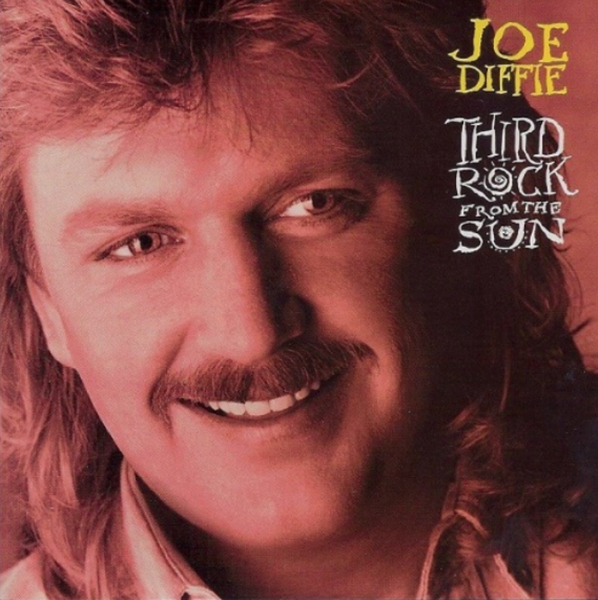
    Born Dec. 28, 1958, Diffie moved to Nashville as a demo session singer in the 1980s, and signed a deal with the Nashville division of Epic Records in 1990 and released his debut album later that that year. He charted more than 30 singles, including “Ships That Don’t Come In,” “Prop Me Up Beside The Jukebox (If I Die),” “If The Devil Danced (In Empty Pockets),” “Honky Tonk Attitude,” “Third Rock From The Sun,” “Bigger Than The Beatles,” “John Deere Green” and “Pickup Man.”

    He was inducted as a member of the Grand Ole Opry in 1993. Last year, Diffie began voicetracking middays for Griffin Classic Country KXBL/Tulsa.

    This is a developing story…