Tag: covid-19

  • How To End Virus Lockdowns? Technology, Tests, Coordination

    How To End Virus Lockdowns? Technology, Tests, Coordination

    BERLIN (AP) — Governments battling a virus that has crossed borders with breathtaking speed pinned their hopes Tuesday on tests, technology and a coordinated approach to ease the tight restrictions on movement that have slowed the outbreak but strangled the global economy.

    While the European Union looked into creating a COVID-19 smartphone app that could function across the bloc, governors on both U.S. coasts pledged to work together as they planned an easing of the confinement of millions. The main concern is to avoid a resurgence by the virus.

    As governments grapple with when and how to reopen their countries for business, the International Monetary Fund projected that the world economy will suffer its worst year since the Great Depression in the 1930s. The grim forecast Tuesday underscored the dilemma facing world leaders as they strive to balance public health against economic stability.

    Around the world, India extended the world’s largest lockdown on 1.3 billion people until May 3. In Britain, new data showed hundreds more people died of the virus than have been recorded in the government’s daily tally from hospitals. The dead include a wave of victims in nursing homes.

    China faced a new flare-up along its remote northern border with Russia. The border has been sealed and medical units have rushed to the area to prevent travelers from returning with the virus.

    New infections appear to have leveled off in much of Asia and Europe, including Italy, France, Spain and Germany, said Dr. Sebastian Johnston, a professor of respiratory medicine at Imperial College London.

    Even in New York — where reported coronavirus deaths passed 10,000 on Monday — Gov. Andrew Cuomo declared the “worst is over if we can continue to be smart.” More than 23,000 people have died of the virus in the United States overall, with close to 600,000 confirmed infections, according to a tally by Johns Hopkins University.

    Tensions between the White House and the nation’s governors increased when President Donald Trump claimed that he has “total” authority to decide how and when to reopen the economy. The Constitution largely delegates such authority to states.

    “We don’t have a king,” Cuomo, a Democrat, said Tuesday on NBC’s “Today. “We have a president. That was a big decision. We ran away from having a king, and George Washington was president, not King Washington. So the president doesn’t have total authority.”

    With social distancing and lockdowns in place across much of the world, projections that the virus would spread with equal ferocity to other corners have yet to materialize. But without a vaccine or widespread antibody tests to determine how many people are immune to the virus, governments fear new outbreaks.

    Germany’s foreign minister, Heiko Maas, called for a single smartphone app across the European Union.

    “It’s important we don’t end up with a patchwork of 27 corona apps and 27 data protection regimes but coordinate as best as possible,” he told Germany’s Funke media group.

    Maas said a contract-tracing app already being jointly developed by several countries showed that the EU “doesn’t have to copy the Big Brother methods of authoritarian states” but can instead safeguard both personal privacy and public health.

    Lothar Wieler, head of the Robert Koch Institute, Germany’s disease control center, said constantly exchanging information among countries and institutions about best practices, vaccine studies and protecting vulnerable people is key.

    The virus has also forced rival companies to work together. Two of the world’s biggest drug companies — Sanofi Pasteur and GSK — announced they will combine forces to work on a vaccine. And Apple and Google last week announced a joint effort to help public health agencies worldwide use Bluetooth wireless technology to trace the contacts of infected people.

    In China, where new reported cases have dwindled, life is ruled by a green bar-code symbol on a smartphone screen that says a user is symptom-free and can board a subway, check into a hotel or just enter Wuhan, the city of 11 million where the outbreak began in December.

    South Korea and Israel have both aggressively used smartphone data to track the movements of carriers. But epidemiologists say contact tracing must be combined with widely available testing, which has been lacking in places like the United States and Britain.

    In Europe, officials pointed to positive signs as they started to reopen their economies.

    In Italy, where the day-to-day count of infections has been trending downward, bookstores, stationery stores and shops selling baby supplies were allowed to open nationwide. Forestry workers, needed to clear dead trees ahead of the summer fire season, also returned to work.

    In Spain, where the official death toll rose to over 18,000, the country’s main epidemiology institute found an additional 1,500 “unexpected deaths” since mid-March after it studied mortality rates.

    Spanish workers returned Monday to some factory and construction jobs. Stores and services were still closed, and the government required office workers to keep working from home.

    In Austria, hardware and gardening stores reopened Tuesday. Chancellor Sebastian Kurz said the government is monitoring new infections closely, and “if the figures develop in the wrong direction, we will, of course, pull the emergency brake.”

    In Britain, which started its lockdown later than the rest of Europe, new infections and deaths were still rising. Britain as of Monday reported more than 11,300 deaths of COVID-19 patients in hospitals. But the head of one of the country’s biggest nursing home operators said Tuesday that the number of infections and deaths among the elderly is much higher than official reports.

    In the United States, governors in the Northeast and along the West Coast announced separate state groups to coordinate reopenings.

    California Gov. Gavin Newsom said he would announce a detailed plan Tuesday for lifting virus restrictions, using “science to guide our decision-making and not political pressure.”

    “The house is still on fire,” New Jersey Gov. Phil Murphy said. “We still have to put the fire out “but also ”make sure this doesn’t reignite.”

    New Jersey is in a coalition with Connecticut, Delaware, Massachusetts, New York, Pennsylvania and Rhode Island to figure out how to reopen their economies while still fighting the virus. The governors of California, Oregon and Washington announced a similar plan.

    More than 1.9 million infections have been reported and over 120,000 people have died worldwide, according to Johns Hopkins University. The figures understate the true size of the pandemic, because of limited testing, uneven counting of the dead and concealment by some governments.

    ___

    Hinnant reported from Paris while Blake contributed from Bangkok. Associated Press journalists around the world contributed to this report.

    ___

    Follow AP coverage of the pandemic at http://apnews.com/VirusOutbreak and https://apnews.com/UnderstandingtheOutbreak

  • What You Need To Know Today About The Virus Outbreak

    What You Need To Know Today About The Virus Outbreak

    Beaten down by the coronavirus outbreak, the world economy in 2020 will suffer its worst year since the Great Depression of the 1930s, the International Monetary Fund says.

    The IMF expects the global economy to shrink 3% this year before rebounding in 2021 with 5.8% growth. It acknowledges that prospects for a rebound next year are clouded by uncertainty.

    Governments battling the virus are pinning their hopes on tests, technology and a coordinated approach to ease the tight social-distancing restrictions that have slowed the pandemic but strangled the global economy.

    Here are some of AP’s top stories Tuesday on the world’s coronavirus pandemic. Follow APNews.com/VirusOutbreak for updates through the day and APNews.com/UnderstandingtheOutbreak for stories explaining some of its complexities.

    WHAT’S HAPPENING TODAY:

    — President Donald Trump is anxious to put the pandemic and its crippling economic crisis behind him ahead of the election in November, discussing with aides when social distancing can be rolled back. A team, expected to be formally announced as early as Tuesday, has begun meeting behind closed doors in the West Wing to tackle another matter paramount to the president: how to begin reopening the American economy. Meanwhile, governors insist they will not be pressured and will put safety in their states first.

    — The coronavirus is spreading in jails and detention centers, with more than 70 detainees in 12 states infected and hundreds of others under quarantine. Migrants say they need more masks, cleaning supplies and space for social distancing. The government says it’s reducing the number of detainees to slow the spread of the virus. Nomaan Merchant reports from Houston.

    — For years, financial inequality has widened in the United States and elsewhere as wealth and income have become increasingly concentrated among the most affluent while millions struggle to get by. Now, the coronavirus outbreak has laid bare the human cost of that inequality, making it more visible and potentially worse.

    — Across the U.S., far-right politicians say state governments are using the pandemic to trample on civil liberties. They are against efforts to close churches and gun stores and to halt large public gatherings.

    — Facing the same invisible enemy in the coronavirus pandemic, Iran and the United States remain locked in retaliatory pressure campaigns that now view the outbreak as just the latest battleground.

    — Indian Prime Minister Narendra Modi has extended the world’s largest lockdown, hoping to head off the peak as officials race to make up for lost time. Experts say India squandered the month it had while neighboring China battled the coronavirus and wasted its own experience battling infectious diseases.

    ___

    WHAT YOU NEED TO KNOW:

    For most people, the coronavirus causes mild or moderate symptoms, such as fever and cough that clear up in two to three weeks. For some, especially older adults and people with existing health problems, it can cause more severe illness, including pneumonia and death. The vast majority of people recover.

    Here are the symptoms of the virus compared with the common flu.

    One of the best ways to prevent spread of the virus is washing your hands with soap and water. The U.S. Centers for Disease Control and Prevention recommends first washing with warm or cold water and then lathering soap for 20 seconds to get it on the backs of hands, between fingers and under fingernails before rinsing off.

    You should wash your phone, too. Here’s how.

    TRACKING THE VIRUS: Drill down and zoom in at the individual county level, and you can access numbers that will show you the situation where you are, and where loved ones or people you’re worried about live.

    ___

    ONE NUMBER:

    — 25: The International Monetary Fund approved $500 million to cancel six months of debt payments for 25 of the world’s most impoverished countries so they can help tackle the COVID-19 pandemic.

    ___

    IN OTHER NEWS:

    — JACKALS EMERGE: With Tel Aviv in lockdown due to the coronavirus crisis, the sprawling park is all but empty. This has cleared the way for packs of jackals to take over a park in the heart of the city.

    — LIFE WITHOUT MOVIE THEATERS: For more than a century, movie theaters have been a refuge, a communal escape, a place transporting people away from everything else. What now as they close amid the pandemic?

    ___

    Follow AP coverage of the virus outbreak at https://apnews.com/VirusOutbreak and https://apnews.com/UnderstandingtheOutbreak

  • Mississippi Prison System Confirms Its 1st Case Of COVID-19

    Mississippi Prison System Confirms Its 1st Case Of COVID-19

    The Mississippi Department of Corrections on Monday night made its first announcement of a coronavirus case in one of the state prisons.

    JACKSON, Miss. (AP) —  An inmate at the Mississippi State Penitentiary was found to have had to the virus after he died, the department said in a news release. It did not give the inmate’s name or say when he died. It said he had underlying health problems.

    “We are committed to protecting the health and well-being of all within our system,” Interim Corrections Commissioner Tommy Taylor said.

    He said that since the beginning of the pandemic, Mississippi has limited the transfer of inmates from prison to prison. The only visitors allowed are attorneys, and daily screenings are done of prison workers.

    “With this first positive case, we have further isolated all the affected areas and increased screenings for all the inmates who came in contact with the individual,” Taylor said. “Inmates who came in close contact with the positive individual have been provided with masks.”

  • Edwards: ‘Too Early To Know’ When Louisiana Can Relax Orders

    Edwards: ‘Too Early To Know’ When Louisiana Can Relax Orders

    Edwards stressed that the practice must continue for now to avoid a new spike in infections.

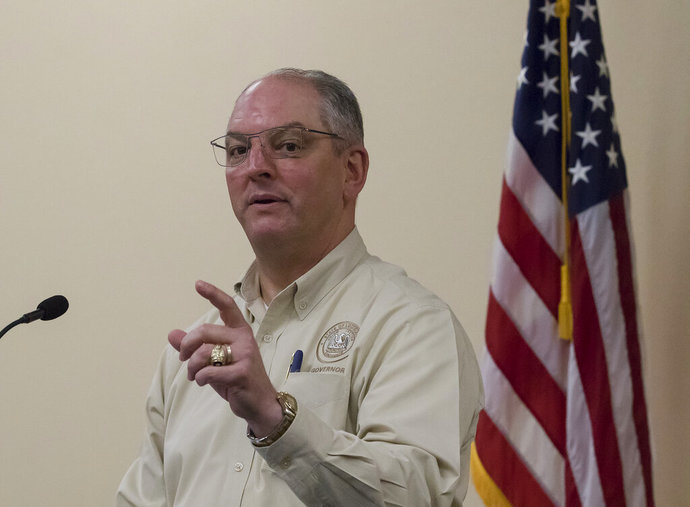
    NEW ORLEANS (AP) — “It’s just too early to know” when Louisiana can begin relaxing stay-at-home orders that have devastated the state’s economy to prevent the spread of the new coronavirus, Gov. John Bel Edwards said Monday.

    He was speaking to reporters in Monroe, in the northern part of the state, after touring sites of widespread damage from tornadoes on Sunday.

    He was responding to a question about President Donald Trump’s eagerness to get businesses re-opened around the nation.

    Edwards, a Democrat, said he will continue to work with Trump and Vice President Mike Pence on the issue.

    State officials from both parties have presented a largely unified front in facing the crisis. But a state representative issued a statement Monday saying the order “must end” April 30.

    “On May 1, we must begin opening as much as possible,” Rep. Mark Wright, a Republican from Covington, said in a news release.

    The number of deaths related to COVID-19 in Louisiana rose to 884 Monday, 44 higher than a day earlier, according to the latest figures from the state health department.

    The number of people hospitalized with the disease caused by the virus was 2,134. That’s 50 more than a day earlier. The number of those requiring ventilators was 461 — a slight increase from Sunday but still well below last week’s numbers.

    State officials have said social distancing efforts appear to be slowing the growth in serious coronavirus illnesses in Louisiana. Edwards on Monday stressed that the practice must continue for now to avoid a new spike in infections.

    He also chastised those who aren’t heeding the warning. He said there was evidence, including anecdotes and a website that records movements of cellphone customers, that many in the state were less mindful of the need for social distancing over the Easter weekend.

    The overall number of Louisiana residents known to have been infected with the new coronavirus was 21,016 as of midday Monday, an increase of 421, as the number of people tested in the state surpassed 108,000.

    The latest figures were released on the same day the state announced that it had made a one-day payment of more than $89.7 million to residents who have lost their jobs or had reduced hours due to the pandemic. That includes more than $66 million from a recently passed federal relief bill to fund the first of weekly $600 payments for unemployed people, including the self-employed who lost work because of the pandemic.

    The state said that, as of Monday, just over 59 % of COVID-19 deaths in Louisiana occurred among African Americans. The figure was down from the 70% figure released last week. However, Edwards noted that the figures vary because the race of some of those affected is not available. Officials in Louisiana and elsewhere have expressed concerns over the disease’s disparate effects on blacks. Edwards last week announced a task force to look into the issue.

    During the absence of college sporting events as a result of the coronavirus battle, LSU announced a plan Monday to help provide badly needed medical supplies. The university said it’s starting large-scale production of personal protective equipment in the assembly center where basketball games are usually played. University employees, working with doctors from New Orleans and Shreveport, are making heavy-duty, reusable gowns and face shields, all with materials donated by area businesses.

    For most people, the coronavirus causes mild symptoms like fever and a cough that resolve in two to three weeks. But for some, especially older adults and people with existing health problems, more severe symptoms can occur, including pneumonia, that can lead to death.

    ___

    Associated Press reporter Melinda Deslatte in Baton Rouge contributed to this report.

  • A Pause On Wall Street; Furloughs Ramp Up, Travel Winds Down

    A Pause On Wall Street; Furloughs Ramp Up, Travel Winds Down

    The outbreak of the coronavirus has dealt a shock to the global economy with unprecedented speed. Following are developments Monday related to the global economy, the work place and the spread of the virus.

    ________________________

    BOTTOM LINE: Hundreds of companies have withdrawn all financial projections for the year given the unprecedented disruption to the economy and to consumers. But details of the extent of the damage are beginning to surface.

    — Ford Motor Co. expects to post a $600 million first-quarter pretax loss and said Monday that it has enough cash to get through the end of September even if vehicle production doesn’t resume.

    The Detroit automaker is considering a phased restart of its factories sometime in the second quarter with enhanced safety standards. Only Ford’s joint venture in China is producing vehicles right now. The company suspended its dividend and drew $15.4 billion from two credit lines to bolster cash reserves.

    PANTRIES, GROCERS & RESTAURANTS: The coronavirus has upended the entire food and beverage industry, from grocery shelves to oysters on the half shell.

    — A least 30 members of the United Food and Commercial Workers International Union have died and nearly 3,000 have self-isolated after becoming sick or being exposed to the virus, according to union president Marc Perrone.

    The union represents grocery workers, among others. It’s urging customers to be safe by wearing masks in stores, practicing social distancing, and not throwing masks and gloves on the ground when they’re done with them.

    — Amazon is now requiring anyone signing up for deliveries from Amazon Fresh or Whole Foods Market to first sign up for an invitation. The crush isolated home-grocery shoppers has created a shortage of delivery slots available despite a 60% increase in capacity put into place by Amazon since the outbreak.

    The online retail behemoth said Monday it’s hiring an additional 75,000 workers to help meet surging demand from shoppers wanting essentials. That’s on top of hiring 100,000 workers over the past month. It also said it’s starting to loosen its restrictions on allowing third-party sellers on its platform to ship non-essential items like jeans.

    — After the first blast of coronavirus wilted orders, GrubHub, is bouncing back. The online order company said Monday that it’s seeing record numbers of new diners.

    Delivery numbers were flat in the first quarter, it conceded, but orders accelerated after the first wave of the virus overtook major markets like New York City. This month, compared with last year, deliveries are up 10%.

    — The decline in U.S. restaurant sales due to the new coronavirus could be bottoming out. Sales fell 41% in the week ending April 5 compared to the same week a year ago, according to The NPD Group, a data and consulting firm. They fell 42% in the week prior to that.

    AIR, LAND & SEA: The world was immobilized at lightning speed this year and conditions in the travel sector continue to deteriorate.

    — Traffic an U.S. airports hit new lows daily, and fell below 100,000 last week for likely the first time since the jet age began. The Transportation Security Administration said it screened 90,510 people on Sunday, or 3.7% of the nearly 2.5 million people who passed through checkpoints on the corresponding Sunday a year ago.

    The airline sector was among the hardest hit Monday on signs of growing tensions with the administration over terms of a rescue package. Shares of American, Delta and United fell between 6% and 8%.

    — Carnival is canceling all North American cruises until at least late June. Cruises out of New York and San Francisco have already been cancelled for all of 2020, but late last month Carnival still hoped to resume North American operations in mid-May. The Miami company said it is focused on taking care of crew that remains aboard its ships and getting non-essential workers home.

    Restrictions on large groups of people getting together have left businesses that require such gatherings, like movie theaters and concert promoters, scrambling to stay afloat.

    — Movie theater chain Cinemark said will try to raise $250 million in a private offering to cover mounting losses as its theaters sit empty due to the impacts of coronavirus.

    — Last week, concert and event promoter Live Nation Entertainment negotiated a new credit line of between $120 and $150 million with its lenders and announced that its executives would be taking pay cuts effective April 16.

    CRUDE AWAKENING: OPEC, Russia and other oil-producing nations finalized an unprecedented production cut of nearly 10 million barrels per day over the weekend, or a tenth of global supply, in a bid to halt plunging crude prices.

    — U.S. benchmark crude initially jumped more than $1 but then lost ground. It was down 8 cents at $22.68 a barrel. Crude prices, already in decline as the global economy slowed, have been in free fall since the outbreak began, tumbling 62% since the beginning of the year.

    — OPEC has historically had a difficult time reining in members and enforcing those cuts. Bank of America says that means the actual cut may be closer to 7 million barrels per day. Energy analysts with the bank believe because the world is so flush with oil, it could mean an extended period of lower prices, particularly in the U.S.

    MARKETS: Stocks fell broadly on Wall Street on Monday after logging their best week since 1974. Every sector on the S&P went negative by midday.

    Markets in Europe are closed because of a holiday.

  • Virus-Era Decisions: Way Too Many, And Each With High Stakes

    Virus-Era Decisions: Way Too Many, And Each With High Stakes

    Are you going out to get the mail? Should you touch the mailbox? Should you touch the mail? Should you clean the mail?

    Should you take a walk? Should you wear a mask? What about gloves? What about neighbors — stay six feet away? Ten? Will they approach? What will you do? Will you be standoffish, or laugh it off?

    Should you go to the supermarket? Should you wipe down the groceries? What if you run out of wipes?

    Should you stop to get gas? Should you wear gloves at the pump? Should you douse your credit card in sanitizer after sticking it in the slot? Should you remove the gloves before you handle your steering wheel? Should you throw the gloves on the car floor or use the gas station trash can?

    Can you wear your mask twice? Should you sew your own? Let someone in your family wear your mask?

    Are you overreacting? Are you under-reacting?

    Should you wash your hands again?

    What kind of soap?

    ___

    “We are living, and in some cases, dying by snap judgments.” — Michael R. LeGault, “ Think: Why Crucial Decisions Can’t be Made in the Blink of an Eye” (2006)

    ___

    The notion of decision fatigue has been around for a long time — long before the virus came.

    But for many of us, it was the fatigue of a consumer society. If you struggled financially, it meant making rolling decisions about which groceries were affordable and which stayed on the shelf. For others, it was selecting channels and streaming services and apps. Choosing tech. Swiping Tinder. Navigating, say, the average New Jersey diner menu, which hovers around at 150 items.

    Yes, if you bought the MacBook Air instead of the MacBook Pro, you’d have portability but a smaller screen and weaker processor. Yes, buying the Oikos Greek Blueberry Blended Yogurt might make your mouth happier than the regular Dannon with the fruit on the bottom. First-world problems, mostly.

    The thing about those tiny decisions, though, was that we didn’t HAVE to make many of them. And if we screwed up, the stakes were often low.

    Now, though, the problems around tiny decisions are not first-world but worldwide. The most fleeting of daily choices — no matter where you are — have taken on the most monumental of potential consequences.

    Kat Boogaard, a Wisconsin freelancer who has written about decision fatigue, grapples with this. On one hand, like many of us, some of her decisions are now pre-made — there’s little debate about whether to stay home or eat out. But that’s offset by the fraughtness of other once-routine decisions.

    “I never thought I’d agonize over the perfect time to grab groceries or whether I should visit my OBGYN,” says Boogaard, who is 35 weeks pregnant. “It increases my anxiety, hinders my focus and has had a negative impact on my productivity.”

    For many right now, duress is a daily companion that wears countless coats. And as social scientists will tell you, an agitated state is not the best moment to decide things — particularly momentous ones. “We seem to do our best thinking when we’re feeling good,” psychologist Barry Schwartz wrote in his 2004 book, “ The Paradox of Choice.”

    “What we’re up against in this kind of situation is our long-ingrained habits,” says Carrie Bulger, a psychology professor at Quinnipiac University in Connecticut who teaches decision fatigue.

    Picture this, she says: You decide to go to the grocery store. You see strawberries. Are they bruised? Normally you’d pick them up and check for freshness. Not now. So you move through the supermarket landscape hyperaware of decisions — from social distancing to choosing a cut of meat — and walk out to the parking lot exhausted.

    “We’re up against decisions that never even crossed our minds before,” Bulger says. “You wonder what norms and rules you might have violated along the way from aisle one to aisle 14.”

    ___

    “The task of making sense of ourselves and our behavior requires that we acknowledge there can be as much value in the blink of an eye as in months of rational analysis.” — Malcolm Gladwell, “ Blink ” (2005)

    ___

    There’s another problem. There always is.

    This one is that we’re often making these little decisions — weighty decisions — without ever knowing how they turn out.

    Did we infect someone with coronavirus by delivering their takeout order? Did we catch it by walking through air that someone with a cough just vacated? Probably not. But hey — maybe.

    Asia Wong, a social worker and life coach who oversees student health services at Loyola University New Orleans, says the sheer strangeness of the decision-making process throughout the past month has been an aggravating factor in many lives.

    Not only do tiny decisions matter more, but they must be repeated — contemplated again and again — and they are changing daily. Just the notion of whether to wear a mask has evolved — a choice laden not only with self-preservation but even morality.

    “In the past, you could say, `I’m a good person, I donate to charity, I am nice to the persons around me, I don’t kick dogs,’” Wong says. “Now people have to ask themselves: Does it make me a bad person if I go to the store to buy a bag of chips? That’s very heavy, and in many ways it’s new to the American consciousness.”

    In NBC’s philosophical comedy “ The Good Place,” a moment comes when the main characters come to a realization: Being “good” has become impossible because life has grown so intricate that even good decisions can, somewhere downstream, cause something bad.

    Perhaps even more relevant right now would be this scenario, unfathomable to Americans four weeks ago: a world where miniature decisions have multiplied and increased in gravity to the point where a paralysis of choice might seem — to many — a reasonable alternative.

    Maybe it’s useful that so many of us are locked down right now. Lots of time to think about this. And wash our hands again. And contemplate the right soap.

    ___

    Ted Anthony, director of digital innovation for The Associated Press, has been writing about American culture since 1990. Follow him on Twitter at http://twitter.com/anthonyted.

  • 20,000: US Death Toll Overtakes Italy’s As Midwest Braces

    20,000: US Death Toll Overtakes Italy’s As Midwest Braces

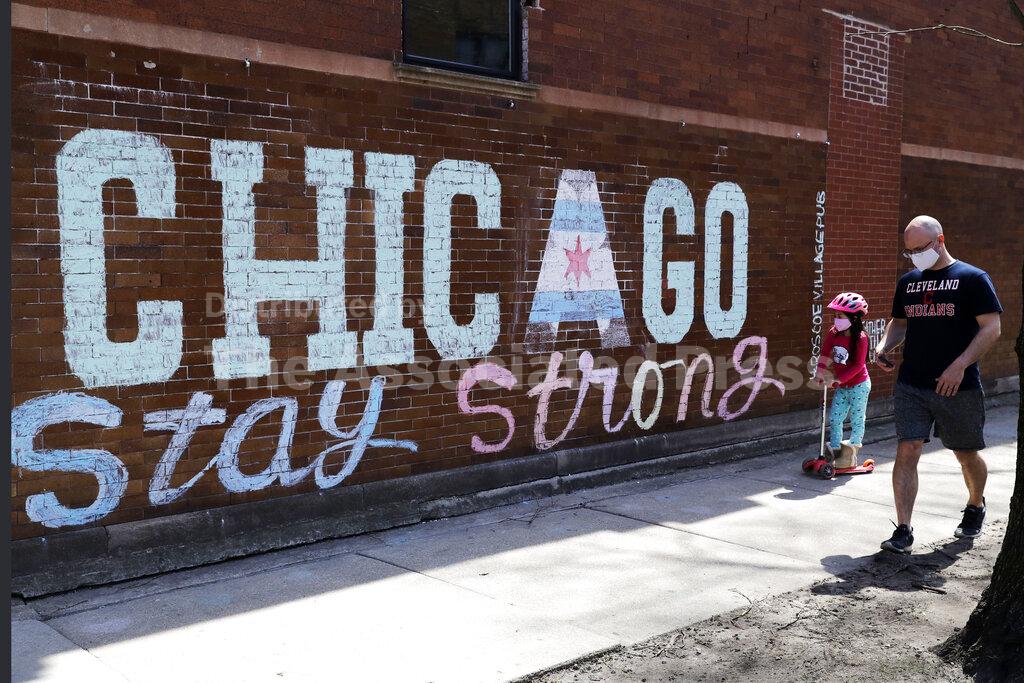
    CHICAGO (AP) — The U.S. death toll from the coronavirus eclipsed Italy’s for the highest in the world Saturday, surpassing 20,000, as Chicago and other cities across the Midwest braced for a potential surge in victims and moved to snuff out smoldering hot spots of contagion before they erupt.

    View all (16)

    With the New York area still deep in crisis, fear mounted over the spread of the scourge into the nation’s heartland.

    Twenty-four residents of an Indiana nursing home hit by COVID-19 have died, while a nursing home in Iowa saw 14 deaths. Chicago’s Cook County has set up a temporary morgue that can take more than 2,000 bodies. And Chicago Mayor Lori Lightfoot has been going around telling groups of people to “break it up.”

    In Europe, countries used roadblocks, drones, helicopters, mounted patrols and the threat of fines to keep people from traveling over Easter weekend. With infections and deaths slowing in Italy, Spain and other places on the Continent, governments took tentative steps toward loosening the weeks-long shutdowns.

    Glorious weather across Europe posed an extra test of people’s discipline.

    “Don’t do silly things,” said Domenico Arcuri, Italy’s special commissioner for the virus emergency. “Don’t go out, continue to behave responsibly as you have done until today, use your head and your sense of responsibility.”

    The outbreak’s center of gravity has long since shifted from China to Europe and the United State s, which now has by far the largest number of confirmed cases — over a half-million — and a death toll higher than Italy’s count of nearly 19,500, according to the tally kept by Johns Hopkins University.

    The death rate — the number of dead relative to the population — is still far higher in Italy than in the United States, which has more than five times as many people. And worldwide, the true numbers of dead and infected are believed to be much higher because of testing shortages, different counting practices and concealment by some governments.

    About half the deaths in the U.S. are in the New York metropolitan area, where hospitalizations are nevertheless slowing and other indicators suggest lockdowns and social distancing are “flattening the curve” of infections and staving off the doomsday scenarios of just a week or two ago.

    New York state on Saturday reported 783 more deaths, for a total of over 8,600. Gov. Andrew Cuomo said the daily number of deaths is stabilizing, “but stabilizing at a horrific rate.”

    “What do we do now? We stay the course,” said Cuomo, who like other leaders has warned that relaxing restrictions too soon could enable the virus to come back with a vengeance.

    With authorities warning that the crisis in New York is far from over, Mayor Bill de Blasio announced that the city’s 1.1 million-student school system will remain closed for the rest of the academic year. But Cuomo said the decision is up to him, and no such determination has been made.

    In the Midwest, pockets of contagion have alarmed state and city leaders and led to stricter enforcement.

    Nearly 300 inmates at the Cook County Jail have tested positive for the virus, and two have died. In Wisconsin, health officials expect to see an increase in cases after thousands of people went to the polls Tuesday for the state’s presidential primary.

    Michigan’s governor extended a stay-at-home order with new provisions: People with multiple homes may no longer travel between them.

    In Kansas, the state Supreme Court heard arguments in a dispute Saturday between Democratic Gov. Laura Kelly and Republican lawmakers who overturned her executive order banning religious services and funerals with more than 10 people. New Mexico’s governor expaned a ban on mass gatherings to include churches and other houses of worship.

    An AP tally from media reports and state health departments indicates at least 2,500 deaths have been linked to coronavirus in nursing homes and long-term care facilities across the United States, though the federal government has not been releasing a count of its own.

    The Internal Revenue Service said the first economic support payments from a $2.2 trillion rescue package have been deposited in taxpayers’ bank accounts, but it didn’t say how many people received them or how much money has been disbursed so far.

    Elsewhere around the world, Italian authorities set up roadblocks around Milan to discourage people from going on Easter weekend trips. British police kept a close watch on gatherings in parks and at the seaside on one of the hottest days of the year. And France deployed some 160,000 police, including officers on horseback who patrolled beaches and parks.

    With religious leaders around the globe urging people to observe Easter safely at home, the archbishop of Turin, Italy, allowed a video streaming display of the Shroud of Turin, believed by the faithful to be the burial cloth of Jesus, so that they can pray in front of it during the epidemic.

    Pope Francis celebrated an Easter vigil Mass in an empty St. Peter’s Basilica, where the footsteps of the pontiff and his small entourage on the marble floor could be heard clearly as they walked in slow procession toward the altar. Francis likened coronavirus fears to anxiety felt by Jesus’ followers after his crucifixion.

    “For them, as for us, it was the darkest hour,” he said, encouraging people to “sow seeds of hope, with small gestures of care.”

    Austria aims to reopen small shops on Tuesday. Spain, with more than 16,600 dead, plans to allow workers in some nonessential industries to return to factories and construction sites Monday. Spanish authorities said they will distribute 10 million face masks at major train and subway stations.

    Italy continued to include all nonessential manufacturing in an extension of its national lockdown until May 3. But Premier Giuseppe Conte held out hope that some industry could re-open earlier if conditions permit.

    Arcuri said that the exit from the lockdown will include increased virus testing, the deployment of a voluntary contact-tracing app and mandatory blood tests as Italy seeks to set up a system of ‘’immunity passports.’’

    India extended its lockdown of the nation of 1.3 billion people by two more weeks. But Iran, the site of the worst outbreak in the Middle East, reopened government offices and businesses outside Tehran.

    In Indonesia, inmates set fire to a prison on Sulawesi island during a riot, apparently angry over restrictions imposed to contain the coronavirus. There were no reports of riot-related deaths.

    Britain on Saturday reported 917 more deaths from the coronavirus, down from the peak of 980 recorded a day earlier. The country’s overall death toll neared 10,000. At the same time, data suggest that the number of hospital admissions in Britain is leveling off.

    Prime Minister Boris Johnson, the first major world leader confirmed to have COVID-19, continued to recover at a London hospital, where he was able to take short walks, according to his office.

    Worldwide, confirmed infections rose to about 1.8 million, with over 108,000 deaths, according to Johns Hopkins. More than 400,000 people have recovered.

    For most people, the coronavirus causes mild or moderate symptoms, such as fever and cough. But for others, especially older people and those with health problems, it can cause severe symptoms like pneumonia.

    ___

    Forliti reported from St. Paul, Minnesota. Moulson reported from Berlin. Associated Press journalists around the world contributed to this report.

    ___

    Follow AP news coverage of the coronavirus pandemic at http://apnews.com/VirusOutbreak and https://apnews.com/UnderstandingtheOutbreak.

  • Field Hospital Built In Houston Ahead Of COVID-19 Surge

    Field Hospital Built In Houston Ahead Of COVID-19 Surge

    Texas continued to brace Saturday for a surge in hospital visits driven by the coronavirus pandemic as the state’s death toll rose to more than 250.

    View all (7)

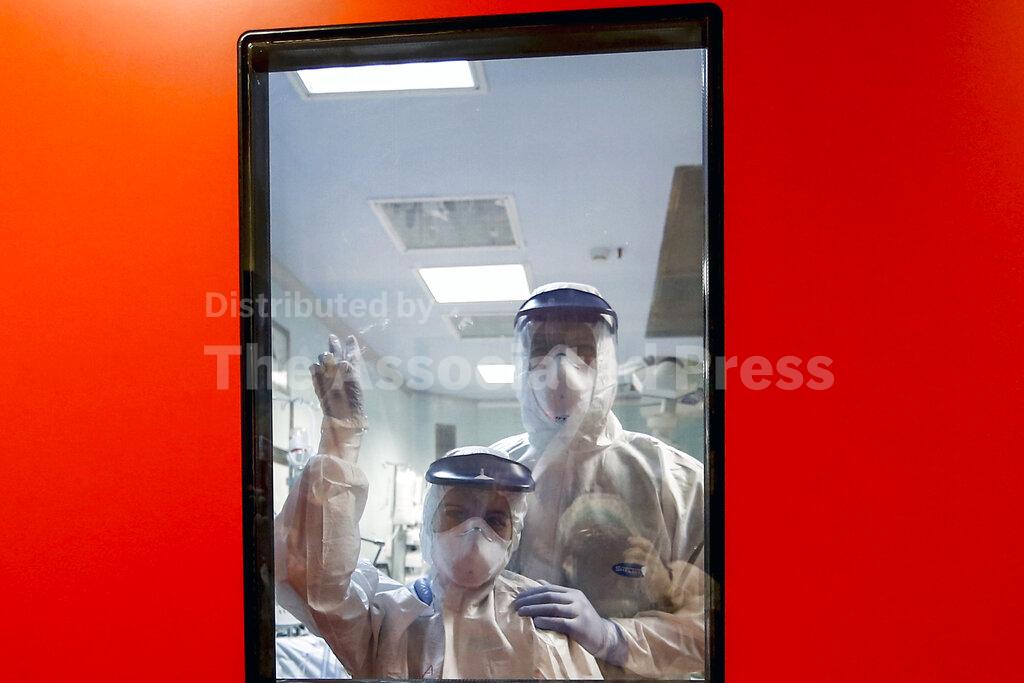
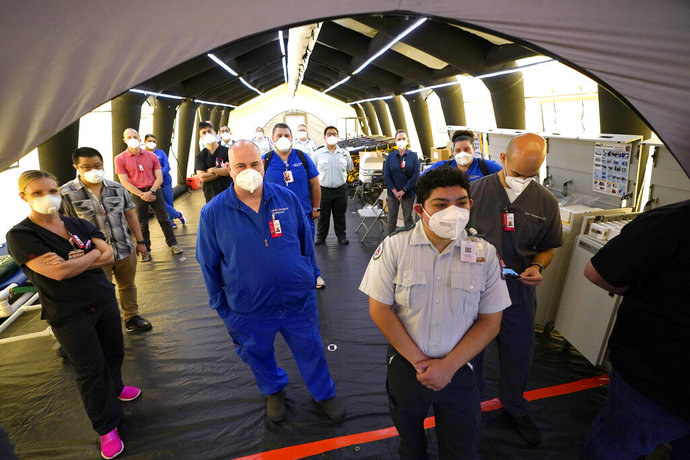
    Officials in Harris County unveiled a temporary overflow hospital that will be able to help take on patients during a heightened onslaught of COVID-19. Medical workers and journalists were taken on a tour of the as-yet-unopened facility on the day the U.S. eclipsed Italy for the highest number of coronavirus deaths in the world, surpassing 20,000.

    Harris County is the state’s most populous with more than 4.2 million residents.

    “We still haven’t reached the peak,” Harris County Judge Lina Hidalgo, the county’s highest elected official, told reporters Saturday. Hidalgo added the field hospital won’t be used until a sharp increase in coronavirus patients starts taxing existing hospital systems, which she expects to become an issue in the Houston area in two or three weeks.

    The overflow shelter at Houston’s NRG Park, where the Houston Texans play, will initially have 250 beds with a capacity of 2,000. Officials are setting up a similar overflow unit in Dallas.

    Gov. Greg Abbott said Friday that Texas is “beginning to slow the growth of the coronavirus.” He said he would issue an executive order next week laying out how Texas will eventually reopen for business. It is unclear when a loosening of restrictions might happen. Abbott put Texas under what amounts to a stay-at-home order until April 30.

    As of Saturday, Texas officials confirmed about 12,500 people had tested positive for COVID-19, and 254 had died. Around 1,600 people have recovered from the disease.

    For most people, the new coronavirus causes mild or moderate symptoms, such as fever and cough that clear up in two to three weeks. For some, especially older adults and people with existing health problems, it can cause more severe illness, including pneumonia.

  • Trump Says He’ll Decide On Easing Guidelines, Not Governors

    Trump Says He’ll Decide On Easing Guidelines, Not Governors

    WASHINGTON (AP) — President Donald Trump asserted Monday that he is the ultimate decision-maker for determining how and when to relax the nation’s social distancing guidelines as he grows anxious to reopen the coronavirus-stricken country as soon as possible.

    Governors and local leaders, who have instituted mandatory restrictions that have the force of law, have expressed concern that Trump’s plan to restore normalcy will cost lives and extend the duration of the outbreak.

    Trump has pushed to reopen the economy, which has plummeted as businesses have shuttered, leaving millions of people out of work and struggling to obtain basic commodities.

    Taking to Twitter on Monday, Trump said some are “saying that it is the Governors decision to open up the states, not that of the President of the United States & the Federal Government. Let it be fully understood that this is incorrect…it is the decision of the President, and for many good reasons.”

    He added, “With that being said, the Administration and I are working closely with the Governors, and this will continue. A decision by me, in conjunction with the Governors and input from others, will be made shortly!”

    Trump last month put in place nationwide recommendations for most Americans to remain home and distant from one another in order to slow the spread of the virus. But his guidelines, scheduled to expire at the end of the month, have little force — unlike actions of governors and local leaders that carry fines or other other penalties, and in some jurisdictions extend out into the early summer.

    Trump’s claim that he could force governors to reopen their states comes after he spent weeks arguing that he didn’t believe he should pressure states that hadn’t imposed stay-at-home restrictions to do so. He had cited his belief in local control of government.

    Trump has bristled at criticism that the social restrictions aimed at stopping the spread of the coronavirus could have saved lives if they’d been started earlier — and that when they’re eased new cases are certain to arise.

    Comments by the nation’s top infectious disease expert, Dr. Anthony Fauci, particularly seemed to draw the president’s ire.

    When asked Sunday on CNN if acting earlier on social distancing and “stay at home” policies could have saved lives, Fauci responded in part: “It’s very difficult to go back and say that. I mean, obviously, you could logically say that if you had a process that was ongoing and you started mitigation earlier, you could have saved lives. Obviously, no one is going to deny that. But what goes into those kinds of decisions is complicated.”

    Trump reposted a tweet that referenced Fauci’s comments and that said “Time to #FireFauci.” Trump again pointed to his decision in late January to restrict travel from China, writing, “Sorry Fake News, it’s all on tape. I banned China long before people spoke up.”

    Fauci had said the economy in parts of the country could have a “rolling reentry” as early as next month, provided health authorities can quickly identify and isolate people who will inevitably be infected. But he said he “can’t guarantee” that it will be safe for Americans to vote in person on Election Day, Nov. 3.

    Fauci cautioned that whenever restrictions ease, “we know that there will be people who will be getting infected. I mean, that is just reality. “

    “There is always the possibility, as we get into next fall, and the beginning of early winter, that we could see a rebound,” he said.

    Dr. Christopher Murray, director of the University of Washington institute that created widely cited projections of virus-related deaths, said studies show that lifting restrictions at the end of this month would lead to a rebound in the number of infections. Because states don’t really have the capability to deal with a big volume of new cases, he said, “by July or August we could be back in the same situation we are now.”

    The U.S. has the most confirmed cases and deaths of any nation, more than 555,000 and more than 22,000, respectively, according to Johns Hopkins University. In hard-hit New York, the number of deaths topped 700 for six straight days, but the increase in people who are hospitalized is slowing, in a hopeful sign.

    For most people, the new coronavirus causes mild or moderate symptoms, such as fever and cough that clear up in two to three weeks. For some, especially older adults and people with existing health problems, it can cause more severe illness, including pneumonia, and death.

    —

    AP writer Mark Sherman contributed.

  • Navy Reports First Coronavirus Death From Roosevelt Crew

    Navy Reports First Coronavirus Death From Roosevelt Crew

    WASHINGTON (AP) — A member of the crew of the coronavirus-infected USS Theodore Roosevelt died Monday of complications related to the disease, the Navy said, just weeks after the aircraft carrier’s captain was fired for pressing his concern that the Navy had done too little to safeguard his crew.

    The sailor, whose name and other identifying information were not publicly released pending notification of relatives, had tested positive for coronavirus on March 30 and was taken off the ship and placed in “isolation housing” along with four other sailors at the U.S. Navy base on Guam. On April 9, he was found unresponsive during a medical check and was moved to a local hospital’s intensive care unit.

    Over the weekend, four additional Roosevelt crew members were admitted to the hospital for monitoring of coronavirus symptoms, the Navy said. All are in stable condition and none are in intensive care or on ventilators.

    The death Monday was the first among the crew of approximately 4,860, of which 585 had tested positive for coronavirus as of Monday. A little over 4,000 crew members have been moved ashore. A number have been kept aboard to attend to the enormous ship’s nuclear reactors and other sensitive systems.

    The Roosevelt has been in a coronavirus crisis that prompted the Navy’s civilian leader, Thomas Modly, to fire the ship’s captain on April 2. Five days later, after having flown to the ship and delivered a speech in which he insulted the skipper, Capt. Brett E. Crozier, and criticized the crew for supporting Crozier, Modly resigned.

    Modly said he felt compelled to remove Crozier from command because he had distributed too widely via email a letter in which he called for more urgent Navy action to prevent a deeper coronavirus crisis aboard his ship. Crozier’s words angered Modly but were seen by others as necessary.

    “We are not at war. Sailors do not need to die. If we do not act now, we are failing to properly take care of our most trusted asset – our sailors,” Crozier wrote March 31. The letter appeared a short time later in the San Francisco Chronicle and other news media. Modly said the letter was inappropriate and that Crozier had failed to consult sufficiently with his immediate superior before writing it.

    President Donald Trump initially criticized Crozier for writing the letter but later said he didn’t want Crozier’s career ruined over a single mistake.

    Navy officials have not ruled out the possibility of Crozier being reinstated.

    Adm. Robert Burke, the Navy’s second-ranking admiral, has been conducting an investigation of the Roosevelt’s coronavirus outbreak and related events, and the results could be presented as early as this week.

    Pentagon leaders anticipate that the coronavirus may strike more Navy ships at sea.

    Last Thursday, Air Force Gen. John Hyten, vice chairman of the Joint Chiefs of Staff, noted that ships with large numbers of sailors aboard operating in close quarters are vulnerable to an outbreak, although the Roosevelt is the only one so far to have reported coronavirus cases while deployed at sea.

    “It’s not a good idea to think that the Teddy Roosevelt is a one-of-a-kind issue,” Hyten told a Pentagon news conference. “We have too many ships at sea. … To think that it will never happen again is not a good way to plan.”

    The Navy’s top officer, meanwhile, said last week that the biggest problem is the inability to test enough people quickly, including those aboard the USS Nimitz, the next U.S.-based aircraft carrier due to deploy out to sea.

    “The challenge that we have now, is having that type of capability where we can test in volume and at speed,” Adm. Mike Gilday said Thursday. “I really don’t have a good estimate right now on when that testing capability might be available in the kinds of quantities we would like to see.”

    He said sailors on the USS Nimitz, which is in port preparing for a deployment, will have all movement restricted for two weeks before the ship leaves.

    ___

    Associated Press writer Lolita C. Baldor contributed to this report.