Tag: covid-19

  • What You Need To Know Today About The Virus Outbreak

    What You Need To Know Today About The Virus Outbreak

    President Donald Trump announced a halt to American payments to the World Health Organization, pending a review of its warnings about the coronavirus and China.

    Nations around the world reacted with alarm to the news, and health experts warned the move could jeopardize global efforts to stop the coronavirus pandemic.

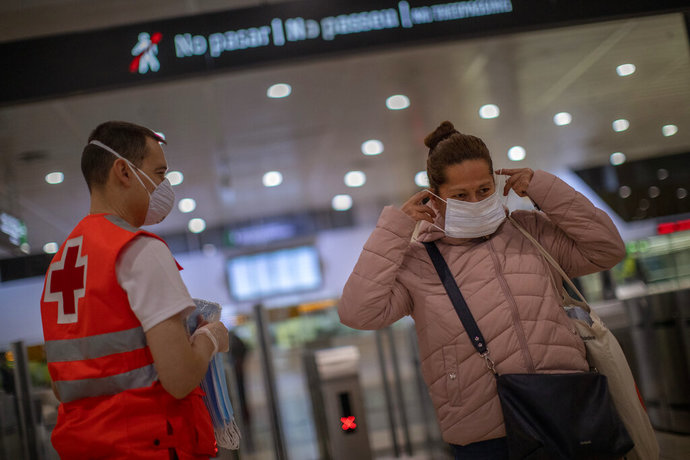
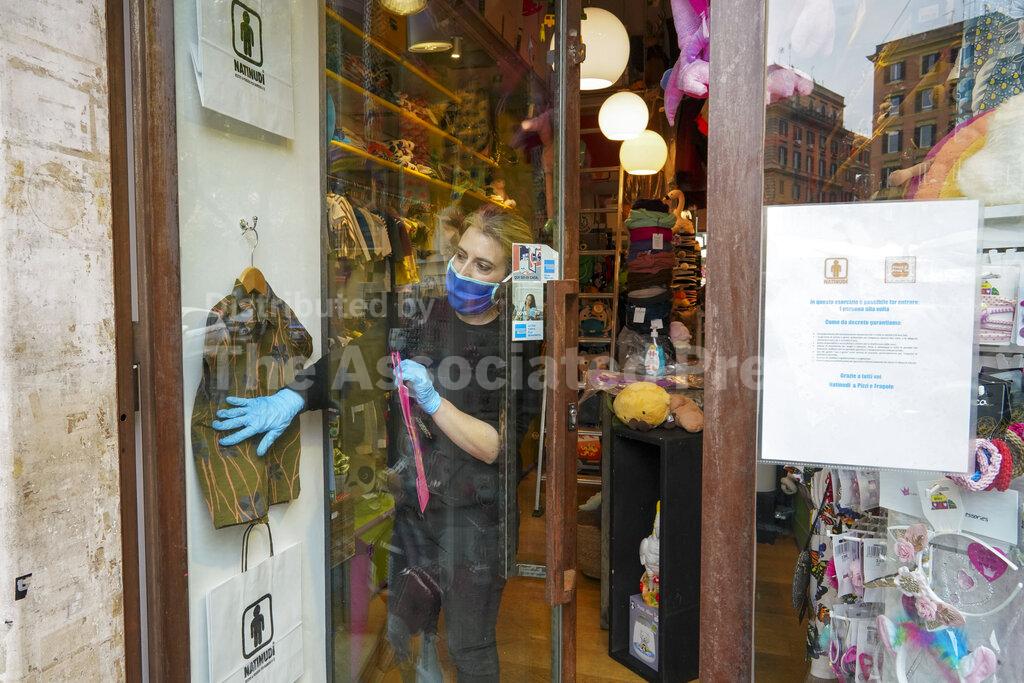
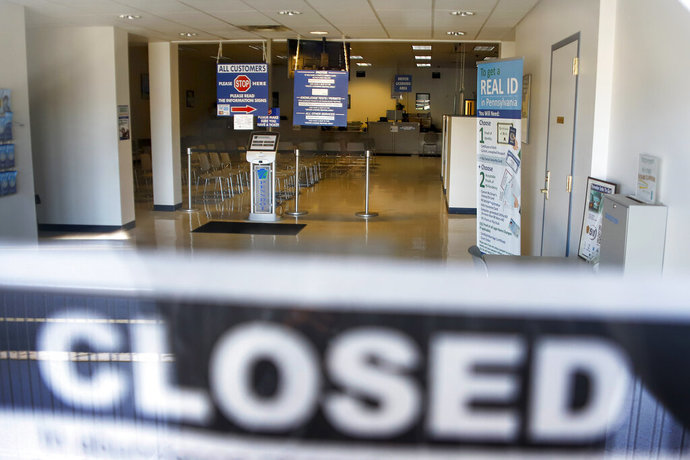
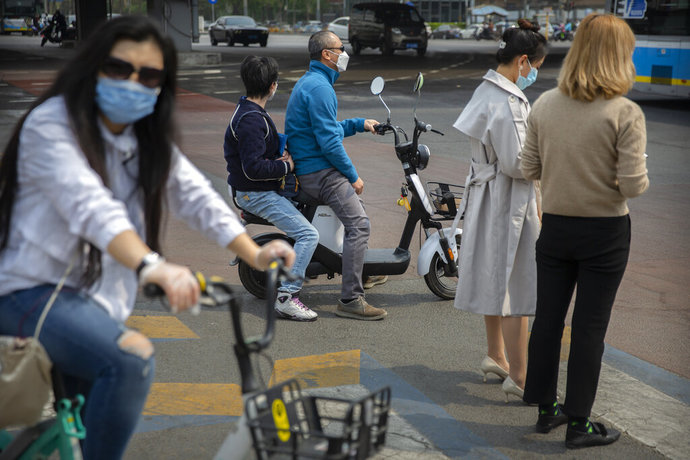
    The first tentative steps in lifting the economically crippling coronavirus restrictions in Europe and China are running into resistance, with shoppers and other customers staying away from the reopened businesses and workers afraid the newly restored freedoms could put their health at risk.

    Here are some of AP’s top stories Wednesday on the world’s coronavirus pandemic. Follow APNews.com/VirusOutbreak for updates through the day and APNews.com/UnderstandingtheOutbreak for stories explaining some of its complexities.

    WHAT’S HAPPENING TODAY:

    — An investigation by The Associated Press has found that six days of delays by China — from Jan. 14 to Jan. 20 — in alerting the public to the growing dangers of the virus set the stage for a pandemic that has upended the lives of millions, sideswiped the global economy and cost nearly 127,000 lives.

    — The European Union moved Wednesday to head off a chaotic and potentially disastrous easing of restrictions that are limiting the spread of the coronavirus, warning its 27 nations to move very cautiously as they return to normal life and base their actions on scientific advice. And U.S. President Donald Trump said he’s enlisting advisers from nearly all sectors of American commerce, the medical field and elected office to help shape his plans to reopen the economy.

    — The official death toll from the coronavirus soared in New York City on Tuesday after health authorities began including people who probably had COVID-19 but died without being tested.

    — As countries around the world edge toward ending lockdowns and restarting their economies and societies, citizens are being more closely monitored. The challenge is achieving the tricky balance between limiting the spread of disease and allowing people freedom to move outside their homes.

    — The U.S. military is bracing for a monthslong struggle against the coronavirus, looking for ways to maintain a defensive crouch that sustains troops’ health without breaking their morale — while still protecting the nation. Defense Secretary Mark Esper acknowledged it’s tough to enforce social distancing and other standards with a force of 2.2 million spread out all over the world.

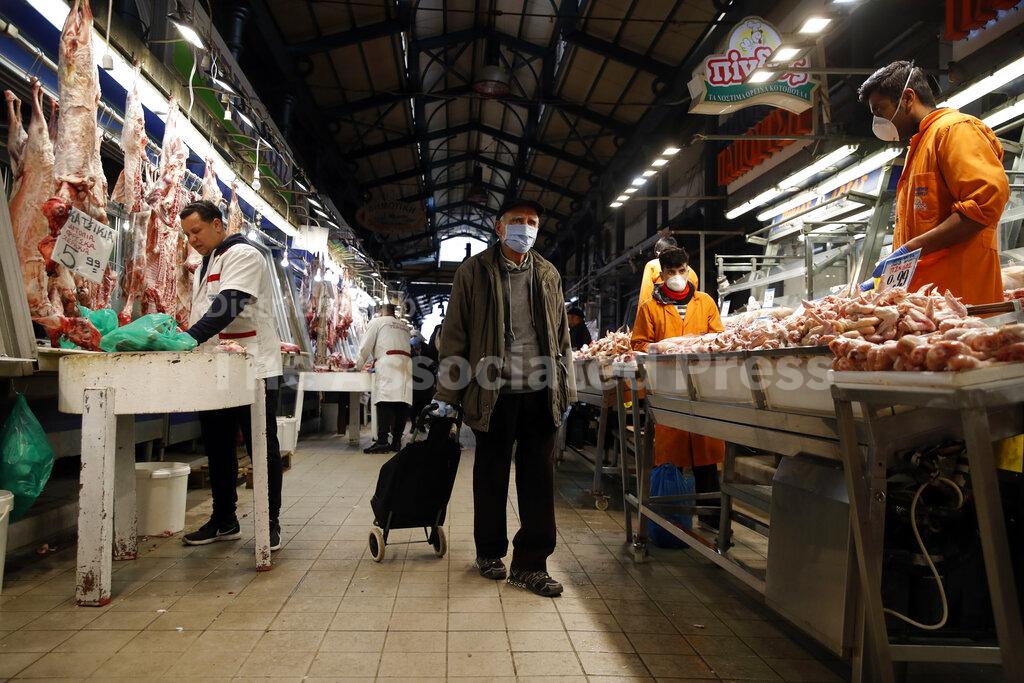
    — Efforts to slow the spread of the coronavirus may be choking Africa’s already-vulnerable food supply. Lockdowns in at least 33 of Africa’s 54 countries have blocked farmers from getting food to markets and threatened deliveries of food assistance to rural populations. Many informal markets where millions buy their food are shut.

    ___

    WHAT YOU NEED TO KNOW:

    For most people, the coronavirus causes mild or moderate symptoms, such as fever and cough that clear up in two to three weeks. For some, especially older adults and people with existing health problems, it can cause more severe illness, including pneumonia and death. The vast majority of people recover.

    Here are the symptoms of the virus compared with the common flu.

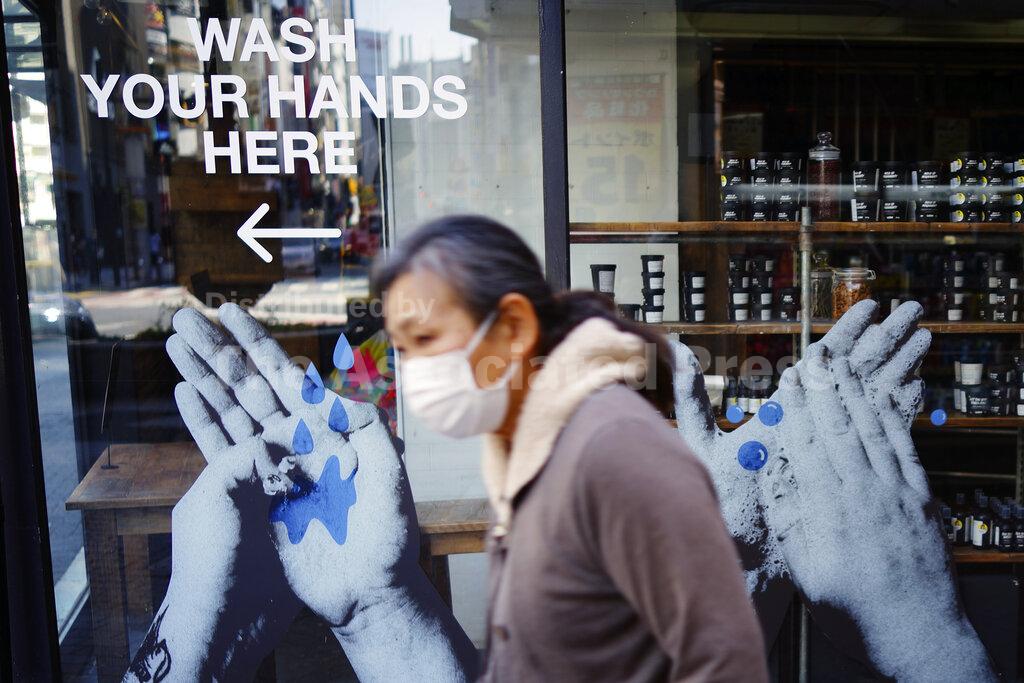
    One of the best ways to prevent spread of the virus is washing your hands with soap and water. The U.S. Centers for Disease Control and Prevention recommends first washing with warm or cold water and then lathering soap for 20 seconds to get it on the backs of hands, between fingers and under fingernails before rinsing off.

    You should wash your phone, too. Here’s how.

    TRACKING THE VIRUS: Drill down and zoom in at the individual county level, and you can access numbers that will show you the situation where you are, and where loved ones or people you’re worried about live.

    ___

    ONE NUMBER:

    — 8.7: U.S. retail sales plummeted 8.7% in March, an unprecedented decline, as the viral outbreak forced an almost complete lockdown of commerce nationwide.

    ___

    IN OTHER NEWS:

    — HOME BAKERS: With millions of people across the globe stuck at home due to lockdown measures imposed during the coronavirus pandemic, many people are choosing to make their own bread, rather than venturing to the local store to buy their weekly fix.

    — ALOHA MASKS: Face masks made with the same colorful prints used for aloha shirts — known as “Hawaiian shirts” elsewhere in the United States — are the latest fashion trend in Hawaii as islanders try to prevent the spread of the coronavirus.

    — POST-PANDEMIC PTSD?: A Boston Marathon bombing survivor talks about his own journey back to mental health, the importance of self-care, and the anxiety, depression and trauma some may be struggling with as the pandemic wears people down.

    ___

    Follow AP coverage of the virus outbreak at https://apnews.com/VirusOutbreak and https://apnews.com/UnderstandingtheOutbreak

  • Louisiana Presidential Primary Pushed Back Again, To July 11

    Louisiana Presidential Primary Pushed Back Again, To July 11

    BATON ROUGE, La. (AP) — Gov. John Bel Edwards on Tuesday again delayed Louisiana’s presidential primary because of the coronavirus — this time to July 11 — as the state’s chief elections officer asked lawmakers to expand mail-in balloting and early voting.

    The primary originally had been scheduled for April 4. Edwards, a Democrat, has pushed back the election twice at the request of Republican Secretary of State Kyle Ardoin as Louisiana continues to grapple with the virus outbreak, which has hit the state especially hard.

    In the past month, more than a dozen states have postponed their primaries to give them time to adjust and plan. Louisiana’s primary initially was postponed until June 20, before being pushed back an extra three weeks to July, making it one of the last states on the current primary calendar.

    Ardoin also is asking lawmakers to approve emergency procedures for the election. He wants to expand early voting from seven days to 13 days and widen the availability of mail-in absentee ballots to people impacted by the virus.

    The proposal would allow people who are 60 years old or older; have underlying medical conditions that make them more at risk to the virus; experiencing symptoms of the COVID-19 disease caused by the virus; or recommended to self-isolate to request an absentee ballot instead of voting in person.

    The secretary of state also wants to change some precinct locations, including relocating polling places located at senior citizen centers and nursing homes, according to the proposal submitted to lawmakers and posted online by the House.

    The House and Senate elections oversight committees have meetings scheduled Wednesday to consider the proposal. Ardoin’s spokesman did not return a call for comment Tuesday about the emergency request.

    Edwards called the emergency plan, with expanded early voting and mail-in balloting options, “reasonable in light of the circumstance.”

    GOP Rep. Stephen Dwight, who chairs the House and Governmental Affairs Committee that oversees elections issues, said the most contentious portion of Ardoin’s proposal centers on the expansion of an absentee balloting procedure that is currently limited to members of the military, overseas voters and people with certain medical conditions. Conservative Republicans oppose the expansion proposal while Democrats want to move to an entirely mail-in ballot procedure for the primary, Dwight said.

    Among the questions, Dwight said: “If I have COVID-19 and am self-isolating, how do I prove that (to get a mail-in ballot)? I don’t know.”

    Louisiana’s primary election will have no sway over who will be the Republican and Democratic nominees for president, with President Donald Trump running for reelection as the GOP pick and the Democratic field in recent days whittled to former Vice President Joe Biden.

    Also on the primary ballot in Louisiana are elections for political party governing committees, along with some municipal and local proposition elections. Runoff elections for the municipal positions have been rescheduled to Aug. 15.

    ___

    Follow AP coverage of the virus outbreak at https://apnews.com/VirusOutbreak and https://apnews.com/UnderstandingtheOutbreak

  • Edwards Worries About Backsliding As Virus Deaths Top 1,000

    Edwards Worries About Backsliding As Virus Deaths Top 1,000

    BATON ROUGE, La. (AP) — Gov. John Bel Edwards worries too many people are newly disobeying his stay-home order and putting the state at risk for a second spike in coronavirus infections as Louisiana reached a somber milestone Tuesday, with the virus death toll growing to more than 1,000.

    In a sign the virus will continue upending lives for months, New Orleans Mayor LaToya Cantrell said major spring and summer festivals that have been postponed to later this year should not be held in 2020 at all, including the New Orleans Jazz and Heritage Festival and the Essence Festival.

    The state announced it will consider temporary furloughs of up to 1,200 inmates, in a bid to decrease the virus’s potential spread in the close confines of prison facilities. Release of the furlough plan details came as a new lawsuit challenged the corrections department’s handling of inmates who have tested positive for COVID-19 and as the agency reported its first COVID-19 death, a worker at the Louisiana State Penitentiary.

    Louisiana has seen encouraging signs in combating the virus, with slowing rates of new hospitalizations and fewer patients on ventilators. Edwards credits people remaining physically distanced from others and limiting trips outside their homes with helping to slow the rate of new infections.

    But the Democratic governor said he saw far more traffic on highways than “I expected to see or wanted to see” during his Monday flight to view tornado damage in north Louisiana. He warned the uptick in traffic and reports of public gatherings could send Louisiana on a backslide in its fight against COVID-19.

    “The reason we are trending in the right direction, the reason we have a slowing in the growth of cases … and deaths is because of the social distancing, the hygiene practices, the stay-at-home order,” Edwards said. “And all it takes to have a spike in cases and go back the other direction is for too many people to violate the order, too much social contact.”

    More than 21,500 people in Louisiana have confirmed infections of the COVID-19 disease, about 9% of whom are hospitalized, according to health department data. The state’s death toll from the virus reached 1,013 Tuesday, up from 884 a day earlier, the largest single-day increase in deaths. Officials stressed not all of those deaths occurred in the last 24 hours, because there is often a lag time in reporting.

    As confirmed infections at Louisiana’s state prisons and local jails continue to rise, Corrections Secretary Jimmy LeBlanc announced the creation of a six-person review panel to consider temporary furloughs for inmates convicted of nonviolent, non-sex-offense crimes who are within the last six months of their sentences.

    The panel will start reviewing cases Friday, LeBlanc said. Five votes are required for an inmate to be furloughed. Approved inmates will be placed on home incarceration with ankle monitors.

    Meanwhile Tuesday, two advocacy groups filed a federal lawsuit challenging the state’s treatment of inmates who have tested positive for COVID-19.

    The Promise of Justice Initiative and the Southern Poverty Law Center are objecting to the Department of Corrections’ decision to transfer infected inmates — including some who are awaiting trial and haven’t been convicted — to a portion of the Louisiana State Penitentiary known as Camp J. The organizations described Camp J as a “notoriously inhumane facility that was closed in 2018 due to its poor conditions.” They said the prison, in rural West Feliciana Parish, isn’t set up to offer adequate medical care.

    “Moving sick people from around the state to a facility with no ventilators, no doctors and a long way from adequate hospitals is wrong and will result in a public health disaster,” Mercedes Montagnes, executive director of The Promise of Justice Initiative, said in a statement.

    LeBlanc said he couldn’t comment about the pending litigation, but he described the use of Camp J as “the right move on our part.”

    For most people, the highly contagious coronavirus causes symptoms such as high fever and a dry cough that resolve in several weeks. But some, especially older adults and people with existing health problems, can suffer severe symptoms that can be fatal.

    Edwards on Tuesday again postponed Louisiana’s presidential primary, this time pushing it back to July 11.

    ___

    Follow AP coverage of the virus outbreak at https://apnews.com/VirusOutbreak and https://apnews.com/UnderstandingtheOutbreak

  • Mississippi Woman Gives $1,200 Stimulus Check To Food Pantry

    Mississippi Woman Gives $1,200 Stimulus Check To Food Pantry

    BAY ST LOUIS, Miss. (AP) — A woman donated the $1,200 relief check she received from the federal government to a Mississippi food pantry amid the coronavirus pandemic.

    Sheron Lambert gave the one-time stimulus payment to the Hancock County Food Pantry, WLOX-TV reported Tuesday. The checks are part of the $2.2 trillion economic recovery bill that will give a $1,200 payout to individuals and $2,400 to married couples. Parents are also set to receive an additional $500 per child.

    Lambert said she doesn’t need the money and gifted it to the pantry to help feed hungry people in the county. “That’s what we all need to do,” she said. “Open our hearts first.”

    Sandra Roberts, a volunteer at the pantry, said she got “chills” after seeing Lambert’s donation. “She felt like we needed it more than she needed it,” she said. Aside from Lambert’s monetary donation, Roberts said they have been getting food donations from other places, including military bases and Walmart.

    Mississippians over 60-years-old are allowed to pick up food once a month from the pantry, while those under that age can get food every three months. Roberts said everyday foods, including peanut butter, are one of their most expensive purchases.

    According to the state’s Health Department, there have been 3,087 coronavirus cases and 111 deaths in Mississippi.

  • No Hugs Or Handshakes: Pandemic Complicates Storm Relief

    No Hugs Or Handshakes: Pandemic Complicates Storm Relief

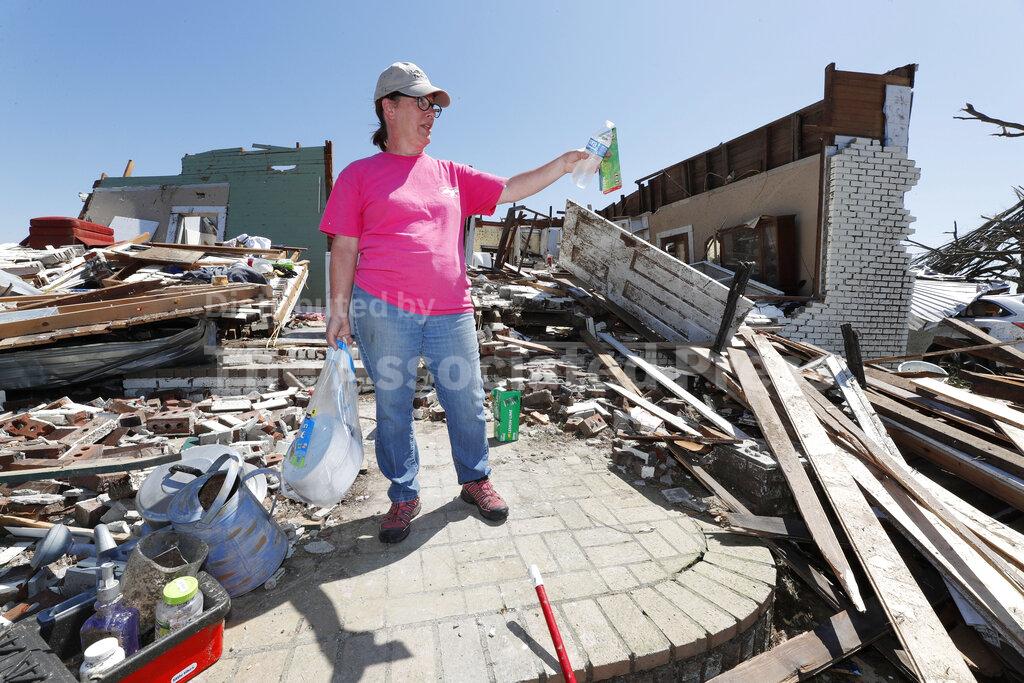
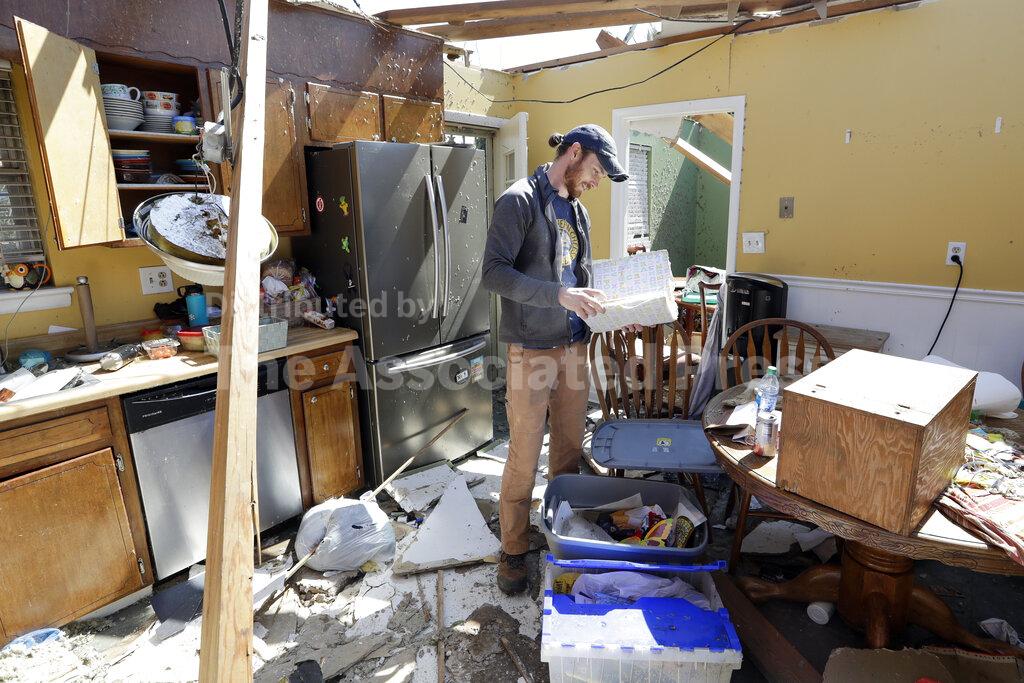
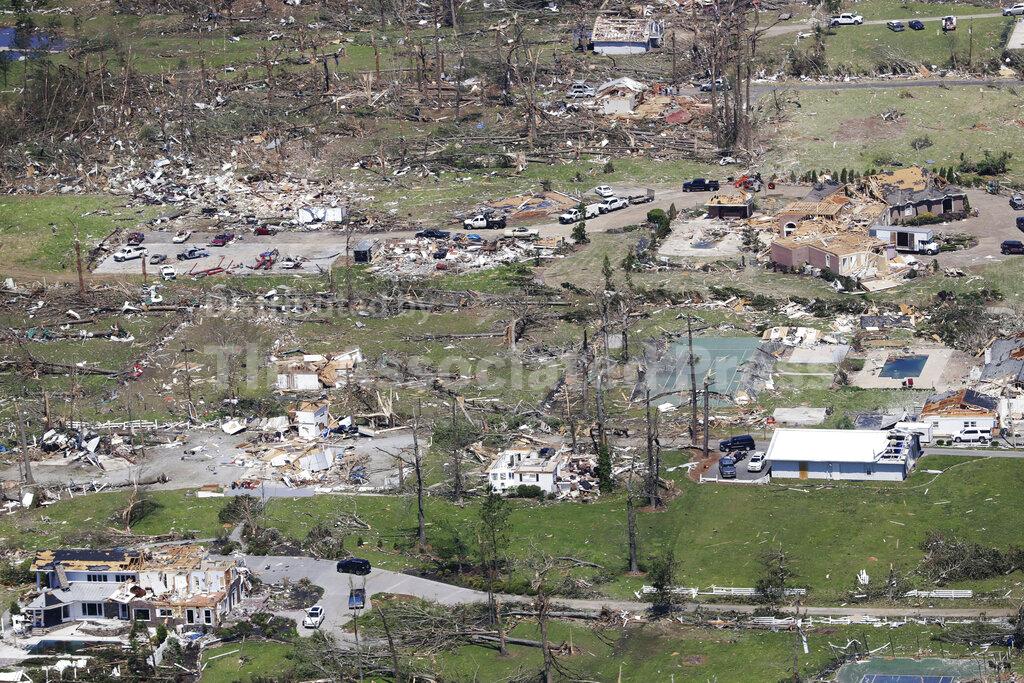
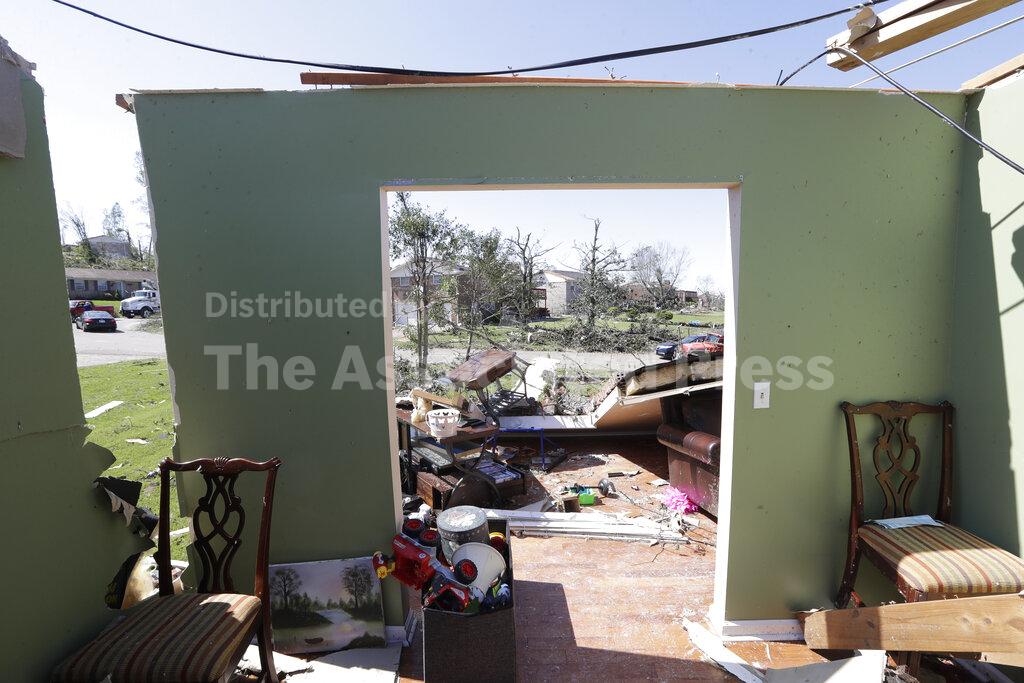
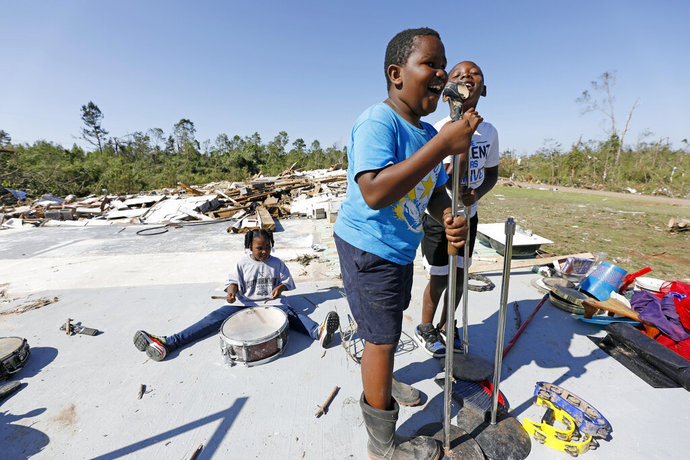
    BIRMINGHAM, Ala. (AP) — For people who lost homes to the deadly tornadoes that rampaged across the South, there are no comforting hugs from volunteers or handshakes from politicians. For homeless families, there are no Red Cross shelters, only hotel rooms.

    View all (17)

    These and other changes reflect how disaster response has been affected by the coronavirus pandemic: Workers are still trying to provide all the help they can, but from a distance.

    Within hours of the tornado onslaught, which began Sunday and killed more than 30 people, church groups were out in damaged communities, and Southern Baptist volunteers were told to avoid holding hands with people as they prayed, said Sam Porter, director of disaster relief for the nearly 15 million-member denomination. Hugs also are out.

    “You’re talking about a very hard change in procedures,” Porter said Tuesday. “It’s agonizing. Jesus touched people all through his ministry. He created us as emotional beings. But we are trying to comply with the guidelines.”

    About 550 people in four states were staying in hotel rooms funded by the Red Cross since mass shelters were not an option, said Brad Kieserman, a vice president of the organization.

    People are being fed catered meals delivered to the hotels instead of through a large kitchen, he said, and workers are wearing masks, gloves and other gear when dealing with people affected by the storms. Other agencies are making similar provisions, he said.

    “How ironic is it that the very thing that may unify people and unify communities is the condition in which we have to remain 6 feet apart,” Kieserman said.

    The death toll from the outbreak rose to at least 34 as officials said a 12th person had died in Mississippi. There, Gov. Tate Reeves, who toured damaged areas, said the pandemic was making a bad situation worse.

    “The fact that the coronaviruses exist is complicating the recovery from the tornado, while the tornadoes are complicating our efforts to make sure that we do everything in our power to stop the spread of the virus,” Reeves said during a stop in tiny Soso. “It is it is exceptionally complicated, and it’s tough on all of us.”

    About 40 miles away in Prentiss, around 15 people wearing masks helped clean up amid the rubble of James Hill Church, which took a direct hit from a tornado. Pastor Sean Coney said breathing through cloth made the work more difficult, “but you can’t be selifsh” and risk spreading the virus.

    “As difficult as it may be, you have to do it,” Coney said.

    A twister left shingles, insulation and other debris strewn across Chattanooga, Tennessee. Almost every official on a tour of storm damage wore a protective mask, and some wore gloves. Instead of hugs and handshakes, Gov. Bill Lee and Mayor Andy Berke offered elbow bumps while talking to affected residents.

    “We need money! We need that stimulus check now!” a person in a passing pickup truck yelled out to Lee as he visited with people cleaning around their home.

    The storms claimed lives in at least six states, and the National Weather Service said preliminary assessments found evidence of at least 27 twisters. The strongest confirmed so far was an EF-4 tornado that devastated southeastern Mississippi with winds as strong as 170 mph (273 kph).

    Hundreds of homes and businesses were damaged or destroyed across the region, and heavy rains caused flooding in some areas. Nashville, Tennessee, received 2.23 inches (5.66 centimeters) of rain in a day, the weather service said. A day later, on Tuesday morning, the city saw snow flurries.

    Damage occurred up the East Coast, with a flurry of tornado warnings issued in Delaware after storms left the Southeast.

    With the economy already faltering because of business shutdowns and job losses linked to the pandemic, the storms hit the state’s $2.9 billion poultry industry. At least 90 poultry houses were damaged or destroyed, many near the city of Collins, the Mississippi State University Extension Service said.

    “Although some houses were between flocks and empty, many of these houses had chickens in them,” poultry specialist Tom Tabler said in a statement. “Some would have been chicks just a few days old, while others would have been flocks nearly ready for harvest.”

    ——-

    This story has been corrected to remove reference to record one day flooding in Nashville.

    ___

    Associated Press writers Emily Wagster Pettus in Jackson, Mississippi; Kimberlee Kruesi in Chattanooga, Tennessee; and video journalist Sarah Blake Morgan in Charlotte, North Carolina, contributed to this report.

  • Governor Tate Reeves Announces Extended School Closures to Slow the Spread

    Governor Tate Reeves Announces Extended School Closures to Slow the Spread

    JACKSON — Today, Governor Tate Reeves announced that schools in Mississippi will remain closed for the rest of the school year to slow the spread of COVID-19.

    To ensure that Mississippi students’ education continues through the remainder of the school year, Governor Reeves is asking every school to submit distance learning plans to mitigate and enhance their learning. He is also asking that educators prepare for summer or early fall learning as an option for make-up school.

    “I know how hard teachers, students, all staff, and parents have been working during this dangerous time. You have my deep respect and sincere admiration. It has been so encouraging to see the efforts of our education community to protect the people of Mississippi while ensuring learning takes place. I know our education community will do whatever it takes to make sure Mississippi kids don’t fall behind,” said Governor Tate Reeves.

    The Governor will be issuing an executive order shortly with details for school districts to develop enhanced learning plans for their students and their communities.

    You can view his full remarks here.

  • How To End Virus Lockdowns? Technology, Tests, Coordination

    How To End Virus Lockdowns? Technology, Tests, Coordination

    Governments battling a virus that has crossed borders with breathtaking speed pinned their hopes Tuesday on tests, technology and a coordinated approach to ease the tight restrictions on movement that have slowed the outbreak but strangled the global economy.

    View all (15)

    While the European Union looked into creating a COVID-19 smartphone app that could function across the bloc, governors on both U.S. coasts pledged to work together as they planned an easing of the confinement of millions. The main concern is to avoid a resurgence by the virus.

    As governments grapple with when and how to reopen their countries for business, the International Monetary Fund projected that the world economy will suffer its worst year since the Great Depression in the 1930s. The grim forecast Tuesday underscored the dilemma facing world leaders as they strive to balance public health against economic stability.

    Around the world, India extended the world’s largest lockdown on 1.3 billion people until May 3. In Britain, new data showed hundreds more people died of the virus than have been recorded in the government’s daily tally from hospitals. The dead include a wave of victims in nursing homes.

    China faced a new flare-up along its remote northern border with Russia. The border has been sealed and medical units have rushed to the area to prevent travelers from returning with the virus.

    New infections appear to have leveled off in much of Asia and Europe, including Italy, France, Spain and Germany, said Dr. Sebastian Johnston, a professor of respiratory medicine at Imperial College London.

    Even in New York — where reported coronavirus deaths passed 10,000 on Monday — Gov. Andrew Cuomo declared the “worst is over if we can continue to be smart.” More than 23,000 people have died of the virus in the United States overall, with close to 600,000 confirmed infections, according to a tally by Johns Hopkins University.

    Tensions between the White House and the nation’s governors increased when President Donald Trump claimed that he has “total” authority to decide how and when to reopen the economy. The Constitution largely delegates such authority to states.

    “We don’t have a king,” Cuomo, a Democrat, said Tuesday on NBC’s “Today. “We have a president. That was a big decision. We ran away from having a king, and George Washington was president, not King Washington. So the president doesn’t have total authority.”

    With social distancing and lockdowns in place across much of the world, projections that the virus would spread with equal ferocity to other corners have yet to materialize. But without a vaccine or widespread antibody tests to determine how many people are immune to the virus, governments fear new outbreaks.

    Germany’s foreign minister, Heiko Maas, called for a single smartphone app across the European Union.

    “It’s important we don’t end up with a patchwork of 27 corona apps and 27 data protection regimes but coordinate as best as possible,” he told Germany’s Funke media group.

    Maas said a contract-tracing app already being jointly developed by several countries showed that the EU “doesn’t have to copy the Big Brother methods of authoritarian states” but can instead safeguard both personal privacy and public health.

    Lothar Wieler, head of the Robert Koch Institute, Germany’s disease control center, said constantly exchanging information among countries and institutions about best practices, vaccine studies and protecting vulnerable people is key.

    The virus has also forced rival companies to work together. Two of the world’s biggest drug companies — Sanofi Pasteur and GSK — announced they will combine forces to work on a vaccine. And Apple and Google last week announced a joint effort to help public health agencies worldwide use Bluetooth wireless technology to trace the contacts of infected people.

    In China, where new reported cases have dwindled, life is ruled by a green bar-code symbol on a smartphone screen that says a user is symptom-free and can board a subway, check into a hotel or just enter Wuhan, the city of 11 million where the outbreak began in December.

    South Korea and Israel have both aggressively used smartphone data to track the movements of carriers. But epidemiologists say contact tracing must be combined with widely available testing, which has been lacking in places like the United States and Britain.

    In Europe, officials pointed to positive signs as they started to reopen their economies.

    In Italy, where the day-to-day count of infections has been trending downward, bookstores, stationery stores and shops selling baby supplies were allowed to open nationwide. Forestry workers, needed to clear dead trees ahead of the summer fire season, also returned to work.

    In Spain, where the official death toll rose to over 18,000, the country’s main epidemiology institute found an additional 1,500 “unexpected deaths” since mid-March after it studied mortality rates.

    Spanish workers returned Monday to some factory and construction jobs. Stores and services were still closed, and the government required office workers to keep working from home.

    In Austria, hardware and gardening stores reopened Tuesday. Chancellor Sebastian Kurz said the government is monitoring new infections closely, and “if the figures develop in the wrong direction, we will, of course, pull the emergency brake.”

    In Britain, which started its lockdown later than the rest of Europe, new infections and deaths were still rising. Britain as of Monday reported more than 11,300 deaths of COVID-19 patients in hospitals. But the head of one of the country’s biggest nursing home operators said Tuesday that the number of infections and deaths among the elderly is much higher than official reports.

    In the United States, governors in the Northeast and along the West Coast announced separate state groups to coordinate reopenings.

    California Gov. Gavin Newsom said he would announce a detailed plan Tuesday for lifting virus restrictions, using “science to guide our decision-making and not political pressure.”

    “The house is still on fire,” New Jersey Gov. Phil Murphy said. “We still have to put the fire out “but also ”make sure this doesn’t reignite.”

    New Jersey is in a coalition with Connecticut, Delaware, Massachusetts, New York, Pennsylvania and Rhode Island to figure out how to reopen their economies while still fighting the virus. The governors of California, Oregon and Washington announced a similar plan.

    More than 1.9 million infections have been reported and over 120,000 people have died worldwide, according to Johns Hopkins University. The figures understate the true size of the pandemic, because of limited testing, uneven counting of the dead and concealment by some governments.

    ___

    Hinnant reported from Paris while Blake contributed from Bangkok. Associated Press journalists around the world contributed to this report.

    ___

    Follow AP coverage of the pandemic at http://apnews.com/VirusOutbreak and https://apnews.com/UnderstandingtheOutbreak
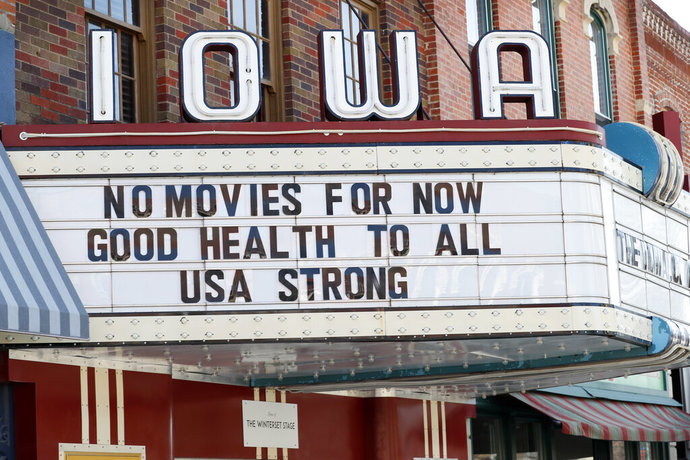
  • In Shutdown, A Glimpse Of Life Without Movie Theaters

    In Shutdown, A Glimpse Of Life Without Movie Theaters

    NEW YORK (AP) — Jennifer Page jokes that four months in, this decade is already the worst of her life.

    A server at a nearby resort, she’s out of work due to the pandemic. After someone tested positive at her mother’s nursing home, Page moved her into a room off the dining room. Two weeks ago, her father died. The day after his memorial, she and her family went for a walk, and her 5-year-old daughter, Roxa, asked for something coveted by children for more than a century.

    “She was just like, ‘Mama, when this is over, can we go to the movies?’” recalled Page, 36, of Buffalo. “She went through the whole process of going to the movies. She said, ‘We can get popcorn and each have our own drink and each get a candy.’”

    The coronavirus pandemic is forcing Americans to journey through hardship without some of the reliable comforts of hard times. One of them is the movies. For more than a century, movie theaters have been a refuge, a communal escape, a place for popcorn-chomping-dreaming-with-your-eyes-open transportation away from everything else.

    A world without movie theaters, like the one we’re temporarily inhabiting, has longbeenforetold. It’s been predicted with every major technological advancement in media, and especially since the advent of streaming. Cinemas, so inconveniently located outside the home, are a dinosaur, analysts have said — one that’s on its way out.

    Now, we’re getting a glimpse of life without movie theaters. Most see this as an opening for streaming services, hastening their expected takeover. But it has also brought a renewed appreciation for the pleasures of going to the movies and clarified their unique role in social life. Isolation has only illuminated the power of sitting together in the dark.

    “It’s one of those things you can’t really appreciate something until it’s taken away from you,” says John Bell, president of the Tampa Theatre, a 1920s-era movie palace. “This has certainly accelerated a dystopian future look at what the landscape could look like. But I just innately believe that humans are social creatures and, ultimately, they will want to gather again. Streaming is great, it’s convenient. But it’s just not the same.”

    Nearly a month of shelter-in-place orders have forced some to hanker for the sticky floors of cinemas like never before. Sure, those people texting a few seats over were always a nuisance and the films weren’t always so great. But peruse social media lists of “What I’m going to do when this is over” and you will see countless cravings for the big screen and a tub of popcorn.

    Being holed up at home has, for some, made the difference between streaming and moviegoing especially acute. Neither “Tiger King” nor the bite-sized “movies in chapters” of Quibi fill the loss of a night out at the movies. Gary Walker, a 22-year-old in San Jose, California, who’s studying film at San Francisco State University, has been filling his time watching documentaries on Netflix and series on Disney Plus. But it doesn’t do the trick.

    “I can’t wait to go back,” says Walker. “I’m just a person who really likes the social experience of going to the movies, not sitting at home watching a movie by myself. Don’t get me wrong — I like doing that, too. But it’s really different sitting in a theater with other people.”

    Theaters nationwide have shuttered indefinitely due to the pandemic, leaving about a dozen still open. Most are drive-ins, which have seen a sudden resurgence after a decades-long slide. Chains have furloughed or laid off employees, many of whom are part-time or hourly workers.

    The shutdown will almost certainly lead to the permanent closure of some cinemas. Analysts say that AMC Entertainment, which presides over the nation’s largest chain, is on the cusp of bankruptcy. To weather the storm, theater owners — like many other businesses — have sought federal aid through the coronavirus stimulus package.

    The earliest most theaters are hoping to reopen is June. All major releases have been postponed up until mid-July.

    “The ability, when this is done, to go out and enjoy something entertaining and affordable with your family and friends is going to be hugely important to the cultural and psychological fabric of the country,” says John Fithian, president of the National Organization of Theater Owners. “We want to do that,” he says. “But we still need to be viable.”

    Moviegoing has been waning for two decades, a decline masked by higher ticket prices. Last year, domestic ticket sales amassed $11.4 billion. That revenue is a big reason why all but a handful of the largest upcoming productions have postponed theatrical release rather than head to streaming. The big money is still at the box office.

    No one expects, whenever theaters do reopen, that masses will stream through the doors. Distancing protocols could still be kept in place, at least at first. So long as there isn’t a vaccine for COVID-19, some will be hesitant to attend crowded indoor events. Last month the analytics company EDO polled moviegoers and found 70% said they were likely to return to cinemas. Some 45% said they would wait a few weeks; 11% said they’d wait months.

    Theaters shuttered during the Spanish Flu pandemic of 1918, but in a more patchwork fashion. The establishment of the studio system followed in the 1920s, a period recounted by Hollywood historian William Mann in “Tinseltown: Murder, Morphine, and Madness at the Dawn of Hollywood.” Mann believes this pandemic will likewise reshape the movie business.

    “If out of this comes a renewed appreciation for going back to some glamour, maybe, in the movies, movie theaters will find their way,” says Mann. “Movie theater chains might be wise to come out of this with a whole new way of, ‘Hey, look at all we have to offer. We can make this experience really special.’”

    As the pandemic continues, a larger streaming ecosystem is growing, too. Viewership is soaring. Viewing parties, a digital facsimile of communal moviegoing, are increasing. Some theaters have even themselves embraced streaming as a band-aid and set up virtual screenings online.

    But none of those options — all of which come with a “pause” button — provide what many right now could use most: an escape.

    ___

    Follow AP Entertainment Writer Jake Coyle on Twitter at http://twitter.com/JakeCoyleAP

  • Government Loans Start Flowing To Small Businesses

    Government Loans Start Flowing To Small Businesses

    NEW YORK (AP) — The flow of money to small businesses under the government’s $349 billion coronavirus relief plan is picking up momentum although many company owners are still waiting and wondering.

    Money that was held up by technological and legal issues and the sheer volume of applications began arriving in companies’ bank accounts at the end of last week. The Small Business Administration reported Monday that more than 959,000 applications had been approved for over $232 billion from the Paycheck Protection loan program.

    The money Amy Power received Friday evening will go toward paying the eight staffers of her Dallas-based public relations company. Revenue is down more than 12% at The Power Group, whose clients include restaurants whose business has been curtailed by the virus outbreak.

    “I want to get through this and retain my people,” Power says.

    The loans of up to $10 million at an interest rate of 1% carry the promise of forgiveness if the money is used for retaining staffers or rehiring those who have been laid off. They also can be used for rent, mortgage interest and utilities.

    The money was arriving as the first economic impact payments under the government’s $2 trillion relief package also landed in Americans’ bank accounts.

    The Paycheck Protection Program so far hasn’t lived up to expectations raised by Treasury Secretary Steven Mnuchin, who said in announcing the program that owners could get loan money the same day they applied. But neither the SBA nor banks could turn around hundreds of thousands of loans in a matter of days, let alone hours.

    There were other obstacles to getting the money flowing. The SBA ran into computer problems and bankers initially favored their most established customers. Money was also delayed amid confusion between the SBA and banks over loan documents.

    Owners were finding that while the government promised less paperwork and quick money, there were still the usual lending processes to be dealt with. Jim Kolea applied early in the program, which began April 3, and didn’t hear until Monday that his truck repair business, PennFleet, had been approved. But he still had a wait ahead.

    “We should see paperwork later this week to sign,” said Kolea, whose company is based in Boothwyn, Pennsylvania.

    Because the coronavirus has devastated the economy as a whole, some owners don’t feel that the loan money would guarantee their companies’ survival. Julie Goldman got her loan money Monday. She’s going to save the money to pay her five staffers when her company, Original Runner, is allowed to reopen by New Jersey Gov. Phil Murphy. The company manufactures fabric runners used at weddings.

    Goldman, whose company is based in Livingston, New Jersey, is worried about her business coming back after life gets back to normal. She doesn’t know if couples planning weddings will want to spring for details like runners.

    “No one knows if they can stay open,” Goldman says. “It’s just a real struggle right now.”

  • Trump Claims He Has ‘Total’ Authority Over Reopening Economy

    Trump Claims He Has ‘Total’ Authority Over Reopening Economy

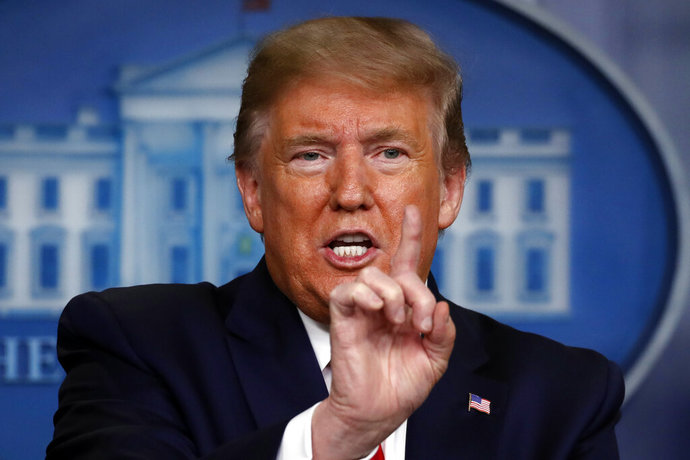
    WASHINGTON (AP) — President Donald Trump claimed the “total” authority to decide how and when to reopen the economy after weeks of tough social distancing guidelines aimed at fighting the new coronavirus. But governors from both parties were quick to push back, noting they have primary responsibility for ensuring public safety in their states and would decide when it’s safe to begin a return to normal operations.

    Trump would not offer specifics about the source of his asserted power, which he claimed, despite constitutional limitations, was absolute.

    “When somebody is president of the United States, the authority is total,” Trump said Monday at the White House. “The governors know that.”

    The comments came not long after Democratic leaders in the Northeast and along the West Coast announced separate state compacts to coordinate their efforts to scale back stay-at-home orders or reopen businesses on their own timetables.

    Anxious to put the crisis behind him, Trump has been discussing with senior aides how to roll back federal social distancing recommendations that expire at the end of the month.

    While Trump has issued national recommendations advising people stay home, it has been governors and local leaders who have instituted mandatory restrictions, including shuttering schools and closing nonessential businesses. Some of those orders carry fines or other penalties, and in some jurisdictions they extend into the early summer.

    And governors made clear they wouldn’t tolerate pressure to act before they deem it safe.

    “The president’s position is just absurd,” said New York Democratic Gov. Andrew Cuomo in an appearance Tuesday on “CBS This Morning.” “It’s not the law. It’s not the Constitution. We don’t have a king. We have a president.”

    New Hampshire Republican Gov. Chris Sununu told CNN that, “All of these executive orders are state executive orders and so therefore it would be up to the state and the governor to undo a lot of that.”

    “The government doesn’t get opened up via Twitter. It gets opened up at the state level,” said Michigan Gov. Gretchen Whitmer, a Democrat, referencing the fact that Trump had first made his assertion by tweet.

    Meanwhile, governors were banding together, with New York, New Jersey, Connecticut, Pennsylvania, Delaware and Rhode Island agreeing to coordinate their actions. The governors of California, Oregon and Washington announced a similar pact, saying they will work together and put their residents’ health first and let science guide their decisions.

    New Jersey Gov. Phil Murphy, a Democrat, stressed the efforts would take time.

    “The house is still on fire,” Murphy said on a conference call with reporters. “We still have to put the fire out, but we do have to begin putting in the pieces of the puzzle that we know we’re going to need … to make sure this doesn’t reignite.”

    Trump, however, insisted it was his decision to make.

    “The president of the United States calls the shots,” he said, promising to release a paper outlining his legal argument at some point.

    While Trump can use his bully pulpit to pressure states to act or threaten them with consequences, the Constitution gives public health and safety responsibilities primarily to state and local officials.

    Though Trump abandoned his goal of beginning to roll back social distancing guidelines by Easter, he has been itching to reboot an economy that has dramatically contracted as businesses have shuttered, leaving millions of people out of work and struggling to obtain basic commodities. The closure has also undermined Trump’s reelection message, which hinged on a booming economy.

    Trump’s claim that he could force governors to reopen their states also represented a dramatic shift in tone. For weeks Trump had argued that states, not the federal government, should lead the response to the crisis. Indeed, he refused to publicly pressure states to enact stay-at-home restrictions, citing his belief in local control of government.

    While Trump can use his daily White House briefings and Twitter account to try to shape public opinion and pressure governors to bend to his will, “there are real limits on the president and the federal government when it comes to domestic affairs,” John Yoo, a University of California at Berkeley law school professor, said on a recent Federalist Society conference call.

    Mississippi Republican Gov. Tate Reeves, a supporter of Trump, said the question of when to lift restrictions would be “a joint effort” between Washington and the states.

    Talk about how and when to reboot the nation’s economy has come as Trump has bristled at criticism that he was slow to respond to the virus and that lives could have been saved had social distancing recommendations been put in place sooner.

    That frustration was amplified by comments made by Dr. Anthony Fauci, the nation’s top infectious diseases expert, who told CNN on Sunday that, “obviously,” had the country “started mitigation earlier, you could have saved lives.”

    Trump responded by reposting a tweet that included the line, “Time to #FireFauci,” raising alarms that Trump might consider trying to oust the 79-year-old doctor. But at Monday’s briefing, Trump insisted Fauci’s job was safe after Fauci took the podium to try to explain his comments.

    Trump has complained to aides and confidants about Fauci’s positive media attention and his willingness to contradict the president in interviews and from the briefing room stage, according to two Republicans close to the White House. They spoke on condition of anonymity because they were not authorized to discuss internal conversations.

    But Trump has told aides that he knows blowback to removing Fauci would be fierce and that — at least for now — he is stuck with the doctor. On more than one occasion, however, he has urged that Fauci be left out of task force briefings or have his speaking role curtailed, according to the Republicans.

    ___

    Mulvihill reported from New Jersey. Associated Press writers Jonathan Lemire in New York; Alan Suderman in Richmond, Virginia; Holly Ramer in Hopkinton, New Hampshire; John O’Connor in Springfield, Illinois; Marc Levy in Harrisburg, Pennsylvania; Scott Bauer in Madison, Wisconsin; David Eggert in Lansing, Michigan; and Mark Sherman and Darlene Superville in Washington contributed to this report.