Tag: covid-19

  • Monday Blood Drive To Include COVID-19 Antibody Testing

    Monday Blood Drive To Include COVID-19 Antibody Testing

    Blood drive today at the Adams County Safe Room from 11:30 until 5:30

    Appointments Required! Click here to make your appointment for today’s blood drive in Natchez.

    Mississippi Blood Services is hosting the blood drive today.  As part of your donation, they will test your blood for COVID-19 antibodies.

    Here is what you need to know about COVID-19 antibody testing.

    Is the COVID-19 antibody test different from a diagnostic test?

    The COVID-19 antibody test does not test for the presence of COVID-19. The
    antibody test looks to see if the blood contains antibodies to the virus. The test
    does not check for the presence of an active COVID-19 infection.

    Do I need to donate blood to get the COVID-19 antibody test?

    Yes, in order to get the COVID-19 antibody test, a complete donation must be
    given. This test is available to donors that complete a whole blood, platelet or
    double red blood cell donation.

    If I test positive for the COVID-19 antibody, then what?

    We would encourage you to consider donating Convalescent Plasma. Plasma
    derived from donations that test positive for the COVID-19 antibody will likely
    be designated as convalescent plasma. Learn more about donating convalescent
    plasma by contacting Noreen Haley at nhaley@msblood.com.

    How will I receive my results after I donate?

    Your results will be sent to you via email within 1 week of your donation. You
    will need to make sure you provide your email to the phlebotomist during
    registration to ensure receipt of your results. IF you do not recieve your emailed
    results within 1 week of donation date, please email sates@msblood.com.

    Can previous donations be used to test for COVID-19 antibody?

    No. However stay tuned as we may offer antibody testing again in the near future.


  • Mississippi football practice can start Aug. 10 and events can start Aug. 17

    Mississippi football practice can start Aug. 10 and events can start Aug. 17

    Mississippi high school sports officially have a schedule.

    The Mississippi High School Activities Association voted on Tuesday to begin the process of scheduling fall 2020 sporting events. Per the vote, practices for high school football can begin on Aug. 17 and games can begin on Sept. 4. Volleyball, cross country and swimming can begin practicing on Aug. 10 and start events on Aug. 17.

    This announcement delays the start of the season by two weeks but still allows for events to happen for most of the fall. The delay, of course, comes in the wake of the COVID-19 pandemic which has caused widespread shutdowns and rescheduling for business and sports leagues across the country.

    The coronavirus pandemic ended the MHSAA spring athletics schedule early on top of the limitations it put upon public schools for general educational purposes.

    For football, Classes 1A, 5A and 6A will play 10-game seasons and 2A, 3A and 4A will play nine-game seasons. Football teams can host a scrimmage between two teams on Aug. 28 but will not be permitted to host a jamboree in that first week before the regular season begins.

    The playoffs are not being rescheduled. Teams in 2A, 3A and 4A will begin their playoffs on Nov. 6 and teams in 1A, 5A and 6A will begin the postseason on Nov. 13. The North State and South State championships are still scheduled for Nov. 27 for all classifications and the state championship games will be held on Dec. 4 and 5.

    Postseason schedules for volleyball, cross country and swimming remain on dates as scheduled as well. Meets or events that are being lost because of the two-week delay can be rescheduled if both schools can agree on an appropriate date.

    Original Article At: The Clarion Ledger

    Contact Nick Suss at 601-408-2674 or nsuss@gannett.com. Follow @nicksuss on Twitter.

  • Face Coverings to be Mandatory in Louisiana Starting Monday, July 13, 2020

    Face Coverings to be Mandatory in Louisiana Starting Monday, July 13, 2020

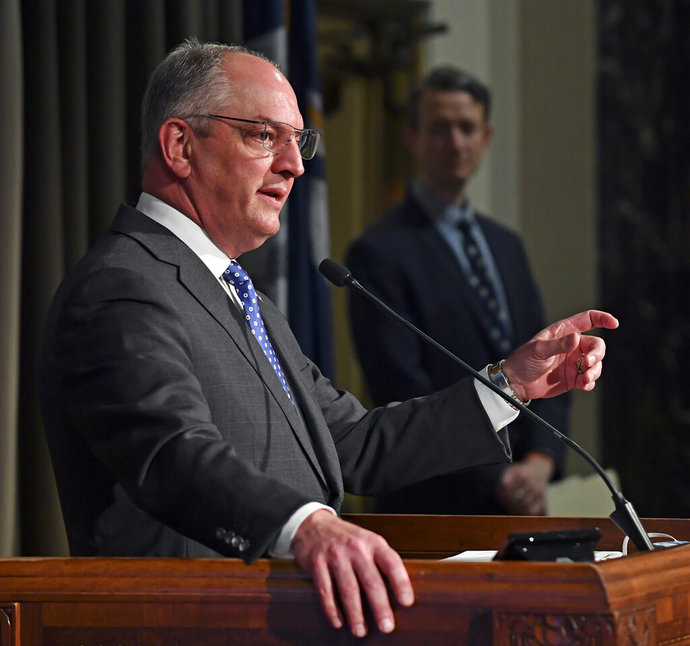
    Today, Gov. John Bel Edwards announced a mandatory mask requirement for Louisiana and ordered bars in the state closed to on-premises consumption, as the state experiences increasing spread of COVID-19. The Governor also limited indoor social gatherings like wedding receptions, class reunions and parties to 50 total people. With these additional restrictions, Louisiana remains in Phase Two of the Roadmap for a Resilient Louisiana.

    The statewide mask mandate, which will allow for parishes without high COVID-19 incidence to opt out if they choose, and bar closures go into effect Monday, July 13 at 12:01 a.m., per a revised Phase Two proclamation signed today. The order will also limit the size of gatherings to 50. The new order is set to expire July 24, 2020, but could be extended.

    “Cases in Louisiana continue to increase, including setting a record-high number of new cases reported in one day, today and yesterday. More than two thousand new COVID infections reported each of these days and increased hospitalizations are signs that we continue to go in the wrong direction in our work to control COVID-19 in our state. While I had hoped to avoid going backwards on restrictions, it is obvious that it is necessary to slow the spread of infection in our state, as COVID-19 has spread to every corner, at a level higher than we have previously seen. This is why I am now mandating face coverings statewide and also closing all bars in Louisiana to on-premises consumption, in addition to putting in limits on the size of indoor gatherings,” Gov. Edwards said. “Right now, all Louisianans need to work together to reduce the spread of COVID-19 by wearing their face masks, keeping social distance, washing their hands frequently and staying at home when they are feeling sick. These are reasonable expectations while we fight to reduce the spread of the illness in our state. This approach also gives us the best possible chance to again flatten the curve without moving back to Phase One.”

    MASK MANDATE
    The statewide mask mandate applies to all 64 parishes in Louisiana. However, parishes with a COVID-19 incidence of fewer than 100 cases per 100,000 people for the most recent two-week period for which data is available could choose to opt out of the mandate. Parish presidents do not have to opt out and may choose to keep a mask mandate in place. Currently, only three parishes in Louisiana do not exceed this standard, which will be updated every other week by the Louisiana Department of Health: Grant, Red River and West Feliciana.

    The order requires face coverings for everyone ages 8 and older except for the following:

    • Anyone who has a medical condition that prevents the wearing of a face covering
    • Anyone who is consuming a drink or food
    • Anyone who is trying to communicate with a person who is hearing impaired
    • Anyone who is giving a speech for broadcast or to an audience
    • Anyone temporarily removing his or her face covering for identification purposes
    • Anyone who is a resident of a parish without a high COVID incidence that has opted out of the masking mandate

    Masks are strongly recommended for children ages 2 to 7.

    CLOSURE OF BARS TO ALL ON PREMISES CONSUMPTION
    All bars, including those with food permits from the Louisiana Department of Health, will be closed to on-premises consumption. They can operate for curbside takeout or delivery service only.

    Since the start of the crisis, Louisiana has identified at least 36 outbreaks, impacting at least 405 people, involving bars, which were actually closed under the Governor’s original Stay at Home order. Public health officials believe going to bars is a higher public health risk than visiting other types of businesses because people are socializing and cannot wear masks when they drink. In addition, young people under the age of 30 make up the largest percentage of new COVID cases in Louisiana.

    GATHERING SIZE
    The new order also limits the size of social gatherings to 50 people indoors. Outdoor social gatherings are also limited to 50 people if individuals cannot avoid being within six feet of one another.

    This crowd size limitation shall not apply to those businesses deemed essential as defined by the Cybersecurity and Infrastructure Security Agency or any businesses and organizations operating at 50% capacity pursuant to Paragraphs (1) through (6) of Subsection (G) of Section 2 of 83 JBE 2020, including churches and other faith-based organizations.

    The 50-person limit will apply to indoor gatherings, like receptions, weddings and others. The changes are based on the advice of public health officials.

    Click here to read the proclamation.

  • Protective gear for medical workers begins to run low again

    Protective gear for medical workers begins to run low again

    The personal protective gear that was in dangerously short supply during the early weeks of the coronavirus crisis in the U.S. is running low again as the virus resumes its rapid spread and the number of hospitalized patients climbs.

    A national nursing union is concerned that gear has to be reused. A doctors association warns that physicians’ offices are closed because they cannot get masks and other supplies. And Democratic members of Congress are pushing the Trump administration to devise a national strategy to acquire and distribute gear in anticipation of the crisis worsening into the fall.

    “We’re five months into this and there are still shortages of gowns, hair covers, shoe covers, masks, N95 masks,” said Deborah Burger, president of National Nurses United, who cited results from a survey of the union’s members. “They’re being doled out, and we’re still being told to reuse them.”

    When the crisis first exploded in March and April in hot spots such as New York City, the situation was so desperate that nurses turned plastic garbage bags into protective gowns. The lack of equipment forced states and hospitals to compete against each other, the federal government and other countries in desperate, expensive bidding wars.

    In general, supplies of protective gear are more robust now, and many states and major hospital chains say they are in better shape. But medical professionals and some lawmakers have cast doubt on those improvements as shortages begin to reappear.

    In other virus-related developments Tuesday:

    — Brazil’s president, Jair Bolsonaro, said he has tested positive for COVID-19 after months of downplaying the virus’ severity. The 65-year-old populist confirmed the test results while speaking to reporters in the capital of Brasilia. Bolsonaro has often appeared in public to shake hands with supporters and mingle with crowds, at times without a mask.

    — The Trump administration formally notified the United Nations of its withdrawal from the World Health Organization. The move makes good on President Donald Trump’s vow to terminate U.S. participation in the WHO, which he has criticized for its response to the pandemic and accused of bowing to Chinese influence. The pullout will not take effect until next year, meaning it could be rescinded under a new administration or if circumstances change.

    — Education Secretary Betsy DeVos said the nation’s schools must reopen this fall and be “fully operational” even as cases of COVID-19 continue to surge around the country. She said anything short of a full reopening would fail students and taxpayers. DeVos made the comments during a call with governors. Audio of the call was obtained by The Associated Press.

    Speaking about protective equipment on the call, U.S. Health and Human Services Secretary Alex Azar said Tuesday that it’s important for gear to be reused and repurposed as a way to stretch the stocks and avoid shortages.

    Dr. Aisha Terry said that she has good access to PPE as an associate professor of emergency medicine at George Washington University in Washington, but some non-academic and rural health facilities have much less.

    “I think overall, production, distribution and access has improved,” Terry said. “But the fear is that we will become complacent” and allow supplies to dwindle in some places.

    The American Medical Association wrote to the Federal Emergency Management Agency, Vice President Mike Pence and members of Congress calling for a coordinated national strategy to buy and allocate gear.

    Rep. Carolyn Maloney, a New York Democrat, released a memo last week ahead of a congressional committee hearing that raised concerns about looming problems in the supply chain. Her report was based on interviews with unnamed employees at medical supply companies, one of whom warned that raw material for gowns is not available at any price in the amounts needed, leading to an “unsustainable” situation.

    Rear Adm. John Polowczyk, who is in charge of coronavirus-related supplies for the White House, told Congress last week that more than than one-fourth of the states have less than a 30-day supply.

    “It would seem like in less than 30 days, we’re going to have a real crisis,” said Rep. Bill Foster, an Illinois Democrat.

    FEMA, one of the main federal agencies in charge of the coronavirus response, would not break down which states have enough gear to last beyond 30 days and which do not. It referred those questions to individual states. In June, the government started replenishing its once-depleted stockpile with the goal of building up a two-month supply.

    As of June 10, FEMA had distributed or directed private companies to distribute more than 74 million N95 masks and 66 million pairs of gloves, along with other gear. The agency said it changed its distribution method to send more equipment to hot spots.

    Although all U.S. states and territories have received some protective gear from FEMA, an Associated Press analysis of the agency’s own data found that the amounts varied widely when measured by population and the number of confirmed COVID-19 cases.

    The AP analysis found that low-population, mostly rural states received the largest FEMA allocations per confirmed case. As of mid-June, for example, Montana had received 1,125 items of protective gear per case, compared with 32 items per case in Massachusetts, an early hot spot. States including California, Iowa and Nebraska, all of which have seen a surge in confirmed infections, received among the lowest amounts of protective gear from FEMA per case, according to the AP analysis.

    Many states say the federal supplies make up a small part of their stockpiles after they spent millions of dollars to acquire equipment on their own. FEMA told the AP that its initial distributions were made on a per-capita basis, but also said the agency has tried to accommodate individual requests from the states.

    Concerns extend beyond the amount of gear. In New Hampshire, an association representing nursing homes said most items sent by FEMA in early June were unusable, including child-size gloves, surgical masks with ear loops that broke when stretched and isolation gowns with no arm openings.

    A nonprofit group called #GetUsPPE was established in March by physicians to help distribute donated protective gear.

    The group had a 200% increase in requests during the last two weeks of June from medical providers in Texas, a state with a big surge in confirmed virus cases. State officials there have said their supplies are adequate.

    “We anticipated that we would need to be around for a few weeks until someone else stepped in and solved this problem,” said Dr. Megan Ranney, an emergency physician at Rhode Island Hospital who was among the group’s founders. “Here we are, still getting hundreds of thousands of requests a week.”

    ___

    Fassett, a data journalist based in Santa Cruz, California, is a corps member for The Associated Press/Report for America Statehouse News Initiative. Report for America is a nonprofit national service program that places journalists in local newsrooms to report on under-covered topics.

    ___

    Mulvihill reported from Cherry Hill, New Jersey. Follow him at http://www.twitter.com/geoffmulvihill. Follow Fassett at http://www.twitter.com/camfassett.

  • Face Coverings Now Mandatory in Natchez and Adams County

    Face Coverings Now Mandatory in Natchez and Adams County

    Effective immediately through July 31st by Order of the Mayor, the Board of Aldermen, and the Adams County Board of Supervisors:  

    • FACE MASKS must be worn at all times in PUBLIC PLACES where person-to-person contact occurs. 
    • This includes ALL STORES (department stores, grocery stores, convenience stores, retail shops, and restaurants), as well as schools and outdoor spaces. 
    • Your mask must cover your NOSE and MOUTH and it may be a scarf, bandanna, or other fabric.
    • This Order will be enforced by the Natchez Police and the Adams County Sheriff’s Department. 
    • Please make the RIGHT CHOICES and lead the way to our recovery:  Wear your mask. Stay 6-feet away from others. Avoid crowds. Wash your hands. 

    The health of our community and our economy depends on YOU.   

    To read the full mandate click here

  • University of Alabama students threw “COVID contest” parties

    University of Alabama students threw “COVID contest” parties

    Students put money in a pot and whoever got COVID first would get the cash.

    TUSCALOOSA, Ala. (AP) — Several college students in an Alabama city organized “COVID-19” parties as a contest to see who would get the virus first, officials said.

    Tuscaloosa City Councilor Sonya McKinstry said students hosted the parties to intentionally infect each other with the new coronavirus, news outlets reported.

    McKinstry said party organizers purposely invited guests who tested positive for COVID-19. She said the students put money in a pot and whoever got COVID first would get the cash.

    “It makes no sense,” McKinstry said. “They’re intentionally doing it.”

    Tuscaloosa Fire Chief Randy Smith confirmed the incidents to the City Council on Tuesday.

     The department thought the parties were rumors, but Smith said after some research, officials discovered the parties were real.

    “Not only do the doctors’ offices confirm it but the state confirmed they also had the same information,” Smith said.

    Smith did not say whether actions would be taken against the students. He also did not say which schools the students attend.

    Tuscaloosa is home to The University of Alabama and several other colleges.

    Tuscaloosa City Council members unanimously approved a mask requirement during a meeting Tuesday.

  • Hollowed out public health system faces more cuts amid virus

    Hollowed out public health system faces more cuts amid virus

    The U.S. public health system has been starved for decades and lacks the resources to confront the worst health crisis in a century.

    Marshaled against a virus that has sickened at least 2.6 million in the U.S., killed more than 126,000 people and cost tens of millions of jobs and $3 trillion in federal rescue money, state and local government health workers on the ground are sometimes paid so little, they qualify for public aid.

    They track the coronavirus on paper records shared via fax. Working seven-day weeks for months on end, they fear pay freezes, public backlash and even losing their jobs.

    Since 2010, spending for state public health departments has dropped by 16% per capita and spending for local health departments has fallen by 18%, according to a KHN and Associated Press analysis of government spending on public health. At least 38,000 state and local public health jobs have disappeared since the 2008 recession, leaving a skeletal workforce for what was once viewed as one of the world’s top public health systems.
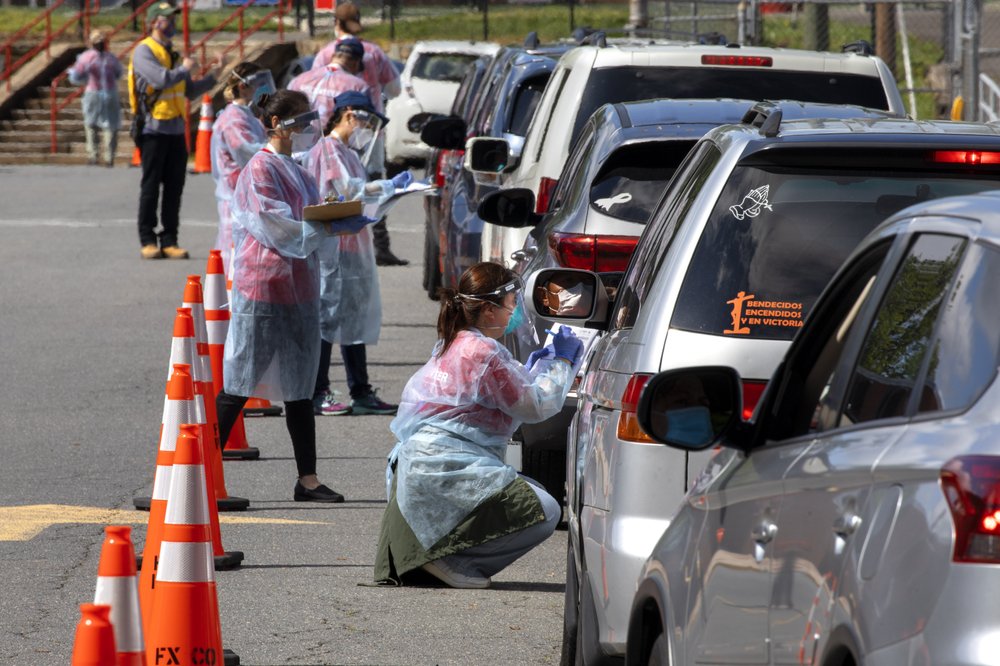
    KHN, also known as Kaiser Health News, and AP interviewed more than 150 public health workers, policymakers and experts, analyzed spending records from hundreds of state and local health departments, and surveyed statehouses. On every level, the investigation found, the system is underfunded and under threat, unable to protect the nation’s health.

    Robert Redfield, the director of the Centers for Disease Control and Prevention, said in an interview in April that his “biggest regret” was “that our nation failed over decades to effectively invest in public health.”

    So when this outbreak arrived — and when, according to public health experts, the federal government bungled its response — hollowed-out state and local health departments were ill-equipped to step into the breach.

    Over time, their work had received so little support that they found themselves without direction, disrespected, ignored, even vilified. The desperate struggle against COVID-19 became increasingly politicized and grew more difficult.
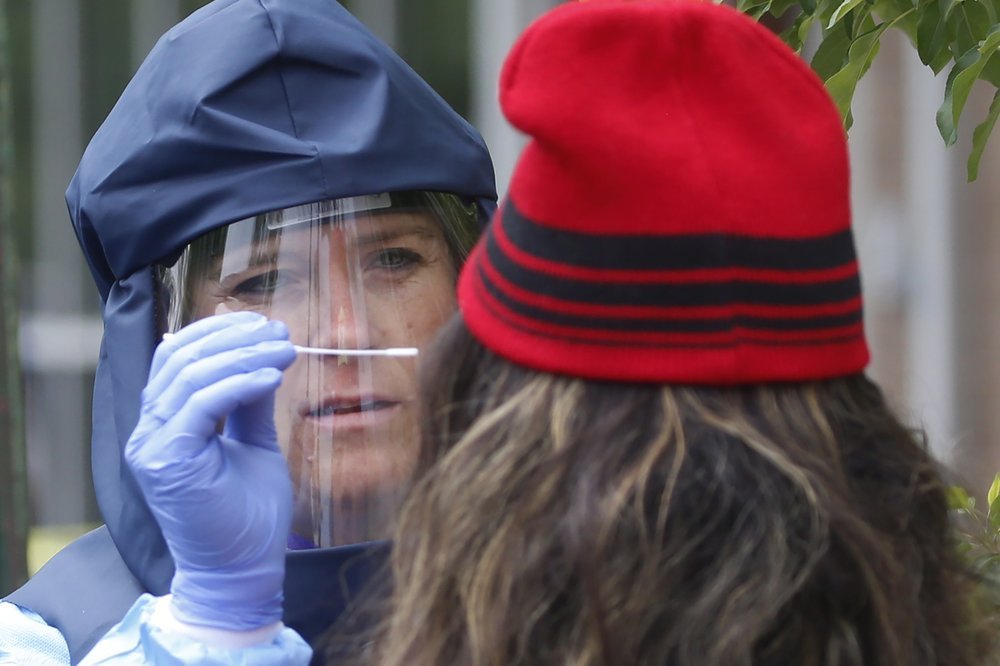
    States, cities and counties in dire straits have begun laying off and furloughing their limited staff, and even more devastation looms, as states reopen and cases surge. Historically, even when money pours in following crises such as Zika and H1N1, it disappears after the emergency subsides. Officials fear the same thing is happening now.

    “We don’t say to the fire department, ‘Oh, I’m sorry. There were no fires last year, so we’re going to take 30% of your budget away.’ That would be crazy, right?” said Dr. Gianfranco Pezzino, the health officer in Shawnee County, Kansas. “But we do that with public health, day in and day out.”

    Ohio’s Toledo-Lucas County Health Department spent $17 million, or $40 per person, in 2017.

    Jennifer Gottschalk, 42, works for the county as an environmental health supervisor. When the coronavirus struck, the county’s department was so short-staffed that her duties included overseeing campground and pool inspections, rodent control and sewage programs, while also supervising outbreak preparedness for a community of more than 425,000 people.

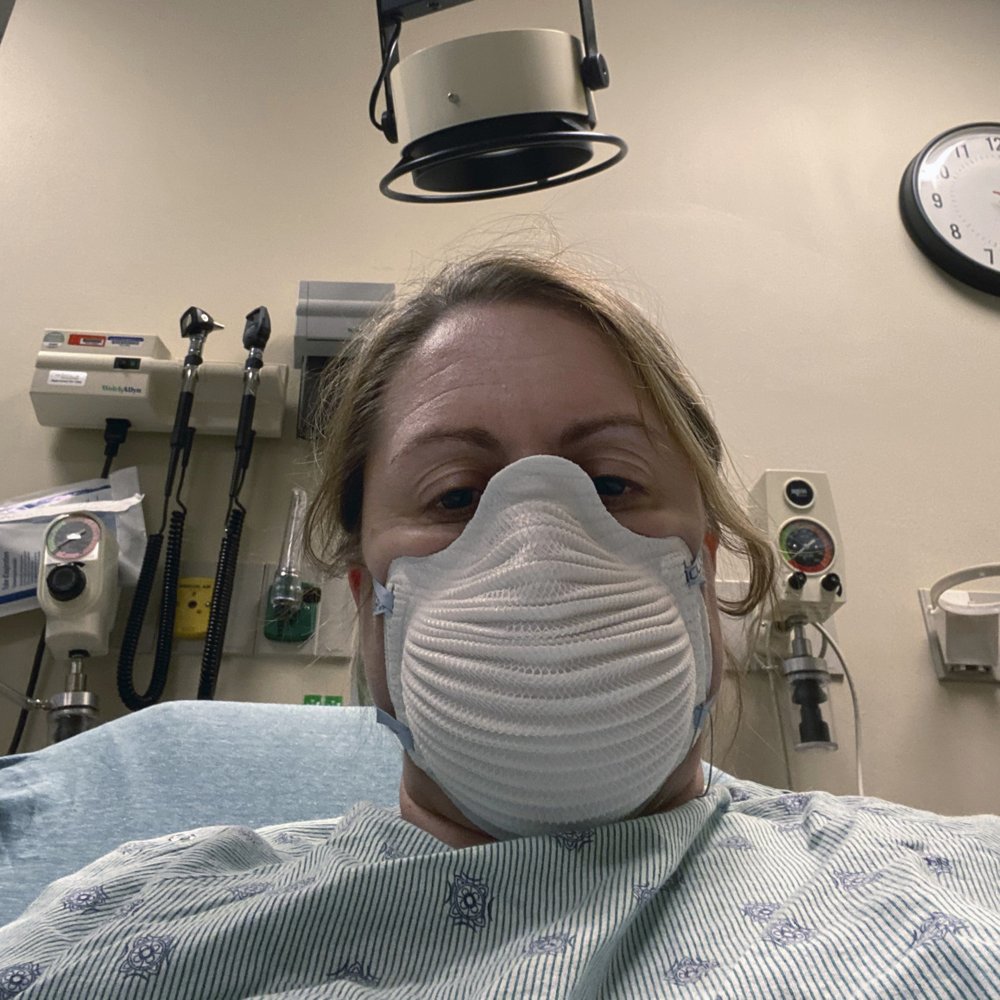
    When Gottschalk and five colleagues fell ill with COVID-19, she found herself fielding calls about a COVID-19 case from her hospital bed, then working through her home isolation. She only stopped when her coughing was too severe to talk on calls.

    “You have to do what you have to do to get the job done,” Gottschalk said.

    Now, after months of working with hardly a day off, she says the job is wearing on her. So many lab reports on coronavirus cases came in, the office fax machine broke. She faces a backlash from the community over coronavirus restrictions and there are countless angry phone calls.

    Things could get worse; possible county budget cuts loom.

    But Toledo-Lucas is no outlier. Public health ranks low on the nation’s financial priority list. Nearly two-thirds of Americans live in counties that spend more than twice as much on policing as they spend on nonhospital health care, which includes public health.

    More than three-quarters of Americans live in states that spend less than $100 per person annually on public health. Spending ranges from $32 in Louisiana to $263 in Delaware, according to data provided to KHN and AP by the State Health Expenditure Dataset project.

    That money represents less than 1.5% of most states’ total spending, with half of it passed down to local health departments.

    The share of spending devoted to public health belies its multidimensional role. Agencies are legally bound to provide a broad range of services, from vaccinations and restaurant inspections to protection against infectious disease. Distinct from the medical care system geared toward individuals, the public health system focuses on the health of communities at large.

    “Public health loves to say: When we do our job, nothing happens. But that’s not really a great badge,” said Scott Becker, chief executive officer of the Association of Public Health Laboratories. “We test 97% of America’s babies for metabolic or other disorders. We do the water testing. You like to swim in the lake and you don’t like poop in there? Think of us.”

    But the public doesn’t see the disasters they thwart. And it’s easy to neglect the invisible.
    A HISTORY OF DEPRIVATION

    The local health department was a well-known place in the 1950s and 1960s, when Harris Pastides, president emeritus of the University of South Carolina, was growing up in New York City.

    “My mom took me for my vaccines. We would get our injections there for free. We would get our polio sugar cubes there for free,” said Pastides, an epidemiologist. “In those days, the health departments had a highly visible role in disease prevention.”

    The United States’ decentralized public health system, which matches federal funding and expertise with local funding, knowledge and delivery, was long the envy of the world, said Saad Omer, director of the Yale Institute for Global Health.

    “A lot of what we’re seeing right now could be traced back to the chronic funding shortages,” Omer said. “The way we starve our public health system, the way we have tried to do public health outcomes on the cheap in this country.”

    In Scott County, Indiana, when preparedness coordinator Patti Hall began working at the health department 34 years ago, it ran a children’s clinic and a home health agency with several nurses and aides. But over time, the children’s clinic lost funding and closed. Medicare changes paved the way for private services to replace the home health agency. Department staff dwindled in the 1990s and early 2000s. The county was severely outgunned when rampant opioid use and needle sharing sparked an outbreak of HIV in 2015.

    Besides just five full-time and one part-time county public health positions, there was only one doctor in the outbreak’s epicenter of Austin. Indiana’s then-Gov. Mike Pence, now leading the nation’s coronavirus response as vice president, waited 29 days after the outbreak was announced to sign an executive order allowing syringe exchanges. At the time, a state official said that only five people from agencies across Indiana were available to help with HIV testing in the county.

    The HIV outbreak exploded into the worst ever to hit rural America, infecting more than 230 people.

    At times, the federal government has promised to support local public health efforts, to help prevent similar calamities. But those promises were ephemeral.

    Two large sources of money established after Sept. 11, 2001 — the Public Health Emergency Preparedness program and the Hospital Preparedness Program — were gradually chipped away.

    The Affordable Care Act established the Prevention and Public Health Fund, which was supposed to reach $2 billion annually by 2015. The Obama administration and Congress raided it to pay for other priorities, including a payroll tax cut. The Trump administration is pushing to repeal the ACA, which would eliminate the fund, said Carolyn Mullen, senior vice president of government affairs and public relations at the Association of State and Territorial Health Officials.

    Former Iowa Sen. Tom Harkin, a Democrat who championed the fund, said he was furious when the Obama White House took billions from it, breaking what he said was an agreement.

    “I haven’t spoken to Barack Obama since,” Harkin said.

    If the fund had remained untouched, an additional $12.4 billion would eventually have flowed to local and state health departments.

    But local and state leaders also did not prioritize public health over the years.

    In Florida, for example, 2% of state spending goes to public health. Spending by local health departments in the state fell 39%, from a high of $57 in inflation-adjusted dollars per person in the late 1990s to $35 per person last year.

    In North Carolina, Wake County’s public health workforce dropped from 882 in 2007 to 614 a decade later, even as the population grew by 30%.

    In Detroit, the health department had 700 employees in 2009, then was effectively disbanded during the city’s bankruptcy proceedings. It’s been built back up, but today still has only 200 workers for 670,000 residents.

    Many departments rely heavily on disease-specific grant funding, creating unstable and temporary positions. The CDC’s core budget, some of which goes to state and local health departments, has essentially remained flat for a decade. Federal money currently accounts for 27% of local public health spending.

    Years of such financial pressure increasingly pushed workers in this predominantly female workforce toward retirement or the private sector and kept potential new hires away.

    More than a fifth of public health workers in local or regional departments outside big cities earned $35,000 or less a year in 2017, as did 9% in big city departments, according to research by the Association of State and Territorial Health Officials and the de Beaumont Foundation.

    Even before the pandemic, nearly half of public health workers planned to retire or leave their organizations for other reasons in the next five years. Poor pay topped the list of reasons.

    Armed with a freshly minted bachelor’s degree, Julia Crittendon took a job two years ago as a disease intervention specialist with Kentucky’s state health department. She spent her days gathering detailed information about people’s sexual partners to fight the spread of HIV and syphilis. She tracked down phone numbers and drove hours to pick up reluctant clients.

    The mother of three loved the work, but made so little money that she qualified for Medicaid, the federal-state insurance program for America’s poorest. Seeing no opportunity to advance, she left.

    “We’re like the redheaded stepchildren, the forgotten ones,” said Crittendon, 46.

    Such low pay is endemic, with some employees qualifying for the nutrition program for new moms and babies that they administer. People with the training for many public health jobs, which can include a bachelor’s or master’s degree, can make much more money in the private health care sector, robbing the public departments of promising recruits.

    Dr. Tom Frieden, a former CDC director, said the agency “intentionally underpaid people” in a training program that sent early-career professionals to state and local public health departments to build the workforce.

    “If we paid them at the very lowest level at the federal scale,” he said in an interview, “they would have to take a 10-20% pay cut to continue on at the local health department.”

    As low pay sapped the workforce, budget cuts sapped services.

    In Alaska, the Division of Public Health’s spending dropped 9% from 2014 to 2018 and staffing fell by 82 positions in a decade to 426. Tim Struna, chief of public health nursing in Alaska, said declines in oil prices in the mid-2010s led the state to make cuts to public health nursing services. They eliminated well-child exams for children over 6, scaled back searches for the partners of people with certain sexually transmitted infections and limited reproductive health services to people 29 and younger.
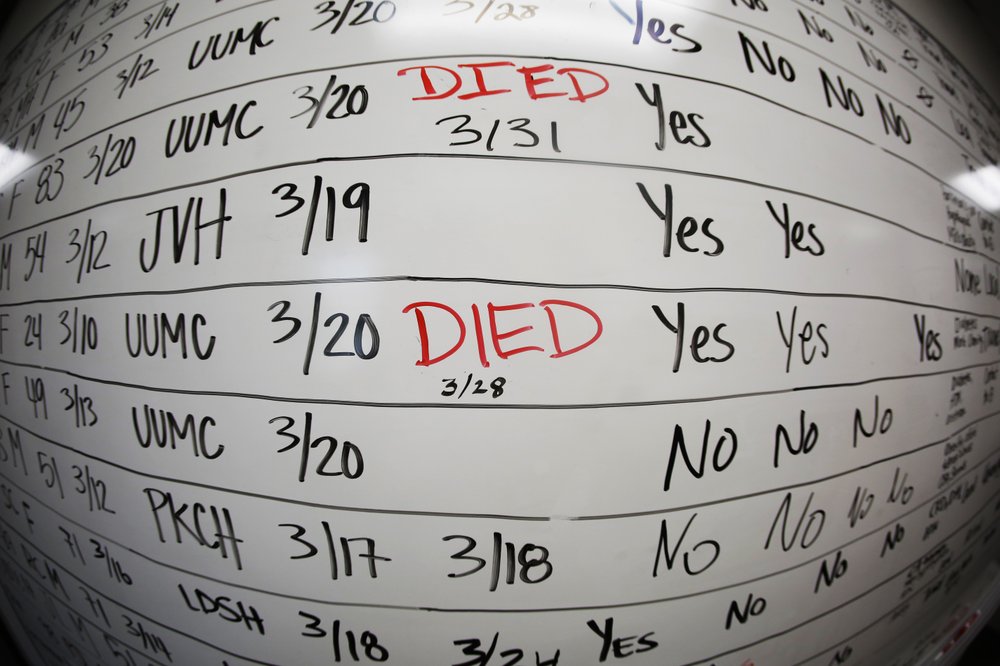
    A DECIMATED SURGE CAPACITY

    As the public health director for the Kentucky River District Health Department in rural Appalachia, Scott Lockard is battling the pandemic with 3G cell service, paper records and one-third of the employees the department had 20 years ago.

    He redeployed his nurse administrator to work round-the-clock on contact tracing, alongside the department’s school nurse and the tuberculosis and breastfeeding coordinator. His home health nurse, who typically visits older patients, now works on preparedness plans. But residents aren’t making it easy on them.

    “They’re not wearing masks, and they’re throwing social distancing to the wind,” Lockard said in mid-June, as cases surged. “We’re paying for it.”

    Even with more staff since the HIV outbreak, Indiana’s Scott County Health Department employees worked evenings, weekends and holidays to deal with the pandemic, including outbreaks at a food packing company and a label manufacturer. Indiana spends $37 a person on public health.

    “When you get home, the phone never stops, the emails and texts never stop,” said Hall, the preparedness coordinator.

    All the while, she and her colleagues worry about keeping HIV under control and preventing drug overdoses from rising. Other health problems don’t just disappear because there is a pandemic.

    “We’ve been used to being able to `MacGyver’ everything on a normal day, and this is not a normal day,” said Amanda Mehl, the public health administrator for Boone County, Illinois, citing a TV show.

    Pezzino, whose department in Kansas serves Topeka and Shawnee County, said he had been trying to hire an epidemiologist, who would study, track and analyze data on health issues, since he came to the department 14 years ago. Finally, less than three years ago, they hired one. She just left, and he thinks it will be nearly impossible to find another.

    While epidemiologists are nearly universal in departments serving large populations, hardly any departments serving smaller populations have one. Only 28% of local health departments have an epidemiologist or statistician.

    Strapped departments are now forced to spend money on contact tracers, masks and gloves to keep their workers safe and to do basic outreach.

    Melanie Hutton, administrator for the Cooper County Public Health Center in rural Missouri, pointed out the local ambulance department got $18,000, and the fire and police departments got masks to fight COVID-19.

    “For us, not a nickel, not a face mask,” she said. “We got (5) gallons of homemade hand sanitizer made by the prisoners.”

    Public health workers are leaving in droves. At least 34 state and local public health leaders have announced their resignation, retired or been fired in 17 states since April, a KHN/AP review found. Others face threats and armed demonstrators.

    Ohio’s Gottschalk said the backlash has been overwhelming.

    “Being yelled at by residents for almost two hours straight last week on regulations I cannot control left me feeling completely burned out,” she said in mid-June.

    Many are putting their health at risk. In Prince George’s County, Maryland, public health worker Chantee Mack died after, family and co-workers believe, she and several colleagues contracted the disease in the office.

    A DIFFICULT ROAD AHEAD

    Pence, in an op-ed in The Wall Street Journal on June 16, said the public health system was “far stronger” than it was when coronavirus hit.

    It’s true that the federal government this year has allocated billions for public health in response to the pandemic, according to the Association of State and Territorial Health Officials. That includes more than $13 billion to state and local health departments, for activities including contact tracing, infection control and technology upgrades.

    A KHN/AP review found that some state and local governments are also pledging more money for public health. Alabama’s budget for next year, for example, includes $35 million more for public health than it did this year.

    But overall, spending is about to be slashed again as the boom-bust cycle continues.

    In most states, the new budget year begins July 1, and furloughs, layoffs and pay freezes have already begun in some places. Tax revenues evaporated during lockdowns, all but ensuring there will be more. At least 14 states have already cut health department budgets or positions or were actively considering such cuts in June, according to a KHN/AP review.

    Since the pandemic began, Michigan temporarily cut most of its state health workers’ hours by one-fifth. Pennsylvania required more than 65 of its 1,200 public health workers to go on temporary leave, and others lost their jobs. Knox County, Tennessee, furloughed 26 out of 260 workers for eight weeks.

    Frieden, formerly of the CDC, said it’s “stunning” that the U.S. is furloughing public health workers amid a pandemic. The country should demand the resources for public health, he said, just the way it does for the military.

    “This is about protecting Americans,” Frieden said.


    By LAUREN WEBER, LAURA UNGAR, MICHELLE R. SMITH, HANNAH RECHT and ANNA MARIA BARRY-JESTER

  • NOT REAL NEWS: A Look At What Didn’t Happen This Week

    NOT REAL NEWS: A Look At What Didn’t Happen This Week

    A roundup of some of the most popular but completely untrue stories and visuals of the week.

    CLAIM: Wearing face masks can cause fungal and bacterial pneumonia.

    THE FACTS: There’s no evidence that normal use of face masks can cause fungal or bacterial infections. On June 19, a Florida congressional candidate posted a tweet claiming that wearing face masks could lead to pneumonia. “Excessive use of face masks causes fungal and bacterial pneumonia,” wrote Jessi Melton, a conservative business owner who is running to represent Florida’s 22nd Congressional District. The false post had over 16,000 retweets as of Wednesday. Davidson Hamer, an infectious disease specialist at Boston University, said he was unaware of any harm that comes from wearing masks besides discomfort. “There’s no evidence of masks leading to fungal or bacterial infections of the upper airway or the lower airway as in pneumonia,” said Hamer, who is also a professor of global health and medicine at the university. Hamer noted that bacterial growth could occur, in theory, if someone wore a mask that was already contaminated with moisture and became moldy. “Theoretically, it could happen, but it’s highly unlikely with just typical mask use,” he said in a phone call with the AP. However, he added, paper masks that become visibly wet should be discarded. Anne Monroe, an internal medicine physician and epidemiologist at George Washington University’s Milken Institute School of Public Health, agreed: “There’s no evidence to back up this claim. Digging into it a little bit more, in terms of mask use, it is important to follow general sanitation guidelines.” She said it’s important that disposable masks be discarded and cloth masks be washed. “The idea that contamination could cause fungal pneumonia is not a valid conclusion,” she said. Monroe agreed with Hamer that it’s “potentially theoretical,” but that it has not been documented. The real danger, Hamer said, is “spreading incorrect information like this, especially at a time when we really need to be encouraging more people to wear masks.” The number of confirmed new coronavirus cases per day in the U.S. hit an all-time high of 40,000 Friday — eclipsing the mark set during one of the deadliest stretches in late April.

    ___

    CLAIM: A May 20 tweet sent and later deleted by U.S. Rep. Alexandria Ocasio-Cortez, a Democrat representing New York, argues that governors should keep businesses closed until after the presidential election because economic recovery will help get President Donald Trump reelected.

    THE FACTS: The tweet was fabricated. It does not appear in archived versions of Ocasio-Cortez’s Twitter feed or in databases that track deleted tweets by politicians. The congresswoman also knocked down the tweet on her Twitter feed: “I usually don’t tweet to correct fake posts about me bc the right circulates so many, but needless to say the alleged ‘deleted’ reopening tweet people are saying I wrote is a photoshopped fake being circulated by Republicans.” On Tuesday, June 23 — the same day as New York state’s primary election — an image of the tweet supposedly posted by Ocasio-Cortez circulated rapidly on Twitter, Facebook and Instagram. “It’s vital that Governors maintain restrictions on businesses until after the November Elections because economic recovery will help Trump be re-elected,” the fabricated tweet read. “A few business closures or job losses is a small price to pay to be free from his presidency. #KeepUsClosed.” Social media users sharing the image in Facebook groups and other social media forums claimed the congresswoman deleted the tweet after it had already amassed more than 20,000 retweets. They used the image to criticize the congresswoman and her intentions on the same day she was defending her seat in a Democratic primary election. “Lil’ miss enemy of the people strikes again,” one Instagram user said. But an investigation into the supposed tweet reveals there is no evidence that it ever appeared on Ocasio-Cortez’s Twitter timeline. Archived versions of her account from the day it was allegedly posted don’t show the tweet. Neither do databases that track deleted tweets by politicians. There’s also no indication that the tweet was re-shared by anyone between May 20, the date on the supposed tweet, and June 23. A tool that tracks the first Twitter user to post certain words and phrases showed that the message didn’t appear on the site until June 23.

    ___

    CLAIM: In North Carolina, you can be charged with a class H felony if you have a concealed carry permit and carry while wearing a mask, according to state statute 14-12.

    THE FACTS: North Carolina state statutes do not prohibit people with permits to carry concealed guns from doing so while wearing a mask. As counties in North Carolina began requiring masks to prevent spread of the coronavirus, posts online have circulated suggesting that gun owners permitted to carry a concealed gun would face a felony charge if they carry while wearing a mask. North Carolina Gov. Roy Cooper announced Wednesday that face coverings would be required while out in public saying that “people must wear face coverings when in public places, indoors or outdoors.” Posts circulating on social media warn that those who decide to concealed carry and wear a mask can be charged with a felony. “Once you have a felony you can no longer carry,” stated one post with more than 5,000 shares on Facebook. The posts online referenced “NC Gen. Statute 14-12” as the reason state residents with “concealed carry” permits could not carry their gun and wear a mask at the same time. But in May, as part of its Covid-19 Recovery Act, the North Carolina state legislature made a temporary exception to the state’s mask law due to public health concerns. The bill also stipulates that a person wearing a mask shall remove the mask upon request of a law enforcement officer. The law dates to the 1950s, when masks were banned in public. Several states passed such laws at the time in response to the Ku Klux Klan. “We are not aware of any statutes that would prohibit people from continuing to concealed carry, which is their legal right in North Carolina, and also wear a mask to protect themselves,” Patrick Ryan, spokesman for North Carolina Senate leader Phil Berger, said.

    ___

    CLAIM: NASCAR allows a Black Lives Matter-themed car, but won’t allow its audience to wear MAGA hats or other Trump clothing.

    THE FACTS: The auto racing association has not banned Trump-themed clothing, according to NASCAR spokesman Mike Forde. This claim emerged as a piece of satire on June 13, days after NASCAR announced it would ban the Confederate flag from its events and properties. Daily World Update, a self-described satire website, published a piece that said NASCAR would no longer allow “Make America Great Again” hats or other political clothing “in order to stem any conflicts resulting from disagreements among ‘politically charged’ attendees.” The trouble came when Facebook users began spreading the claim as real. Over the last several days, posts claiming NASCAR has instituted a MAGA hat and Trump clothing ban have eclipsed 6 million views and been shared more than 100,000 times on Facebook. “WOW HOW TO DIG YOUR OWN GRAVE AND JUMP IN : NASCAR HAS NOW BANNED ALL MAGA HATS AND TRUMP CLOTHING !!! JUST WOW,” one post read. Many other posts claimed NASCAR was hypocritical for allowing its athlete Bubba Wallace to drive a Black Lives Matter-themed car while banning Trump gear. Forde confirmed that beyond the Confederate flag ban, people at NASCAR events are free to wear political clothing as they please. “There is no ban on maga hats or Trump clothing,” he said in an email.

    ____

    CLAIM: In a Facebook post, tennis star Serena Williams said she was sick of COVID-19, “black vs. white,” “gay vs. straight” and “Democrats vs. Republicans,” and that people should “stop thrusting your beliefs on others.”

    THE FACTS: This is a case of mistaken identity. Another Facebook user named Serena Williams shared the comments. Screenshots of her post are being shared on social media, mistaking her for the tennis athlete. In late June, Facebook and Twitter users began sharing a screenshot of the Facebook post, which showed the name Serena Williams next to a message about COVID-19 and political tension. “I’m sick of COVID-19. I’m sick of black vs. white. I’m sick of Democrats vs. Republicans. I’m sick of gay vs. straight. I’m sick of Christians vs atheists. I’m REALLY sick of the media. I’m sick of no one being allowed to think what they want & feel what they do without offending someone,” said the message, which went on for three more paragraphs, encouraging people to be tolerant of others’ opinions. ”If you can’t handle the fact that you may have a friend that has opposing views as you then you are not any better than the bigots and the racists. I don’t have to agree with everything you believe to be a decent human being & your friend,” it concluded, with a heart emoji at the end. But the actual Facebook user who posted the opinions on Sunday, June 14, is not the athlete Serena Williams — they just happen to share the same name. “Nope, not THAT Serena Williams,” the user’s Facebook bio reads. The message in the post appears to have originated with a different Facebook user who shared the same words on Facebook on June 2. The tennis star Serena Williams has been outspoken on social media about racial injustice, denouncing racism on Twitter and hosting discussions on the topic on her Instagram page. Williams’ publicist confirmed the tennis star didn’t make the post.

    ____

    CLAIM: Photo shows a massive crowd in a parking lot at President Trump’s rally in Tulsa, Oklahoma.

    THE FACTS: The photo shows an event in Arlington, Virginia, not Trump’s rally in Tulsa. On Saturday, June 21, as Trump prepared for a rally in Tulsa, posts began circulating online sharing a photo of a red car passing a parking lot crowded with people. “Look at Tulsa now!!!!” stated one Facebook post with more than 3,000 shares. In reality, the photo shows the North Pentagon parking lot in Arlington, Virginia, a location that has been used by the Rolling Thunder, a group that honors prisoners of war and service members killed in action, for their annual motorcycle demonstration. Similar photos on the Rolling Thunder Washington, DC Inc., Facebook page match the parking lot, surrounding greenery and a building in the background of the one being misrepresented online. Rolling Thunder Washington, DC confirmed to The Associated Press that the photo appeared to show a Rolling Thunder event in a Pentagon parking lot. Photos of the event online also show the Washington Monument in the background. “First Amendment Demonstration Run – Bikes leave the North Pentagon parking lot to begin their run through the Mall area,” Rolling Thunder organizers wrote on their website, showing a map of the area. The photo was widely misrepresented on social media, including by Donald Trump Jr., who posted it to Facebook the day of his father’s rally. “The Silent Majority is about to GET LOUD,” he wrote. The misrepresented Arlington photo was labeled: “Line for today’s Trump rally.” One Instagram post sharing the misrepresented photos received about 30,000 likes. Posts falsely identifying the photo also circulated widely following reports that turnout at Trump’s Tulsa rally on Saturday was far lower than anticipated. According to estimates by the city’s fire marshal’s office, about 6,200 people gathered in the BOK center for the rally. The center will hold about 19,000 people. Other posts shared the photo in a side-by-side comparison with a photo that appeared to show poor turnout at a June 17 campaign event for Democratic presidential nominee Joe Biden in Darby, Pennsylvania. “A Joe Biden ‘rally’ this week,” said the caption with the photo taken at the Biden event, which was closed to the public and allowed only journalists and nine official attendees.

    ___

    CLAIM: Photo depicts Japanese police spraying looters and rioters with blue dye so they could be identified and arrested later.

    THE FACTS: The photo is miscaptioned and being shared out of context. A reverse-image search reveals it actually shows Hong Kong police spraying pro-democracy protesters in 2019 with water containing blue dye. The photo of people on a street being drenched with blue-tinted water circulated widely on Facebook with a false caption this week, reaching more than 6 million people. “Japan sprays looters and rioters with indelible blue dye so they can be identified and arrested later,” a caption with the photo read. “How about it America?” The misrepresented photo was being shared in the wake of nationwide protests in the U.S. following the death of George Floyd in Minneapolis. Floyd, who is Black, died May 25 after a white officer used his knee to pin him down by the neck. Peaceful protests supporting the Black Lives Matter movement have erupted in Japan in the past month — but this image doesn’t show one of them. Instead, an internet search for the photo reveals it was taken in Hong Kong in 2019, amid protests sparked by a proposed law that would allow suspects there to be extradited to mainland China to stand trial. During the protests in 2019, Hong Kong police used water cannons with blue dye in them, The Associated Press reported at the time.

    ___

    CLAIM: “Congratulations, Dr. Michelle Obama! Since her husband left the White House, and her children are out of the house, Mrs. Obama decided to complete her ‘PHD in law.’”

    THE FACTS: Social media users are posting Facebook photos of Michelle Obama and falsely congratulating her for supposedly completing a new law degree after leaving the White House in 2016. The posts, many of which were made in May or June, have received thousands of shares on Facebook. Obama was already accomplished on this front, having earned a juris doctor from Harvard Law School in 1988, decades before her husband assumed the presidency in 2008. She earned that degree three years after finishing her bachelor’s degree at Princeton University. A spokeswoman for Obama confirmed in an email to The Associated Press that she has not earned any new degrees since leaving the White House in 2016. Obama has received several honorary degrees from universities after giving commencement speeches, including honorary doctorate degrees from Oregon State University in 2012, Bowie State University in 2013 and Jackson State University in 2016. Since the end of her time as first lady, Obama released a memoir, “Becoming,” in 2018 that was followed by a 34-city book tour that concluded last year, and a Netflix documentary was unveiled this year.

    ___

    This is part of The Associated Press’ ongoing effort to fact-check misinformation that is shared widely online, including work with Facebook to identify and reduce the circulation of false stories on the platform.

    ___

    Find all AP Fact Checks here: https://apnews.com/APFactCheck

  • 1,300-Plus Leap In Reported Louisiana Coronavirus Cases

    1,300-Plus Leap In Reported Louisiana Coronavirus Cases

    Friday marked the second one-day spike of more than 1,300 COVID-19 cases this week.

    NEW ORLEANS (AP) — The number of reported COVID-19 cases in Louisiana has taken another large one-day jump, increasing Friday by more than 1,300 as the number of people hospitalized with the disease caused by the new coronavirus continued upward.

    The state reported a total of 54,769 confirmed cases as of midday. The death toll was 3,077, up by 26 from Thursday.

    Some of the growth in known case numbers can be attributed to increased testing. However, the number of people sick enough to be hospitalized — considered a key indicator that the virus is spreading — went up to 700. The figure is down from nearly 2,000 in April but up from a low of 542 on June 13.

    The increasing numbers led Gov. John Bel Edwards this week to put off a further easing of restrictions on public gatherings and some business activity. Edwards has promised stepped up enforcement on businesses that aren’t complying with virus-related restrictions on capacity and requirements that employees dealing with the public wear masks.

    Baton Rouge’s mayor unveiled a phone number and website for people to anonymously report businesses that don’t comply with the rules.


  • Mississippi Announces 550 New Reported COVID Cases

    Mississippi Announces 550 New Reported COVID Cases

    Gov. Tate Reeves extends his Safe Return Executive Order

    JACKSON, Miss. (AP) — The Mississippi Department of Health announced an additional 550 confirmed cases of the new coronavirus Friday, after record-high numbers reported the day before.

    After the department reported 1,092 new cases of coronavirus Thursday, State Health Officer Dr. Thomas Dobbs warned of continuing increases if people do not take social distancing and mask-wearing seriously.

    “If we’re not careful, Mississippi is going to look like New York at the height of the pandemic,” Dobbs said at a press briefing.

    On Friday evening, Gov. Tate Reeves announced the extension of his Safe Return Executive Order, which limits the amount of people who can gather in groups, and recommends retail stores, bars and restaurants limit capacity to 50%. The Safe Return Order is extended through July 6. Reeves also extended all unemployment benefits to those out of work due to the coronavirus until the end of July.

    “The threat is far from over. Extending our Safe Return order will give us much-needed time to assess this rapidly-changing situation and adapt our response to slow the spread,” Reeves said in a statement.

    Reeves said he needs Mississippians to increase their efforts to follow health and safety guidelines.

    “We’re taking every step possible at the state-level to protect public health, but we can’t do it alone,” he said. The only way through this pandemic is together. I urge my fellow Mississippians to do their part to help limit transmission in their communities and take care of each other.”

    In his order, Reeves also announced that public pools can now be open 24 hours a day if social distancing is adhered to. Concession stands at sporting complexes can now be open if employees wear masks and customers stand 6 feet apart.

    The Health Department said Friday that Mississippi — with a population of about 3 million — has had at least 25,066 cases and 1,022 deaths from the coronavirus as of Thursday evening. That is six additional deaths from the day before.

    The Health Department said at least 2,514 cases of the virus have been confirmed in long-term care facilities such as nursing homes, with at least 507 virus-related deaths in those facilities.

    The number of coronavirus infections is thought to be far higher because many people have not been tested, and studies suggest people can be infected without feeling sick. For most people, the coronavirus causes mild or moderate symptoms that clear up within weeks. But for others, especially older adults and people with existing health problems, it can cause severe symptoms and be fatal.