Tag: covid-19

  • Colleges plan fall opening, but campuses won’t look the same

    Colleges plan fall opening, but campuses won’t look the same

    Growing numbers of U.S. colleges are pledging to reopen this fall, with dramatic changes to campus life to keep the coronavirus at bay. Big lectures will be a thing of the past. Dorms will will be nowhere near capacity. Students will face mandatory virus testing. And at some smaller schools, students may be barred from leaving campus.

    Even as some universities abandon hope of in-person instruction next semester, citing concerns from public health officials, dozens are announcing plans to welcome students back in August. They acknowledge that an outbreak could force classes back online, but many of their leaders say the financial and political pressures to reopen are too large to ignore.

    At West Virginia University, President E. Gordon Gee said students don’t want to wait for a vaccine, and the school can’t afford to.

    “If it was simply based on science, we would keep everything shut down until we have a vaccine and until it’s working. But I don’t feel that that’s feasible, either economically or socially, and certainly not educationally,” Gee said. “We will open, but it will be different.”

    Colleges planning to reopen include Purdue University, Texas A&M University, the University of Notre Dame and statewide systems in Arizona, Florida, New Hampshire and elsewhere. Some plan to make decisions this summer, including Princeton University, where officials say it’s too soon to make a call.

    The California State University system, by contrast, has said its 23 campuses will stay mostly online this fall, citing predictions of a virus resurgence later this year. Others including the University of South Carolina, Rice and Creighton universities plan to bring students back but end the term early, before Thanksgiving, anticipating a second wave could hit later in the fall.

    President Donald Trump has encouraged schools to reopen despite concerns from his top infectious disease expert, Dr. Anthony Fauci. Speaking at a Senate hearing last week, Fauci said it would be “a bit of a bridge too far” to expect a vaccine before the fall. Trump countered that the comment was “not an acceptable answer.”

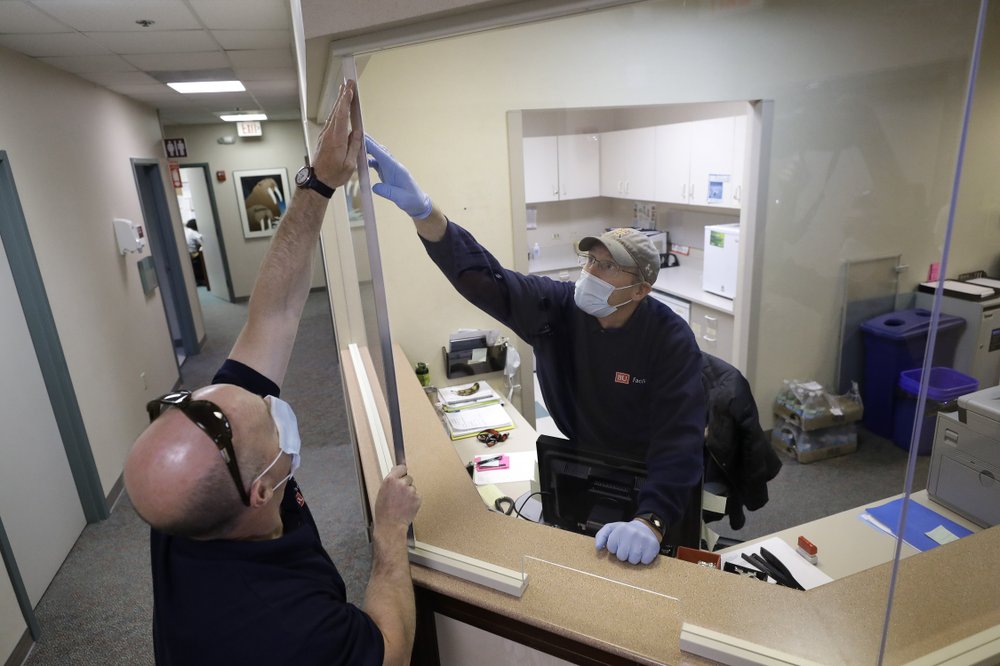
    New guidelines issued by the Centers for Disease Control and Prevention this week say colleges should work with state and local officials to decide how to reopen. But the agency suggests a range of safety measures for campuses, saying they should keep common spaces closed if possible, hold smaller classes in larger rooms, and install plastic barriers in areas where it’s hard to stay apart.

    In other countries emerging from lockdown, universities have been slow to reopen. Primary schools in France were allowed to reopen earlier this month, but universities are expected to remain closed through the summer. Universities in New Zealand have been granted permission to reopen, but most say they plan to stay online until July or later.

    Britain’s Cambridge University announced Wednesday that all in-person lectures will be canceled through the 2020-21 academic year because of the pandemic.

    In the U.S., colleges that plan to reopen have told students to expect strict social distancing measures, including mandatory use of face masks. College leaders say widespread virus testing will be the linchpin to a safe reopening. At many schools, students who test positive would be placed in dorm rooms reserved as quarantine space.

    But there are questions about schools’ ability to provide large numbers of tests. Some research universities say they have the lab equipment to analyze virus tests, but not enough swabs and testing chemicals. Smaller schools will need to hire companies to handle tests, likely at a significant cost.

    In a call with 14 university leaders last week, Vice President Mike Pence pledged to help colleges ramp up testing operations. But some on the call said details, especially about funding, remain hazy.

    “This testing is going to cost money, and many academic institutions are already going to be fiscally challenged,” said Michael Lovell, president of Marquette University in Milwaukee, Wisconsin. “There’s not a clear path from an institutional point of view.”

    Once students are back on campus, the primary goal will be to keep them spaced out, colleges say. Classroom desks will be arranged 6 feet apart. Class schedules may be staggered. Big lectures will be split up or moved online. Some colleges are discussing teaching certain classes outside or in tents.

    A growing number of colleges say they will offer a “hybrid flex” model, in which classes are offered online and in person at the same time, and students can choose either option. Professors at some colleges will also be allowed to continue teaching remotely through video feeds projected in the classroom.

    Most vexing for colleges, however, is the dilemma of dorm life. At some schools, suites meant for several students will be limited to one or two. Bathrooms shared by entire floors will be restricted to a handful of students. With only so much dorm space, some colleges have been scrambling to rent nearby apartments as overflow housing.

    At Trinity College, a school of 2,000 in Hartford, Connecticut, officials hope to place every student in their own room. Staff members have been scouring campus with tape measures in recent weeks to make sure students will have space to stay 6 feet apart.

    “I have a huge incentive to want to reopen. I want to see our students. I want to see them educated in the best way possible,” Trinity President Joanne Berger-Sweeney said. “And I also want to remain a significant and good employer in the state of Connecticut at a time when that’s really important.”

    Boston University is exploring whether the housing problem can be solved by placing students into “family groups” that live together but have little social interaction with other groups. Robert Brown, the school’s president, said placing all students alone “may be overly isolating for students and lead to another set of problems.”

    At Claremont McKenna College near Los Angeles, officials are wondering how their single dining hall will accommodate 900 students who buy meal plans. The school is weighing measures to restrict capacity in the hall, which may require students to eat in shifts or take their meals outside.

    It’s just one way in which campus life will “not be the same as what we have grown so accustomed to,” said Hiram Chodosh, president of the college.

    Hoping to keep the virus away, some smaller colleges are considering limits or even outright bans on travel in and out of campus. In a recent letter to students, Amherst College in Massachusetts said officials “may need to require that you limit your movement to on-campus locations only.”

    At West Virginia, Gee said he’ll rely on students to police their own behavior. He argues that peer pressure is more effective “than a 76-year-old university president saying don’t do it.” Gee, known for his impromptu appearances at student activities on campus and off, said he will scale back this fall, much to his chagrin.

    “It’s going to be a lot different for me, and I’m going to miss that,” Gee said. “But I view us as dancing with the coronavirus. This is going to be with us forever, even once we find a vaccine. We just need to learn how to manage it in a way that allows life to go on.”

  • Donation brings a bit of Mardi Gras to hospital workers

    NEW ORLEANS (AP) — Emily Bauman is a believer in the power of music. So when she got her stimulus check, she put that power to work — for New Orleans’s hospital workers and the city’s out-of-work musicians.

    Bauman and a friend funded the stimulus serenade, a concert for front-line health care workers in one of the nation’s coronavirus hot spots, and a paying gig for musicians who badly need one.

    Health care workers in masks and hair coverings hoisted umbrellas and waved handkerchiefs, danced and clapped as nine members of the New Orleans Jazz Orchestra performed outside New Orleans East Hospital. They played “Do Whatcha Wanna” and “Hot Sausage Rag” and Paul Barbarin’s “Second Line.”

    In a city known for music and good times, last Friday’s serenade was a balm for difficult ones.

    “This was fantastic therapy for us and our staff,” said Takeisha Charles Davis, a doctor at the hospital and among those dancing there on Friday. “The last 8½ weeks have been tremendously stressful.”

    Their benefactor is not even a local resident. A professor, classical pianist and jazz enthusiast, Bauman lives in New York City. (An anonymous friend also donated a stimulus check to the project.)

    At first, the plan was to present the serenade in New York. When Bauman was told it wasn’t practical to do it there, she was elated to hear it would be workable in New Orleans.

     Bauman, 49, said she fell hard for NOLA when she lived there temporarily as part of the Teach for America program in the 1990s.

    “Music, I think, is really important as a way for us to communicate with each other in these isolating times,” she said.

    Her hope: to inspire copycats who will fund stimulus serenades across the country and in New Orleans.

    Adonis Rose, artistic director for the jazz orchestra and one of the musicians performing at the serenade, said the 20 of the group’s members who typically perform all over town are now unemployed due to the pandemic and subsequent business closures.

    Rose said the gift was a boost to musicians who have been unemployed and in quarantine for more than two months.

    “This was great for the musicians to keep the musicians working and also to show support for the health care workers and the patients affected by the virus,” Rose said. “Being able to bring them together, to be able to do it for such a great cause, was amazing.”

    There’s enough money left over for a second concert, planned for later this month at the Lambeth House, the retirement and assisted living facility where a dozen died early on in the pandemic.

    Bauman, more than 1,400 miles away, watched the hospital concert on the jazz orchestra’s website.

    “I loved it and found it very emotional but also very joyful, which I didn’t expect,” she said. “The dancing was so inspiring and made me feel watching it like I was there and part of it. I actually felt like the serenade was sending courage and soul to me, too, and I was one of the ones organizing it!”

  • ‘We’re expendable’: Russian doctors face hostility, mistrust

    ‘We’re expendable’: Russian doctors face hostility, mistrust

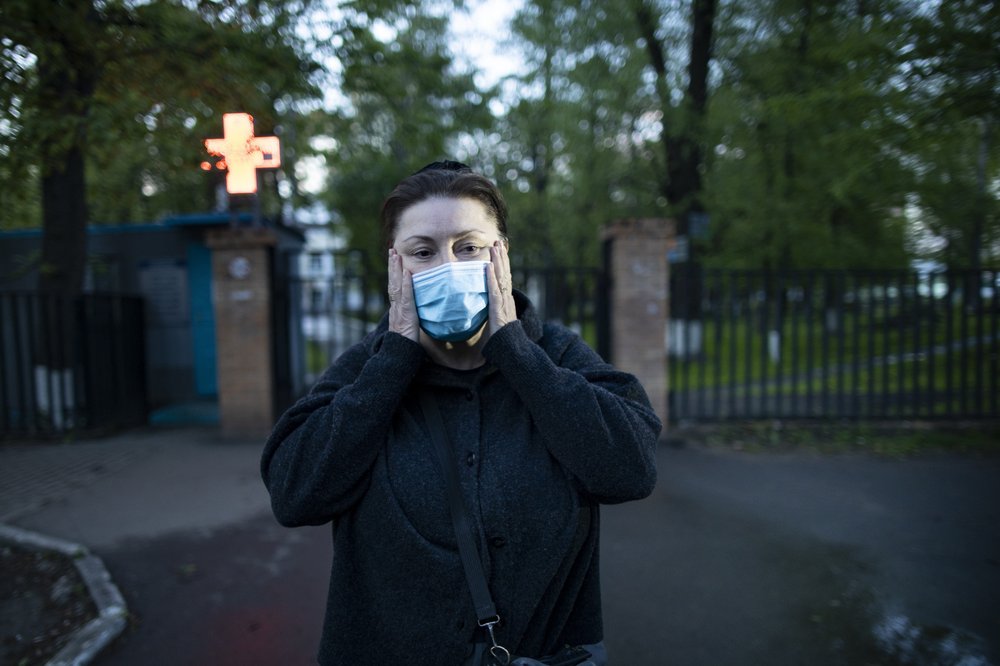
    MOSCOW (AP) — There are no daily public displays of gratitude for Russian doctors and nurses during the coronavirus crisis like there are in the West. Instead of applause, they face mistrust, low pay and even open hostility.

    Residents near the National Medical Research Center for Endocrinology, a Moscow hospital now treating virus patients, complained when they saw medical workers walking out of the building in full protective gear, fearing the workers would spread contagion.

    “Maybe once the disease knocks on the door of every family, then the attitude to medics will change,” said Dr. Alexander Gadzyra, a surgeon who works exhausting shifts.

    The outbreak has put enormous pressure on Russia’s medical community. While state media hails some of them as heroes, doctors and nurses interviewed by The Associated Press say they are fighting both the virus and a system that fails to support them.

    They have decried shortages of protective equipment, and many say they have been threatened with dismissal or even prosecution for going public with their complaints. Some have quit and a few are suspected to have killed themselves.

    Government officials insist the shortages are isolated and not widespread.

    Antipathy toward the medical profession is widespread in Russia, said social anthropologist Alexandra Arkhipova, who studies social media posts peddling virus conspiracy theories. More than 100 theories she studied say doctors diagnose COVID-19 cases so they can get more money; others say they help the government cover up the outbreak.

    “It’s a crisis of trust that the epidemic underscored,” she said. “I haven’t seen this attitude anywhere else.”

    Trust in government institutions has always been low in Russia, according to opinion polls, and most of its hospitals are state-run.

    Russia is struggling in the pandemic, with over 300,000 infections and 2,972 deaths. The government has disputed critics who have questioned the relatively low number of fatalities.

    Official statements and news reports in more than 70 Russian regions show that at least 9,479 medical workers have been infected with the virus in the past month, and more than 70 have died. Health care workers believe the death toll to be much higher and they have compiled a list of more than 250.

    Dr. Irina Vaskyanina said at least 40 workers are infected at a hospital in Reutov, outside Moscow, where she headed a department handling blood transfusions.

    She also said insults and threats from superiors became common after she complained about working conditions to her bosses, to law enforcement and even to President Vladimir Putin.

    “I handed in my notice,” Vaskyanina said. “They’re not letting me do my job. I love my job and I want to keep doing it, but I can’t go on like this.”

    She said 13 of her 14 colleagues have also quit.

    Dr. Tatyana Revva, an intensive care specialist in the town of Kalach-on-Don, was summoned by police for questioning and slapped with disciplinary action after recording a video about equipment shortages. The hospital’s head reported her to a prosecutor for “spreading false information” — an offense punishable by fines of up to $25,000 or a prison term.

    “I am one reprimand away from being fired,” Revva told AP.

    Dr. Oleg Kumeiko, head of Revva’s hospital, rejected the claims. He told the AP there were no shortages of protective equipment in the hospital, and said he had no intention of firing Revva. Disciplinary action against her was justified, he said, and “had nothing to do with her public activity.”

    “I don’t understand why they treat us like we’re expendable,” said Nina Rogova, a nurse in the Vladimir region 200 kilometers (120 miles) east of Moscow. She is recovering from the virus after getting it at work and she says she is being threatened with dismissal after she told local media about a lack of protective gear.

    Doctors in the southern region of Chechnya who complained about equipment shortages later had to retract their statements as a “mistake” and apologize on TV. The predominantly Muslim region’s leader, Ramzan Kadyrov, has a reputation for stifling dissent, and he has demanded they be fired.

    Adding to the frustration is pay. Health workers say they haven’t gotten bonuses the government promised them for working with coronavirus patients. In early April, Putin personally promised generous bonuses to monthly salaries — about $1,100 for doctors, $680 for nurses and paramedics, and $340 for orderlies.

    A month later, social media was filled with photos of pay slips reflecting bonuses from 10 to 100 times smaller than promised. Dr. Yevgeniya Bogatyryova, a Moscow-area paramedic, told AP the April bonuses varied from $2 to $120. “They’re calculating the time ambulance doctors spend with a coronavirus patient and pay by the hour, apparently,” Bogatyryova said.

    More than 110,000 people signed an online petition demanding the government keep its promise. Dozens of paramedics protested in the Nizhny Novgorod region 400 kilometers (240 miles) east of Moscow, and scores more from Siberia to southern Russia made videos demanding the bonuses.

    “Whoever we ask in our management, our superiors, they say, ‘Putin promised you (bonuses), so Putin should pay you,’” Natalia Salomatova, an orderly at a hospital in the Siberian city of Chita, told the AP. April bonuses for her colleagues ranged from the equivalent of 41 cents to $6.86. Salomatova herself didn’t receive any.

    Only after Putin went on TV twice last week and angrily demanded that officials pay what was promised did medical workers in some regions start getting the payments.

    “Makes you wonder: Who should we protect the medics from, the infection or the administrators?” said Arkhipova, the social anthropologist.

    Russia’s Health Ministry did not immediately respond to a request for comment.

    Reports of health care workers resigning are surfacing. Over 300 quit in the western Kaliningrad region two weeks ago, dozens of paramedics reportedly resigned in the Siberian city of Novosibirsk in May and 40 workers gave notice at a hospital in the Vladimir region.

    That could further cripple Russia’s health care system, already impaired by a widely criticized reform that closed half of its 10,000 hospitals in 20 years, with thousands of layoffs. In December, Deputy Prime Minister Tatyana Golikova called the reform “horrible” and said it significantly affected the quality and the accessibility of health care.

    “Now we’re facing the threat of a complete destruction of the medical community,” said Semyon Galperin, head of the Doctors Defense League rights group.

  • Detective, nurse, confidant: Virus tracers play many roles

    SALT LAKE CITY (AP) — Health investigator Mackenzie Bray smiles and chuckles as she chats by phone with a retired Utah man who just tested positive for the coronavirus.

    She’s trying to keep the mood light because she needs to find out where he’s been and who he’s been around for the past seven days. She gently peppers him with questions, including where he and his wife stopped to buy flowers on a visit to a cemetery. She encourages him to go through his bank statement to see if it reminds him of any store visits he made.

    Midway through the conversation, a possible break: His wife lets slip that they had family over for Mother’s Day, including a grandchild who couldn’t stop slobbering.

    “Was there like a shared food platter or something like that?” Bray asks. “There was, OK, yep … sharing food or sharing drinks, even just being on the same table, it can spread that way.’”

    Suddenly, with a shared punch bowl, the web has widened, and Bray has dozens more people to track down.

    She is among an army of health professionals around the world filling one of the most important roles in the effort to guard against a resurgence of the coronavirus. The practice of so-called contact tracing requires a hybrid job of interrogator, therapist and nurse as they try coax nervous people to be honest.

     The goal: To create a road map of everywhere infected people have been and who they’ve been around.

    While other countries have devised national approaches, a patchwork of efforts has emerged in the U.S. where states are left to create their own program.

    Bray normally does this type of work to track contacts for people with sexually transmitted diseases. She is now one of 130 people at the Salt Lake County health department assigned to track coronavirus cases in the Salt Lake City area. The investigators, many of them nurses, each juggle 30 to 40 cases, and try to reach everyone the original person was within 6 feet (1.8 meters) of for 10 minutes or more. They stay in touch with some people throughout the 14-day incubation period, and calls can take 30 minutes or more as they meticulously go through a list of questions.

    Some estimate as many as 300,000 contact tracers would be needed in the U.S. to adequately curtail the spread. While some states like Utah have reported having enough contact tracers, others are hundreds or even thousands of people short.

    The contact tracers often find themselves in a tangled web of half-truths and facts that don’t match up. Language and cultural barriers arise that require interpreters and taxing conversations that leave the investigators wondering if the person understands what they’re trying to do.

  • Treasury is Delivering Millions of Economic Impact Payments by Prepaid Debit Card

    Treasury is Delivering Millions of Economic Impact Payments by Prepaid Debit Card

    The EIP Card is part of Treasury’s U.S. Debit Card program

    WASHINGTON— This week, Treasury and the IRS are starting to send nearly 4 million Economic Impact Payments (EIPs) by prepaid debit card, instead of by paper check. EIP Card recipients can make purchases, get cash from in-network ATMs, and transfer funds to their personal bank account without incurring any fees. They can also check their card balance online, by mobile app, or by phone without incurring fees. The EIP Card can be used online, at ATMs, or at any retail location where Visa is accepted. This free, prepaid card also provides consumer protections available to traditional bank account owners, including protections against fraud, loss, and other errors.

    “Treasury and the IRS have been working with unprecedented speed to issue Economic Impact Payments to American families. Prepaid debit cards are secure, easy to use, and allow us to deliver Americans their money quickly,” said Secretary Steven T. Mnuchin. “Recipients can immediately activate and use the cards safely.”

    Treasury has already delivered more than 140 million Economic Impact Payments worth $239 billion to Americans by direct deposit to accounts at financial institutions, Direct Express card accounts, and by check. The Treasury-sponsored EIP Card is another method to provide money efficiently and securely to eligible recipients and their families. EIP Cards are being distributed to qualified individuals without bank information on file with the IRS, and whose tax return was processed by either the Andover or Austin IRS Service Center.

    Treasury’s financial agent, MetaBank, will mail EIP Cards to eligible recipients beginning this week. Each mailing will include instructions on how to activate and use the card.

    The EIP Card is part of Treasury’s U.S. Debit Card program, which provides prepaid debit card services to federal agencies for the electronic delivery of non-benefit payments. MetaBank was selected as Treasury’s financial agent for the U.S. Debit Card program in 2016, following a competitive selection process conducted by the Treasury’s Bureau of the Fiscal Service.

  • No evidence onions can cure ailments or kill viruses but they are good for you

    No evidence onions can cure ailments or kill viruses but they are good for you

    CLAIM: Video says that onions can cure bronchitis, fever and kill viruses in the air.

    AP’S ASSESSMENT: False. While onions offer nutritional and health benefits, there is no evidence that onions can cure bronchitis, fever or kill viruses in the air if placed around a room.

    THE FACTS: Myths around using onions to cure various ailments have existed for years. As medical researchers around the world struggle to find a vaccine for coronavirus, social media users are searching online for ways to treat themselves at home.

    One video on Facebook with more than 50,000 views was shared with the comment, “onions better than any VACCINE.”

    “Do you know if you have fever or bronchitis, if you chop up onions and put it in like a cheese cloth or a thin cloth, put it on your chest, it gets rid of bronchitis?” says a woman featured in the video. “If you have a fever, cut a piece of the onion in slices, put it under your foot bottom and put on a sock. By morning your fever gone.”

    The woman also suggests cutting the tops off the onions and then putting them in every corner of a room. “It will pull out every virus, any bacteria out of the air,” she says.

    Myths about onions and viruses are totally undocumented by science, said Ruth S. MacDonald, who chairs the Department of Food Science and Human Nutrition at Iowa State University.

    According to the National Onion Association, myths about onions date back to the 1500s when it was said that putting cut onions around a room would protect against the bubonic plague. Back then it was believed diseases were spread through “noxious air.” The myth continued to live on to the influenza pandemic of 1918–1919.

    “In short, there is no scientific evidence that a cut raw onion absorbs germs or rids the air of toxins/poisons,” the association says on its website.

    Dr. Jen Caudle, a family physician and associate professor at Rowan University in New Jersey, said like the claims spreading online about onions, old wives’ tales are sometimes family traditions that are passed down through generations.

    “They may not be all bad to do, but are they going to cure the problem? That answer is likely no,” she said.

    Medical experts say it is important to consult a health care professional if you are showing signs of fever or bronchitis rather than relying on home remedies.

    “While someone may tell us to go try the onion thing, the real thing we should be doing in this day and age, especially with the COVID-19 pandemic, is if we are feeling terrible, worse than just a regular cold, we should be talking to our healthcare provider and potentially be evaluated,” Dr. Jason G. Newland, professor of pediatrics at Washington University, said.

  • Natchez board lets restaurants, hair salons open doors with COVID regulations in place

    Natchez board lets restaurants, hair salons open doors with COVID regulations in place

    NATCHEZ, Miss. –The Board of Aldermen today agreed to let Natchez restaurants reopen for indoor dining if they adhere to strict rules that include limiting the number of patrons inside and requiring waiters to wear facial coverings to help slow the spread of the Coronavirus.
    With Natchez restaurants being closed by the city for dine-in services since March 25, they’re starving financially as local and state governments have imposed stringent controls on people getting together in public.
    The board also decided to let Natchez hair salons, barber shops and fitness centers reopen if they also take steps to keep their facilities sanitized and less crowded.
    What Natchez aldermen implemented today will let these businesses “begin to recover economically and provide services in a safe environment,” said Mayor Darryl Grennell.
    The new city order is much like Gov. Tate Reeves’ directives implemented statewide in the past week to let businesses considered “nonessential” to open their doors for customers. Natchez — as other Mississippi cities — is allowed to enact stricter regulations if they don’t impede on essential services or rights.
    Natchez remains in a public-health crisis that compels people to stay home, avoid contact with others, wear masks in public, wash hands often and take other steps against the highly contagious respiratory disease. However, with the socioeconomic shutdown of the past two months, there’s a “strong sense of unrest developing among the citizens of our community,” said William Thames, who chairs a committee counseling the Natchez mayor and aldermen during the COVID-19 global pandemic.
    While Thames recommended letting Natchez eateries and hair salons reopen their doors, they must follow “very onerous and stringent regulations and guidelines.” Those include having fewer people being inside at one time and being spaced farther apart; wearing face masks covering mouth and nose; deep-cleaning to ensure facilities are sanitized; and testing employees to ensure they’re not sick.
    “It is important to note that we are not in a safety zone. We are still in a state of emergency,” Thames said.
    At least 15 people from Adams County have died from the novel coronavirus of the 161 people sickened by it here since March 11, according to the Mississippi Department of Health’s count Tuesday. That’s an increase from three weeks ago, when four Adams County residents had died and 70 had the disease.
    Of the 15 who’ve died, eight were in nursing homes, eight were black and seven were white, according to the state statistics. Of the total 161 victims hit by the virus from Adams County, 95 are black and 42 white.
    The rising number of coronavirus cases in Adams County appears to be stabilizing, said Blane Mire, a Natchez physician advising Grennell and city aldermen. However, he stressed there must be a reduction of cases for two weeks to know if the virus is abating here. “This is only going to happen with a continued mitigation strategy…. to reduce the spread,” Mire told the city officials Tuesday.
    People, he said, must exercise social distancing, stay home as much as possible, avoid close contact with others, wash hands often  — and wear face masks when interacting with other people inside stores and elsewhere.
    “If this isn’t done smartly, … we could turn this into another spike in cases and see an outbreak again,” Mire said.
    The six city aldermen’s actions Tuesday revised the various city quarantine orders that were initiated March 24 and gradually eased since then for most businesses to be open with various public-health regulations in place. They’re currently set to expire May 31. This includes an 11 p.m. – 5 a.m. curfew forbidding Natchez-Adams County residents being outside their homes unless for essential duties or services.
    Natchez Police Chief Walter Armstrong said most people appear to be complying with the city’s COVET-19 restrictions, but he noted there have been isolated incidents of violators causing “significant problems.” He noted fines up to $1,000 can be imposed on violators found guilty in city court.
    Tuesday’s meeting of the mayor and Board of Aldermen was conducted as a teleconference to avoid person-to-person contact. They’ve been meeting like this since March.
  • Baseball Team Owners Propose 82 Game Season Starting Around July Fourth

    Baseball Team Owners Propose 82 Game Season Starting Around July Fourth

    Spring training could start in early to mid-June

    NEW YORK (AP) — Major League Baseball owners gave the go-ahead Monday to making a proposal to the players’ union that could lead to the coronavirus-delayed season starting around the Fourth of July weekend in ballparks without fans, a plan that envisioned expanding the designated hitter to the National League for 2020.

    Spring training could start in early to mid-June, a person familiar with the decision told The Associated Press. The person spoke on condition of anonymity because details of the plan were not announced.

    MLB officials are slated to make a presentation to the union on Tuesday. An agreement with the players’ association is needed, and talks are expected to be difficult — especially over a proposal for a revenue split that would be unprecedented for baseball. Players withstood a 7 1/2-month strike in 1994-95 to fight off such a plan.

    “If you do anything that resembles a cap, that smells like a cap, you’ve given too much,” said Dave Stewart, a four-time 20-game winner who is now an agent and spent two years as Arizona’s general manager.

    “A salary cap has been a non-starter for the players as long as I’ve been in baseball,” said David Samson, president of the Expos and Marlins from 2002-17. “I think when MLB is proposing a revenue split, it is with the full knowledge that the players’ union will automatically reject that.”

    Each team would play about 82 regular-season games: against opponents in its own division plus interleague matchups limited to AL East vs. NL East, AL Central vs. NL Central and AL West vs. NL West.

    Postseason play would be expanded from 10 clubs to 14 by doubling wild cards in each league to four.

    Teams would prefer to play at their regular-season ballparks but would switch to spring training stadiums or neutral sites if medical and government approvals can’t be obtained for games at home. Toronto might have to play home games in Dunedin, Florida.

    “We’ll see where we will be in July,” said California Gov. Gavin Newsom, whose state is the home of five MLB clubs and who has talked with baseball Commissioner Rob Manfred. “We certainly look forward to Major League Baseball and all sports resuming. But again, the question is when and that will be determined on the basis of public health and public safety and the spread of this virus.”

    The All-Star Game, scheduled for Dodger Stadium in Los Angeles on July 14, likely would be called off.

    Medical issues will be at the forefront of talks along with economics.

    “Bear with me, but it feels like we’ve zoomed past the most important aspect of any MLB restart plan: health protections for players, families, staff, stadium workers and the workforce it would require to resume a season,” Washington pitcher Sean Doolittle tweeted. “What’s the plan to ethically acquire enough tests? … What’s the protocol if a player, staff member, or worker contracts the virus?”

    Teams will propose that players receive the percentage of their 2020 salaries based on a 50-50 split of revenues MLB receives during the regular-season and postseason, which likely will be among the most contentious aspects of the proposal during negotiations with the players’ association.

    “These concepts are beyond the spectrum of what players have both fought for and derived from the CBA from inception: salary caps, methodologies like this are something far afield from our working relationship with Major League Baseball,” said Scott Boras, the sport’s best-known agent. “You certainly know why they would suggest it.”

    That proposal would take into account fans being able to return to ballparks at some point, perhaps with a small percentage of seats sold at first and then gradually increasing.

    Baseball players have refused to consider even the frameworks for the type of revenue splits that have been agreed to by unions in the NFL, NBA and NHL.

    Active rosters would be expanded from 26 to around 30. With minor leagues shuttered, there likely will be the addition of about 20 players per club akin to the NFL’s practice squad.

    Teams would have the option of holding the resumption of spring training at home or at their facilities in Florida and Arizona. Most teams based in Florida appear to be leaning toward that option, while Arizona-based clubs are inclined to work out at home rather than deal with June heat in the Phoenix area.

    Players and teams agreed to a deal on March 26 that called for each player to receive only a portion of salary, determined by what percentage of a 162-game schedule is played. As part of that deal, if no season is played each player would receive 2020 service time matching what the player earned in 2019.

    But that deal is contingent there being no restrictions on mass gatherings at the federal, state, city and local level; no relevant travel restrictions in the U.S. and Canada; and Commissioner Rob Manfred after consulting the union and medical expects, determines there is no risk to playing in front of fans at regular-season ballparks.

    Players and teams committed to “discuss in good faith the economic feasibility of playing games in the absence of spectators or at appropriate neutral sites.” Manfred has said about 40% of MLB revenue is tied to gate, including concessions, parking, ballpark advertising, luxury suites and programs.

    Union officials and players have cited the March 26 agreement as setting economic terms and say they have no inclination for additional cuts. Players are more interested in medical protocols and testing designed to protect them from and detect the new coronavirus. The proposal will detail the plan for dealing with players and staff who test positive.

    Because players accrue salaries for the regular season only and not for spring training or the postseason, the union may counter by asking for more regular-season games during negotiations that could significantly alter or possibly even scuttle the restart plan.

    The DH was adopted by the American League for the 1973 season but has been resisted by National League owners. The players’ union has favored it because it would create more jobs for high-paying hitters in their 30s, by MLB has looked at it as an economic issue.

    Money, however, has disappeared as a DH issue at this stage for 2020 because nearly all veteran players have agreed to contracts. Yasiel Puig is the most notable exception.

  • Barbers to snip again in Mississippi as virus rules loosen

    Barbers to snip again in Mississippi as virus rules loosen

    Some courts will also reopen Monday

    JACKSON, Miss. (AP) — Some Mississippians will be able to take that inch of hair off beginning Monday thanks to a further rollback of coronavirus restrictions, but the fallout from the COVID-19 pandemic continues to spread across the state even as some protest that Gov. Tate Reeves hasn’t done enough to loosen up.

    The Republican Reeves says hair salons and barbershops can reopen Monday as long as chairs are at least 6 feet apart, employees and customers wear face masks, and everyone is screened for virus symptoms. Customers are supposed to wait outside until stylists are ready for them.

    Gyms can reopen Monday too at 30% capacity, operating under restrictions.

    The moves come as Mississippi officials on Sunday reported nine new deaths and 123 new cases, pushing the total number of cases above 9,500 and the total number of deaths to at least 430.

    Michelle Johnson of Fountain of Love hair salon in Southaven told WREG-TV she’s eager to open in part because employees need money.

    “They’ve been living off their savings and that can only go on for so long,” Johnson said.

    She said her employees have been at a competitive disadvantage because salons in nearby Tennessee opened last week.

    Others say they will stay closed for a while longer,

    “We just feel that it’s really just too soon,” barber Rickey Boggan in Meridian told WTOK-TV. “You’re dealing with more people and with more people, more risks are associated.”

    Some courts will also reopen Monday, although defendants in Columbus are being asked to sign in outside and wait in their vehicles for a phone call with further instructions. The city of Oxford is allowing restaurants to reopen their dining rooms on Monday after a delay behind the statewide reopening. West Point says shoppers and store employees must start wearing masks beginning Monday, while a similar requirement was lifted in Starkville.

    Reeves’ “Safer at Home” order now extends until May 25. He has said he might loosen more restrictions between now and then, a move that could be welcomed by thousands of casino employees statewide. In Tunica County, some local business people say they fear that Mississippi’s delay in reopening casinos behind Arkansas could accelerate a shift in gambling dollars to a casino in West Memphis, Arkansas.

    “It’s great for Arkansas, but it’s bad for Mississippi,” Tunica auction house owner Howard Mea told WHBQ-TV. “They are getting a jump on us, and we are sitting down here wondering where and when and how and for the governor’s office to get us back up.”

    Reeves’ moves are not enough for some, though. The Sun Herald reports that about 150 people attended a protest Saturday in Biloxi to protest restrictions, although about 50 of them participated from a distance.

    They heard from Ocean Springs Mayor Shea Dobson and state Sen. Chris McDaniel, two Republicans who suggested that restrictions aimed at preventing the spread of the virus were tyrannical violations of Americans’ rights.

    “We will not accept our rights being trampled on any longer,” Dobson said.

    GOP state Sen. Chris McDaniel said America was founded by revolutionaries, and told the crowd they shouldn’t be ashamed of that legacy.

    “They didn’t let the fear of dying stop them from living,” McDaniel said. “You and you alone are ultimately responsible for your safety.”

    The audience cheered when McDaniel said, “We’ll take our chances because we’d rather be free.”

    E. Brian Rose, president of the Jackson County Republican Club, and Dan Carr, who heads the Harrison County Republican Club, organized the event. When asked why, Rose said, “Because somebody told me I couldn’t.”

  • Restaurants in Natchez must remain closed for inside dining

    Restaurants in Natchez must remain closed for inside dining

    NATCHEZ, Miss. –Restaurants in Natchez must remain closed for inside dining even though Gov. Tate Reeves decided Monday to allow patrons to dine in if eateries adhere to strict measures to curb the coronavirus’ spread.
    The city’s six-week-old ban on restaurants opening their dining rooms should remain in place through May, said Natchez Mayor Darryl Grennell. They can only serve drive-through, pickup or delivery customers.
    While Reeves’ easing of the state’s quarantine order goes into effect, Grennell said Natchez’ stricter mandates are needed to combat the worsening rate of people sickened by the highly contagious respiratory disease.
    “Our order will stay in place until May 31. Our numbers are too high here in Adams County,” Grennell said.
    At least 149 people in Natchez-Adams County have been sickened by the novel coronavirus and nine have died since March 11, according to the Mississippi Department of Health’s count Monday. That’s an increase from two weeks ago, when four Adams County residents had died from it and 70 were confirmed to have had it.
    Adams County Emergency Management Director Brad Bradford cited statistics Monday indicating about 80 of the nearly 150 people who’ve had COVID-19 here have recovered.
    The Board of Aldermen last week extended Natchez’ restrictions on public gatherings through May but to allow some nonessential businesses to reopen as the global coronavirus continues to sicken more people and cripple the economy.
    The city order – which includes a requirement for people in stores to wear facial coverings — continues measures implemented in March encouraging people to stay home isolated from others to deter the spread of the virus. However, certain businesses deemed nonessential were allowed last week to open their doors for customers but with various requirements.
    Among them: Businesses must require employees and customers to wear masks covering their mouth and nose; limit the number of store patrons to half of their building’s capacity; ensure they’re at least six feet apart; require employees to frequently sanitize hands and surfaces and offer hand sanitizers to customers.
    Natchez restaurants and bars, however, must continue to close their doors for sit-down dining but be allowed to serve take-out food.
    Churches and funerals should also not have more than 10 people gathered at one time.
    The governor decided Monday to let people gather in Mississippi parks with limitations, but Natchez parks must remain closed except for walking trails, as directed by the city board-adopted order. The city park’s entrance gate was open but with a sign saying park is closed – “enter at your own risk.”
    Barber shops and hair salons still aren’t allowed to open, as directed by both the state and city orders currently in place.
    Mississippi cities and counties can enact COVID-19 lockdowns stricter than the state if they don’t impact essential services.
    The Adams County Board of Supervisors on Monday extended the county’s curfew through May to prohibit people being out of their homes from 10 p.m. to 5 a.m. daily. It does not apply to essential workers, such as health-care providers, grocery employees and critical manufacturing employees.
    While the various mandates and restrictions imposed since March seem strict, they’re not as severe as what city officials did in past Natchez epidemics and quarantines, according to historical accounts.
    During the 1871 yellow fever epidemic, “Natchez became virtually abandoned, as a strict quarantine was enforced and the epidemic dragged on into late October, ruining business,” wrote Aaron Anderson, author of Builders of a New South: Merchants, Capital and the Remaking of Natchez, 1865-1914.