Tag: covid19

  • WHO warns that 1st wave of pandemic not over; dampens hopes

    WHO warns that 1st wave of pandemic not over; dampens hopes

    BANGKOK (AP) — As Brazil and India struggle with surging coronavirus cases, a top health expert is warning that the world is still smack in the middle of the pandemic, dampening hopes for a speedy global economic rebound and renewed international travel.

    “Right now, we’re not in the second wave. We’re right in the middle of the first wave globally,” said Dr. Mike Ryan, the World Health Organization’s executive director.

    “We’re still very much in a phase where the disease is actually on the way up,” Ryan told reporters, pointing to South America, South Asia and other areas where infections are still on the rise.

    India saw a record single-day jump in new cases for the seventh straight day. It reported 6,535 new infections Tuesday, raising its total to 145,380, including 4,167 deaths.

    The virus has taken hold in some of India’s poorest, most densely populated areas, underscoring the challenges that authorities face in curbing the spread of a virus for which a vaccine or cure isn’t yet in sight.

    Most of India’s cases are concentrated in the western states of Maharashtra, home to the financial hub of Mumbai, and Gujarat. Infections have also climbed in the east as migrant workers stranded by lockdowns returned to their native villages from India’s largest cities.

    Despite this, India allowed domestic flights to resume Monday following a two-month hiatus, but at a fraction of normal traffic levels.

    WHO poured cold water on the hopes of Brazilian President Jair Bolsonaro and others of quickly re-opening the economy, warning that authorities must first have enough testing in place to control the spread of the pandemic. Brazil has 375,000 coronavirus infections — second only to the 1.6 million cases in the U.S. — and has counted over 23,000 deaths but many fear Brazil’s true toll is much higher.

    Ryan said Brazil’s “intense” transmission rates means it should keep some stay-at-home measures in place, regardless of the negative impacts on its economy.

    “You must continue to do everything you can,” he said.

    But Sao Paulo Gov. João Doria has ruled out a full lockdown in Brazil’s largest state economy and plans to start loosening restrictions on June 1.

    In Rio de Janeiro, Mayor Marcelo Crivella, an evangelical bishop, designated religious institutions as “essential services” so they could stay open with social distancing rules despite recommendations for people to stay at home and most businesses remaining shut.

    A U.S. travel ban was taking effect Tuesday for foreigners coming from Brazil, moved up two days earlier than its original date. It does not apply to U.S. citizens.

    In Europe, the Russian government reported a record daily spike Tuesday of 174 deaths, bringing the country’s confirmed death toll to 3,807. Russia’s coronavirus caseload surpassed 360,000 — the third highest in the world — with almost 9,000 new infections registered.

    The country’s comparatively low mortality rate has raised questions among experts both in Russia and in the West. Russian officials, however, vehemently deny manipulating any figures and attribute the low numbers to the effectiveness of the country’s lockdown measures.

    The question of who can travel where and when remains a dilemma that officials still have yet to solve.

    Spain’s foreign minister said Tuesday that European Union members should commonly agree to open borders and jointly determine which non-EU countries are designated as safe for travel. Arancha González Laya told Cadena SER radio that resuming cross-border travel should be decided collectively even if countries in the 27-nation bloc are phasing out lockdowns at different dates.

    “We have to start working with our European partners to retake the freedom of movement in European territories,” she said.

    The minister said Spain is eager to welcome tourists to shore up an industry that accounts for 12% of the country’s GDP but plans to do it with “health, sustainability and safety.”

    South Korea on Tuesday began requiring people to wear masks on public transit and in taxis. The country is tracing dozens of infections linked to nightclubs and other entertainment venues as it prepares for 2.4 million students to return to school on Wednesday.

    But South Korean rights groups have criticized government plans to require some businesses to register customers with smartphone QR codes. They say the country’s technology-driven approach to controlling COVID-19 has increased state surveillance too much.

    South Korea’s Health Ministry said beginning in June “high-risk” businesses such as bars, nightclubs, gyms, karaoke rooms and concert halls will be required to use QR codes to register customers so they could be found more easily when infections occur.

    In a joint statement Tuesday, groups including privacy watchdog Jinbo Net called the move excessive.

    “That’s exactly how we step into a surveillance state,” the statement said.

    Tests by a U.S. biotechnology company, Novavax, have begun in Australia with hopes of releasing a proven vaccine this year. A Novavax executive said 131 volunteers were getting injections in the first phase of the trial to test the vaccine’s safety and effectiveness.

    Novovax expects the results of the Australian trial to be known in July.

    About a dozen experimental vaccines are in early stages of testing or poised to start, and it’s not clear whether any will prove safe and effective. But they use different methods and technologies, increasing the odds that one might succeed.

    “We are in parallel making doses, making vaccine in anticipation that we’ll be able to show it’s working and be able to start deploying it by the end of this year,” Novovax’s research chief, Dr. Gregory Glenn, told a virtual news conference from the company’s headquarters in Maryland.

    Meanwhile, WHO said it will temporarily drop hydroxychloroquine — the malaria drug U.S. President Trump said he is taking — from its global study into experimental COVID-19 treatments.

    WHO director-general Tedros Adhanom Ghebreyesus said there would be a “temporary pause” on the hydroxychloroquine arm of its global clinical trial. The announcement came after a paper in the Lancet showed that people taking the drug were at higher risk of death and heart problems.

    Still, several countries in Europe and North Africa are using chloroquine and hydroxychloroquine to treat COVID-19 patients. Brazil’s Bolsonaro has ordered an army lab to boost its production of chloroquine.

    Other treatments in the WHO study, including the experimental drug remdesivir and an HIV combination therapy, are still being pursued.

    Worldwide, the virus has infected nearly 5.5 million people, killing over 346,000, according to a tally by Johns Hopkins University. Europe has had about 170,000 deaths and the U.S. has seen nearly 100,000. Experts say the tally understates the real effects of the pandemic due to counting issues in many nations.
  • AP count: Over 4,300 virus patients sent to NY nursing homes

    AP count: Over 4,300 virus patients sent to NY nursing homes

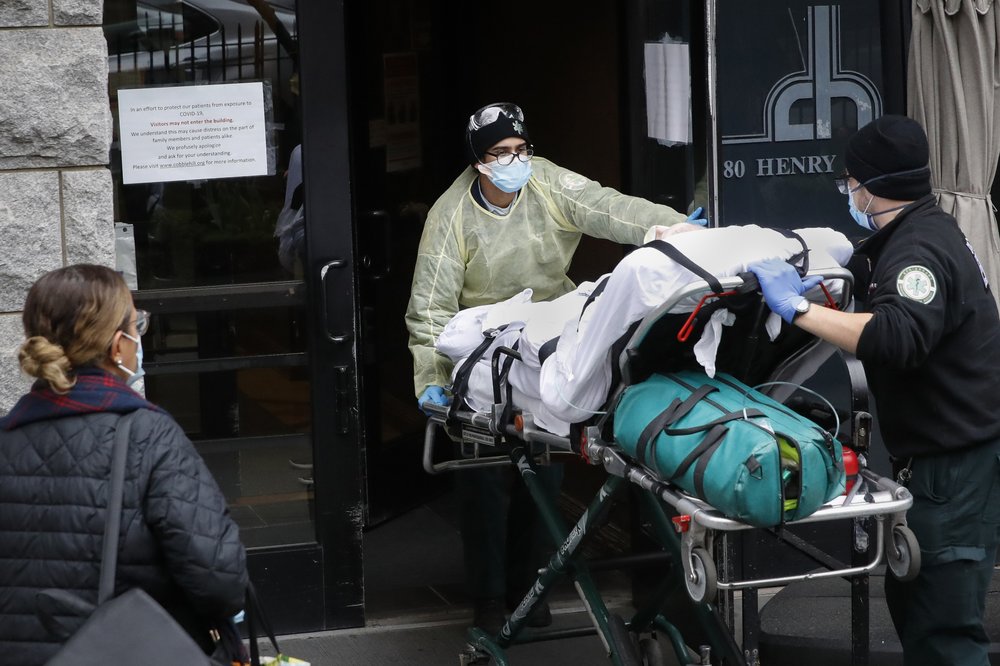
    NEW YORK (AP) — More than 4,300 recovering coronavirus patients were sent to New York’s already vulnerable nursing homes under a controversial state directive that was ultimately scrapped amid criticisms it was accelerating the nation’s deadliest outbreaks, according to a count by The Associated Press.

    AP compiled its own tally to find out how many COVID-19 patients were discharged from hospitals to nursing homes under the March 25 directive after New York’s Health Department declined to release its internal survey conducted two weeks ago. It says it is still verifying data that was incomplete.

    Whatever the full number, nursing home administrators, residents’ advocates and relatives say it has added up to a big and indefensible problem for facilities that even Gov. Andrew Cuomo — the main proponent of the policy — called “the optimum feeding ground for this virus.”

    “It was the single dumbest decision anyone could make if they wanted to kill people,” Daniel Arbeeny said of the directive, which prompted him to pull his 88-year-old father out of a Brooklyn nursing home where more than 50 people have died. His father later died of COVID-19 at home.

    “This isn’t rocket science,” Arbeeny said. “We knew the most vulnerable — the elderly and compromised — are in nursing homes and rehab centers.”

    Told of the AP’s tally, the Health Department said late Thursday it “can’t comment on data we haven’t had a chance to review, particularly while we’re still validating our own comprehensive survey of nursing homes admission and re-admission data in the middle of responding to this global pandemic.”

    Cuomo, a Democrat, on May 10 reversed the directive, which had been intended to help free up hospital beds for the sickest patients as cases surged. But he continued to defend it this week, saying he didn’t believe it contributed to the more than 5,800 nursing and adult care facility deaths in New York — more than in any other state — and that homes should have spoken up if it was a problem.

    “Any nursing home could just say, ‘I can’t handle a COVID person in my facility,’” he said, although the March 25 order didn’t specify how homes could refuse, saying that ”no resident shall be denied re-admission or admission to the (nursing home) solely based” on confirmed or suspected COVID-19.

    Over a month later, on April 29, the Health Department clarified that homes should not take any new residents if they were unable to meet their needs, including a checklist of standards for coronavirus care and prevention.

  • Colleges plan fall opening, but campuses won’t look the same

    Colleges plan fall opening, but campuses won’t look the same

    Growing numbers of U.S. colleges are pledging to reopen this fall, with dramatic changes to campus life to keep the coronavirus at bay. Big lectures will be a thing of the past. Dorms will will be nowhere near capacity. Students will face mandatory virus testing. And at some smaller schools, students may be barred from leaving campus.

    Even as some universities abandon hope of in-person instruction next semester, citing concerns from public health officials, dozens are announcing plans to welcome students back in August. They acknowledge that an outbreak could force classes back online, but many of their leaders say the financial and political pressures to reopen are too large to ignore.

    At West Virginia University, President E. Gordon Gee said students don’t want to wait for a vaccine, and the school can’t afford to.

    “If it was simply based on science, we would keep everything shut down until we have a vaccine and until it’s working. But I don’t feel that that’s feasible, either economically or socially, and certainly not educationally,” Gee said. “We will open, but it will be different.”

    Colleges planning to reopen include Purdue University, Texas A&M University, the University of Notre Dame and statewide systems in Arizona, Florida, New Hampshire and elsewhere. Some plan to make decisions this summer, including Princeton University, where officials say it’s too soon to make a call.

    The California State University system, by contrast, has said its 23 campuses will stay mostly online this fall, citing predictions of a virus resurgence later this year. Others including the University of South Carolina, Rice and Creighton universities plan to bring students back but end the term early, before Thanksgiving, anticipating a second wave could hit later in the fall.

    President Donald Trump has encouraged schools to reopen despite concerns from his top infectious disease expert, Dr. Anthony Fauci. Speaking at a Senate hearing last week, Fauci said it would be “a bit of a bridge too far” to expect a vaccine before the fall. Trump countered that the comment was “not an acceptable answer.”

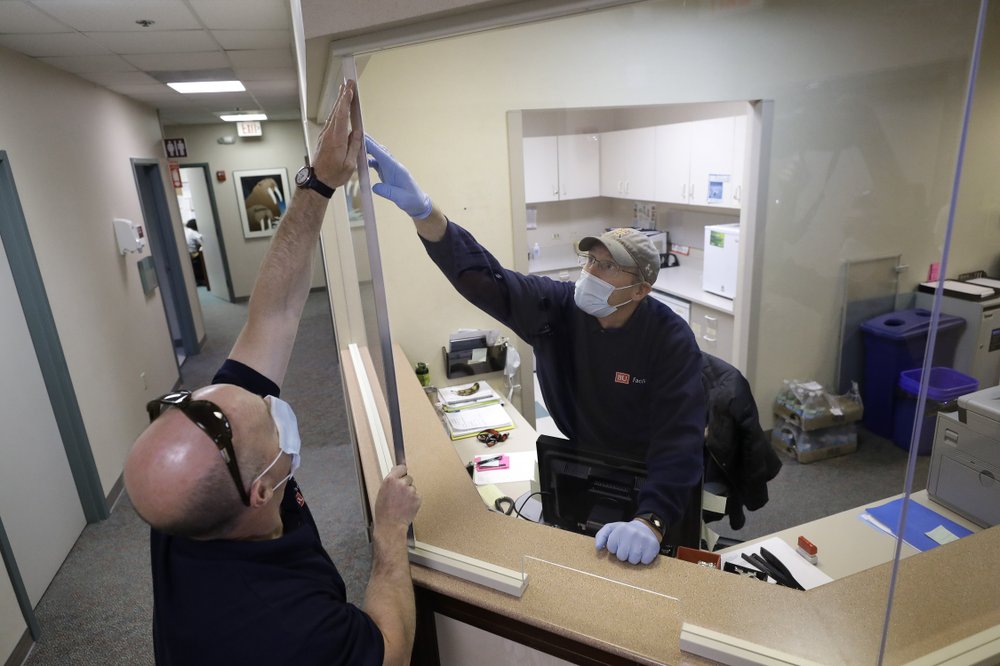
    New guidelines issued by the Centers for Disease Control and Prevention this week say colleges should work with state and local officials to decide how to reopen. But the agency suggests a range of safety measures for campuses, saying they should keep common spaces closed if possible, hold smaller classes in larger rooms, and install plastic barriers in areas where it’s hard to stay apart.

    In other countries emerging from lockdown, universities have been slow to reopen. Primary schools in France were allowed to reopen earlier this month, but universities are expected to remain closed through the summer. Universities in New Zealand have been granted permission to reopen, but most say they plan to stay online until July or later.

    Britain’s Cambridge University announced Wednesday that all in-person lectures will be canceled through the 2020-21 academic year because of the pandemic.

    In the U.S., colleges that plan to reopen have told students to expect strict social distancing measures, including mandatory use of face masks. College leaders say widespread virus testing will be the linchpin to a safe reopening. At many schools, students who test positive would be placed in dorm rooms reserved as quarantine space.

    But there are questions about schools’ ability to provide large numbers of tests. Some research universities say they have the lab equipment to analyze virus tests, but not enough swabs and testing chemicals. Smaller schools will need to hire companies to handle tests, likely at a significant cost.

    In a call with 14 university leaders last week, Vice President Mike Pence pledged to help colleges ramp up testing operations. But some on the call said details, especially about funding, remain hazy.

    “This testing is going to cost money, and many academic institutions are already going to be fiscally challenged,” said Michael Lovell, president of Marquette University in Milwaukee, Wisconsin. “There’s not a clear path from an institutional point of view.”

    Once students are back on campus, the primary goal will be to keep them spaced out, colleges say. Classroom desks will be arranged 6 feet apart. Class schedules may be staggered. Big lectures will be split up or moved online. Some colleges are discussing teaching certain classes outside or in tents.

    A growing number of colleges say they will offer a “hybrid flex” model, in which classes are offered online and in person at the same time, and students can choose either option. Professors at some colleges will also be allowed to continue teaching remotely through video feeds projected in the classroom.

    Most vexing for colleges, however, is the dilemma of dorm life. At some schools, suites meant for several students will be limited to one or two. Bathrooms shared by entire floors will be restricted to a handful of students. With only so much dorm space, some colleges have been scrambling to rent nearby apartments as overflow housing.

    At Trinity College, a school of 2,000 in Hartford, Connecticut, officials hope to place every student in their own room. Staff members have been scouring campus with tape measures in recent weeks to make sure students will have space to stay 6 feet apart.

    “I have a huge incentive to want to reopen. I want to see our students. I want to see them educated in the best way possible,” Trinity President Joanne Berger-Sweeney said. “And I also want to remain a significant and good employer in the state of Connecticut at a time when that’s really important.”

    Boston University is exploring whether the housing problem can be solved by placing students into “family groups” that live together but have little social interaction with other groups. Robert Brown, the school’s president, said placing all students alone “may be overly isolating for students and lead to another set of problems.”

    At Claremont McKenna College near Los Angeles, officials are wondering how their single dining hall will accommodate 900 students who buy meal plans. The school is weighing measures to restrict capacity in the hall, which may require students to eat in shifts or take their meals outside.

    It’s just one way in which campus life will “not be the same as what we have grown so accustomed to,” said Hiram Chodosh, president of the college.

    Hoping to keep the virus away, some smaller colleges are considering limits or even outright bans on travel in and out of campus. In a recent letter to students, Amherst College in Massachusetts said officials “may need to require that you limit your movement to on-campus locations only.”

    At West Virginia, Gee said he’ll rely on students to police their own behavior. He argues that peer pressure is more effective “than a 76-year-old university president saying don’t do it.” Gee, known for his impromptu appearances at student activities on campus and off, said he will scale back this fall, much to his chagrin.

    “It’s going to be a lot different for me, and I’m going to miss that,” Gee said. “But I view us as dancing with the coronavirus. This is going to be with us forever, even once we find a vaccine. We just need to learn how to manage it in a way that allows life to go on.”

  • ‘We’re expendable’: Russian doctors face hostility, mistrust

    ‘We’re expendable’: Russian doctors face hostility, mistrust

    MOSCOW (AP) — There are no daily public displays of gratitude for Russian doctors and nurses during the coronavirus crisis like there are in the West. Instead of applause, they face mistrust, low pay and even open hostility.

    Residents near the National Medical Research Center for Endocrinology, a Moscow hospital now treating virus patients, complained when they saw medical workers walking out of the building in full protective gear, fearing the workers would spread contagion.

    “Maybe once the disease knocks on the door of every family, then the attitude to medics will change,” said Dr. Alexander Gadzyra, a surgeon who works exhausting shifts.

    The outbreak has put enormous pressure on Russia’s medical community. While state media hails some of them as heroes, doctors and nurses interviewed by The Associated Press say they are fighting both the virus and a system that fails to support them.

    They have decried shortages of protective equipment, and many say they have been threatened with dismissal or even prosecution for going public with their complaints. Some have quit and a few are suspected to have killed themselves.

    Government officials insist the shortages are isolated and not widespread.

    Antipathy toward the medical profession is widespread in Russia, said social anthropologist Alexandra Arkhipova, who studies social media posts peddling virus conspiracy theories. More than 100 theories she studied say doctors diagnose COVID-19 cases so they can get more money; others say they help the government cover up the outbreak.

    “It’s a crisis of trust that the epidemic underscored,” she said. “I haven’t seen this attitude anywhere else.”

    Trust in government institutions has always been low in Russia, according to opinion polls, and most of its hospitals are state-run.

    Russia is struggling in the pandemic, with over 300,000 infections and 2,972 deaths. The government has disputed critics who have questioned the relatively low number of fatalities.

    Official statements and news reports in more than 70 Russian regions show that at least 9,479 medical workers have been infected with the virus in the past month, and more than 70 have died. Health care workers believe the death toll to be much higher and they have compiled a list of more than 250.

    Dr. Irina Vaskyanina said at least 40 workers are infected at a hospital in Reutov, outside Moscow, where she headed a department handling blood transfusions.

    She also said insults and threats from superiors became common after she complained about working conditions to her bosses, to law enforcement and even to President Vladimir Putin.

    “I handed in my notice,” Vaskyanina said. “They’re not letting me do my job. I love my job and I want to keep doing it, but I can’t go on like this.”

    She said 13 of her 14 colleagues have also quit.

    Dr. Tatyana Revva, an intensive care specialist in the town of Kalach-on-Don, was summoned by police for questioning and slapped with disciplinary action after recording a video about equipment shortages. The hospital’s head reported her to a prosecutor for “spreading false information” — an offense punishable by fines of up to $25,000 or a prison term.

    “I am one reprimand away from being fired,” Revva told AP.

    Dr. Oleg Kumeiko, head of Revva’s hospital, rejected the claims. He told the AP there were no shortages of protective equipment in the hospital, and said he had no intention of firing Revva. Disciplinary action against her was justified, he said, and “had nothing to do with her public activity.”

    “I don’t understand why they treat us like we’re expendable,” said Nina Rogova, a nurse in the Vladimir region 200 kilometers (120 miles) east of Moscow. She is recovering from the virus after getting it at work and she says she is being threatened with dismissal after she told local media about a lack of protective gear.

    Doctors in the southern region of Chechnya who complained about equipment shortages later had to retract their statements as a “mistake” and apologize on TV. The predominantly Muslim region’s leader, Ramzan Kadyrov, has a reputation for stifling dissent, and he has demanded they be fired.

    Adding to the frustration is pay. Health workers say they haven’t gotten bonuses the government promised them for working with coronavirus patients. In early April, Putin personally promised generous bonuses to monthly salaries — about $1,100 for doctors, $680 for nurses and paramedics, and $340 for orderlies.

    A month later, social media was filled with photos of pay slips reflecting bonuses from 10 to 100 times smaller than promised. Dr. Yevgeniya Bogatyryova, a Moscow-area paramedic, told AP the April bonuses varied from $2 to $120. “They’re calculating the time ambulance doctors spend with a coronavirus patient and pay by the hour, apparently,” Bogatyryova said.

    More than 110,000 people signed an online petition demanding the government keep its promise. Dozens of paramedics protested in the Nizhny Novgorod region 400 kilometers (240 miles) east of Moscow, and scores more from Siberia to southern Russia made videos demanding the bonuses.

    “Whoever we ask in our management, our superiors, they say, ‘Putin promised you (bonuses), so Putin should pay you,’” Natalia Salomatova, an orderly at a hospital in the Siberian city of Chita, told the AP. April bonuses for her colleagues ranged from the equivalent of 41 cents to $6.86. Salomatova herself didn’t receive any.

    Only after Putin went on TV twice last week and angrily demanded that officials pay what was promised did medical workers in some regions start getting the payments.

    “Makes you wonder: Who should we protect the medics from, the infection or the administrators?” said Arkhipova, the social anthropologist.

    Russia’s Health Ministry did not immediately respond to a request for comment.

    Reports of health care workers resigning are surfacing. Over 300 quit in the western Kaliningrad region two weeks ago, dozens of paramedics reportedly resigned in the Siberian city of Novosibirsk in May and 40 workers gave notice at a hospital in the Vladimir region.

    That could further cripple Russia’s health care system, already impaired by a widely criticized reform that closed half of its 10,000 hospitals in 20 years, with thousands of layoffs. In December, Deputy Prime Minister Tatyana Golikova called the reform “horrible” and said it significantly affected the quality and the accessibility of health care.

    “Now we’re facing the threat of a complete destruction of the medical community,” said Semyon Galperin, head of the Doctors Defense League rights group.

  • Treasury is Delivering Millions of Economic Impact Payments by Prepaid Debit Card

    Treasury is Delivering Millions of Economic Impact Payments by Prepaid Debit Card

    The EIP Card is part of Treasury’s U.S. Debit Card program

    WASHINGTON— This week, Treasury and the IRS are starting to send nearly 4 million Economic Impact Payments (EIPs) by prepaid debit card, instead of by paper check. EIP Card recipients can make purchases, get cash from in-network ATMs, and transfer funds to their personal bank account without incurring any fees. They can also check their card balance online, by mobile app, or by phone without incurring fees. The EIP Card can be used online, at ATMs, or at any retail location where Visa is accepted. This free, prepaid card also provides consumer protections available to traditional bank account owners, including protections against fraud, loss, and other errors.

    “Treasury and the IRS have been working with unprecedented speed to issue Economic Impact Payments to American families. Prepaid debit cards are secure, easy to use, and allow us to deliver Americans their money quickly,” said Secretary Steven T. Mnuchin. “Recipients can immediately activate and use the cards safely.”

    Treasury has already delivered more than 140 million Economic Impact Payments worth $239 billion to Americans by direct deposit to accounts at financial institutions, Direct Express card accounts, and by check. The Treasury-sponsored EIP Card is another method to provide money efficiently and securely to eligible recipients and their families. EIP Cards are being distributed to qualified individuals without bank information on file with the IRS, and whose tax return was processed by either the Andover or Austin IRS Service Center.

    Treasury’s financial agent, MetaBank, will mail EIP Cards to eligible recipients beginning this week. Each mailing will include instructions on how to activate and use the card.

    The EIP Card is part of Treasury’s U.S. Debit Card program, which provides prepaid debit card services to federal agencies for the electronic delivery of non-benefit payments. MetaBank was selected as Treasury’s financial agent for the U.S. Debit Card program in 2016, following a competitive selection process conducted by the Treasury’s Bureau of the Fiscal Service.

  • Natchez board lets restaurants, hair salons open doors with COVID regulations in place

    Natchez board lets restaurants, hair salons open doors with COVID regulations in place

    NATCHEZ, Miss. –The Board of Aldermen today agreed to let Natchez restaurants reopen for indoor dining if they adhere to strict rules that include limiting the number of patrons inside and requiring waiters to wear facial coverings to help slow the spread of the Coronavirus.
    With Natchez restaurants being closed by the city for dine-in services since March 25, they’re starving financially as local and state governments have imposed stringent controls on people getting together in public.
    The board also decided to let Natchez hair salons, barber shops and fitness centers reopen if they also take steps to keep their facilities sanitized and less crowded.
    What Natchez aldermen implemented today will let these businesses “begin to recover economically and provide services in a safe environment,” said Mayor Darryl Grennell.
    The new city order is much like Gov. Tate Reeves’ directives implemented statewide in the past week to let businesses considered “nonessential” to open their doors for customers. Natchez — as other Mississippi cities — is allowed to enact stricter regulations if they don’t impede on essential services or rights.
    Natchez remains in a public-health crisis that compels people to stay home, avoid contact with others, wear masks in public, wash hands often and take other steps against the highly contagious respiratory disease. However, with the socioeconomic shutdown of the past two months, there’s a “strong sense of unrest developing among the citizens of our community,” said William Thames, who chairs a committee counseling the Natchez mayor and aldermen during the COVID-19 global pandemic.
    While Thames recommended letting Natchez eateries and hair salons reopen their doors, they must follow “very onerous and stringent regulations and guidelines.” Those include having fewer people being inside at one time and being spaced farther apart; wearing face masks covering mouth and nose; deep-cleaning to ensure facilities are sanitized; and testing employees to ensure they’re not sick.
    “It is important to note that we are not in a safety zone. We are still in a state of emergency,” Thames said.
    At least 15 people from Adams County have died from the novel coronavirus of the 161 people sickened by it here since March 11, according to the Mississippi Department of Health’s count Tuesday. That’s an increase from three weeks ago, when four Adams County residents had died and 70 had the disease.
    Of the 15 who’ve died, eight were in nursing homes, eight were black and seven were white, according to the state statistics. Of the total 161 victims hit by the virus from Adams County, 95 are black and 42 white.
    The rising number of coronavirus cases in Adams County appears to be stabilizing, said Blane Mire, a Natchez physician advising Grennell and city aldermen. However, he stressed there must be a reduction of cases for two weeks to know if the virus is abating here. “This is only going to happen with a continued mitigation strategy…. to reduce the spread,” Mire told the city officials Tuesday.
    People, he said, must exercise social distancing, stay home as much as possible, avoid close contact with others, wash hands often  — and wear face masks when interacting with other people inside stores and elsewhere.
    “If this isn’t done smartly, … we could turn this into another spike in cases and see an outbreak again,” Mire said.
    The six city aldermen’s actions Tuesday revised the various city quarantine orders that were initiated March 24 and gradually eased since then for most businesses to be open with various public-health regulations in place. They’re currently set to expire May 31. This includes an 11 p.m. – 5 a.m. curfew forbidding Natchez-Adams County residents being outside their homes unless for essential duties or services.
    Natchez Police Chief Walter Armstrong said most people appear to be complying with the city’s COVET-19 restrictions, but he noted there have been isolated incidents of violators causing “significant problems.” He noted fines up to $1,000 can be imposed on violators found guilty in city court.
    Tuesday’s meeting of the mayor and Board of Aldermen was conducted as a teleconference to avoid person-to-person contact. They’ve been meeting like this since March.
  • Restaurants in Natchez must remain closed for inside dining

    Restaurants in Natchez must remain closed for inside dining

    NATCHEZ, Miss. –Restaurants in Natchez must remain closed for inside dining even though Gov. Tate Reeves decided Monday to allow patrons to dine in if eateries adhere to strict measures to curb the coronavirus’ spread.
    The city’s six-week-old ban on restaurants opening their dining rooms should remain in place through May, said Natchez Mayor Darryl Grennell. They can only serve drive-through, pickup or delivery customers.
    While Reeves’ easing of the state’s quarantine order goes into effect, Grennell said Natchez’ stricter mandates are needed to combat the worsening rate of people sickened by the highly contagious respiratory disease.
    “Our order will stay in place until May 31. Our numbers are too high here in Adams County,” Grennell said.
    At least 149 people in Natchez-Adams County have been sickened by the novel coronavirus and nine have died since March 11, according to the Mississippi Department of Health’s count Monday. That’s an increase from two weeks ago, when four Adams County residents had died from it and 70 were confirmed to have had it.
    Adams County Emergency Management Director Brad Bradford cited statistics Monday indicating about 80 of the nearly 150 people who’ve had COVID-19 here have recovered.
    The Board of Aldermen last week extended Natchez’ restrictions on public gatherings through May but to allow some nonessential businesses to reopen as the global coronavirus continues to sicken more people and cripple the economy.
    The city order – which includes a requirement for people in stores to wear facial coverings — continues measures implemented in March encouraging people to stay home isolated from others to deter the spread of the virus. However, certain businesses deemed nonessential were allowed last week to open their doors for customers but with various requirements.
    Among them: Businesses must require employees and customers to wear masks covering their mouth and nose; limit the number of store patrons to half of their building’s capacity; ensure they’re at least six feet apart; require employees to frequently sanitize hands and surfaces and offer hand sanitizers to customers.
    Natchez restaurants and bars, however, must continue to close their doors for sit-down dining but be allowed to serve take-out food.
    Churches and funerals should also not have more than 10 people gathered at one time.
    The governor decided Monday to let people gather in Mississippi parks with limitations, but Natchez parks must remain closed except for walking trails, as directed by the city board-adopted order. The city park’s entrance gate was open but with a sign saying park is closed – “enter at your own risk.”
    Barber shops and hair salons still aren’t allowed to open, as directed by both the state and city orders currently in place.
    Mississippi cities and counties can enact COVID-19 lockdowns stricter than the state if they don’t impact essential services.
    The Adams County Board of Supervisors on Monday extended the county’s curfew through May to prohibit people being out of their homes from 10 p.m. to 5 a.m. daily. It does not apply to essential workers, such as health-care providers, grocery employees and critical manufacturing employees.
    While the various mandates and restrictions imposed since March seem strict, they’re not as severe as what city officials did in past Natchez epidemics and quarantines, according to historical accounts.
    During the 1871 yellow fever epidemic, “Natchez became virtually abandoned, as a strict quarantine was enforced and the epidemic dragged on into late October, ruining business,” wrote Aaron Anderson, author of Builders of a New South: Merchants, Capital and the Remaking of Natchez, 1865-1914.
  • PODCAST: Interview with Dr. Blane Mire of the Natchez COVID-19 Task Force

    PODCAST: Interview with Dr. Blane Mire of the Natchez COVID-19 Task Force

    Dr. Mire answers your questions:

    Dr. Blane Mire works at Internal Medicine Associates at Merit Health hospital in Natchez.  He is a graduate of LSU’s School of Medicine, and is on Natchez Mayor Darryl Grennell’s COVID-19 Task Force, and the Economic Recovery Task Force as well.

    The doctor talked with us this morning about where the Miss-Lou is currently with this pandemic, and what it takes to move forward.  He also answers questions like:

    How do I go back to work and keep myself and my family safe?

    How do I stay calm and center myself when the uncertainty about what is next is driving me crazy?

    How do I stay safe after I go shopping and bring food home?

    Should I wipe down packages delivered to my house?

    Do mosquitoes spread COVID-19?

    Which will come first, a treatment or a vaccine?

    If I’m making a homemade mask, how thick and how many layers should my mask be?

    You’ll hear answers to these questions and more facts in this outstanding interview!

  • Mississippi Inmates, Prison Staff Get Masks During Pandemic

    Mississippi Inmates, Prison Staff Get Masks During Pandemic

    The highly contagious virus is difficult to control in prisons

    ###

    JACKSON, Miss. (AP) — All inmates and employees in Mississippi prisons have been given masks to try to slow the spread of the new coronavirus, the state Department of Corrections said Monday.

    Advocates have repeatedly raised concerns that the highly contagious virus is difficult to control in prisons, where inmates have little chance to keep distance from one another even when they’re told to do so. They have also pushed for wider testing for COVID-19 in prisons.

    The corrections department said four Mississippi inmates had tested positive for the highly contagious virus by Monday — two at the State Penitentiary at Parchman and two in the Winston-Choctaw County Regional Correctional Facility. The department has previously said one of the Parchman cases was an inmate who died.

    The department said 21 inmates had tested negative for COVID-19 as of Monday. Two were waiting for test results; one was at the Marshall County Correctional Facility and one was at Delta Correctional Facility.

    For most people, the coronavirus causes mild or moderate symptoms, such as fever and cough. But for others, especially older adults and people with existing health problems, the highly contagious virus can cause severe symptoms and be fatal.

    In court papers filed earlier this month, the Department of Corrections said and inmates in crowded spaces are being encouraged to sleep face-to-feet with each other rather than face-to-face. Prisoners’ rights attorneys said in a separate court filing that in some areas of Parchman, more than 100 inmates were sleeping about 18 inches (46 centimeters) apart from each other.

    More than 18,500 people are in custody in Mississippi prisons. Long before the pandemic, multiple health inspections showed sanitation problems including broken sinks and toilets in cells and widespread mold in showers.

    The Department of Corrections said gloves and additional soap are being provided in prisons. A news release said hand sanitizer is available in “strategic locations,” including dining areas. In court papers filed in mid-April, the Department of Corrections said hand sanitizer with 60% or more alcohol is a security concern, and distributing it to all inmates is not feasible.

    “Running a prison in the midst of the COVID-19 pandemic is all the more difficult, as corrections systems are neither infallible nor immune from the virus’s spread,” the department said in the court papers. Those came in response to demands made by attorneys who sued the state early this year over conditions at the Mississippi State Penitentiary at Parchman.

    The Mississippi Emergency Management Agency and Mississippi Prison Industries Corporation have provided many of the masks being used by inmates and prison employees. The news release said Parchman inmates are using 5,000 masks donated by REFORM Alliance, affiliated with entertainment mogul Jay-Z.

    Mississippi prisons were hit by outburst of violence in late December and early January that left several inmates dead or injured. The Justice Department announced Feb. 5 that its civil rights division would investigate Mississippi prisons that have also struggled with tight budgets, short staffing and poor living conditions.

    Mississippi prison officials have told state budget writers for years that the department has trouble hiring guards because the jobs are dangerous and the pay is low. Despite the requests, budgets were cut.

    Two federal lawsuits have been filed on behalf of prisoners since January, saying Parchman is dangerous, vermin-infested and unfit for human habitation. Attorneys in both lawsuits are being paid by Jay-Z, rapper Yo Gotti and Team Roc, the philanthropic arm of Jay-Z’s Roc Nation.

  • Louisiana Stay at Home Order Extended Until May 15

    Louisiana Stay at Home Order Extended Until May 15

    Everyone in Louisiana should wear masks when in public; Next announcement will be May 11

    Today, Gov. John Bel Edwards announced he will extend Louisiana’s Stay at Home order until May 15 to continue to slow the spread of COVID-19. Louisiana does not currently meet the White House criteria for entering Phase One of reopening.

    While Louisiana has seen positive, improving trends statewide in terms of new case growth and new hospitalizations, in several regions across the state, new cases and hospitalizations continue to increase or to plateau, according to data from the Louisiana Department of Health. The White House criteria calls for declining numbers of new cases and hospitalizations, among other things.

    “Thanks to the commitment of the people of Louisiana, our state has made progress in flattening the curve and reducing the spread of the novel coronavirus. Unfortunately, we still have a little work to do before we meet the criteria to safely move to the next phase of reopening, so I will extend the state’s Stay at Home order until May 15, with a few minor changes,” Gov. Edwards said. “While this is not the announcement I want to make, I am hopeful, and all of Louisiana should be hopeful, that we will enter into the next phase of reopening soon, in mid-May. I am anxious to get all areas of our economy reopened, but if we accelerate too quickly, we may have to slam on the brakes. That will be bad for public health and for businesses, bad for our people and bad for our state.”

    Gov. Edwards’ decision is based on regional data that shows that while overall new cases and hospitalizations have decreased, this is not the case in several regions. In the Baton Rouge and Monroe regions, both new cases and new hospitalizations have increased. Some increases are also being seen in terms of new cases in Acadiana and a plateau for hospitalizations in Southwest Louisiana and a plateau of new cases on the Northshore.

    • Click here to view the Governor’s presentation on regional data trends.

    Under the extended order, which will be issued on Friday, May 1, businesses that previously were directed to be closed will remain closed, including salons, barber shops, bars and casinos, among other things. Businesses that are deemed essential under the third phase of federal CISA guidance may still be open. Non-essential retail businesses in Louisiana continue to be able to open with fewer than 10 people total inside.

    Three major changes in the new Stay at Home order include:

    • Malls will remain closed to the public, but stores may open for curbside delivery.
    • Restaurants will be allowed to open their outside areas for patrons to eat meals only, without tableside service.
    • All employees of a business who have contact with the public must wear a mask.

    Additionally, both the CDC and the Louisiana Department of Health strongly urge everyone to wear masks when in public.

    “Wearing cloth masks or protective face coverings is part of the new normal,” Gov. Edwards said. “Wearing a mask is being a good neighbor and in Louisiana, we pride ourselves on being good neighbors. Your mask protects me and other people and my mask protects you.”

    Hopefully, Louisiana will meet the White House criteria and move to Phase 1 on May 15, provided symptoms, new case counts and hospitalizations decrease and the state continues to surge testing and contact tracing capacity. Phase 1 lifts the Stay at Home order and eases restrictions on some public spaces like houses of worship and restaurants and opens other businesses that have been closed such as barber shops and salons, but with restrictions on occupancy and strict requirements for personal distancing and masks to keep everyone safe. Phase One occupancy for these businesses will be limited to 25 percent.

    As Louisiana prepares for its next phase of reopening, business owners and faith leaders are encouraged to plan as well, including understanding their building’s maximum occupancy limits, which may require contacting local government or the State Fire Marshal’s office. They should also plan on ensuring their employees have masks.

    Gov. Edwards intends to make his next announcement on moving to Phase 1 in Louisiana on or by May 11. Members of the public can continue to get information from the Governor’s office on coronavirus.la.gov and by texting LACOVID to 67283.