Tag: covid19

  • FDA Approves First At-Home Coronavirus Test

    FDA Approves First At-Home Coronavirus Test

    The kit includes cotton swabs, a collection tube, an insulated pouch and box to ship the specimen back to LabCorp

    WASHINGTON (AP) — U.S. health regulators on Tuesday OK’d the first coronavirus test that allows people to collect their own sample at home, a new approach that could help expand testing options in most states.

    The test from LabCorp will initially only be available to health care workers and first responders under a doctor’s orders. The sample will still have to be shipped for processing back to LabCorp, which operates diagnostic labs throughout the U.S.

    Allowing people to self-swab at home would help reduce infection risks for front-line health care workers and help conserve protective gear.

    For the home test, people are initially screened with an online questionnaire. If authorized by a physician, LabCorp will ship a testing kit to their home. The kit includes cotton swabs, a collection tube, an insulated pouch and box to ship the specimen back to LabCorp. To take a sample, a cotton swab is swirled in each nostril. The test results are posted online to a secure company website.
    The company said it will make the test available in the coming weeks. Each kit will cost $119. The kits will not be available in Maryland, New Jersey, New York and Rhode Island. Those states have laws prohibiting testing with at-home sample collection kits, according to LabCorp.
  • Hoax Alert:  Do You Have To Pay Back Your $1200 Relief Check???

    Hoax Alert: Do You Have To Pay Back Your $1200 Relief Check???

    Fake News: Relief Checks Being Sent To U.S. Taxpayers By The Government Under The Coronavirus Economic Recovery Bill Will Have To Be Paid Back.

    In recent days, social media posts have falsely claimed there’s one catch to this money – that you’ll eventually have to pay it back. ‘Next year, you’re automatically going to owe $1,200 come tax season,’ one of the videos, viewed hundreds of thousands of times on YouTube, falsely claims.   Videos and online reports claiming that millions of Americans will have to repay the relief checks they receive from the federal government under the $2.2 trillion coronavirus economic recovery bill are not true. 

    The Truth (As Reported By AP):  The U.S. Treasury Department and Internal Revenue Service, which are working to deliver the money to people, confirmed to The Associated Press that households will not have to pay back the money in next year’s tax filing.  The government began issuing the one-time payments this week. Most adults who earned up to $75,000 will see a $1,200 payout, while married couples who made up to $150,000 can expect to get $2,400. Parents will get payments of $500 per child. The checks will be directly deposited into bank accounts or mailed to households, depending on how you’ve filed your tax returns in the past. 

    ‘This is not an advance and there is absolutely no obligation to pay it back,’ Treasury spokeswoman Patricia McLaughlin said.

  • FTC Warns About Stimulus Check Scams

    FTC Warns About Stimulus Check Scams

    Nothing is off limits to a scammer

    By Karen Hobbs  Assistant Director, Division of Consumer and Business Education, FTC
    April 8, 2020

    There’s a lot to worry about when it comes to the Coronavirus crisis, including the new ways scammers are using the economic impact payments (so-called “stimulus checks”) to trick people. To keep ahead of scammers who are trying to cash in on those payments, read on.

    Scammers have no shame, and nothing – not even a global health crisis – is off limits. They’re pitching fake Coronavirus vaccines, unproven cures, and bogus at-home testing kits. So, it’s not surprising that scammers are exploiting confusion about economic impact payments too. But it’s still shameful.

    Most people who qualify for a check will automatically get it direct deposited by the IRS within weeks. But as details emerge about how and when payments will arrive, some scammers may start using official-looking fake checks to steal money and confuse people into turning over personal information. Here’s some information to help avoid fake check scams that might be arriving soon.

    • The check’s not in the mail – yet. Reports say that paper checks – for people without direct deposit – will start arriving in May at the earliest. So, if you get an economic impact payment, stimulus, or relief check before then, or you get a check when you’re expecting a direct deposit, it’s a scam.
    • The IRS will not send you an overpayment and make you send the money back in cash, gift cards, or through a money transfer. If you get an official-looking check for more than what you were expecting – say, for $3,000 – the next call you’re likely to get is from a scammer. They’ll tell you to keep your $1,200 payment, and return the rest by sending cash, gift cards, or money transfers. It’s a scam that will leave you owing money to your bank.
    • That’s not the IRS calling, texting, or emailing. Scammers are sending official-looking messages – including postcards with a password to be used online to “access” or “verify” your payment or direct deposit information. The IRS will not contact you to collect your personal information or bank account. It’s a scam.

    For trusted information and updates about IRS payments – including eligibility, how to sign up for direct deposit, or where to file a short tax form – always start with irs.gov/coronavirus. Learn how to avoid scams by subscribing to the FTC’s consumer alerts, and report scams to the FTC at ftc.gov/complaint.

  • Mississippi Prison System Confirms Its 1st Case Of COVID-19

    Mississippi Prison System Confirms Its 1st Case Of COVID-19

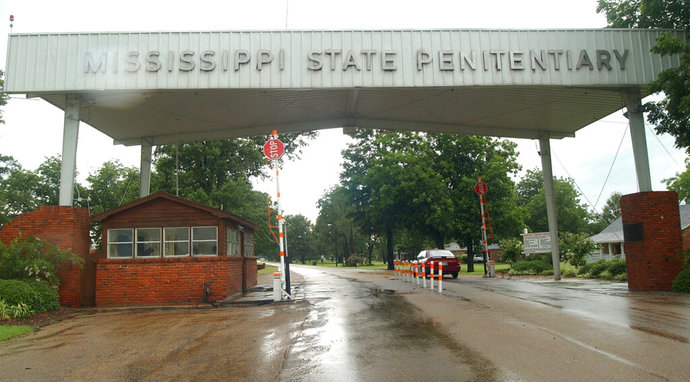
    The Mississippi Department of Corrections on Monday night made its first announcement of a coronavirus case in one of the state prisons.

    JACKSON, Miss. (AP) —  An inmate at the Mississippi State Penitentiary was found to have had to the virus after he died, the department said in a news release. It did not give the inmate’s name or say when he died. It said he had underlying health problems.

    “We are committed to protecting the health and well-being of all within our system,” Interim Corrections Commissioner Tommy Taylor said.

    He said that since the beginning of the pandemic, Mississippi has limited the transfer of inmates from prison to prison. The only visitors allowed are attorneys, and daily screenings are done of prison workers.

    “With this first positive case, we have further isolated all the affected areas and increased screenings for all the inmates who came in contact with the individual,” Taylor said. “Inmates who came in close contact with the positive individual have been provided with masks.”

  • Edwards: ‘Too Early To Know’ When Louisiana Can Relax Orders

    Edwards: ‘Too Early To Know’ When Louisiana Can Relax Orders

    Edwards stressed that the practice must continue for now to avoid a new spike in infections.

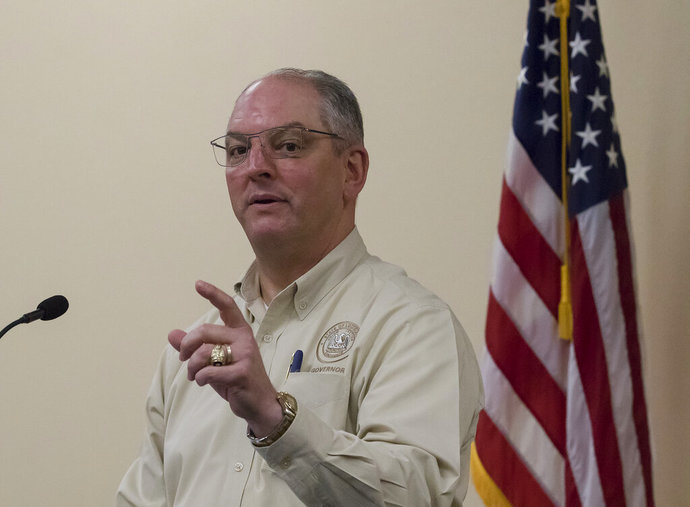
    NEW ORLEANS (AP) — “It’s just too early to know” when Louisiana can begin relaxing stay-at-home orders that have devastated the state’s economy to prevent the spread of the new coronavirus, Gov. John Bel Edwards said Monday.

    He was speaking to reporters in Monroe, in the northern part of the state, after touring sites of widespread damage from tornadoes on Sunday.

    He was responding to a question about President Donald Trump’s eagerness to get businesses re-opened around the nation.

    Edwards, a Democrat, said he will continue to work with Trump and Vice President Mike Pence on the issue.

    State officials from both parties have presented a largely unified front in facing the crisis. But a state representative issued a statement Monday saying the order “must end” April 30.

    “On May 1, we must begin opening as much as possible,” Rep. Mark Wright, a Republican from Covington, said in a news release.

    The number of deaths related to COVID-19 in Louisiana rose to 884 Monday, 44 higher than a day earlier, according to the latest figures from the state health department.

    The number of people hospitalized with the disease caused by the virus was 2,134. That’s 50 more than a day earlier. The number of those requiring ventilators was 461 — a slight increase from Sunday but still well below last week’s numbers.

    State officials have said social distancing efforts appear to be slowing the growth in serious coronavirus illnesses in Louisiana. Edwards on Monday stressed that the practice must continue for now to avoid a new spike in infections.

    He also chastised those who aren’t heeding the warning. He said there was evidence, including anecdotes and a website that records movements of cellphone customers, that many in the state were less mindful of the need for social distancing over the Easter weekend.

    The overall number of Louisiana residents known to have been infected with the new coronavirus was 21,016 as of midday Monday, an increase of 421, as the number of people tested in the state surpassed 108,000.

    The latest figures were released on the same day the state announced that it had made a one-day payment of more than $89.7 million to residents who have lost their jobs or had reduced hours due to the pandemic. That includes more than $66 million from a recently passed federal relief bill to fund the first of weekly $600 payments for unemployed people, including the self-employed who lost work because of the pandemic.

    The state said that, as of Monday, just over 59 % of COVID-19 deaths in Louisiana occurred among African Americans. The figure was down from the 70% figure released last week. However, Edwards noted that the figures vary because the race of some of those affected is not available. Officials in Louisiana and elsewhere have expressed concerns over the disease’s disparate effects on blacks. Edwards last week announced a task force to look into the issue.

    During the absence of college sporting events as a result of the coronavirus battle, LSU announced a plan Monday to help provide badly needed medical supplies. The university said it’s starting large-scale production of personal protective equipment in the assembly center where basketball games are usually played. University employees, working with doctors from New Orleans and Shreveport, are making heavy-duty, reusable gowns and face shields, all with materials donated by area businesses.

    For most people, the coronavirus causes mild symptoms like fever and a cough that resolve in two to three weeks. But for some, especially older adults and people with existing health problems, more severe symptoms can occur, including pneumonia, that can lead to death.

    ___

    Associated Press reporter Melinda Deslatte in Baton Rouge contributed to this report.

  • UMMC and MSDH Offering Free COVID-19 Testing In Fayette on Tuesday, April 14

    UMMC and MSDH Offering Free COVID-19 Testing In Fayette on Tuesday, April 14

    Testing Will Take Place At Fayette High School

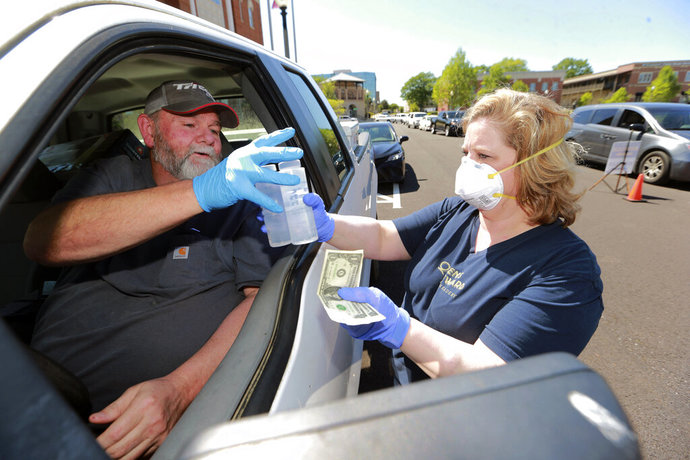
    UMMC and the Mississippi State Department of Health will hold free drive-through COVID-19 testing in Fayette, Tuesday, April 14 at Fayette High School from 9:00 a.m. until 4:00 p.m.

    To be tested, you must first be screened through the C Spire Health app.  The app is the fastest way to be screened.

    Click here to get the C Spire Health App for Apple devices

    Click here to get the C Spire Health App for Android devices

    Call 601-496-7200 for screening if you do not have a smartphone.  The app, screening and testing are free of charge.  This is only available for Mississippi residents.

    Screening
    During screening, a clinician will ask a few questions to determine the person’s risk of having the virus. Those at high risk will receive a appointment for drive-through testing. Those deemed not at high risk may be given instructions for self-care at home.

    Testing
    People with an appointment should plan to arrive on time. Only people with an appointment will be tested. People will stay in their vehicles and providers wearing protective gear will come to the car window. The provider will insert a long, naso-pharyngeal swab deep into the nose of the person being tested, similar to a flu test. The specimen they retrieve will go to the Mississippi State Department of Health for testing. 

    Waiting for results
    UMMC will contact people with their test results. In the meantime, it is crucial for everyone who has been tested go home. Self-isolate at home, away from friends and family, for at least 7 days from when symptoms first began or 3 days after symptoms improve significantly, whichever time is longer. Stay at least 6 feet away from others and avoid groups of 10 or more people, even when quarantine is no longer needed.


  • Drinking tonic water WILL NOT prevent or cure the COVID19 coronavirus

    Drinking tonic water WILL NOT prevent or cure the COVID19 coronavirus

    Medical experts say as of now there is no proven medication or home remedy that can cure coronavirus.

    THE FACTS: Posts circulating on Facebook and Twitter suggest that drinking tonic water from Schweppes or Fever-Tree will work to treat the new coronavirus because the drinks contain quinine. Other posts tout a combination of tonic water and zinc, an idea that gained traction after a St. Louis chiropractor posted a video recommending the combination.

    Experts say there is no scientific evidence that quinine would have any impact if used in this way. The concentration used for medical use is much different from the concentration of quinine used in soft drinks, said Dr. Humberto Choi, a pulmonologist at Cleveland Clinic.

    “I would not encourage anyone to drink tonic water to prevent or treat covid at all,” said Dr. Michael Angarone, assistant professor of infectious diseases at Northwestern University Feinberg school of Medicine.

    The U.S. Food & Drug Administration states that in carbonated beverages as a flavor, the level of quinine used should not exceed 83 parts per million.

    As far as taking tonic water and zinc, Choi said while zinc has been studied to see if it could help protect organs against low oxygen supply in cases of severe lung infection or inflammation, it has not been proven to treat the infection itself.

    “I don’t think people should be fooled to think they are ingesting something that is causing any benefit to them,” he said.

    Quinine is a compound found in the bark of the Cinchona tree and has been used to treat malaria. Malaria drugs like chloroquine and hydroxychloroquine are the synthetic form of quinine.

    Social media users appear to be suggesting there is no difference between quinine and hydroxychloroquine, which has been touted by President Donald Trump as a treatment for coronavirus. Hydroxychloroquine has not been approved as a drug to treat coronavirus and medical experts have not concluded whether the drug is safe or effective for this use.

    “The data so far in terms of therapeutic efficacy are pretty shaky,” said Dr. David Hamer, a professor at Boston University School of Public Health and School of Medicine and physician at Boston Medical Center.

    Tonic water companies like Fever-Tree are now debunking the myth on their websites.

    Fever-Tree says anti-malaria drugs “contain a significantly higher amount of quinine than tonic water.”

     “We would not advise using our tonic water for anything other than making a tasty drink to keep your spirits up during this difficult time,” the company states on its website.

    It’s not the first time tonic water has been promoted as a cure. Tonic water has also been falsely suggested as a way to cure malaria.

    “You have to be mindful of people touting miracle cures or cure all or miracle drugs for coronavirus,” Dr. Angarone said.

  • Mississippi Death Toll Rises; Elective Surgeries Banned

    Mississippi Death Toll Rises; Elective Surgeries Banned

    More than 2600 virus cases in Mississippi as of Saturday, April 10th

    JACKSON, Miss. (AP) — Mississippi officials have reported 11 additional deaths from the coronavirus, raising the state’s death toll from the disease to at least 93, as the governor banned all elective surgeries including abortion.

    The state Department of Health released the new figures on Saturday. They show the total number of virus cases at a little under 2,650.

    Gov. Tate Reeves has encouraged residents to continue practicing social distancing over the Easter holiday by worshiping at home on Sunday.

    On Friday, Reeves signed an order that banned any surgical procedure not needed to save a life or correct a serious medical condition until April 27, including abortion. In a news briefing, Reeves said the order was needed to save medical equipment including protective gear because Mississippi was “moving to a peak” of its cases.

    The owner of the state’s only abortion clinic, Diane Derzis, referred questions to the Center for Reproductive Rights, which said it was “exploring all options” for ensuring that abortion access continued in the state.

    In Texas, abortion providers asked the Supreme Court to allow the procedure to resume there after a similar order by Gov. Greg Abbott.

    For most people, the coronavirus causes mild or moderate symptoms, such as fever and cough. But for others, especially older adults and people with existing health problems, the highly contagious virus can cause severe symptoms and be fatal.

    __

  • Teachers Share How They Cope, Miss Students

    Teachers Share How They Cope, Miss Students

    “I miss my students!”

    LAFAYETTE, La. (AP) — Louisiana students and teachers learned suddenly before dismissal on a Friday afternoon that schools would shut down for a month.

    It was jarring news, and on top of all the questions — Would there be distance learning? What about meals? What happens with testing? — many educators were just plain sad.

    “Oh my word, this is even harder than summer break,” said Jennifer Babineaux, a first-grade teacher at Broadmoor Elementary in Lafayette.

    She described the initial feeling as something similar to mourning or grieving. She’s not alone. Blogs using the same descriptors have circulated on social media as teachers related and shared.

    “The announcement was made during our last hour, which is my planning (hour), so I never got a chance to tell any of my babies goodbye,” said Lucie Mesuch, who is in her 29th year teaching middle school in Sulphur.

    Taylor Wallace, a fourth-grade teacher at Woodvale Elementary in Lafayette, was out of town the last day of school, and her substitute called her at the end of the day to let the kids say goodbye on speakerphone.

    “It made me so emotional to think that I wouldn’t see them for a while and even more that I couldn’t be there to help them through this huge transition,” Wallace said.

    And now Louisiana schools will be closed at least through April 30, as Gov. John Bel Edwards extended his stay-at-home order last week to align with guidelines from the president and the U.S. Centers for Disease Control and Prevention.

    Teachers miss their students. They worry about them — that they’ll lose what they’ve learned this year, that they’ll fall behind, that they won’t be fed enough or loved enough. Teachers develop relationships with students from all backgrounds and home lives, and they worry what will happen while schools are closed.

    “I worry about my students who come to school to be loved, who need the support they find there,” Mesuch said. “I have one student who had not been himself the past few days. I wanted to talk to him Friday, but he told me he was OK and would talk to me Monday, so I have been worried about him.”

    She’s thankful and proud that her district, like others across the state, has been providing food for those who need it.

    Soon after Edwards’ proclamation closing schools, teachers were able to return to campuses briefly to collect items and finish grading for the third nine weeks. Being back on campus without their students stirred emotions.

    Carletta Anthony Jones teaches fourth grade reading and social studies at a school in northwest Louisiana.

    “I just arrived at my school, Natchitoches Magnet, and the tears are just falling!” Jones said. “As the young ones would say, ‘I’m feeling some type of way.’ I really miss my students! My prayer is that my students, coworkers and all stay safe.”

    When art teacher Erin Parish went to clean her room at Natchitoches Magnet, she wanted to make sure the classroom would be ready for kids when — or if — they return this year.

    “To cope, I sat outside looking for four leaf clovers, taking photos, and trying to create crowns, praying the entire time as I do it,” she said, “trying not to let my mind wander and become panicked.”

    Her husband told her if they do come back with just a week left, at least she would get to say goodbye to her eighth-graders and watch them graduate on to high school.

    “That broke me a little and got me crying because I really, really miss my kids,” Parish said. “I didn’t say bye on Friday because I was extremely ill. I didn’t get to tell them that I’ll miss them. I didn’t get to tell them that I hope they still create and can’t wait to see what they have made when we come back. I just pray they’re all OK and healthy.”

    In nearly every comment, teachers have expressed how much they miss their students, whom they’ve spent so much time with. That makes school like a home, Lafayette student teacher Raegan Abshire said.

    “It’s like a second family,” Abshire said.

    And email and video conferencing don’t quite fill the void, teachers are finding.

    “I miss working with my students, man,” said Mark Burt, visual art instructor in the Bossier Talented Arts Program. “I really miss seeing an engaged student — the expressions they have on their face when they solve a problem with my tutelage and encouragement.”

    Andrea Buchanan McFarlain, a teacher at Sulphur High School, feels the same way and is surprised when people expect her to be happy about being out of school.

    “Everyone assumes we are so excited to be ‘off’ work, but I’m miserable!” McFarlain said. “I miss my students!”

    Like many teachers, she’s worried about how being out of school this long will impact student learning.

    McFarlain teaches junior and senior Advanced Placement English and an EdRising course for future teachers.

    “All classes involve testing for college credits, and I want my babies to get those credits,” McFarlain said.

    She’s been messaging her students online assignments to help them prepare for upcoming AP exams, which will be given online and in a shorter format.

    “My classes work best face-to-face,” but she’s figuring out the web conferencing software Zoom, she said.

    McFarlain “hopes and prays we are able to go back,” echoing a sentiment so many others are voicing. They hope to return to school this semester, fit in some instruction and say a proper goodbye, especially to seniors.

    “I hope people take these health directives seriously, and I hope, if it’s safe, we will get to go back to school for a few weeks and at least let our seniors graduate,” said Christa Cunningham, creative writing and AP English teacher at the Magnet Academy for Cultural Arts in Opelousas.

    “While I know this is for the best, I feel bad for kids missing out on experiences they were counting on,” she continued. “I feel sad for the older kids who are missing milestones such as prom, ring ceremony and graduation, rites of passage that everyone gets.”

    It’s that social aspect of school that worries Cathlean Gilmer Snyder, a math teacher at Southwood High School in Shreveport. The transition for her students to online learning hasn’t been challenging “as far as the coursework is concerned,” she said.

    But her high-schoolers are concerned with what life is going to look like and when life is going to get back to normal, she said.

    “I just try to make sure, very much, to take care of them in that way, too, just as much as I’ve made sure they’ve finished their math curriculum,” Snyder said. “That’s important, that math is important. But making sure they get through this time of chaos OK and stable and emotionally all there, that’s what’s most important to me.”

    Wallace plans to see her kids again one way or another.

    “If we don’t end up going back to school this year, I do fully plan to host a get together for our classes when it is safe to be able to celebrate their hard work and success this year as a whole,” she said. “We will get a chance to say our proper goodbyes, somehow, someway!”
  • Politics Mixes With Science As States Turn To Virus Models

    Politics Mixes With Science As States Turn To Virus Models

    The models have resulted in conflict in several locations.

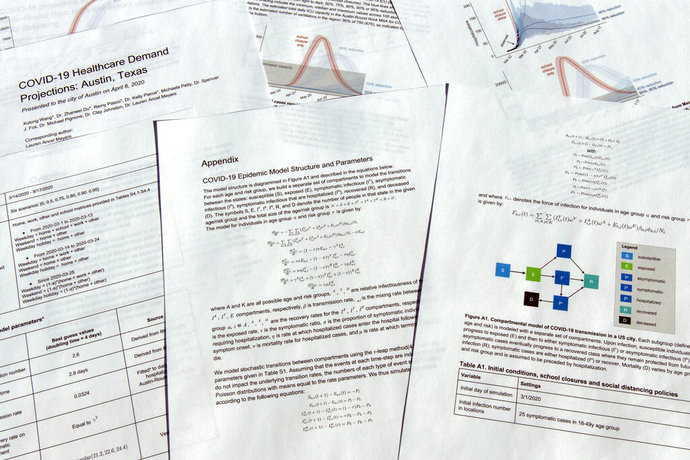
    State leaders are relying on a hodgepodge of statistical models with wide-ranging numbers to guide their paths through the deadly coronavirus emergency and make critical decisions, such as shutting down businesses and filling their inventory of medical supplies.

    During hurricane season, coastal states can trust the same set of computer models to warn of a storm’s track. During this pandemic, there is no uniform consensus to predict the toll and direction of the virus that is tearing through communities around the country.

    With little agreed-upon information, governors and local officials are basically creating do-it-yourself sources of information with their own officials and universities.

    The models have resulted in conflict in several locations.

    About 75 protesters on Thursday called on Ohio Gov. Mike DeWine to reopen businesses and questioned the models used by his health director to continue the state’s shelter-at-home order. Critics have denounced an Iowa Health Department a matrix as arbitrarily devised and being used by the governor to rationalize her decision to not issue a stay-at-home order.

    The federal government and many states rely on a University of Washington model that’s the closest thing to a benchmark but it is so imprecise that the latest projection for the death toll had a range of more than 100,000. In Washington D.C., health officials took the unusual step of publicly announcing that they didn’t trust the University of Washington’s updated model and embraced far more pessimistic predictions from a model created by researchers at the University of Pennsylvania.

    Some states, including Alaska, Ohio, Pennsylvania, Minnesota, Louisiana, are incorporating the work of local researchers and other experts to fine-tune their models.

    Some elected officials have cited the most dire forecasts in issuing stay-at-home orders. Others have seized on more optimistic figures from their models to justify their calls to loosen restrictions.

    “We know now that a lot of the models out there are not accurate,” Missouri Gov. Mike Parso said in describing why he waited until Monday to issue his stay-at-home order.

    President Donald Trump’s handling of the pandemic could well decide whether he is reelected, and the models the White House relies on for forecasting will be an issue if they miss the mark.

    Unlike with the National Hurricane Center, the federal government doesn’t have a national clearinghouse for virus models. The Centers for Disease Control and Prevention hasn’t publicly released any coronavirus models of its own. The Trump administration favors the University of Washington model, but the CDC hasn’t identified a modeling consensus for states to follow.

    Dr. Georges Benjamin, executive director of the American Public Health Association, said some public officials tend to act according to what “politically plays the best” instead of “following the science.”

    “It’s good to have optimistic models, but I prefer to be more of a pessimist when you don’t know what’s going,” Benjamin said.

    States worry about what models show because they believed there were more ventilators and other needed equipment stockpiled by the federal government than what actually exists, said Craig Fugate, who was head of the Federal Emergency Management Agency under President Barack Obama. Fugate said states are having difficulty planning and coping because the CDC, which is supposed to lead the pandemic response for the federal government, seems to be disappearing.

    “When you do not hear from the CDC directly and you have all these other filters (of information), we’re losing the message,” Fugate told The Associated Press.

    White House coronavirus task force members Drs. Deborah Birx and Anthony Fauci have delved into modeling at numerous briefings. Birx has said the task force has consulted a range of outside models to make the case for the need for social distancing to flatten the curve.

    The federal government is trying to amass and process a trove of data on testing, disease levels, hospital capacity and other factors that could help improve modeling and maybe even focus down to the community level. It’s unclear how far the effort has gotten, particularly given all the other challenges that governments at all levels are facing dealing with the outbreak.

    The model from the University of Washington, the one most frequently cited at White House press briefings, predicts daily deaths in the U.S. have peaked and will decline through the summer. The updated model on Friday shows that 26,487 to 155,315 Americans will die in a first wave stretching into the summer. A few days earlier, the same model had projected up to 136,401 deaths.

    Louisiana Gov. John Bel Edwards, a Democrat whose state has had one of the deadliest outbreaks of COVID-19, has said his administration is doing its own modeling. It’s a collaboration between the state health department, Louisiana State University, the University of Louisiana at Lafayette, a medical system and Blue Cross/Blue Shield.

    Edwards called it “heartening” to see the University of Washington’s updated model forecasting a lower death toll. But he said, “the numbers in that particular model don’t match up so well with what we’ve already experienced, so we’re trying to reconcile the assumptions that underlie that model with the assumptions that underlie ours.”

    New York Gov. Andrew Cuomo has used his daily press briefings to explain how models have helped his administration forecast the pandemic’s impact on the Empire State. The Democrat has relied on projections from McKinsey & Company and Weill-Cornell medical center and consulted the World Health Organization.

    But he has described the range of estimates as “maddening” and concedes that projections of an apex could change every day.

    Natalie Dean, an assistant professor of biostatistics at the University of Florida’s College of Medicine, has seen an overreliance on modeling and confusion about the role it should play in responding to a pandemic. She said some of the most valuable information can be anecdotal, gleaned from people working on the front lines of the response.

    “Models need to input parameters. You need to input a lot of assumptions about what you think is happening, and there’s still a lot we don’t know. We have to view numbers with skepticism,” said Dean, who is working with other experts on COVID-19 vaccine strategies.

    ___

    Kunzelman reported from Silver Spring, Maryland. Associated Press reporters Ricardo Alonso-Zaldivar in Washington; Seth Borenstein in Kensington, Maryland; Steve Karnowski in Minneapolis; Melinda Deslatte in Baton Rouge, Louisiana; Meg Kinnard in Columbia, South Carolina; David Lieb in Jefferson City, Missouri; Ryan Foley in Iowa City, Iowa; Michael Rubinkam in northeastern Pennsylvania; Ashraf Khalil in Washington; and Marina Villeneuve in Albany, New York; contributed to this report.

    ___